NEC Section 690.43 PV Equipment Grounding Bonding
NEC Section 690.43 PV equipment grounding bonding: why it matters for commercial solar
Putting NEC Section 690.43 in context for commercial and industrial facilities
At Kord Electric, we take the safety of large solar installations personally. In the first place, we focus on NEC Section 690.43 PV equipment grounding bonding, because that rule helps prevent dangerous fault conditions and supports proper system operation. For commercial and industrial facilities, one overlooked detail can turn a clean solar project into a headache that nobody wants, not even the “someone will handle it later” crew. And we do not roll the dice. Instead, we verify how PV equipment connects to earth and how bonding supports the design and the intent of the NEC.
To make this practical, our expert technicians explain what the code requires, where installers commonly slip, and how facility owners can expect a safer, more predictable outcome. Then, we connect those requirements to real project decisions, such as equipment location, conduit routing, and inspection readiness. With that in mind, let’s walk through the key parts of the National Electrical Code as they relate to grounded systems for PV equipment, and how we apply them in the field.
We also tie NEC Section 690.43 into the broader rulebook so clients can see the bigger picture. For example, in our resource Understanding NFPA 70: The National Electrical Code Explained for 2026, we outline how grounding, bonding, overcurrent protection, and equipment listings work together for modern facilities. That same mindset shows up when we review PV projects: we are not just “checking a box” for one section; we are confirming that the entire system’s protection strategy makes sense from the roof down to the main service.
For commercial property teams juggling upgrades, tenant improvements, and new energy goals, that context matters. A PV array might be the newest part of the electrical system, but it still has to live peacefully with existing panels, life safety loads, and critical process equipment. Our job is to make sure NEC Section 690.43 PV equipment grounding bonding supports that long-term reliability, instead of becoming the reason someone has to schedule an emergency shutdown.
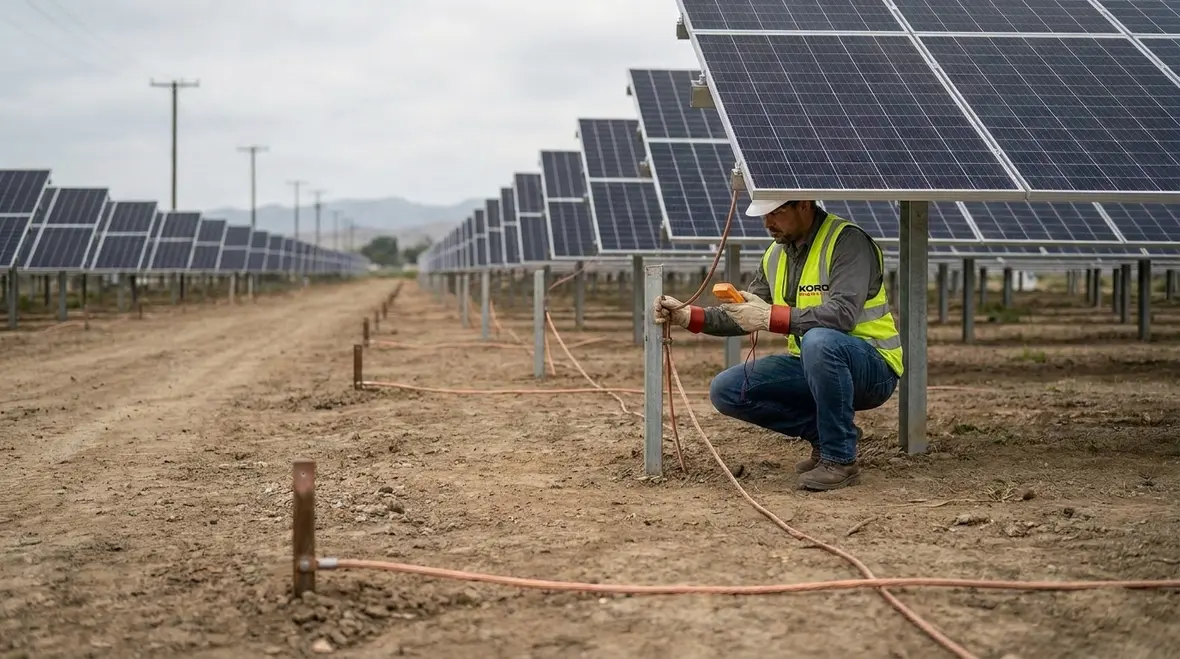
What the NEC expects from PV grounding and bonding
In plain terms, the NEC aims to control electrical hazards. Specifically, it addresses how PV equipment grounds and bonds to reduce shock risk, stabilize potential differences, and support fault clearing. Furthermore, it aims to keep metallic parts from becoming energized during a fault. That is the mission behind grounding and bonding rules across the code, and PV systems rely on those same safety goals.
However, PV adds its own complexity. Solar arrays include metal frames, wiring, inverters, rapid shut down components, and mounting systems. Additionally, PV conductors can carry DC at high voltage, and DC faults behave differently than AC faults. So, the NEC does not treat PV grounding as an afterthought. Instead, it lays out a path for how the system should be connected to earth and how metallic parts should be bonded to maintain safe electrical conditions.
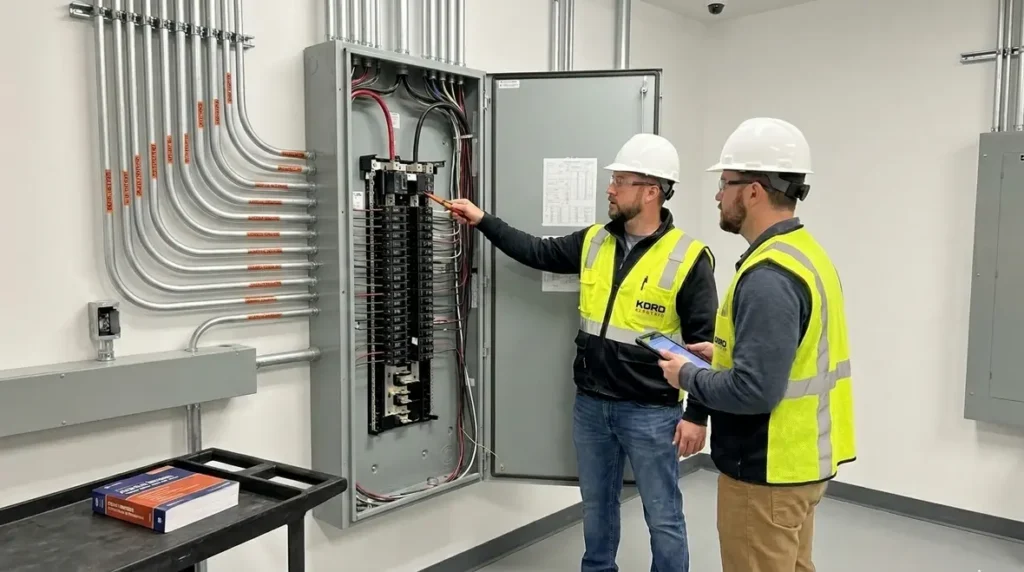
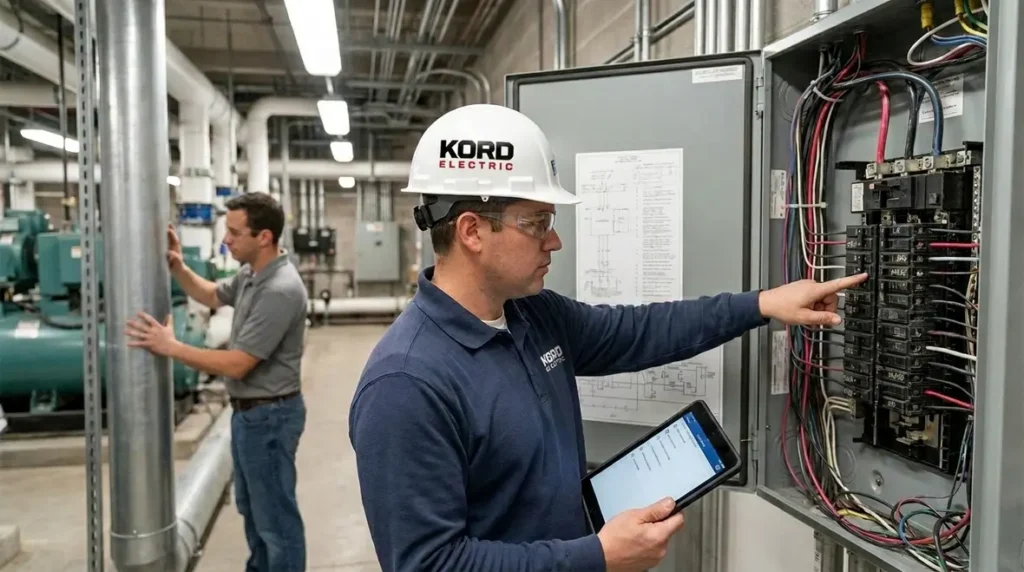
Our technicians follow that logic step by step. For example, they treat equipment bonding as a system, not a collection of loose parts. As a result, they check connections, verify continuity, and document what was installed so inspectors can confirm compliance without guesswork.
We also look well beyond a single roof. In many commercial and industrial campuses, PV equipment lands on several buildings, ties into multiple electrical rooms, and shares grounding infrastructure with older gear. That mix makes it even more important to read NEC Section 690.43 alongside the wider National Electrical Code guidance you will find in Kord Electric’s NFPA 70 articles. When the same team understands both the rooftop details and the service entrance grounding electrode system, grounding and bonding stop being a puzzle and start looking like a clear design choice.
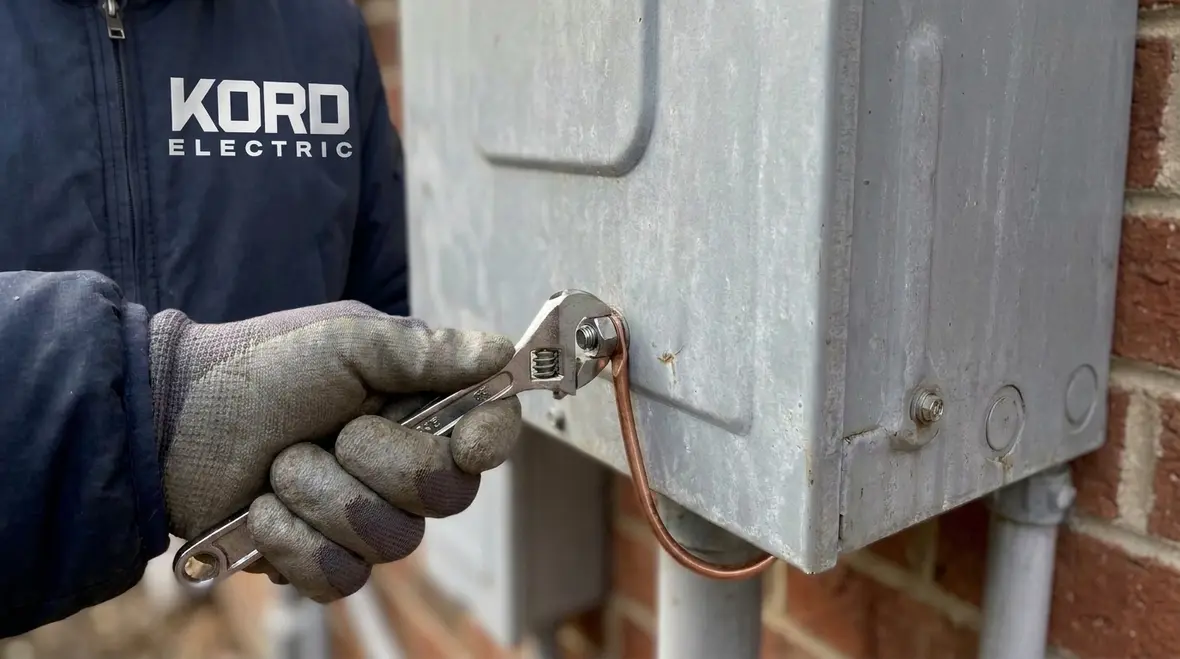
How PV grounding and bonding align with broader code strategy
Grounding and bonding for solar live in the same world as grounding and bonding for the rest of your building. Where NFPA 70 talks about fault paths, overcurrent protection, and equipment enclosures, NEC Section 690.43 narrows the lens to PV gear and mounting systems. That means commercial PV projects benefit from the same structured thinking we apply in our other code-focused work, from electrical connection quality standards to surge protection and service upgrades.
When we plan a PV project, we do not assume that “the building ground” is perfect, permanent, or properly documented. Instead, our technicians verify how the PV grounding electrode connections, bonding jumpers, and equipment grounds line up with the rest of the system. That layered approach reduces surprises during commissioning and keeps the PV array from becoming the weak link during the next fault event.
NEC 690 grounding basics that protect large solar sites
When facilities build PV systems, they often ask, “Where do we ground, and what do we bond?” The answer depends on the equipment and on the system design, but the core idea stays consistent. Grounding connects the system to earth, and bonding connects exposed and conductive parts so they do not rise to unsafe potential during faults.
At Kord Electric, we focus on these grounding and bonding outcomes for commercial and industrial sites. First, we ensure that exposed conductive surfaces stay at a controlled potential. Next, we ensure that fault current has a clear path so protective devices can operate. Then we confirm that PV mounting and enclosures work as intended, including any metal racks, frames, and accessible metallic parts.
Also, we consider how a facility actually operates. For example, a warehouse with high traffic needs consistent cable management and sturdy bonding at accessible junction points. Meanwhile, a campus with multiple roofs and equipment rooms needs clear coordination between PV sections and main electrical service grounding. In other words, we build safety into the layout, not just into the drawings.
Those basics show up again and again in our wider code consulting work. When Kord Electric helps facilities modernize commercial building electrical systems or upgrade panels and feeders, we keep grounding and bonding at the center of the conversation. Bringing PV into that mix simply adds one more storyline, not a different universe. NEC Section 690.43 PV equipment grounding bonding becomes one of the main tools we use to keep rooftop hardware, conduits, raceways, and service equipment on the same page.
Translating NEC 690 concepts into day-to-day decisions
On paper, NEC 690 reads like a list of conditions, conductor sizes, and connection rules. On a job site, those lines turn into choices about where to land bonding jumpers, how to route equipment grounding conductors, and which enclosures need special attention. Our technicians walk project managers through those tradeoffs using the same calm, clear style we use when explaining general NFPA 70 requirements for feeders, panels, and life safety circuits.
For example, we help facility teams decide how to balance roof accessibility with short, reliable bonding paths; how to route PV output circuits so equipment grounding remains obvious and testable; and how to label disconnects so future crews instantly know how the PV grounding arrangement ties back to the main electrode system. When those decisions are made early, projects stay smoother, and NEC Section 690.43 stops being a last-minute citation and starts feeling like a design ally.
How PV equipment bonding supports fault control
Bonding does more than “tie metal together.” In practice, bonding reduces the risk of energized metal surfaces and helps protective devices clear faults. Moreover, bonding supports the equalization of electrical potential so that a person touching two conductive parts does not experience a harmful voltage difference.
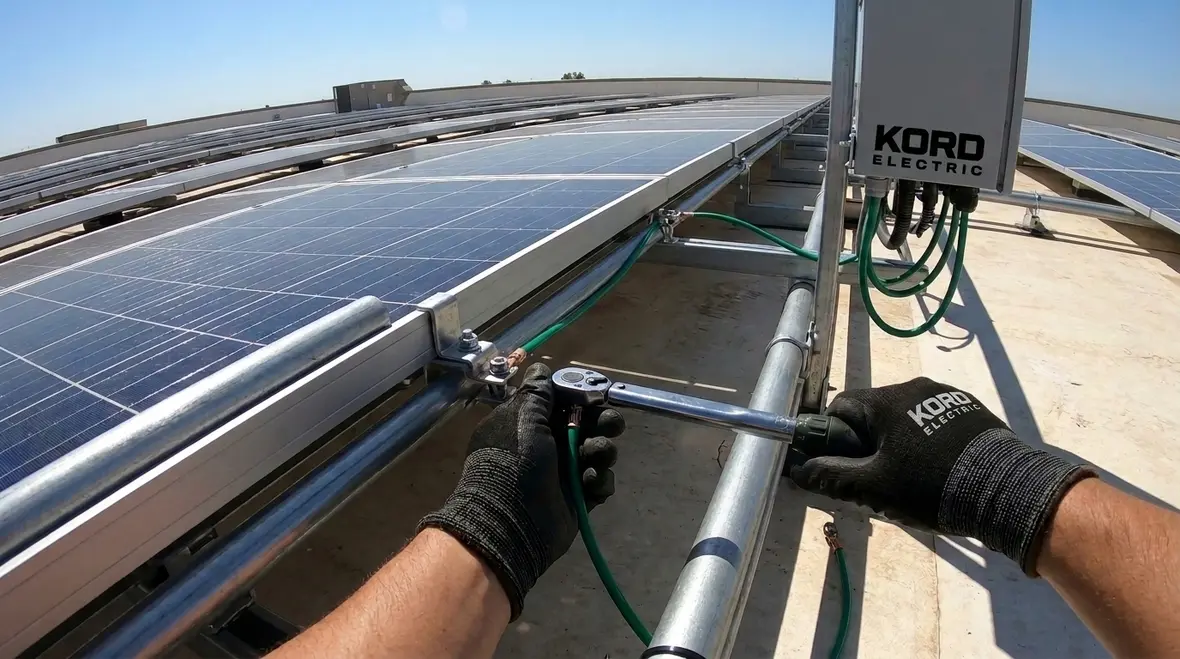
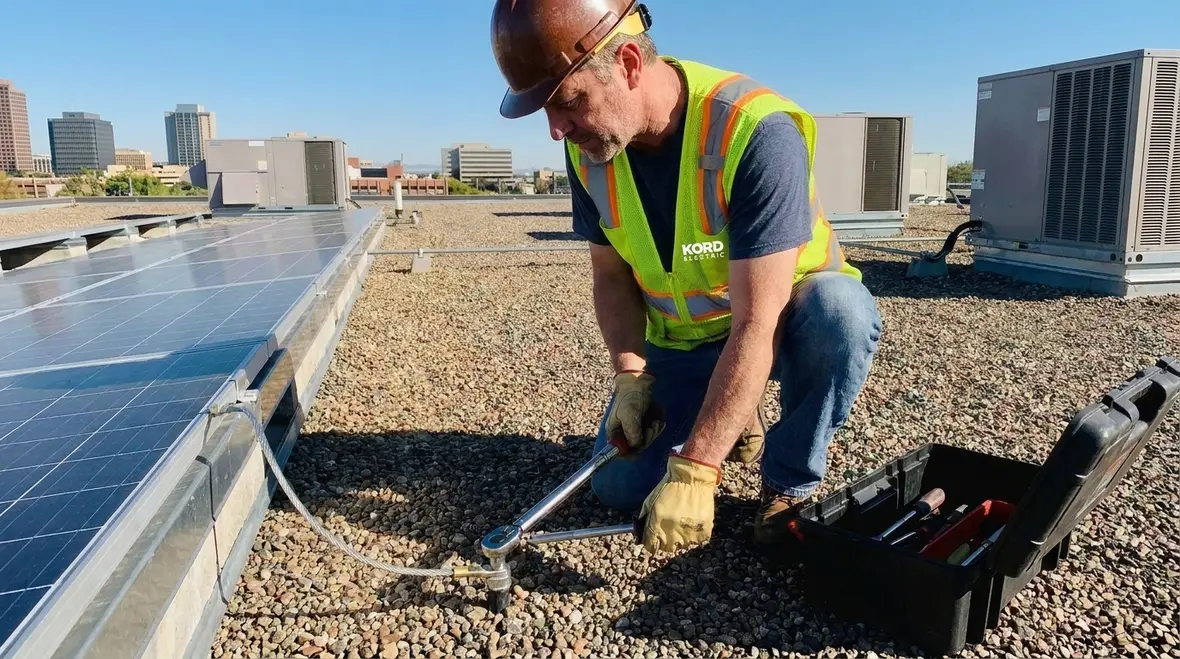
For commercial sites, we also consider the real world: vibration from HVAC equipment, expansion and contraction of mounting structures, and environmental exposure. Therefore, bonding connections must be durable, properly terminated, and resistant to corrosion where relevant. Our technicians also confirm that the bonding method matches the equipment requirements, and that installers do not substitute a quick fix for a code compliant path.
Then there is the DC side. PV can operate with DC voltage present even when a portion of the system is shut down, depending on the design and the rapid shutdown strategy. Consequently, the bonding approach must support safety across operating states. Our team reviews how bonding interfaces with inverter enclosures, disconnects, and any supplemental grounding points so the facility does not rely on luck or “it seems fine.”
Connecting bonding strategy to the rest of your NEC planning
When Kord Electric reviews fault control strategies for a site, we treat PV the same way we treat surge protection, motor control centers, and backup power: as part of one coordinated story. That is why our NFPA 70 resources talk about how grounding and bonding influence overcurrent protection and equipment behavior under stress. If a PV array feeds into panels that also support fire pumps or emergency lighting, we want the bonding and grounding paths to be predictable, testable, and efficient for fault-clearing no matter where a problem starts.
We also coach facility teams on what inspectors and maintenance staff will look for later. Consistent hardware choices, clearly labeled bonding jumpers, and tidy conductor routing all make NEC Section 690.43 PV equipment grounding bonding easier to verify. That attention to detail does not just earn smoother inspections; it makes troubleshooting faster when someone has to trace a fault path under pressure.
Installer mistakes we catch before inspectors do
Even well meaning teams can miss details on complex PV builds. However, the issues are often predictable. So, our expert service staff focuses on the common failure points we see across large projects.
One frequent problem is inconsistent or incomplete equipment grounding paths. Sometimes the mounting hardware gets treated like it is automatically bonded, when it actually needs deliberate connection. Another issue involves improper use of bonding jumpers or missing bonding at enclosures. In some cases, teams rely on conduit continuity, yet the design may require a specific bonding conductor method.
Additionally, we see rushed routing and termination. For example, installers may shorten leads, skip proper tightening, or use mismatched connectors. Also, they may overlook how the electrical rooms connect to roof equipment when the site uses multiple roof sections. In a major property building, that coordination matters, because bonding continuity must remain intact from the PV equipment all the way to the grounding system.
To prevent these problems, our technicians explain what they find, why it matters, and what changes we recommend. We also help teams prepare documentation and inspection support, because we would rather correct an issue on the worksite than argue about it in an office later. If that sounds dramatic, think of it this way: we prefer fewer surprises than a streaming series finale.
Those “almost right” installations show up outside PV as well, which is why our blog spends so much time on electrical connection quality, panel upgrades, and code-ready renovations. The same workmanship that keeps a feeder lug solid under load also keeps a PV frame properly bonded when wind, temperature swings, and time start doing their thing. When we correct an error in the array, we are usually improving the whole system’s resilience, not just avoiding a red mark on an inspection form.
Project planning for commercial and industrial PV grounding
Great PV grounding does not begin at installation. It begins with planning. First, we review the one line diagram and the grounding electrode scheme. Next, we map equipment locations, roof mounting details, and pathways for bonding conductors and grounding conductors. Then we coordinate with structural and mechanical constraints so the bonding plan fits the physical layout.
For commercial and industrial facilities, we also consider service capacity and system integration. The PV equipment grounding bonding approach affects how the facility protects people and equipment, especially in electrical rooms that also serve motors, UPS systems, or process loads. Therefore, we look at where the PV inverters land, how disconnects connect, and how the grounding system ties in with the main grounding conductor and service electrode system.
Furthermore, we coordinate with fire and electrical safety planning. If the site includes fire pump systems or related life safety circuits, proper grounding coordination matters even more. Fire safety teams and electrical teams need predictable electrical behavior. We also understand that accurate labeling and clear conductor identification reduce maintenance errors later.
Our approach stays grounded in code compliance and practical buildability. In other words, we do not just quote rules. We translate the requirements into a build plan that your contractors can execute and your inspectors can verify.
Because PV is often only one piece of a larger modernization plan, we frequently align these steps with broader initiatives like electrical code upgrade consulting for renovations or modern electrical system design. That way, when NEC Section 690.43 PV equipment grounding bonding drives a decision about conductor routing or mounting hardware, it also supports your long-term plans for power quality, capacity, and future gear. Planning once and building with the next decade in mind beats reworking a roof because a later project discovers a missing bonding path.
Where Kord Electric fits with NEC guidance and safety culture
Kord Electric supports major property buildings and commercial and industrial facilities with electrical expertise built for demanding schedules and long term reliability. We work with project teams that need more than “installed and done.” They need a system that remains safe, maintainable, and inspection ready.
We also align our electrical strategy with the broader safety culture reflected in industry resources. Kord Fire and firepump related guidance often highlights how electrical safety connects to life safety outcomes, and we respect those links. While our focus stays on electrical installation and compliance, we collaborate with other teams so the facility’s safety goals stay consistent across disciplines.
In addition, our technicians keep the code context front and center. When the NEC updates, we review what changes mean for grounding and bonding details in the field. Then we adjust our practices so clients do not face avoidable rework. That is how we keep projects from turning into a “why did nobody catch this earlier” meeting.
That same mindset shows up in how we structure service offerings. Whether a site needs routine maintenance, emergency electrical services, or a complete design refresh for a new tenant, we build every recommendation around NFPA 70 principles and the specific needs of commercial and industrial environments. NEC Section 690.43 PV equipment grounding bonding slots directly into that culture: it is not just about checking a solar box; it is about keeping your entire facility safer every time the sun comes up and your array wakes up with it.
How PV grounding integrates with your wider electrical services
Because PV grounding touches roof structures, electrical rooms, and sometimes parking canopies or carports, you want a contractor who understands how all of those pieces talk to each other. Kord Electric brings that systems view to every project. When we install or review PV equipment, we are also checking how the work affects surge protection, panel loading, labeling, and maintenance workflows for the rest of your building.
If your facility is in Southern California and you are planning a solar project or a broader upgrade, our Los Angeles County electrical services team can help align PV grounding and bonding with your overall electrical roadmap. That way, you do not end up with a beautiful array on the roof and a confusing, mismatched grounding scheme in the electrical closet.
FAQ
Final thoughts and call to action for your solar project
If you are planning or upgrading a commercial solar system, do not treat PV equipment grounding bonding like a last minute checklist item. At Kord Electric, we apply NEC requirements with disciplined planning, clear installation practices, and expert technician support so your site protects people and equipment. We help facility teams avoid costly rework and keep inspections on track. If you want a compliant, well documented PV grounding and bonding approach for your building, contact Kord Electric today for expert service and project support.
Whether your next move is a rooftop array, a service upgrade, or a full renovation, building NEC Section 690.43 PV equipment grounding bonding into the early design conversations saves time and reduces risk. Our team is ready to connect the dots between your energy goals, your existing infrastructure, and the latest NFPA 70 guidance so your project feels less like a gamble and more like a well-planned step forward for your facility.