
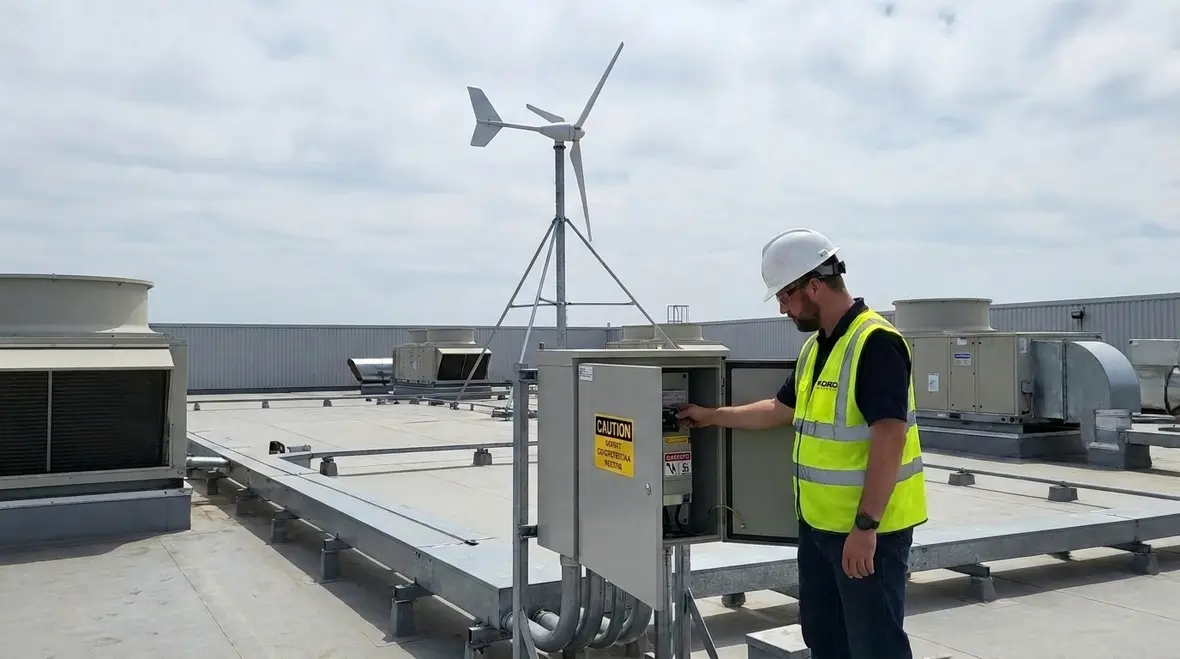
NEC Section 694.2 Wind Turbine Equipment Listing Explained
When owners and facility managers look at wind energy, they often focus on the turbine itself. However, we at Kord Electric know the real safety story lives in the wiring rules. Within the first part of the National Electrical Code, NEC Section 694.2 directs how wind turbine equipment must be listed, labeled, and approved for use. In other words, the equipment you install should meet recognized standards, not just look tough on a site walk.
As our technicians explain it to others, the listing process helps reduce guesswork. Then again, guesswork is fun only in movies, and we do not build electrical systems like a thriller plot twist. Our expert service staff work with commercial and industrial facilities, and major property buildings, so we plan for real-world load, real-world access, and real-world inspection expectations.
NEC Section 694.2 Wind Turbine Equipment Listing, and why commercial and industrial sites should care
In commercial and industrial environments, wind turbines do more than spin gracefully in the background. They tie into service equipment, feeders, protective devices, and monitoring systems that keep your facility running. NEC Section 694.2 sets the expectation that the wind turbine equipment you use is not a mystery box. It must be listed and identified for the intended application, with a clear path back to recognized testing and evaluation standards.
For facility leaders, that listing requirement means your procurement choices directly affect how simple or stressful your next inspection becomes. Listed wind turbine equipment comes with defined ratings, installation instructions, and limits. When our technicians walk a site, they compare those details with project drawings, protective device settings, and conductor sizing. If the numbers and labels do not line up, the safest move is to stop and correct it before energizing the system.
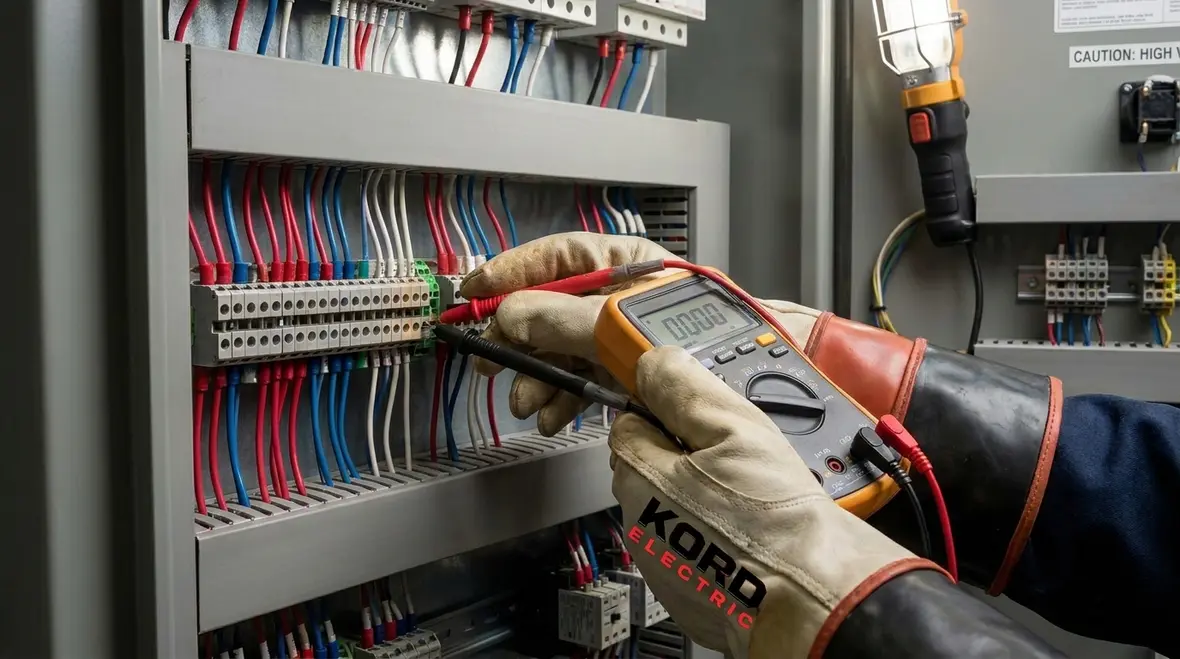
We see wind turbine projects succeed when owners treat NEC Section 694.2 as an early design checkpoint instead of a last-minute paperwork chore. That mindset keeps everyone aligned: engineers specify listed equipment, purchasing teams order against those specs, and installers verify labels in the field instead of improvising at the eleventh hour.
If your teams already follow high-level NEC guidance for other systems, you can connect this topic to resources like Understanding NFPA 70: The National Electrical Code Explained for 2026. That big-picture view supports better decisions when you zoom in on a focused requirement like wind turbine equipment listing.
What the NEC does in plain terms for power and control wiring
Third party standards can feel like a wall of paper, yet the National Electrical Code exists to make electrical work safer and more predictable. It guides design, installation, and protection methods, and it does not just care about “working,” it cares about how the system behaves during faults, maintenance, and unusual conditions. Then, as your site grows, those details matter even more.
In practice, the NEC drives choices around conductor types, overcurrent protection, grounding, bonding, isolation, and how power transitions between sources and loads. Additionally, for wind turbine systems, you must consider unique elements like power conversion equipment, inverter interfaces, transformer connections, and how conductors route from outdoors to equipment rooms and control spaces.
That guidance matters in wind projects because generation equipment lives next to ordinary building systems. One moment, you are routing turbine output conductors; the next, you are sharing a room with lighting panels, emergency circuits, automation controls, and fire alarm interfaces. The NEC framework helps you separate, protect, and coordinate these circuits so that a future upgrade or repair does not accidentally compromise safety.
Our team often sees a pattern: someone starts with a mechanical plan, then they realize electrical requirements must match it. That is when we step in early. Our technicians review documentation, confirm equipment ratings, and explain each decision in a way operators can act on, not just nod at. We highlight where NEC direction for power and control wiring intersects with Section 694.2 requirements so you avoid gaps between “what the spec says” and “what the labels allow.”
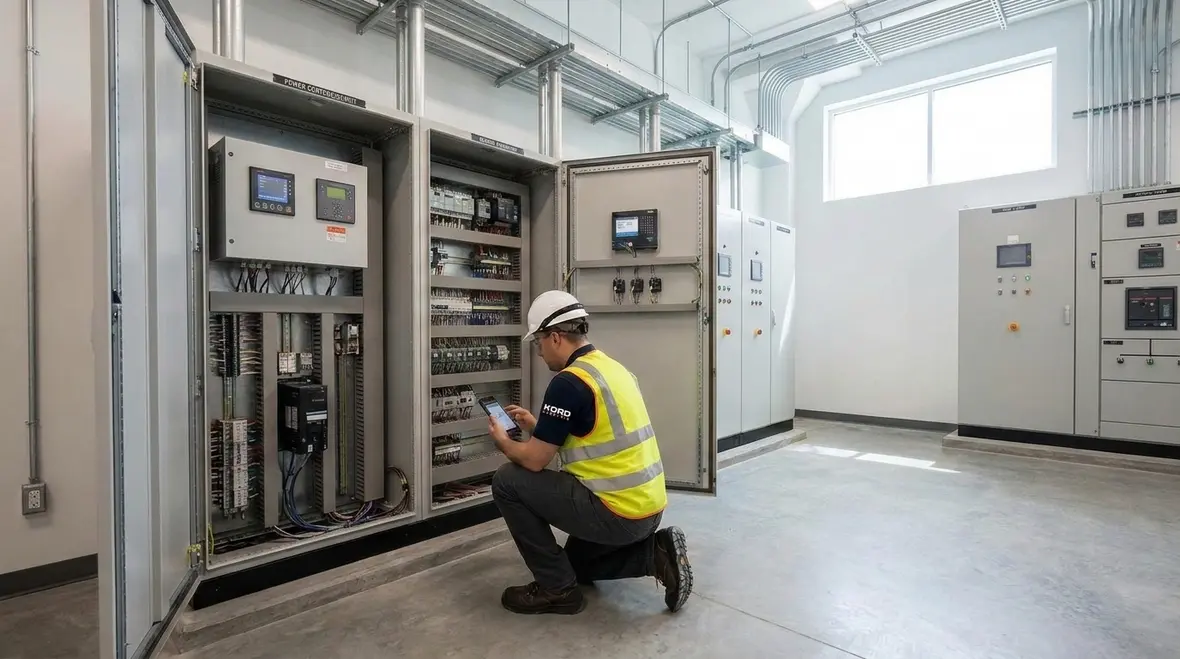
For commercial and industrial clients who want an even broader NEC roadmap before digging into wind specifics, articles like “How to Read NFPA 70 National Electrical Code” from the Kord Electric blog help their teams navigate sections, articles, and definitions without getting lost in the table of contents maze.
How wind turbine circuits change the safety picture
Wind systems bring energy production into settings that may also host sensitive loads, building automation, fire alarm systems, and critical power distribution. Because of that, we treat wind turbine electrical work as part of the building electrical architecture, not as a stand alone gadget.
First, generation equipment can create voltage and current patterns that differ from traditional utility feeds. Next, power electronics may include switching elements that require correct grounding, surge protection, and equipment separation. Meanwhile, control circuits can interface with protective relays, monitoring systems, and shutdown methods. If those interfaces get handled casually, you risk nuisance trips, degraded performance, or worse, unsafe conditions when protective schemes fail to operate as intended.
Second, wind turbine output circuits may route through harsh outdoor environments before entering the building. That shift from tower or pad-mount equipment into conduit, raceways, junction boxes, and switchgear introduces real risk points: mechanical damage, water ingress, cable movement, and misunderstandings about where building wiring starts and wind equipment ends. The NEC view reminds us that there is one safety story, not two parallel ones.
To keep things calm and correct, our expert service staff use a methodical approach. They verify labeling and documentation for the turbine equipment, then they confirm the installation plan supports safe operation and service access. They check clearances, working space, disconnect visibility, and lockout support, not just nameplate kVA. And yes, we also remind people that electrical hazards do not care about deadlines or holiday schedules.
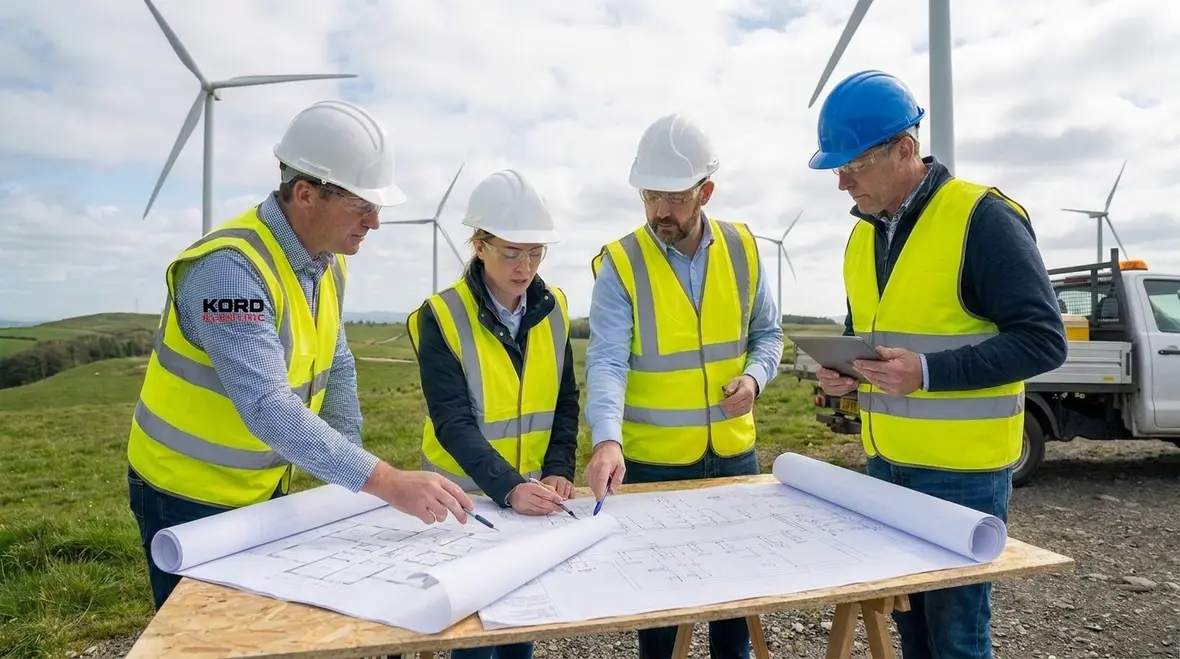
In major property buildings, wind generation sometimes shares space with life safety equipment, elevator systems, HVAC drives, and data infrastructure. Our role is to ensure the turbine circuits and controls complement that mix, supporting clear fault paths, selective coordination, and safe shutdown behavior rather than adding surprise interactions when breakers trip or when the utility feed returns after an outage.
Real design steps commercial projects can follow
For commercial and industrial facilities, the best results come from disciplined design and tight handoffs between electrical engineering, turbine integrators, and site operations. We help coordinate that work so the end system stays consistent from submittals to commissioning.
Here are the design steps we commonly guide teams through:
- Confirm listed turbine components early. We verify turbine equipment meets the listing intent of NEC Section 694.2, so later wiring changes do not become major redesign.
- Plan conductor routing and separation. We consider outdoor exposure, physical protection, and separation from low voltage systems where interference can cause headaches.
- Verify grounding and bonding paths. We check that bonding maintains safe fault current paths and supports proper operation of surge devices and monitoring equipment.
- Match protection devices to circuit behavior. We help select overcurrent protection and disconnecting means that align with how the turbine system actually delivers power.
- Document service and shutdown intent. We coordinate labeling and access for safe troubleshooting, maintenance, and rapid isolation when needed.
At this stage, our technicians do more than “install.” They explain what they see in the field, what it means, and what to fix before it turns into a costly rework cycle. Also, we help facility teams understand inspection prep so they are ready, not surprised. That includes mapping Section 694.2 listing expectations to your equipment schedule, your one-lines, and your operation manuals.

On many projects, we also reference broader NEC application resources from the Kord Electric blog to give stakeholders a shared language around code direction and the 2026 cycle. That simple step often prevents misunderstandings between engineering reviews, purchasing decisions, and what actually appears at the loading dock.
Compliance, commissioning, and inspection readiness
Meeting code requirements is not a one-time checkbox. After installation, you must confirm the system operates safely and as intended. That is where commissioning and documentation earn their keep.
We support commercial and industrial facilities with practical commissioning steps that help reduce last minute failures. First, we confirm terminations, torque, and conductor identification. Next, we test protective elements and verify that isolation points work as designed. Then we validate grounding continuity and confirm that surge and monitoring devices connect correctly. For wind projects, we also confirm that control logic for start, stop, emergency stop, and fault response tracks cleanly with manufacturer instructions and NEC expectations.
During inspection readiness, our expert service staff focus on traceability. We help you maintain a clean record trail: equipment labels, wiring diagrams, field test results, and revision history. If the AHJ asks for specifics, we do not want your team hunting through emails like it is a scavenger hunt from a superhero movie. We prepare so answers come quickly and accurately.
Additionally, for major property buildings, we consider how operations teams will interact with the system. We help ensure that signage and access align with safe switching and maintenance practices, so the site runs smoothly after we leave. That mindset connects directly back to NEC fundamentals and to broader education pieces on the National Electrical Code that Kord Electric publishes for owners and facility managers.
Common wind turbine electrical mistakes we prevent
Even strong teams can stumble when wind systems enter a building electrical environment. We see recurring issues, and we address them early because they usually show up at the worst possible time.
Common mistakes include:
- Assuming turbine equipment ratings transfer automatically. They do not. We confirm compatibility with the site electrical design and protection scheme.
- Skipping careful conductor routing. Poor routing can lead to abrasion, water ingress, heat buildup, or trouble maintaining separation from other systems.
- Underestimating grounding and bonding complexity. Incorrect bonding can affect protective operation and surge performance.
- Using mismatched protective device characteristics. The wrong selection can cause nuisance tripping or slow fault response.
- Weak labeling and unclear isolation points. When operators cannot quickly identify what to isolate, safety and downtime both suffer.
Our technicians explain each risk in a business friendly way. Then we translate those risks into field actions: better routing, correct labeling, verified terminations, and commissioning tests that actually prove safety. If it sounds simple, that is because the process is simple when it gets attention early. The hard part is convincing project teams not to treat wind turbine electrical details as optional extras when schedules get tight.
For facilities already working through other NEC-focused upgrades, such as conductor sizing or equipment marking, we align wind turbine work with that same disciplined approach. That keeps your documentation stack consistent and makes future audits or insurance reviews much easier to navigate.
Industry guidance, fire safety, and where Kord Electric fits
Wind turbine systems connect into broader electrical and safety ecosystems. Fire safety rules and protective planning must align with electrical design so emergency response procedures remain practical. That is why we coordinate electrical work with the safety mindset found across industry guidance, including the broader NEC education resources available through partners in the Kord network, such as Kord Fire and local fire safety organizations like firepumps.org.
We also stay aware of regional expectations and the practical realities of commercial sites. For example, when teams rely on incomplete guidance, they often focus on power output and miss the protection and safety details. We prevent that by working from code intent and field proof, not guesswork. That includes staying current on NEC Section 694.2 wind turbine equipment listing direction and how it interacts with other NEC articles that govern wiring, grounding, and overcurrent protection.
In short, we help you build systems that inspectors can follow, operators can maintain, and safety teams can trust. Whether your project involves a single turbine or a broader renewable strategy, our technicians bring the same calm, code-informed approach that we use on other complex commercial and industrial installations.
FAQ
Need wind turbine electrical work done the right way?
If you are planning a wind turbine installation or upgrading an existing system, we at Kord Electric will help you build a compliant electrical plan, confirm equipment requirements aligned with NEC Section 694.2, and support commissioning with clear documentation. Our technicians and expert service staff explain each step in plain business terms, so your team stays confident during inspection and operation. Reach out today for a consult, and let us keep your project safe, readable, and built to last.
For facility teams in Southern California and surrounding regions, our dedicated Los Angeles County electrical services offering connects this wind turbine expertise with broader commercial electrical maintenance, upgrades, and code-driven projects. That way, you can coordinate generation work, distribution improvements, and ongoing service under one calm, NEC-focused partner.
If your team wants additional background on how wind requirements fit into the bigger NEC picture, combine this guide with Kord Electric’s National Electrical Code resources. Together, they turn what can feel like a dense rulebook into a set of practical, repeatable steps you can apply on every commercial or industrial wind turbine project.
When you are ready to move from planning to action, our technicians help bridge that gap, from confirming NEC Section 694.2 wind turbine equipment listing expectations to verifying field installs, documentation, and inspection readiness. Your project deserves that level of attention from start to finish.


