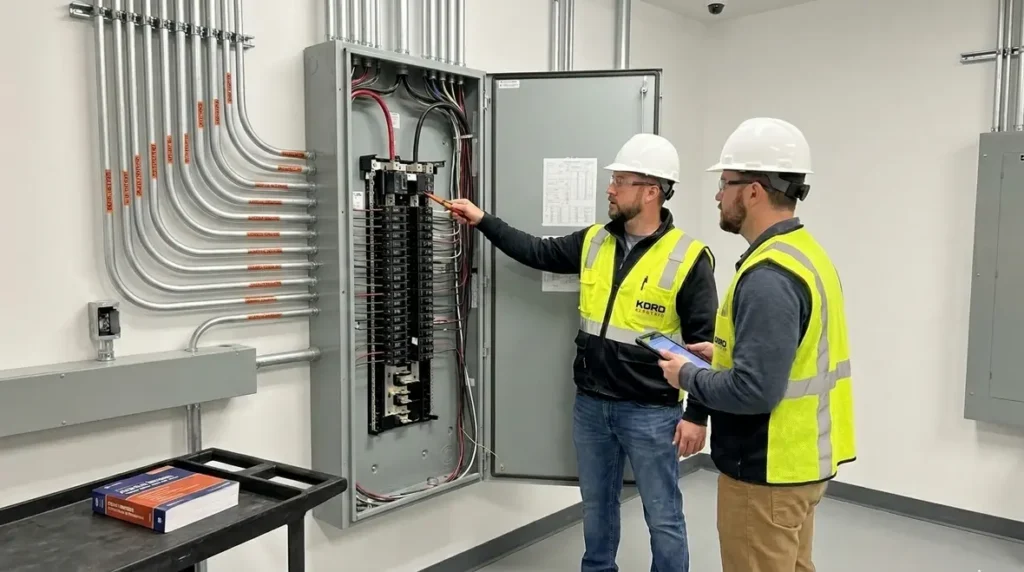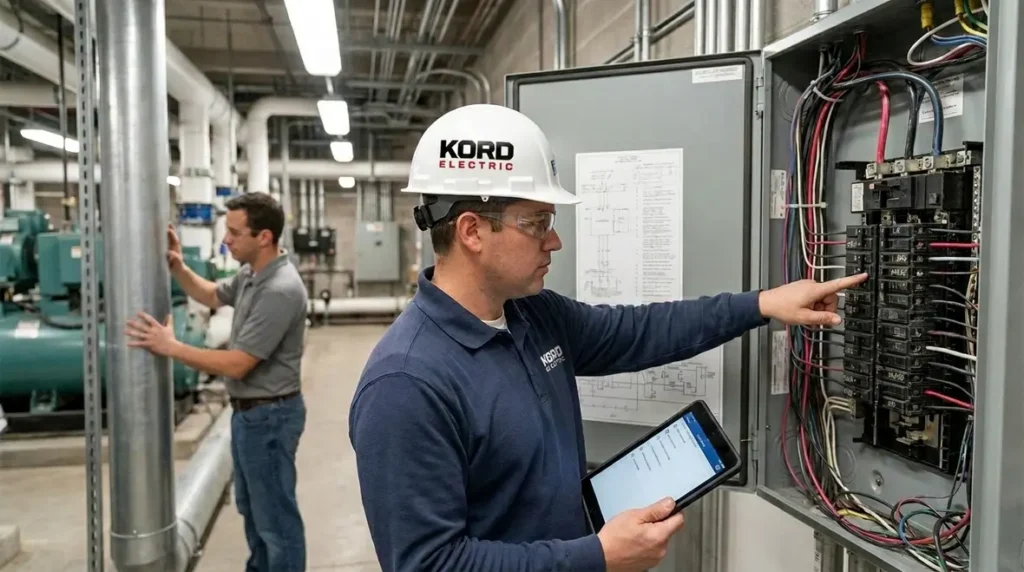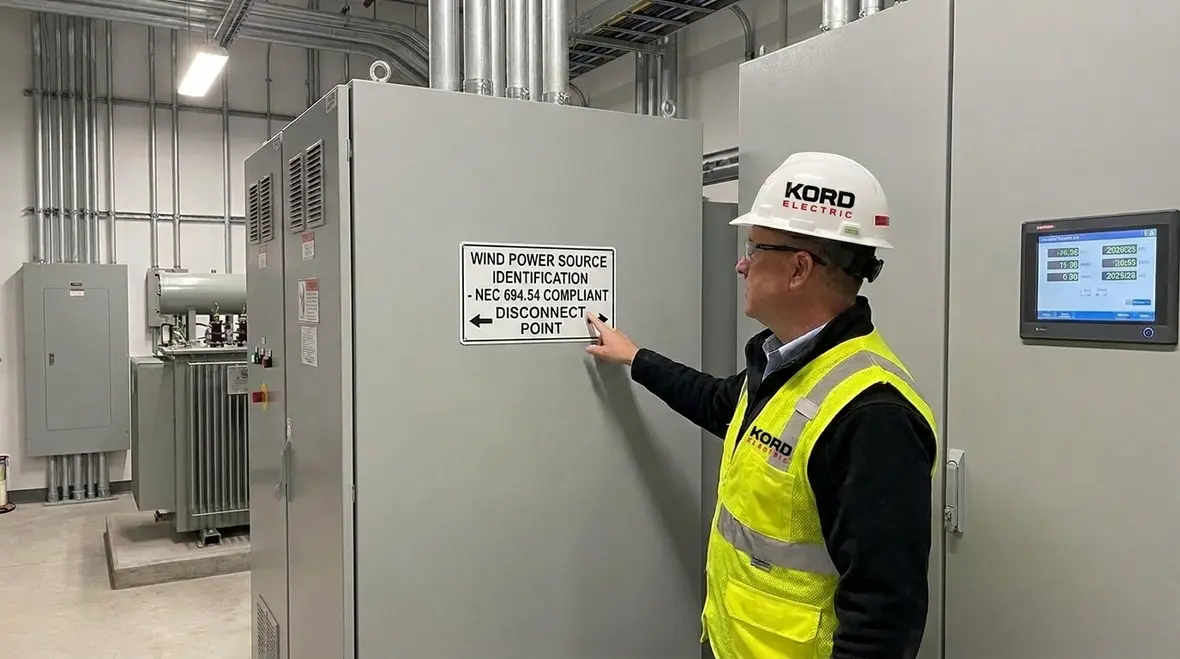
NEC Section 694.54 Wind Power Source Identification
NEC Section 694.54 wind power source identification: what commercial and industrial teams must do first
When wind energy shows up at a facility, we do not treat the wiring as a “nice-to-have.” Instead, we make the first call to safety and clarity. In the NEC Section 694.54 wind power source identification, the code focuses on making it clear where the wind power source begins, where it connects, and what service personnel must recognize before they touch anything. That matters in commercial and industrial buildings because the system may include multiple power paths, maintenance access points, and staff who do not work on wind every day.
At Kord Electric, our expert service staff walks teams through what the identification requirement really means on the ground. Then, we help them avoid the kind of “who wired this?” moment that no one wants, unless you are watching a sitcom and the plot demands confusion.
Why identification rules prevent real-world hazards
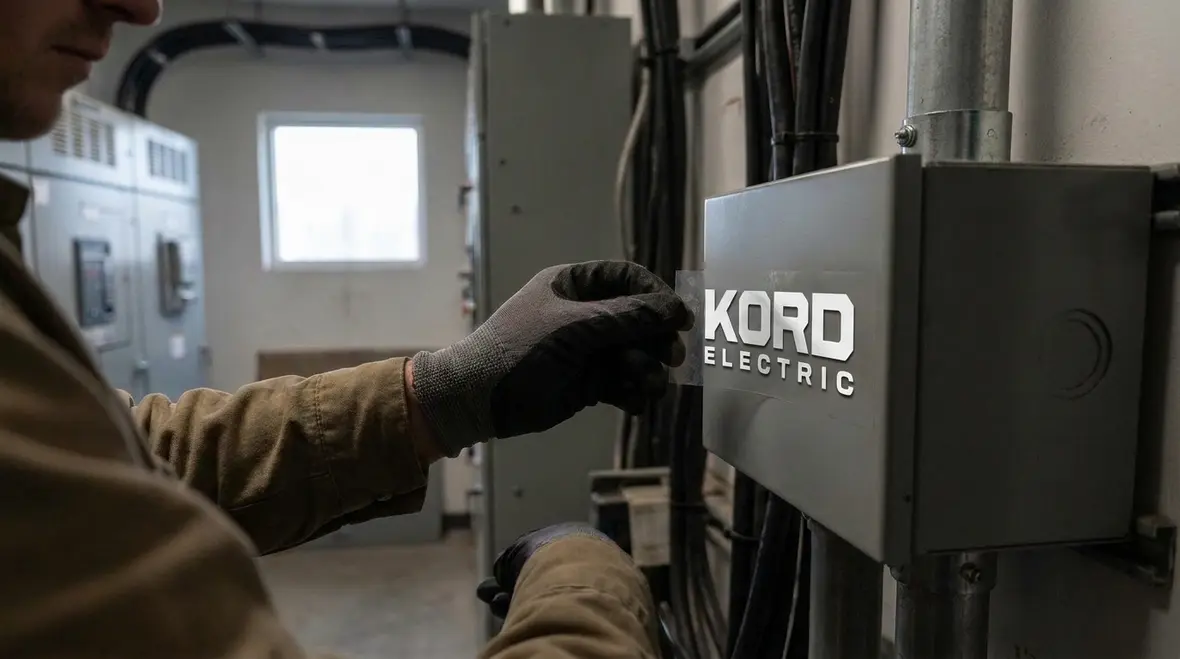
Electrical problems rarely start with a dramatic explosion. More often, they begin with uncertainty. Someone arrives for maintenance, follows a diagram, sees mismatched labels, and assumes the markings must be old, wrong, or just “decorative.” And then, equipment and people pay the price.
We plan around how crews actually work. That is why wind power source identification supports safe operation across shift changes, contractor swaps, and emergency response. If the facility serves critical loads, the margin for error shrinks fast. Therefore, clear identification helps ensure that workers can verify the system state and take the right steps before they disconnect, test, or restore power.
Our technicians explain the logic behind the markings in plain terms, not in code-speak. Even so, we still connect the dots to the National Electrical Code updates and the way enforcement typically happens during inspections. For deeper context on how the NEC shapes everyday electrical work, many facility teams also review our resource on Understanding NFPA 70: The National Electrical Code Explained for 2026, then apply those concepts directly to wind source identification.
How the NEC organizes wind systems and what you should map on site
Commercial and industrial facilities usually treat distributed generation like a building system, not a one-off project. As a result, teams must map how wind generation ties into the rest of the electrical network. We help our clients build that map before the first panel cover comes off.
Here is how we approach it:
- Locate the wind source boundaries: identify where generation originates, where the output enters the electrical distribution system, and where the interface points sit.
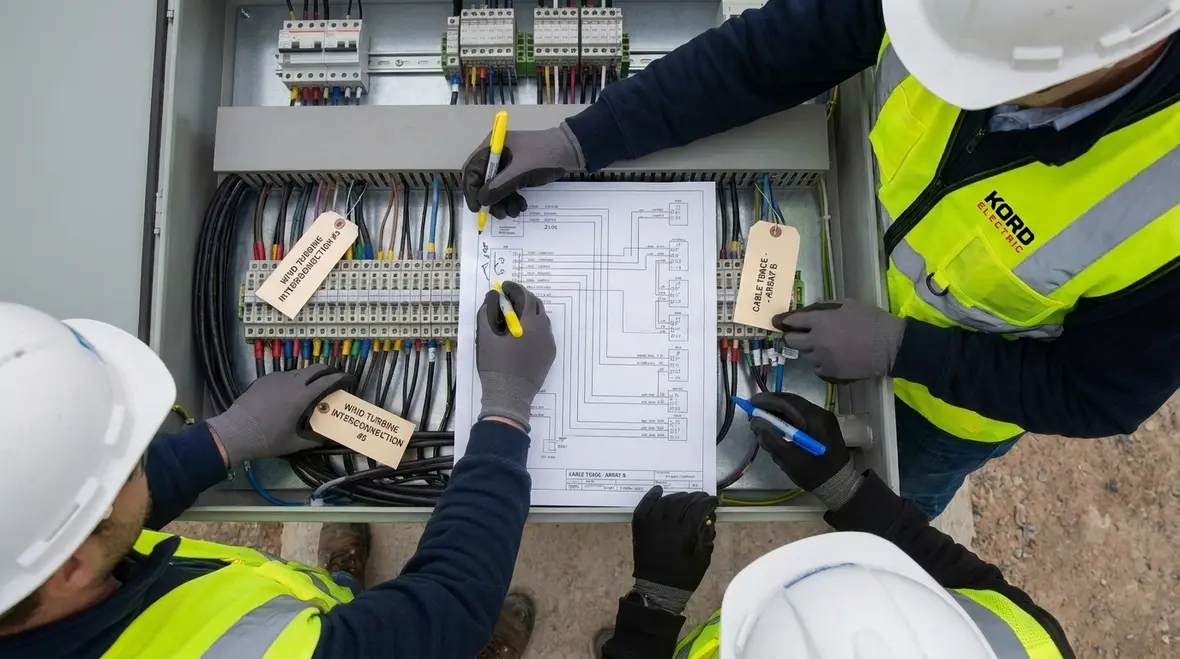
- Trace interconnections: document how the wind source connects to inverters, transformers, switchgear, and protection devices.
- Verify labeling zones: confirm that identification appears at the equipment people actually reference during service.
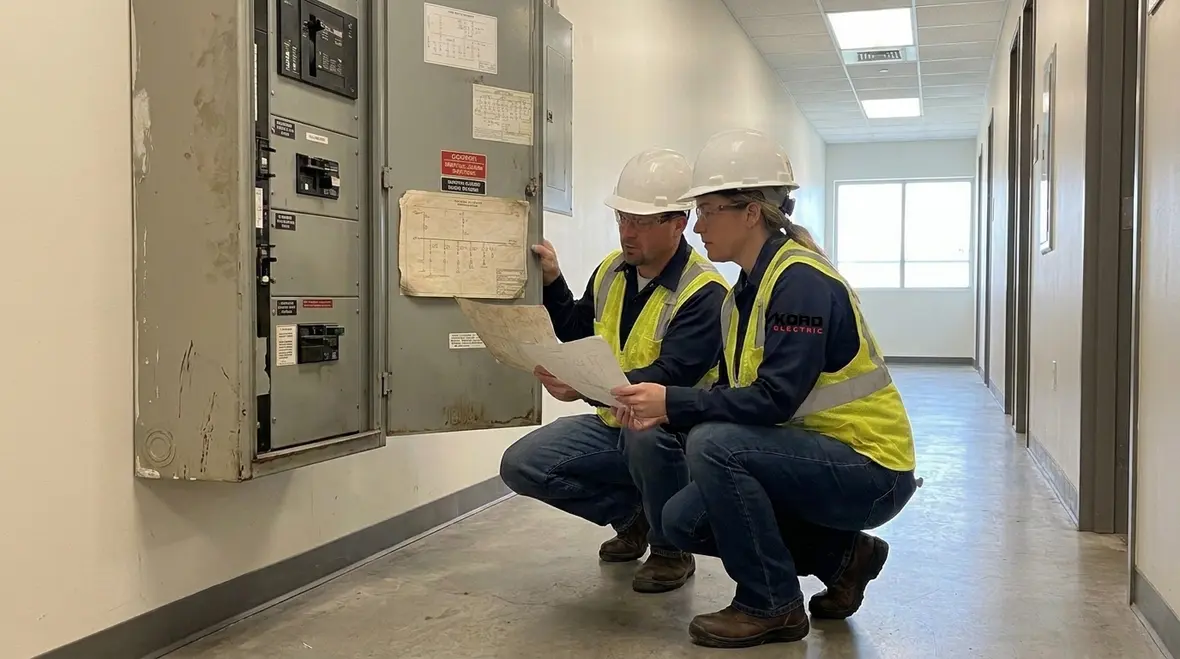
- Cross-check one line diagrams: ensure the on site reality matches the drawings, because “the drawing says so” does not keep anyone safe.
Next, we align those findings with NEC Section 694.54 wind power source identification expectations. In practical terms, that means we treat identification as part of the system layout and not as a sticker added at the end. Our technicians show staff where the labels must guide decisions during maintenance and fault response, so the facility does not rely on memory or guesswork.
Marking, labeling, and field verification that inspections actually reward
Many facilities add labels late in the project. Then the labels arrive with gaps, typos, and inconsistent wording. The field team then spends extra time chasing clarity, and the inspection team notices the mismatch right away. We aim to prevent that cycle.
Our expert service staff uses a simple rule: if a person can stand next to the equipment and understand the wind power source connection without a scavenger hunt, the labeling works. Otherwise, we revise.
During verification, we also check the physical reality. That includes:
- Visibility: labels should be readable without moving hazards or removing too many covers.
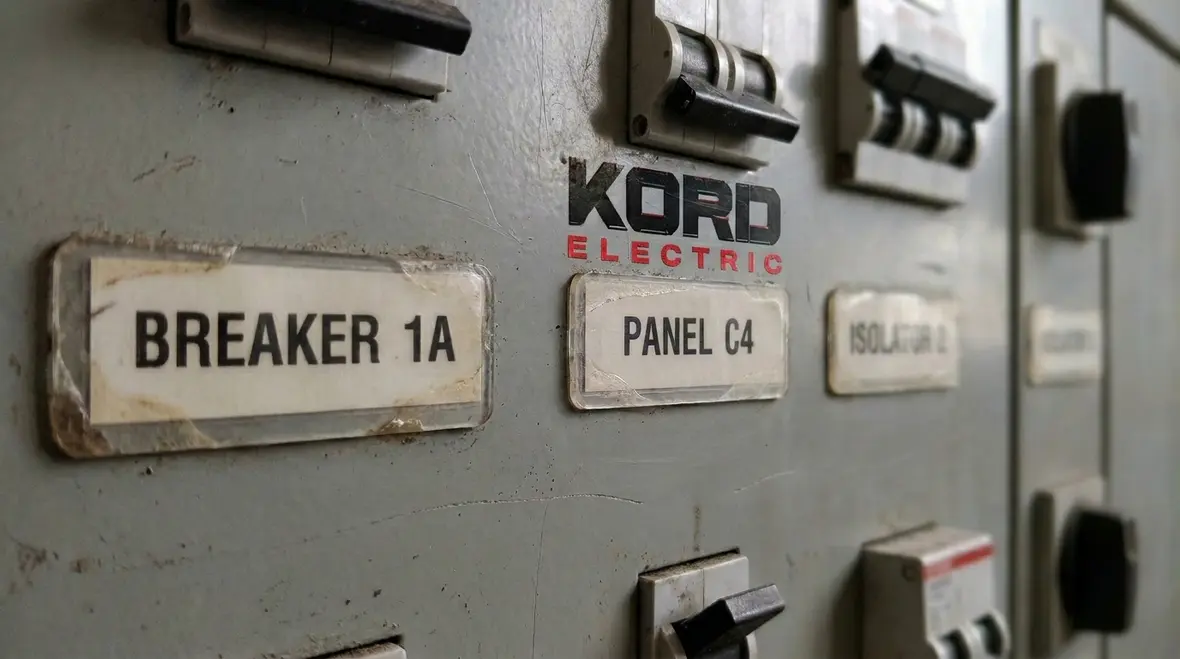
- Durability: markings must survive the facility environment, including vibrations, cleaning cycles, and weather exposure when applicable.
- Consistency: naming conventions should match drawings and operational procedures.
- Placement: the label should appear where the decision happens, not where the electrician once stood.
If you have ever tried to read a blurry label while a manager is asking, “How long will this take?” you know why we take this seriously. We also coordinate with facility leads so operational steps stay aligned, especially when the wind power system ties into larger building loads and controls.
Coordinating with fire and emergency planning across buildings
Commercial and industrial sites rarely operate in isolation. Electrical systems connect with fire safety plans, emergency shut down procedures, and on site response workflows. Therefore, wind power identification should support those workflows, not confuse them.
In our work, we coordinate with the broader safety mindset used by the fire and emergency ecosystem. We make sure the labels help responders and maintenance crews understand what sources may be present and where the wind power connects. That coordination supports faster, safer actions during abnormal events.
Also, we respect how fire and emergency planning groups think. They need quick, dependable recognition. In the same way that smoke alarms should not depend on your phone flashlight, identification should not depend on someone remembering which switch goes where. We design the labeling and documentation so teams can follow the process calmly, even under pressure.
And yes, we understand that safety meetings can sound like a motivational poster. But the day something goes wrong, safety posters stop being funny. So we help clients make the plan real.
Working with NEC updates and keeping documentation aligned
Electrical codes evolve, and our client teams need documentation that stays current. We do not treat compliance like a one-time box check. Instead, we build a workflow that keeps the electrical record aligned with the facility’s configuration.
Here is what we do when we support commercial and industrial projects:
- Review the system scope: we confirm the wind power source features, the interconnection points, and how the facility expects to operate the equipment.
- Check code alignment: we compare labeling and documentation needs to the current approach under NEC guidance, including how identification supports safe handling.
- Update drawings: we adjust the one line diagrams and equipment schedules so they match the installed reality.
- Train the teams: we explain what the identification means for routine work, lockout tagout steps, and emergency response.
Our goal remains straightforward. We want facility staff to read the identification and act correctly the first time. That reduces delays, prevents rework, and supports safer maintenance cycles. If your facility manages multiple buildings or has recurring contractor visits, consistent documentation becomes even more valuable.
Some owners treat documentation like clutter. We treat it like a map. Without it, you end up driving in circles, and no one wants that during an inspection.
Commercial and industrial implementation plan from Kord Electric
We know this topic can feel technical. So we turn it into a clear plan for facilities that run critical operations. At Kord Electric, our approach stays practical and focused on major property buildings, commercial sites, and industrial environments.
Here is the implementation path we commonly follow:
- Site walkthrough and system review: our technicians examine the wind system layout, connection points, and how staff accesses the equipment.
- Identification strategy: we decide what needs to be labeled, where labels must be placed, and how staff should interpret them.
- Label and document updates: we support updates to equipment schedules and field documentation so the facility has one consistent story.
- Field verification: we check readability, durability, and placement before sign off.
- Team briefing: our expert service staff explains the “why” behind the identification so your teams do not just follow instructions, they understand them.
As a result, the facility gains a safer maintenance routine and clearer emergency workflows. And if you are thinking, “We already have labels,” we usually help verify whether the labels actually guide the right decisions. Because sometimes the labels exist, but they do not help. Like a warning sign that points toward the wrong exit.
For facilities in the region that want this mapped into everyday operations, our team also connects wind source identification with broader reliability planning. That includes how labeling interacts with backup power, surge protection, and load management strategies that keep commercial buildings steady during abnormal events. When you are ready to align your wind generation with the rest of your electrical system, our Los Angeles County electrical services team can coordinate the full picture, from code interpretation to final inspections.
FAQ
Conclusion and call to action
Wind power can support major facilities, but only if your electrical identification supports safe decisions. We at Kord Electric help commercial and industrial teams apply NEC Section 694.54 wind power source identification in a way that matches the real equipment, the drawings, and the way people work on site. If you want a calm, inspection ready approach with technicians who explain things clearly, contact us to schedule a review. We will map the system, confirm the labels, and help your team move forward with confidence.
If your facility wants to coordinate wind power labeling with broader NEC compliance, documentation, and day-to-day operation, our commercial and industrial specialists can help you connect this work with your overall electrical strategy, from normal operation through emergency events.