
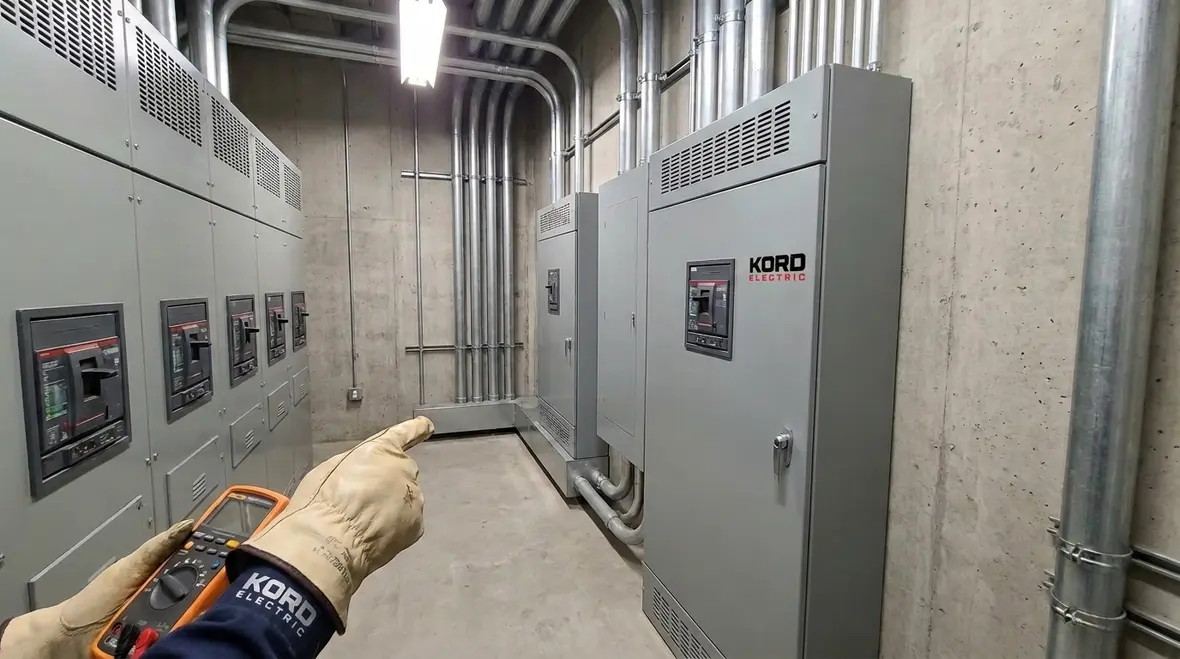
NEC Service Overcurrent Protection in 230.90 Explained
In commercial and industrial facilities, we do not leave safety to “it should be fine.” That is why our team at Kord Electric focuses on NEC service overcurrent where required based on NFPA 70 Section 230.90, which tells us where service overcurrent protection must be provided. Even so, we understand that codes can feel like a mystery novel written by an electrical contractor who never sleeps. Therefore, our technicians and expert service staff break it down in plain language, then apply it to real-world equipment schedules, utility service setups, and coordination plans.
Next, we walk through what Section 230.90 actually requires, how inspectors tend to look at it, and how proper design choices reduce nuisance trips and protect expensive gear. And yes, we will also keep a few jokes in the mix, because safety should never feel like punishment.
Where Section 230.90 requires service overcurrent protection
Section 230.90 sits inside Article 230, which deals with service conductors and equipment. In general terms, it addresses the places where the code expects overcurrent protection at the service, rather than only at downstream panels. In other words, the code wants the service equipment to open the circuit when faults happen in a way that protects the building and its wiring.
Now, the key move in 230.90 is that it ties the requirement to specific setups involving the service equipment and the electrical path from the utility. Consequently, the answer is not “always,” and it is not “never.” Instead, it depends on whether the system design includes protection at the service location and whether other devices provide adequate protection for the service conductors.
At Kord Electric, our expert staff reviews the one-line diagram, then checks equipment ratings, available fault current, and the expected coordination between upstream and downstream devices. If a system needs service-side overcurrent protection, we build it into the plan early, not after procurement. That approach avoids the classic scenario where someone says, “We can swap it later,” and then reality shows up with a procurement lead time and a permit clock.
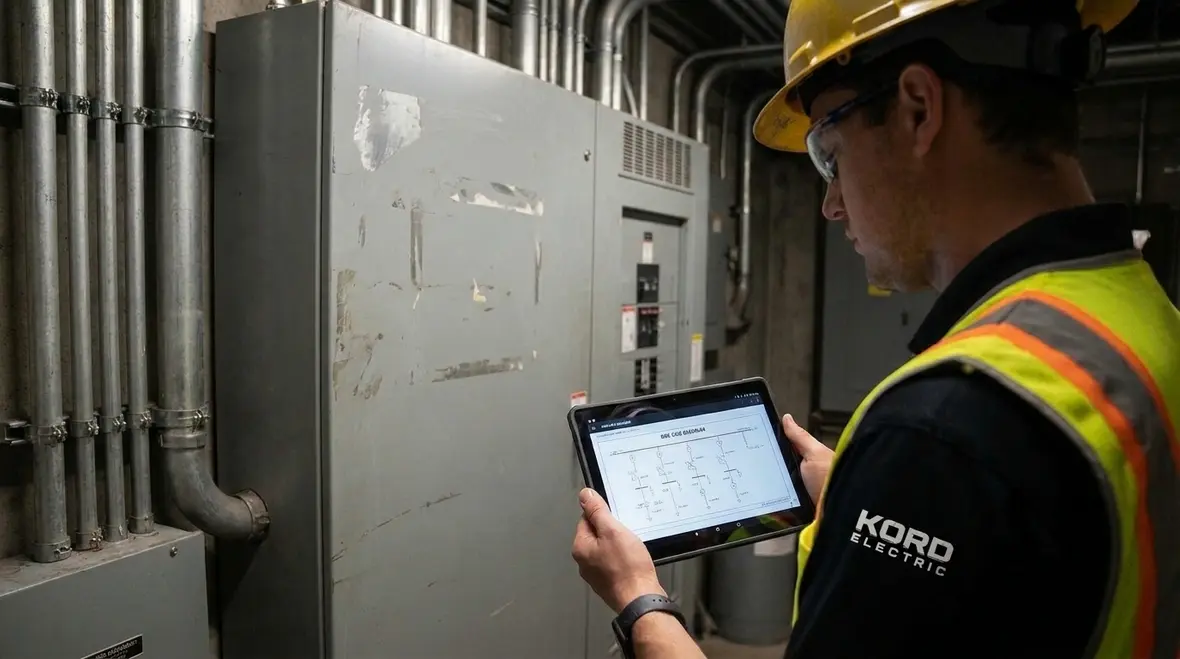
In many commercial and industrial buildings, this early planning ties directly into broader NEC understanding work. For teams that want a bigger picture view of how NFPA 70 shapes modern electrical design decisions, our resource on the National Electrical Code explained for 2026 gives useful context before diving into service-level details, so facilities see how Section 230.90 fits into the overall NEC roadmap and not just a single project line item.
How utilities, service conductors, and fault current shape the decision
Commercial and industrial sites often have multiple loads that start at the same time, such as HVAC systems, pumps, conveyors, compressors, and production equipment. Therefore, fault current levels and available short circuit current can be high, and those numbers matter. When faults occur, the system must interrupt quickly and safely, with an outcome that meets code intent.
In practice, we connect the dots between:
- Utility service characteristics, including transformer type and upstream protection
- Service conductor length and type, because impedance influences fault current
- Service equipment ratings, including switchgear, service disconnects, and service panels
- Coordination needs, so downstream devices clear faults without leaving upstream gear exposed longer than necessary
Next, our technicians explain that even when a building has protective devices elsewhere, that does not automatically satisfy the need at the service. For example, if the service conductors run through areas where damage would be unacceptable, the code can drive the expectation for protection right at the service equipment. Put simply, we protect the “feed” before it becomes a problem.
Also, inspections often focus on whether the design shows a clear path to interruption and whether the service equipment arrangement matches the plan. So, we document the logic, not just the hardware. That is how teams avoid back-and-forth that delays energization.
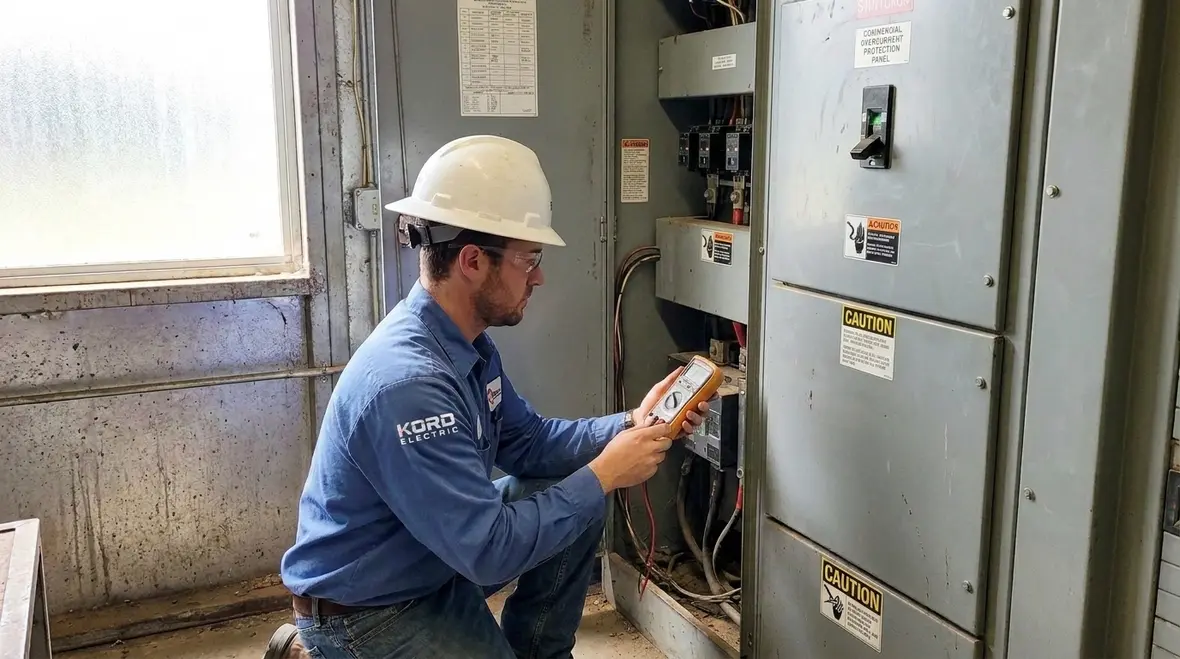
On complex projects, these reviews tie into broader load and protection planning. When we apply NEC service overcurrent where required, we often coordinate it with calculated load determination and data-driven design so that breaker sizing, conductor selection, and short-circuit ratings all reinforce each other instead of fighting for space on the drawing set.
NEC guidance and coordination: keeping protection selective and reliable
Section 230.90 does not live alone. It works alongside other NEC concepts that support safe interruption and coordination. When a system is coordinated, a fault should clear at the lowest practical level, with upstream devices acting only when needed. Consequently, a good design reduces downtime and prevents damage to equipment that should remain in service.
Our approach in major properties and industrial facilities typically includes:
- Short circuit and coordination study planning, so the overcurrent protective devices operate as intended
- Device selection, including proper ampacity and interrupting ratings
- Time-current curve review, so the system clears faults in sequence
- Arc flash risk awareness, because fast clearing and correct device choice help manage hazards
Now, one thing we tell our customers is that coordination is not a one-time checkbox. Over time, loads change. A production line expands. A new chiller goes in. A tenant buildout adds panelboards. Therefore, we encourage periodic review of the system, especially when major electrical modifications happen.
And yes, electrical coordination is like planning a good movie scene. If everyone rushes to act at once, the story falls apart. In electrical systems, we want the right device to “take the lead” at the right moment.
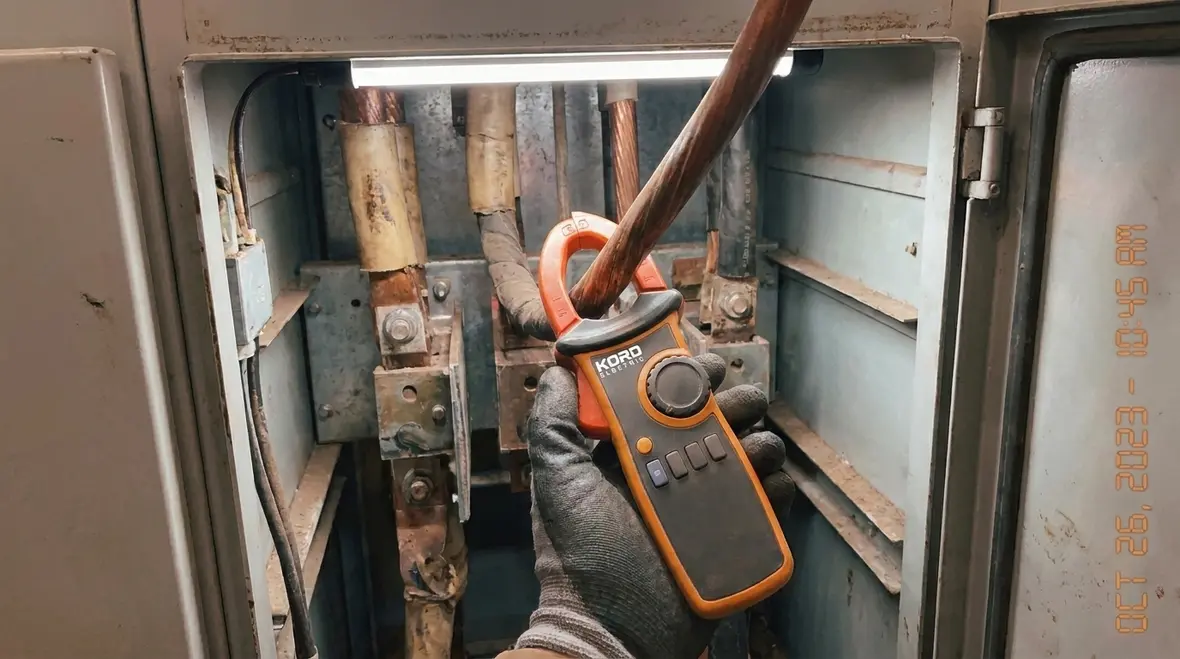
For facility leaders who like seeing how this fits into a broader planning lens, resources that walk through NFPA 70 foundations and 2026 NEC direction help connect service overcurrent decisions with upgrades, surge protection, emergency power, and data center reliability. That way, a single breaker choice does not become the weak link in an otherwise well-planned electrical storyline.
Common pitfalls we see in commercial and industrial service designs
Even careful teams sometimes miss details. In the field, our technicians and service staff notice recurring issues that can lead to failed plan reviews or delayed field corrections. And because you are building for uptime, not drama, we address them early.
Here are frequent pitfalls tied to service overcurrent expectations under NEC Article 230 practices:
- Assuming downstream protection covers the service without verifying the code-driven requirement at the service point
- Mismatched equipment arrangements, such as service disconnect layouts that do not align with the one-line diagram
- Interrupting ratings that do not match the available fault current, which can force costly replacement
- Incomplete coordination documentation, so the design cannot show selective operation
- Late changes during construction, where conduit routing or equipment swapping shifts the design basis
To reduce these risks, we keep communication clear between design teams, facility leadership, and the electrical contractor side of the project. Furthermore, we explain the “why,” not just the “what.” When stakeholders understand the logic, decisions get faster and more accurate.
We also remind teams that NFPA 70 is a living standard. If your facility works under current rules, you still need to plan upgrades carefully when code editions change. For background on how NEC updates get framed for major projects, our team points customers to the Kord Electric and Kord Fire resources that summarize NEC themes and planning realities.
Another subtle pitfall appears when teams treat NEC service overcurrent where required as a checkbox instead of part of a coordinated strategy. When we align service protection with surge mitigation, emergency power design, and data center uptime strategies, the overall system behaves better during faults, switching events, and utility disturbances.
What our expert service teams do to implement the requirement
When a facility team needs NEC service overcurrent where required addressed, we do not approach it like a random guess. We approach it like a process. Our Kord Electric technicians start with the building’s service story, then we translate code requirements into a practical installation plan.
Typically, we run through these steps for commercial and industrial facilities and major property buildings:
- Review of service equipment and one-line, including meter, switchgear, service disconnects, and feeders
- Verification of service conductor routing and protection scheme, so the design matches the physical layout
- Fault current and device capability checks, so interrupting ratings and ampacity align
- Coordination strategy, so devices clear in the intended sequence
- Field readiness checks, so the construction team installs what the design expects
Additionally, we talk through options with the facility team, such as whether to adjust equipment locations, change protective device types, or revise coordination settings. We do this because the best electrical plan should protect people and equipment, while also supporting maintenance realities.
And if you are thinking, “This sounds like a lot,” you are correct. Electrical safety is not a “wing it” hobby. It is more like a well-rehearsed production in a very strict theater. The show must go on, and the audience must go home safe.
FAQ: NFPA 70 Section 230.90 and service overcurrent
What does “NEC service overcurrent where required” mean in real projects?
In real projects, it means the electrical design must place the right overcurrent protection at the service location when the code requires it. We translate that into equipment choices and coordination settings that match the utility service, service conductors, and building operating needs.
Then, we make sure the installation aligns with the plan, so the facility does not get stuck with changes during testing and energization. The goal stays simple: protect people, protect equipment, and keep the lights on without surprise interruptions.
For teams planning larger upgrades or new facilities, this practical interpretation often connects with broader NEC education. Articles that explain NFPA 70 in everyday language help non-engineers follow along when we discuss why a specific breaker frame, fuse class, or service disconnect location matters for a particular building.
Ready for a code-accurate service protection plan?
Kord Electric helps commercial and industrial facilities apply NEC and NFPA guidance with clear documentation and expert field execution. If you need NEC service overcurrent where required reviewed for a new installation, retrofit, or compliance update, our technicians walk the site plan, one-line diagram, and equipment selection through step by step. You keep your timeline, we protect your assets, and your electrical system behaves like it was designed on purpose.
For facility leaders across Southern California, including those who rely on comprehensive Los Angeles County electrical services, this approach turns NEC language into decisions that support uptime instead of adding friction to the schedule. When service protection, emergency power, and surge mitigation work together, the building is ready for both normal operation and the bad days you hope never arrive.
If you want a deeper dive into how this fits into the larger NEC picture, our educational resources on NFPA 70 and related code topics walk through how wiring methods, grounding and bonding, and overcurrent protection all share the same mission: keep people safe and keep operations steady.
Sources referenced for code context and NEC planning themes: Kord Electric blog on the National Electrical Code explained for 2026, Kord Fire NEC overview pages, and related NEC educational resources that connect Article 230 requirements to real-world commercial and industrial projects.


