
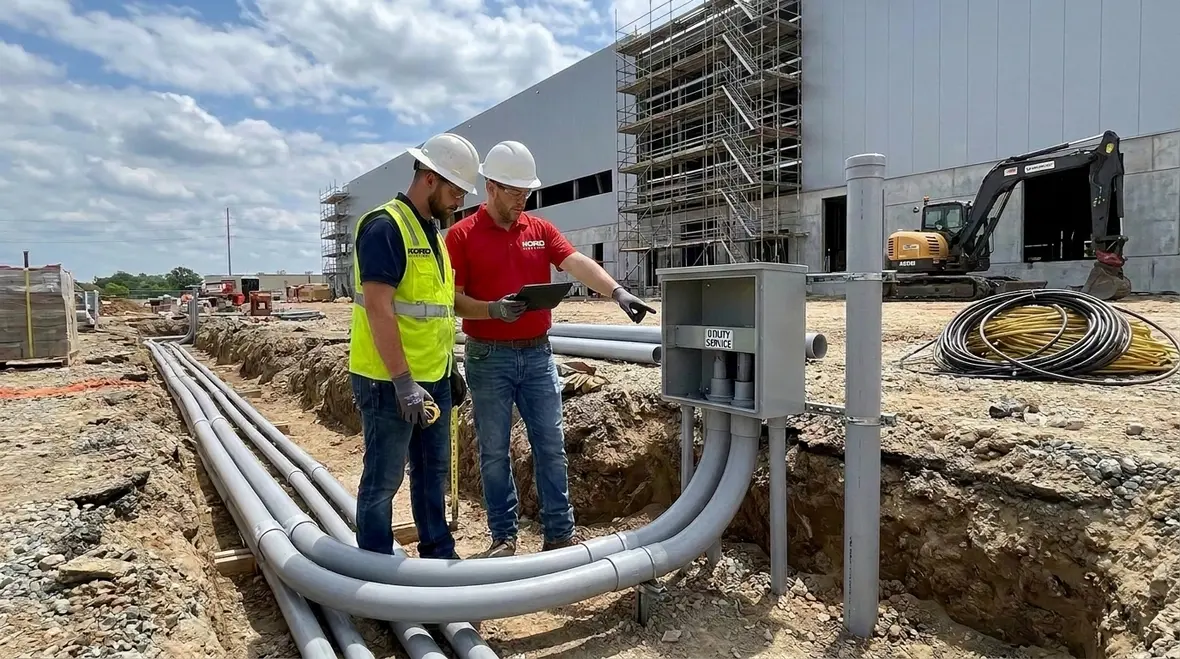
NEC Underground Service Installation: How We Install Underground Power the Right Way
At Kord Electric, we focus on commercial and industrial facilities, as well as major property buildings, because the stakes stay high and the schedule never stops. When we plan an NEC underground service installation, we start with the real-world goal: deliver power safely from the utility side to the facility with minimal risk, clear labeling, and protection that lasts. We follow the discipline found in NFPA 70 Section 230.30, and we back it up with jobsite experience, careful material selection, and field checks that our technicians explain in plain language. In other words, we handle the “boring” parts before they turn into expensive parts, and yes, we have heard every horror story. If you have, too, then you already get it.
What NFPA 70 Section 230.30 requires for underground runs
NFPA 70, also known as the National Electrical Code, sets rules that keep people and equipment safe. In Section 230.30, we find the core direction for underground service installation, including how to build, protect, and route the service conductors so they do not suffer damage over time. However, this section is not just a checklist. It is a design philosophy. First, it pushes the installer to prevent physical damage. Then, it emphasizes protection against moisture and corrosion where conditions demand it. Finally, it requires methods that support reliable service delivery.
Our expert service staff often tells customers the same thing: code requirements work best when they are built into the plan early. That means the conduit routing and trench details happen before someone “just quickly” changes a path after the excavator leaves. And when that quick change happens, it usually happens with a laugh, because at the time everyone thinks it is fine. Later, everyone finds out it is not funny.
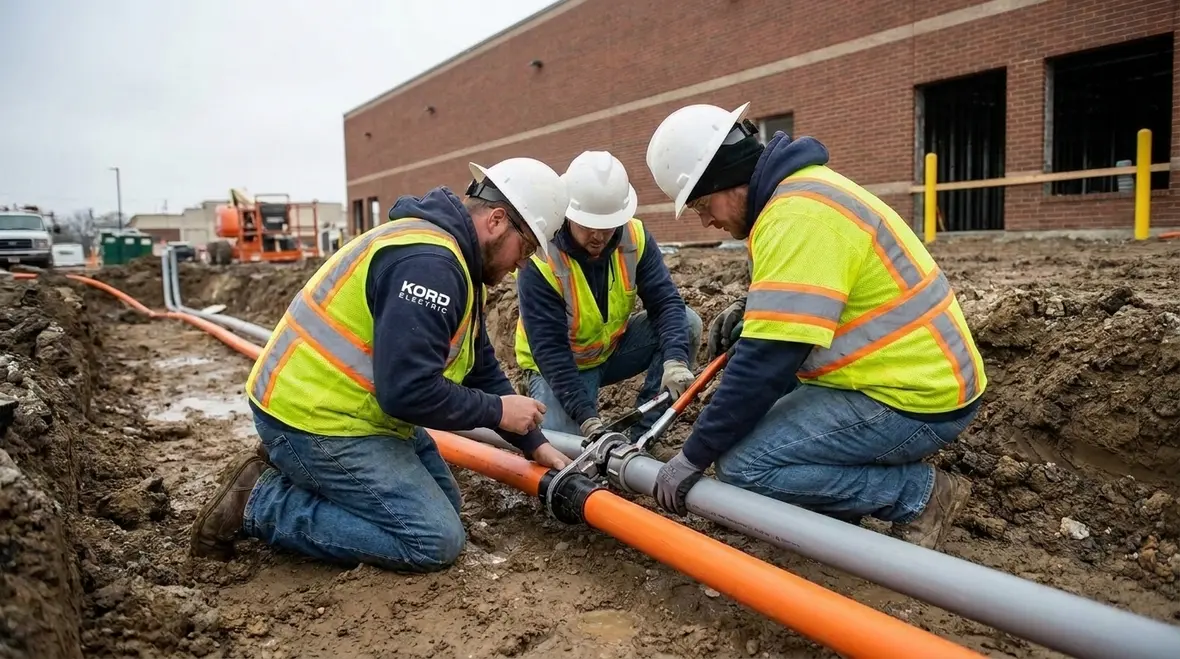
Planning the route: depth, cover, and protection that holds up
Underground work starts long before we touch the conduit. At Kord Electric, we plan the route with the site in mind, and we coordinate with civil teams so the excavation matches electrical needs. Next, we verify depth and cover requirements for the specific wiring method we use, because cover acts like a shield. After that, we consider future site activity, such as loading zones, landscaping, and equipment movement. If a facility manager expects a parking expansion, we plan for it now, not after the fact.
Then we think about protection. Underground conduits and raceways protect conductors, but they do not magically protect themselves. For example, a conduit run that is too shallow risks damage from normal wear. Meanwhile, a poorly protected segment near a structure can take on water or suffer impact. So we use jobsite checks and we document what we do, and we explain the “why” to the facility team. That way, people do not ask later why something had to be installed the way it was. If they do ask, we answer calmly, like we are being paid to teach, which we are.
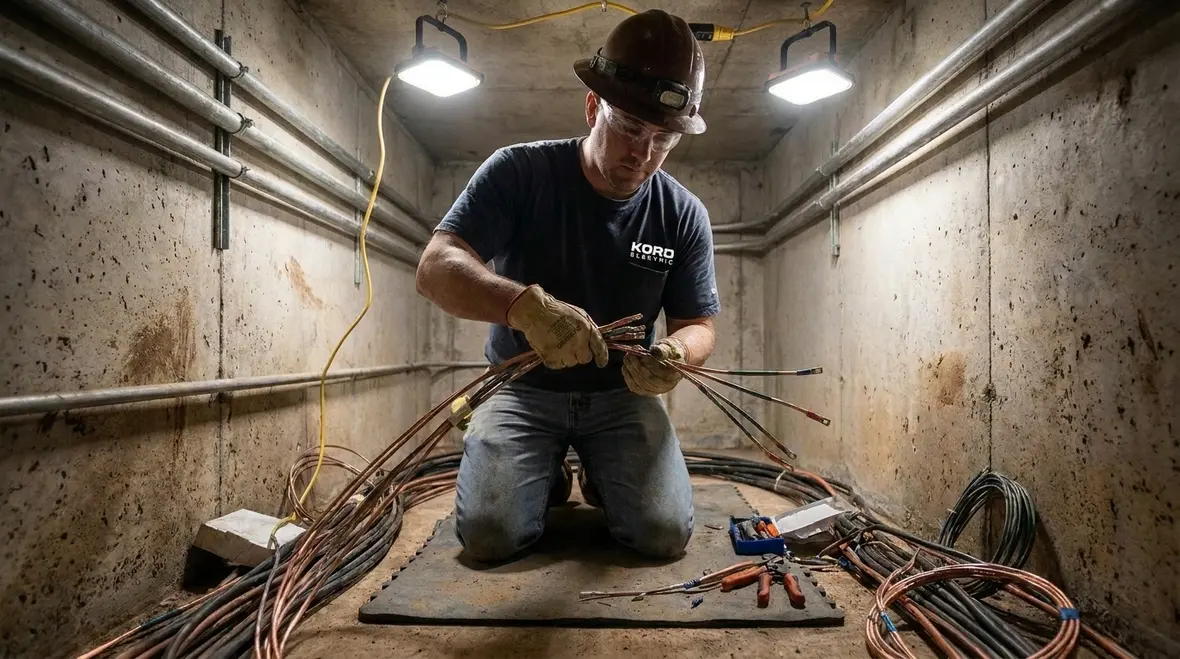
Conduit and conductor choices for commercial and industrial reliability
The best plan fails when equipment selection ignores reality. In a major building, we expect long life, consistent performance, and clear traceability. Therefore, we choose conduit and conductor methods that match both the environment and the service demands. To start, we confirm the required wiring method and conductor type for the installation approach. Then, we account for conditions like moisture, corrosive soil, and temperature swings, because underground does not stay “neutral.”
Our technicians also consider the practical side of installation. Conduit that is too difficult to pull can lead to damage during pulling, and damaged insulation does not improve with optimism. So we verify pulling access points, support spacing, and bend radius needs. As a result, we reduce stress on conductors and avoid rework.
For many commercial and industrial facilities, we also coordinate installation so the service path supports the building’s electrical design. That reduces the chance of improvising in the field. And if you ever see someone “improvise” with a conduit transition at the last moment, imagine a TV detective saying, “Well, case closed,” right before the real clue appears. The clue will show up, just later.
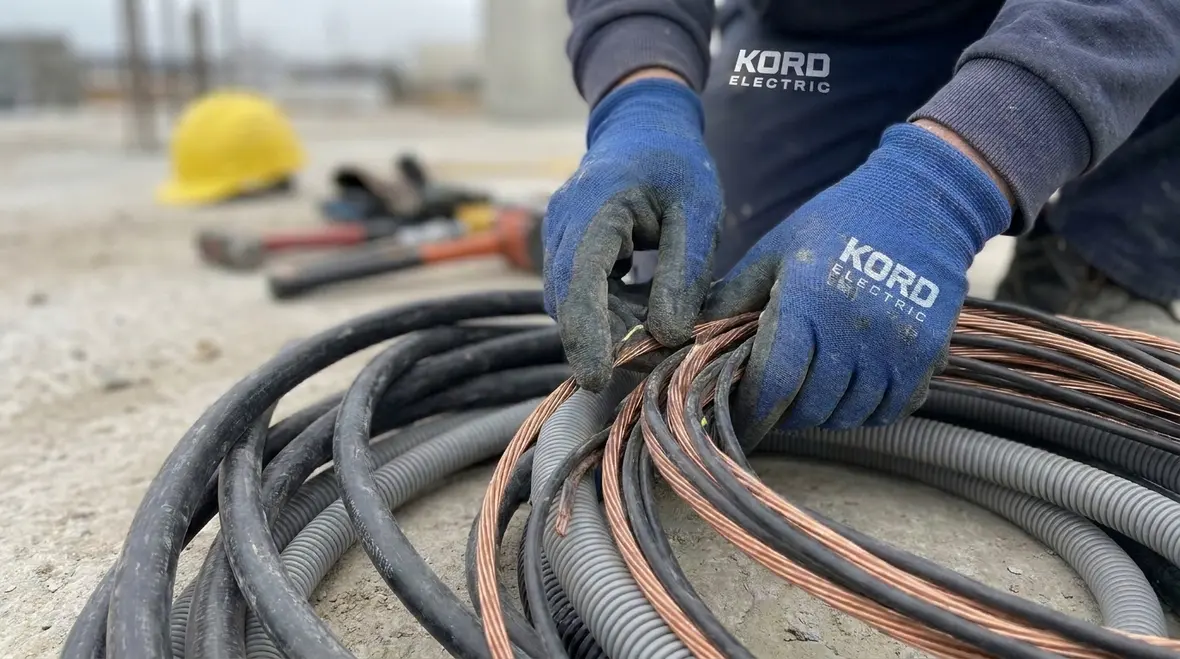
Connections, splices, and termination practices that prevent surprises
Underground segments introduce a specific risk: a hidden weakness can stay hidden until it fails. Therefore, we treat connections, splices, and terminations as critical work, not as side work. We follow NFPA 70 principles for how equipment should connect and how protection should hold. First, we plan where terminations occur so access stays safe and future maintenance remains possible. Next, we use the correct fittings and methods so mechanical and electrical performance stays consistent.
Then we focus on workmanship details that matter in real installations. That includes cleaning, proper sealing practices where required by the installation method, and correct torque or connection procedures based on equipment listings and manufacturer guidance. Afterward, we verify phase and continuity behavior where applicable, because testing helps catch problems before the utility energizes the service.
When our technicians explain these steps, they do it with the goal of clarity. We want facility stakeholders to understand that a good underground service installation is not just about digging a trench. It is about making each connection reliable enough to outlast the next few project phases. In other words, we build for tomorrow, not for today’s photos.
System protection, labeling, and inspection readiness
Even when the underground path is perfect, the system must remain protected as a whole. So we coordinate protection devices and grounding and bonding practices with the overall design. Meanwhile, we plan for compliance documentation so inspections feel routine rather than frantic. For commercial and industrial work, inspection readiness matters because downtime costs real money.
We also handle labeling with care. That may sound small, but clear identification supports troubleshooting, switching, and maintenance. If you cannot quickly find the right feeder or service section, you waste time and add risk. So we support a labeling approach that fits the facility’s electrical room layout and maintenance practices.
At this point, our team often references code guidance, including the way NEC resources explain the National Electrical Code as it applies to modern buildings. For a deeper dive into how we interpret and apply NFPA 70 across real projects, we also point facility teams to our guide on how to read NFPA 70 National Electrical Code, so stakeholders can see how design decisions connect to field practices. We also remind customers that local enforcement may add interpretation details, so we stay current and we coordinate early with the jurisdiction. And yes, we keep jokes light, because an inspector does not enjoy being treated like a sitcom character. Still, the job gets done with calm confidence.
Common mistakes we help facilities avoid
Commercial and industrial sites face recurring underground service problems. One mistake we see is last-minute route changes that conflict with planned cover, access, or protection. Another is mismatched conduit systems, where installers assume “all conduit is the same,” which is like assuming all coffee tastes the same. It does not.
We also see poor coordination between excavation and electrical scope. For instance, if the trench bottom gets disturbed or if rocks damage conduit during placement, the “hidden” damage can become a failure later. Then there is improper pulling practice, where force and speed replace careful methods. That can nick insulation and create future faults. Finally, inadequate testing and documentation leave the facility guessing, which is never a good business plan.
Our expert service staff addresses these issues by controlling the process steps, checking materials before installation, and validating the installation after placement. We also explain what we are doing and why, so teams can make informed decisions during the project. That communication reduces surprises, and it helps everyone keep moving.
Commercial and industrial jobsite coordination for smooth underground service work
Underground service installation rarely happens in isolation. It takes place alongside site construction, civil work, and often other electrical scopes like lighting pathways or building power distribution. Therefore, we coordinate with contractors and facility stakeholders to sequence the work so each team can do its job without stepping on the others.
We plan for access, staging, and safety. First, we confirm where materials enter the site and how crews move during trench work. Then, we set expectations for when conduits and service components will be placed, inspected, and covered. As a result, the project avoids delays caused by waiting on one missing element, the way a building schedule waits for one critical approval.
If the facility is part of a larger campus or a multi building property, we also consider how utilities interface across phases. Major property buildings demand consistency, so we plan for future expansions and planned upgrades. We want the underground path to support growth, not block it.
Because underground service work often ties directly into broader distribution and reliability planning, many facilities pair this kind of project with the strategies covered in our resources on data-driven electrical design and downtime prevention. When you connect NEC underground service installation with the way your building is planned, maintained, and upgraded, you get a system that behaves more like a long-term asset and less like a mystery waiting to appear during your busiest season.
FAQ
Why Kord Electric is the team you want on site
We know commercial and industrial facilities run on reliability, and underground power needs more than luck. Our team follows NFPA 70 direction and handles NEC underground service installation planning, conduit selection, connections, testing, and documentation with disciplined workmanship. And we explain the process in plain terms so your facility team feels informed, not confused.
If you are planning a new build, upgrading a major property, or correcting a risky underground service path, Kord Electric can also connect your project with broader electrical planning resources, from guides on reading NFPA 70 to data-driven design for commercial and industrial facilities. For properties across the region, our dedicated Los Angeles County electrical services team supports everything from underground service work and distribution upgrades to maintenance and reliability planning, so your project gets field-proven crews alongside clear design and documentation.
When you are ready to move from sketches and ideas to a real plan in the ground, contact Kord Electric. We will come out, review the scope, and build a safe, NEC-aligned plan you can trust—one that keeps your service conductors protected, your inspections calm, and your operations supported long after the trench is covered.


