
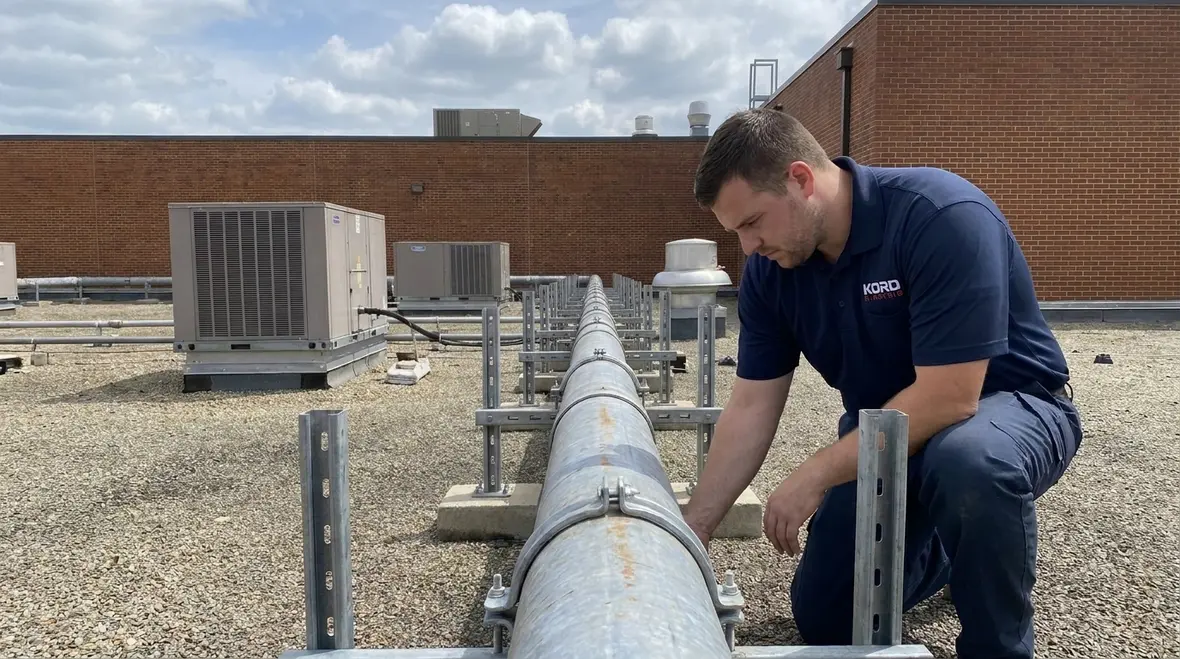
NFPA 70 Section 230.29 Supports Over Buildings by Kord Electric
When people talk about electrical systems, they often imagine a single switch and a single outcome. In the real world of commercial and industrial buildings, it takes more. That is why NEC supports over buildings matter. We at Kord Electric focus on the rules that keep service conductors safe, supported, and reliable as buildings get taller, busier, and more complex. In this article, our expert service staff and trained technicians explain what NFPA 70 Section 230.29 means in plain terms, and how we apply it on major property projects. You will see how the code approach reduces risk and supports inspections, while still allowing the job to move forward without turning your timeline into a long sitcom season.
NFPA 70 Section 230.29: what it protects in real installations
NFPA 70, which is the National Electrical Code, sets safety rules for how electrical wiring connects, runs, and stays in place. Section 230.29 focuses on service conductors and the way they get supported over buildings. In other words, the rule addresses what happens when conductors span from one structural point to another, while exposed conditions like wind, vibration, temperature change, and building movement still exist.
We treat this as more than paperwork. First, we confirm the conductor route and identify where support is required. Then we check that the support method matches the installation design and the expectations of inspection authorities. Finally, we document what we built and why. Our technicians do this carefully because service conductor failures are not a “minor inconvenience.” They can interrupt power and create hazardous conditions. And nobody wants an electrical system that behaves like a bad magic trick.
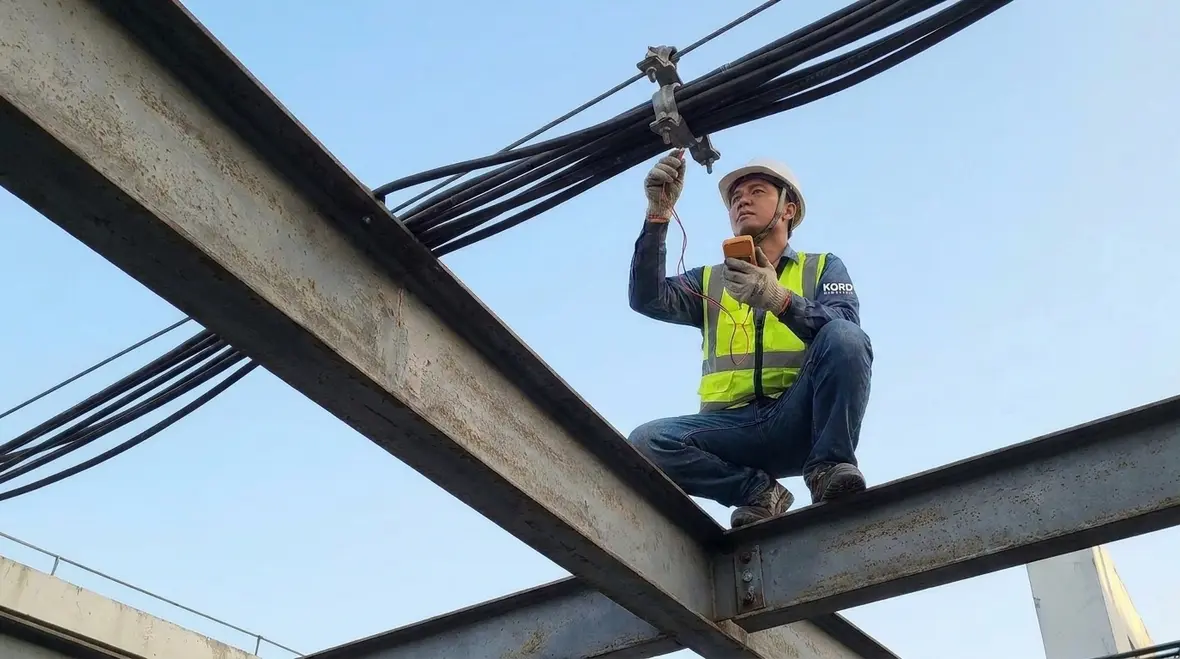
Where “over buildings” shows up on commercial and industrial projects
On major property buildings, conductors often run to service equipment, meters, switchboards, or transfer gear, and some parts may need to pass over building surfaces or across open spans. For example, you may see overhead runs between a utility interface and a service structure, or a portion of the service path that routes across a canopy, walkway structure, or structural opening.
At this stage, we remind our clients of something important: the code intent does not rely on guesswork. The installation must account for mechanical strength and stability. Therefore, we evaluate the span length, conductor size, and the physical setup at each support point. We also coordinate with the site team so the support design fits the facility layout, including future maintenance access. In practice, that means we plan early instead of installing supports after the field crew is already standing around wondering where the last hour went.

How service conductor support requirements work on the jobsite
Section 230.29 requires proper support of service conductors where they extend over buildings. The goal is to prevent undue strain and to keep conductors from sagging or moving in a way that can damage insulation or create unsafe conditions. When conductors move, connections can loosen, protective clearances can shrink, and reliability drops.
Our team approaches it in a step by step way. First, we identify the exact conductor location that qualifies as “over buildings.” Next, we verify the supporting hardware used for the installation. Then we confirm the installation method and spacing so the system maintains safe conditions under expected mechanical loads.
Also, we pay attention to the details that inspectors notice. That includes alignment, secure attachment, and the absence of improper substitutions. Our expert service staff explains these points in plain language because the best compliance is the kind a customer understands. When clients know what we are doing and why, the project runs smoother. And frankly, it keeps everyone from playing “code telephone,” where each person interprets the last person’s notes like it is a message passed under a door.
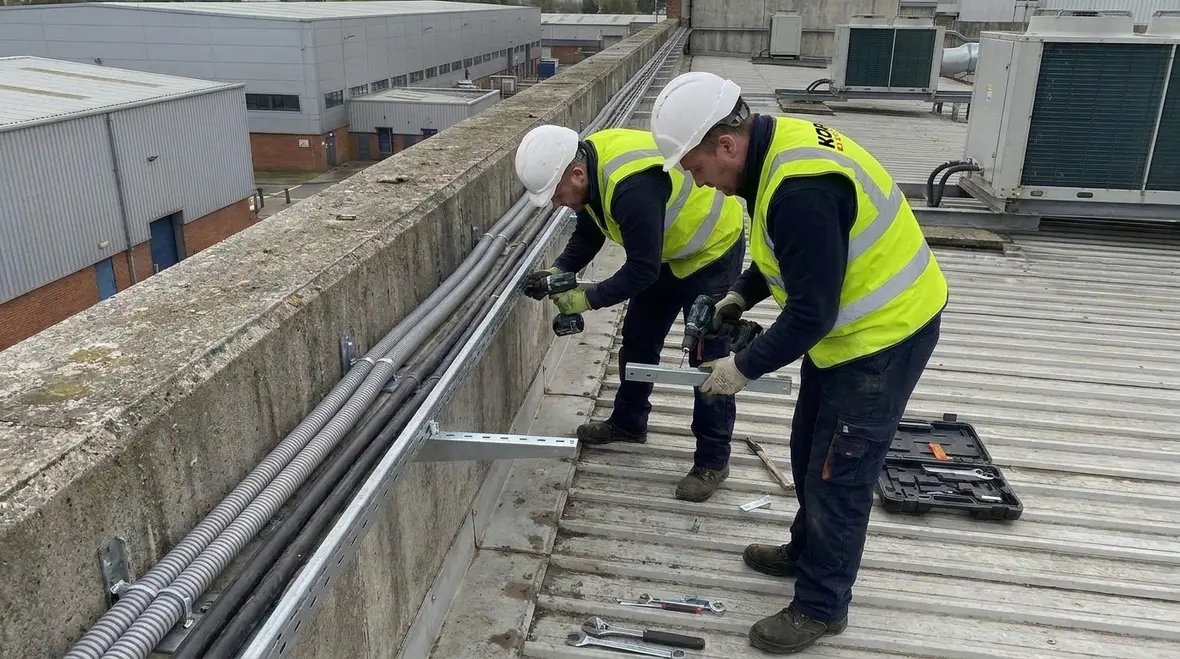
Clearances, sag, and mechanical strain: what inspectors look for
While Section 230.29 focuses on support, it connects to other code thinking about safe spacing and protection from mechanical stress. Inspectors commonly evaluate whether the conductor run maintains safe clearance and whether the installation shows signs of strain. If conductors sag too much, they may approach surfaces they should not contact. If supports are weak or misapplied, the conductor can move more than it should when wind or vibration acts on the run.
In commercial and industrial sites, there are also added realities. HVAC structures, signage, loading dock equipment, and roof accessories create a busy environment. Therefore, we coordinate the route and support plan with the electrical layout and the site constraints. Additionally, we consider how traffic and maintenance activities interact with the overhead path.
Our technicians often describe it like this: the support system is the “quiet manager” of the electrical run. It works in the background. Then, when the weather changes or the building settles, it keeps the conductors from acting like loose cables in a streamer party. This is also where our documentation helps, because it provides a clear record of the choices we made during installation.
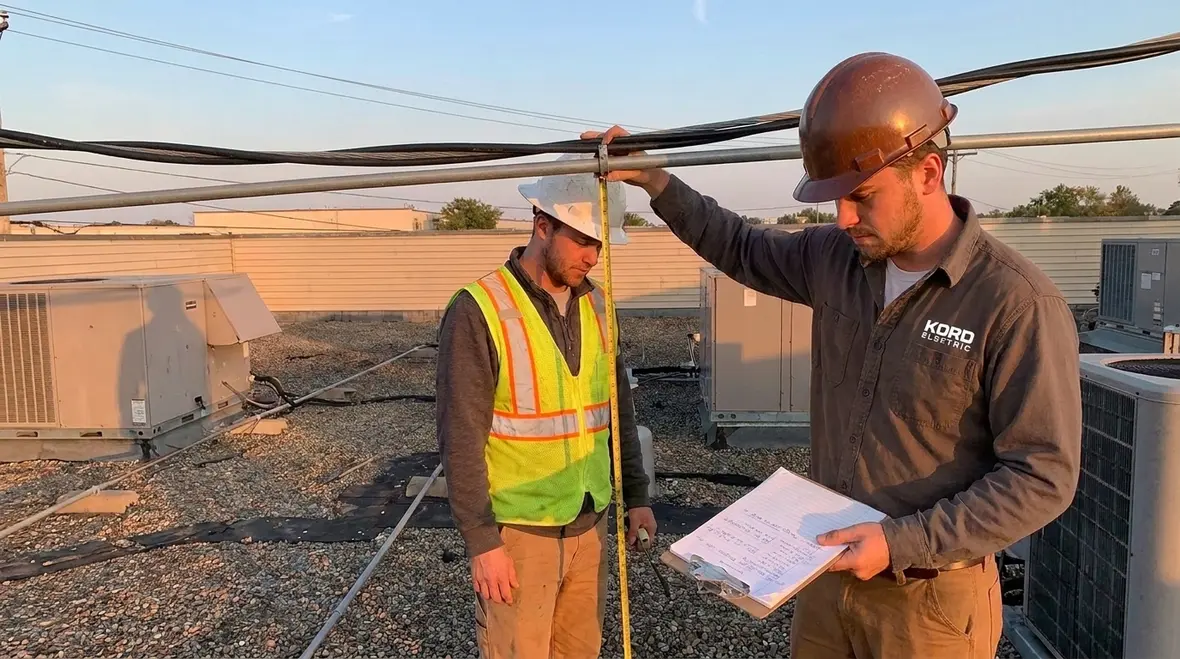
Best practices we use for NEC compliance planning
We do not wait for a surprise inspection. We plan for compliance early in the design and procurement steps. Then, when the field work starts, our crew follows a checklist approach that matches the project reality, not a generic template.
Our typical best practices include these actions. First, we review the service layout and confirm whether the conductors cross or span over building areas. Second, we select support components that match the conductor and installation type, and we verify fit before field placement. Third, we check for adequate securement and correct placement at each support point. Finally, we coordinate with other trades so supports do not conflict with roof equipment, structural elements, or future work.
We also explain the outcome to facility managers and electrical coordinators. Others can call it training, but we call it clarity. Our expert service staff tells people what to expect, what to monitor, and how to avoid rework. When the goal is stable power delivery, compliance becomes a tool for reliability, not a chore.
Common mistakes and how Kord Electric avoids them
Even with good intentions, projects sometimes stumble. Here are common issues we see during field reviews, and how we prevent them.
- Improper support placement: crews may place supports where they look convenient, not where the code intent requires stable support. We verify the run and plan support points before install.
- Support hardware mismatch: using the wrong hardware or mix and matching components can create weak points. We select components that fit the conductor and installation method.
- Unplanned route changes: small design tweaks late in the process can shift where conductors pass. We recheck the “over buildings” portions whenever the layout changes.
- Insufficient documentation: when field notes and product selections are missing, it becomes hard to show what the installation supports and why. We keep clear project records.
And yes, sometimes a mistake happens because someone thought “it probably will be fine.” That is the electrical equivalent of bringing a spoon to a plumbing job. It might work once, but the second time it does not, you pay with time, cost, and stress.
How code knowledge supports safe power for major properties
Commercial and industrial facilities run on schedules. When power fails, operations stop, systems reboot, and the entire day gets expensive. Therefore, correct support of service conductors supports more than safety. It supports continuity.
As part of that, we treat NFPA 70 updates and local interpretations seriously. We also align with the broader code context published through trusted references and electrical education resources. For example, Kord Electric stays mindful of how the National Electrical Code concepts connect across the installation, not just within one section. If you want a deeper code overview, you can explore our resource Understanding NFPA 70: The National Electrical Code Explained for 2026 alongside Kord Fire’s coverage of the National Electrical Code and their NFPA 70 overview at Kord Fire.
When we plan a project, we do not just follow a clause. We build a system that holds up over time and under real mechanical forces. Then, when the facility team needs clarity, our technicians explain the decisions step by step, so the installation stays understandable long after the last truck leaves the site.
FAQ: NFPA 70 230.29 and NEC supports over buildings
Questions facilities ask before the crew arrives
Will support requirements change if the building layout changes?
Yes. If routing or attachment points change, the section that applies to the “over buildings” portion may also change. We recheck support needs when layouts shift.
What happens if supports are missing or not installed correctly?
It can lead to conductor sag, strain, and clearance issues. In real projects, that creates safety concerns and can trigger failed inspections and costly corrections.
How can Kord Electric help on a major property project?
We evaluate the service conductor path early, design the support plan, install with care, and explain the compliance choices through practical guidance from our technicians and expert service staff.
Plan NEC supports over buildings with Kord Electric
If your facility includes service conductor runs that pass over buildings, Kord Electric can help you avoid last minute surprises. We review your service layout, confirm where the support rules apply, and build the support system to match NFPA 70 Section 230.29 with clean installation details your inspector can understand. Then our technicians explain the work in business friendly language, so your team feels confident and your NEC supports over buildings stand up to real-world conditions.
For facilities across the region, our broader commercial and industrial offerings support everything from code-driven upgrades to uptime-focused projects. When you need a partner that understands both compliance and operations, our team is ready to help you keep power stable and inspections predictable.
If your site is in Southern California, you can explore our Los Angeles County electrical services to see how we design, install, and maintain systems that stay aligned with NFPA 70 and local requirements while supporting everyday operations.
And if you want to see how NEC planning fits into your broader code roadmap, pairing this guide with our National Electrical Code overview resources gives your team a clearer picture of how today’s decisions affect the next inspection, the next expansion, and the long-term reliability of your building.


