

NEC Service Means of Attachment Under 230.27
NEC service means of attachment and why NFPA 70 Section 230.27 matters
At Kord Electric, we build safety into every commercial and industrial electrical job, and we do it with eyes wide open. In the first place, NEC service means of attachment guides how service conductors connect and support properly, using code approved methods. Then NFPA 70 Section 230.27 steps in and gets specific about how those conductors and equipment must be attached so they stay secure, protected, and ready for the real world, not just the drawing on paper.
In other words, this section is not “nice to have.” It is the rule that helps prevent looseness, heat stress, mechanical strain, and the kind of failure that turns a maintenance visit into a full blown emergency call. And yes, even if the building is busy, electrical attachment cannot be treated like a last minute IKEA assembly.
What Section 230.27 covers in plain business terms
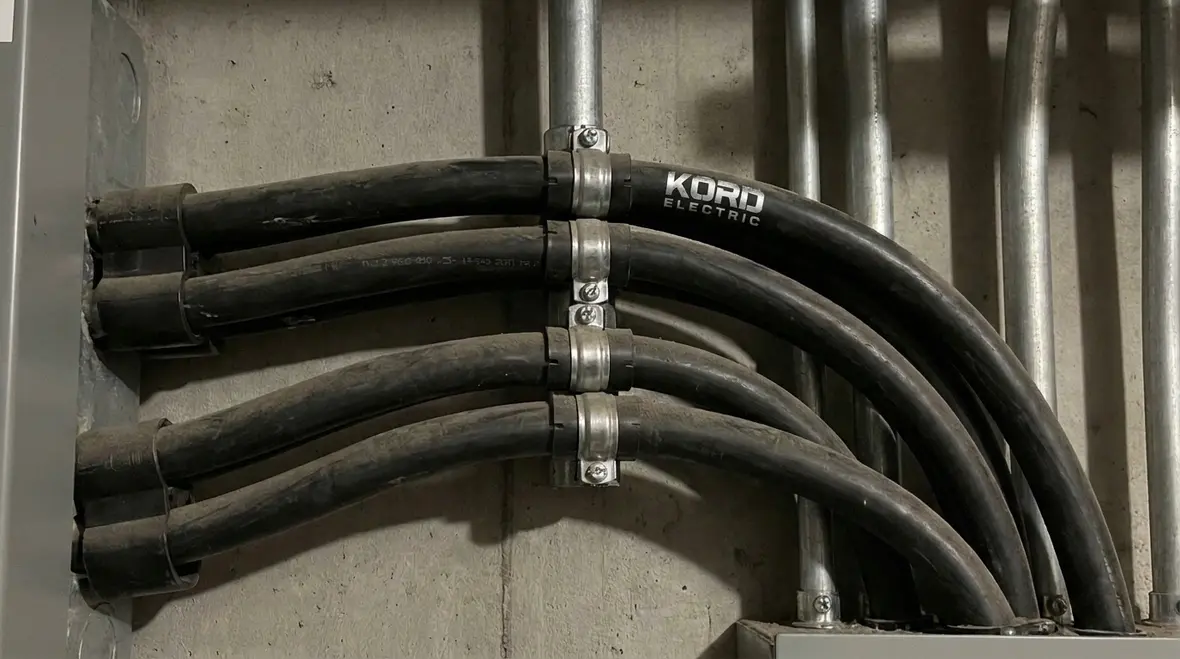
Third person or not, the point stays the same: Section 230.27 focuses on means of attachment that the NEC accepts. However, that does not mean “anything goes.” Instead, it requires that attachments use methods approved by the code and that the installer supports conductors and equipment in a way that matches the listing and the installation instructions.
So, when we send our technicians and experienced service staff to a site, they do more than “make it work.” They verify that the attachment points, hardware, and securement methods match what the product listing allows, and that the installation supports the load and forces that can happen during normal operation and fault conditions.
As a result, we reduce the risk of damage from vibration, thermal expansion, and accidental impacts from maintenance activity. Also, we avoid sloppy fixes that look fine until the first time someone pulls a cable tray lid the wrong way. Then suddenly the whole system has trust issues.
Code approved methods: how Kord Electric verifies attachments
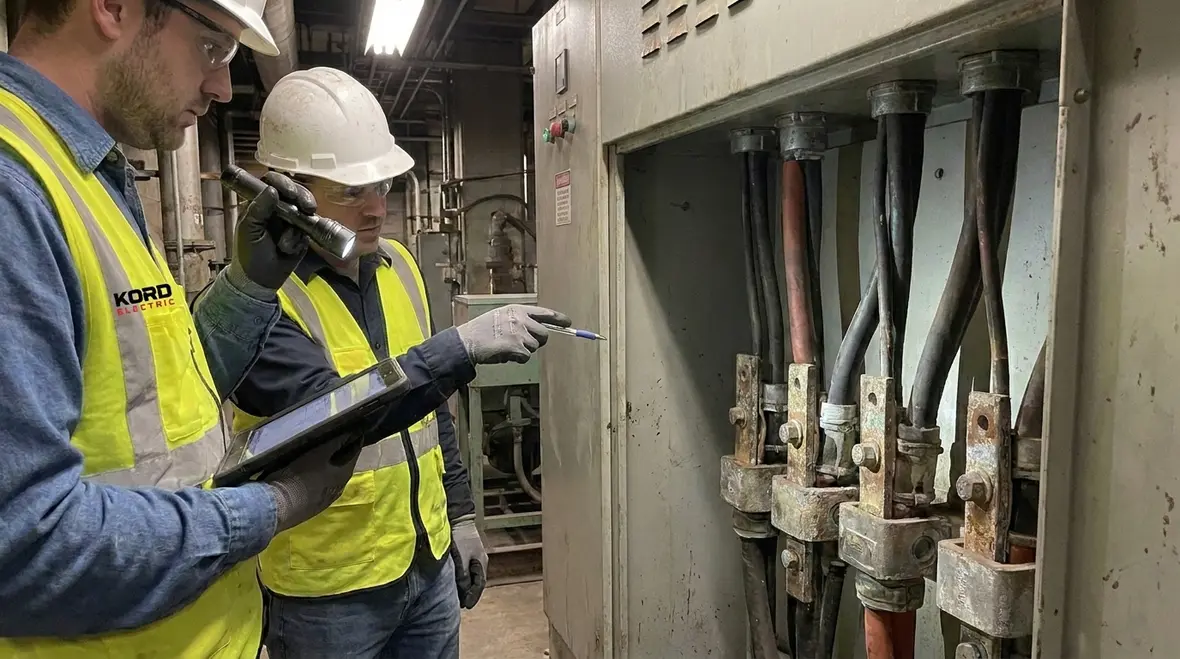
When our team approaches a commercial or industrial facility, we treat Section 230.27 as a checklist with consequences. First, we look at the service equipment location, the routing path, and the strain points. Then we confirm the attachment method is code approved for that specific setup.
Common items we verify include anchors, clamps, fittings, and the way conductors enter and exit equipment. For example, an attachment that relies on makeshift supports or unlisted parts may fail later even if it holds today. Therefore, our technicians confirm the mechanical integrity and use proper hardware that matches the design.
Furthermore, we pay attention to protection from damage. If conductors are exposed where forklifts, ladder traffic, or routine work could disturb them, we adjust the approach. We also check for routing that avoids sharp edges, pinch points, and areas where abrasion can eat away at insulation over time.
Finally, our experts explain what they see to facility managers and electrical stakeholders. We do not hide behind jargon. We translate the code into practical steps, so others on site know what was changed and why it matters.
Mechanical strength and protection: the hidden half of service safety
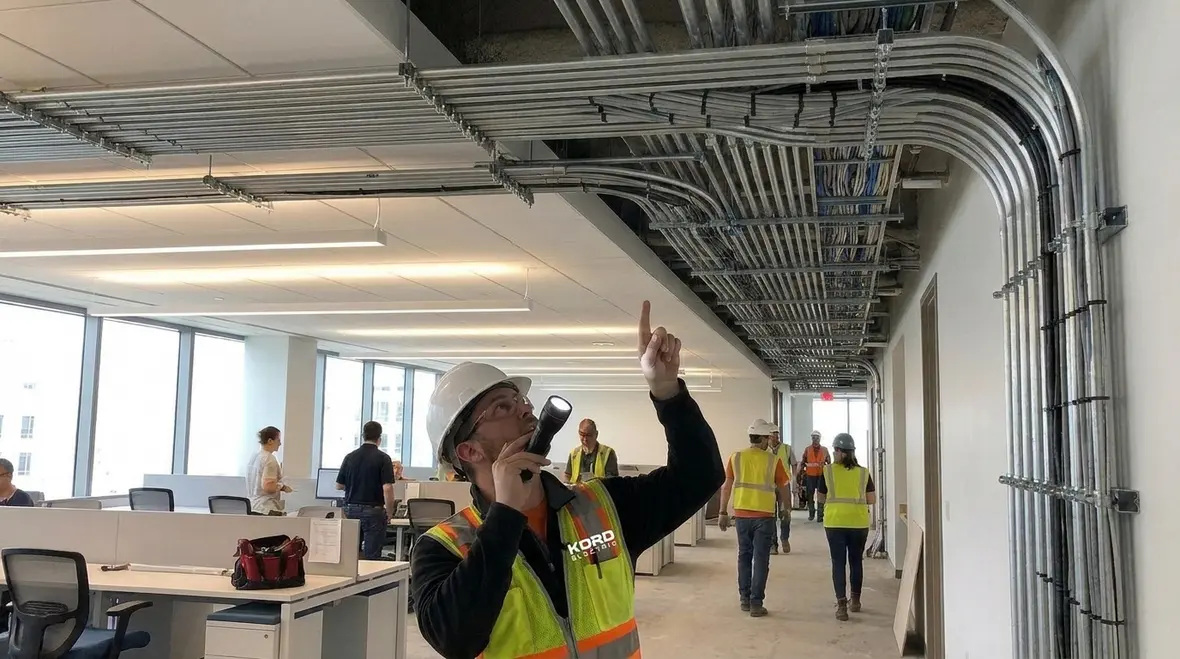
Most people think about electricity as a power story. Yet, in NFPA 70, it is also a mechanical story. Conductors experience forces during installation and can see additional stress during abnormal events. Consequently, Section 230.27 pushes for attachments that resist movement and keep connections stable.
In practical terms, our service process considers three things. First, it checks strain relief and how the load transfers from conductors to supports. Second, it reviews how supports hold up against vibration and thermal cycling. Third, it confirms the installation does not invite damage from physical contact.
To make it concrete, a poor attachment can lead to a gradual loosening or misalignment. Over time, that can raise resistance at a connection. Higher resistance means more heat. Then heat becomes stress, and stress becomes failure. That is the boring chain reaction no one wants, even if the meeting room chair squeaks like it is narrating a horror movie.

Common attachment mistakes we prevent on commercial sites
At industrial facilities and major property buildings, the “work never stops” mindset can tempt teams into shortcuts. Meanwhile, electrical work demands discipline. Our experience shows a few predictable mistakes, and we prevent them before the system learns a painful lesson.
1. Using unapproved hardware
Some installations rely on random clamps or fittings pulled from general inventory. However, Section 230.27 expects means of attachment that align with code approved methods. That means our technicians use the right parts for the right use.
2. Skipping proper support spacing
If supports are too far apart, conductors can sag or sway. Over time, that movement stresses connections.
3. Treating routing like an afterthought
A conductor path that crosses traffic zones without protection invites abrasion and accidental disturbance. Therefore, we plan routing with the site’s reality in mind.
4. Overlooking entry and exit stress
Where conductors enter enclosures or equipment, the mechanics get complicated. We focus on that exact area because it often becomes the first weak point.
5. Failing to match product listing requirements
Even when a part seems to fit, listings and installation instructions control. Our team checks those requirements and then documents what we found and what we corrected.
How our NEC service and local support work together
Kord Electric serves commercial and industrial facilities with a service approach that stays practical. We do not just install. We guide. We also coordinate with facility teams so downtime stays low and work stays safe. Then we follow the NEC requirements that keep service attachments stable and compliant.
When we work, we often see multiple trades operating in the same space: construction teams, maintenance groups, and sometimes facilities staff from different vendors. Therefore, our technicians communicate clearly about where attachments need to stay untouched, what areas need protection, and how cable paths should remain clear.
Also, our expert explanations help stakeholders understand the long game. A properly supported service improves reliability, reduces outage risk, and supports easier future maintenance. That is a win for operations, and it also helps the electrical team avoid chasing problems that should never have formed in the first place.
For deeper NEC context and safety discussions, some teams also reference resources like Kord Fire’s NFPA 70 overview for 2026 alongside Kord Electric’s own guide on understanding NFPA 70, the National Electrical Code explained for 2026. And when facilities want to align with broader fire and electrical safety perspectives, it can help to coordinate priorities across disciplines. We stay focused on electrical compliance, yet we respect how fire and safety planning connects to real building outcomes.
Dual column example: attachment checks we document
Here is how our technicians typically document attachment verification for major buildings and industrial facilities. We keep it simple, clear, and audit friendly.
| What we inspect | What we confirm |
| Support hardware and fittings | Code approved methods and correct part use for the application |
| Conductor routing and protection | Physical protection from abrasion, impact, and pinch points |
| Entry and exit points | Securement that avoids stress on connections and terminations |
| Mechanical stability | Support spacing and strain relief that resists movement and sag |
| Documentation and photos | Clear records for compliance and future maintenance planning |
FAQ about NFPA 70 Section 230.27 and service attachment
Final word: let our technicians secure your service the right way
NEC service means of attachment under NFPA 70 Section 230.27 is one of those rules that protects you from problems you cannot easily predict. At Kord Electric, we bring experienced technicians, careful documentation, and code focused installation practices to commercial and industrial facilities and major property buildings. If a service needs inspection, upgrade, or correction, we can evaluate attachment methods and explain the fixes in plain terms.
For facilities across the region, our dedicated Los Angeles County electrical services connect NEC workmanship standards, service attachment rules, and real-world troubleshooting support into one coordinated approach. And when you want to see how attachment rules tie back to the broader NEC, you can pair this guide with Kord Electric’s article on understanding NFPA 70 for 2026 so your team sees both the big picture and the specific steps.
If your service conductors, raceways, or supports look uncertain, or if recent work left you wondering whether attachments truly match NEC 230.27, it is time to bring in a team that treats mechanical support and code compliance as a package deal. Call us to schedule an assessment and keep your electrical system secure, stable, and ready for the next inspection.


