

NEC Underground Service Insulation Requirements Under 230.22
NEC underground service insulation: what we protect in the first place
At Kord Electric, we take NFPA 70 Section 230.22 seriously, especially when we build or update NEC underground service insulation for commercial and industrial facilities. In the first 100 to 150 words, here is the big idea: the code requires the right insulation or covering so underground service conductors stay protected from damage and heat over time. And yes, the ground can be dramatic. It shifts, it corrodes, it bites, and it rarely sends a polite warning.
In this article, our team explains what Section 230.22 means in practical terms, how our technicians verify compliance, and how proper underground service insulation helps you avoid costly downtime. We also cover how to coordinate installation with other NEC rules so your system stays safe and reliable for the long run. For a broader view of how NFPA 70 shapes modern electrical work, you can also explore our piece on Understanding NFPA 70, the National Electrical Code, Explained for 2026, which connects high level NEC guidance with day to day decisions in the field.
What NFPA 70 Section 230.22 really requires below grade
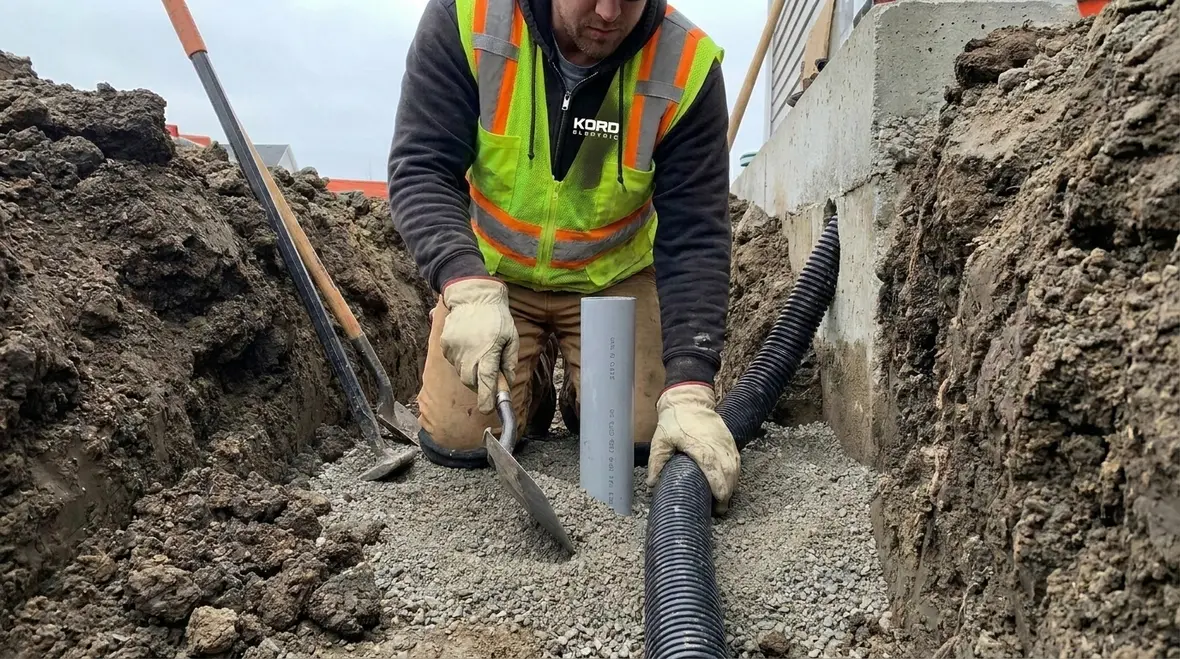
NFPA 70 Section 230.22 focuses on how we insulate or cover conductors that run underground for service supply. In plain terms, the rule aims to prevent physical damage and reduce the chance that moisture and other conditions degrade insulation. Therefore, the code sets expectations for protection that does not rely on good luck.
When our expert service staff reviews plans, we look at how the conductors will be installed, what protection they already get from raceways, and what extra insulation or covering the code calls for. Because this section interacts with other NEC parts, we do not treat it like a standalone checkbox. We treat it like part of a system that must survive soil conditions, installation methods, and long service life.
In practice, that means we review the full service path from the utility connection to service equipment. We match each segment to the right NEC article, confirm conductor ratings, and verify that the NEC underground service insulation usage lines up with how the site will actually operate. When needed, we coordinate with design teams so Section 230.22 does not fight with other code driven choices on grounding, bonding, or overcurrent protection.
Because Section 230.22 lives inside the broader NEC framework, we often point facility teams to companion resources like our article on Understanding NFPA 70, the National Electrical Code, Explained for 2026. That wider lens helps decision makers see how underground service insulation fits into arc flash risk, equipment ratings, and other protection strategies rather than treating it as an isolated trench detail.
How we decide the right insulation or covering for service conductors
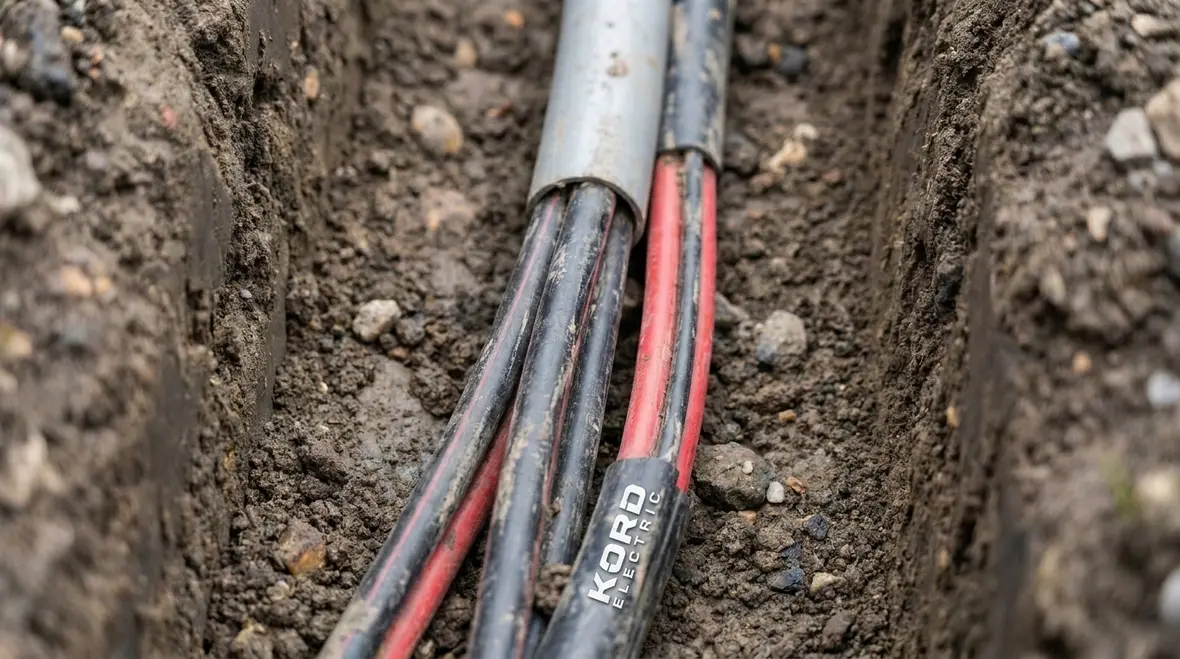
We follow a simple workflow in the field. First, our technicians identify the exact service conductor type and the installation path. Next, we confirm whether the conductors will enter a conduit system, remain direct buried, or pass through areas that need extra protection. Then, we select insulation or covering that matches the NEC requirements for underground service.
To keep things clear, we separate the decision into four practical checks. First, we check exposure risk. Second, we check temperature and conductor limits. Third, we check the surrounding material and installation depth. Fourth, we check how the system will be protected at transitions where underground meets above grade.
And if you think this sounds like a lot, good. That is the point. Underground work does not reward the “close enough” approach. It rewards methodical work, and we train our staff to do it right the first time.
Check 1: exposure risk along the full service route
The first question is simple: what can hurt the conductors over the next 20 to 30 years? Heavy vehicle traffic, unstable soil, nearby foundations, and future utility work all shape what the insulation or covering must survive. In some locations, a raceway or encasement becomes part of the answer. In others, the primary defense is the insulation rating and construction of the cable itself.
We map the route, mark risk zones, and match each segment with appropriate protection. Where the environment gets more aggressive, we avoid bare minimum solutions. Instead, we design for the “worst Tuesday,” not the “best Wednesday.”
Check 2: temperature, ampacity, and conductor limits
NEC ampacity tables and insulation temperature ratings do more than fill up code pages. They decide whether a conductor runs comfortably under load or cooks slowly underground. When we evaluate underground service insulation, we confirm that the insulation type and thickness can handle the real operating temperature, not just the theoretical nameplate.
That evaluation includes soil thermal properties, grouping of conductors, and any derating that applies when cables share space in a raceway. We would rather find a marginal rating on a drawing than discover it later as a discolored jacket during troubleshooting.
Check 3: surrounding materials, depth, and backfill choices
Next, we look at the materials that will live closest to the conductors: bedding sand, native soil, concrete, or other utilities. Depth and spacing are not just excavation notes; they set mechanical stress, moisture patterns, and long term insulation health. If sharp debris or reactive soil ends up against the conductors, even a good insulation system can lose the long game.
Our teams verify that backfill and bedding materials meet the intent of both NEC guidance and project specifications. Where documentation is vague, we clarify it with the project team before trench work begins. That way, everyone knows what “acceptable” looks like before a loader shows up with the wrong pile of dirt.
Check 4: transitions between underground and above grade
The last check focuses on the handoff zones: where underground conductors rise into equipment, pass into buildings, or change wiring methods. These spots combine mechanical stress, moisture, and the human tendency to add “one more thing” in the same space later. We select fittings, seals, and supports that protect the insulation and maintain the rating of the overall system.
In many facilities, we pair this work with broader electrical design reviews. Articles like Building Electrical System Design: Planning Power for Commercial Facilities and Data-Driven Electrical Design for Commercial & Industrial Facilities show how solid planning around feeders, panels, and protection devices prevents underground details from turning into future bottlenecks.
Installation details that impact compliance and long term performance
Even when the right NEC underground service insulation is specified, installation quality still decides whether the protection holds up. As a result, we focus on details that other teams sometimes skip when the schedule gets loud.
Our technicians pay attention to these areas:
- Conductor handling: We keep insulation protected from cuts and abrasion during pulling and termination.
- Raceway and conduit integrity: Where conduit is used, we confirm it is installed and sealed correctly at transitions.
- Backfill and bedding: We confirm the material and compaction practices that reduce stress and avoid rocks or debris.
- Moisture and corrosion conditions: We consider how soil and nearby materials affect covering performance.
- Splices and terminations: We verify that protected areas remain protected, including where connections occur.
Then we document what we did. That way, if someone asks later why a cable looks the way it does, our files answer the question. Also, it helps avoid the classic moment when a project turns into a mystery novel and nobody has the plot summary.
Field checks that keep NEC underground service insulation honest
Before backfilling, our crews walk the route, take photos, and confirm that what ended up in the trench matches the design and the NEC expectations. We check for nicks, compression points, and unsupported spans at bends or risers. If anything looks questionable, we correct it before it disappears under soil and concrete.
Those checks align with how we approach broader reliability work across our portfolio, from preventive electrical maintenance to zero-downtime solutions. For us, an underground service is not an isolated task; it is a critical piece of a power system that must behave on the busiest day of the year.
Direct burial versus protected conduit: we plan for both
Commercial and industrial sites often have different routes, utility access points, and constraints. Therefore, the underground service path may include direct burial segments, conduit runs, or a mix. Our approach is to design the route so the protection method fits the conditions, not just what fits the trench.
When conduit is used, it can provide a strong layer of protection against many physical hazards. However, we still check the insulation and covering rules that apply to the conductors. In addition, we confirm transition points, because those are where problems commonly start. For example, the shift from below grade protection to equipment entry points can introduce exposure if it is not handled with care.
When direct burial is used, insulation or covering becomes the main shield. In that case, we treat the conductor jacket and covering as a safety system. We verify that the installation supports the rating and protects against damage during the entire lifecycle.
Coordinating NEC underground service insulation with system upgrades
Many underground service projects tie into broader upgrades: new distribution equipment, panel replacements, or capacity increases for critical facilities. We align the insulation and installation plan with those goals so you do not end up with a beautifully upgraded electrical room fed by an underspecified or poorly installed underground service.
For facilities planning larger changes, resources like Electrical Downtime Prevention: Reduce Power Failures and Zero-Downtime Electrical Solutions for Critical Commercial Facilities show how service reliability depends on both what you see in the electrical room and what you do not see underground.
Transition points and protection at entry to structures
Underground work does not end when the cable reaches the building. In fact, the most overlooked moment is often the last one: the transition into the structure, into service equipment, or into a different wiring method. We therefore plan entry details as carefully as we plan trench routing.
Our expert service staff explains these points to owners and facility managers in straightforward terms. For example, we show how covering and insulation expectations change when conductors move from soil conditions to exposed environments. Then we explain how sealing, support, and termination methods affect safety and durability.
We also coordinate with the project team so the electrical scope matches the civil and structural work. This matters because one trade cannot “fix” another trade’s shortcut without creating a new risk. We keep the process calm, methodical, and clear, the way a seasoned professional does when the schedule is already stressed.
Why entry details matter for inspections and future work
Inspectors, maintenance staff, and future project teams all focus on transition points. If those areas show cracked fittings, missing seals, or unsupported conductors, confidence drops fast. We design entries so they are easy to inspect, straightforward to maintain, and ready to accept future changes without compromising the original NEC underground service insulation strategy.
We also keep documentation aligned with what inspectors and owners need. Clear records about conductor types, insulation ratings, burial depth, and termination methods make it easier to justify decisions and defend the installation years from now when memories fade but code questions do not.
How Kord Electric supports commercial and industrial compliance
Kord Electric serves commercial and industrial facilities and major property buildings. So we approach NFPA 70 and the NEC as part of a larger safety and reliability program. That means we focus on electrical infrastructure that supports operations, reduces risk, and avoids emergency repairs that interrupt production.
When we work with a site, we bring technicians and experienced support staff to the table. We do not just “install and move on.” Instead, we verify the underground service insulation method, check installation methods that affect long term protection, and help the team understand the reasons behind our choices.
Also, we keep an eye on how local code interpretations and coordinated standards play into execution. In the broader NEC context, compliance often depends on how multiple articles work together, not on one isolated requirement. And while the NEC can feel like a never ending scroll from the gods, we translate it into decisions your project can actually build.
If you are comparing contractors or building a long term relationship, you can see how we handle complex commercial work by looking at resources like Best Commercial Electrical Contractor Los Angeles and Data-Driven Electrical Design for Commercial & Industrial Facilities. Both show how our field crews and expert service staff keep code requirements, uptime goals, and schedule pressure in the same conversation without letting safety fall to the bottom of the list.
FAQ about NFPA 70 Section 230.22 and underground service protection
Call Kord Electric before the trench gets too deep
If you want underground service protection that holds up, Kord Electric can help you plan and build it the right way. Our technicians review insulation and covering choices under NFPA 70 Section 230.22, then verify installation details that affect compliance and long term performance. So if your project involves new service, upgrades, or a property retrofit, contact us early. We will help you avoid surprises, keep operations steady, and make sure your electrical system stays safe for the long haul.
For facility leaders who want a broader view of how NEC concepts shape everyday work, our blog on Understanding NFPA 70, the National Electrical Code, Explained for 2026 connects high level requirements with field decisions. And when your project in Southern California needs a team that can turn those requirements into installed infrastructure, our Los Angeles County electrical services bring design support, code conscious installation, and responsive troubleshooting together under one roof.
Whether you are coordinating with utilities, planning around other trades, or upgrading an aging service that has quietly powered your building for decades, we help you treat underground work with the respect it deserves. The goal is simple: power that behaves when it matters most, without drama from the parts of your system nobody can see.
Reach out to our team, share your project timeline, and let us align NEC underground service insulation usage, routing, and protection with the rest of your electrical strategy. Done right, the trench becomes a one time event instead of a recurring character in your facility’s maintenance stories.


