
Why NEC Service Clearances on Buildings Matter
Why NEC service clearances on buildings matter in real inspections
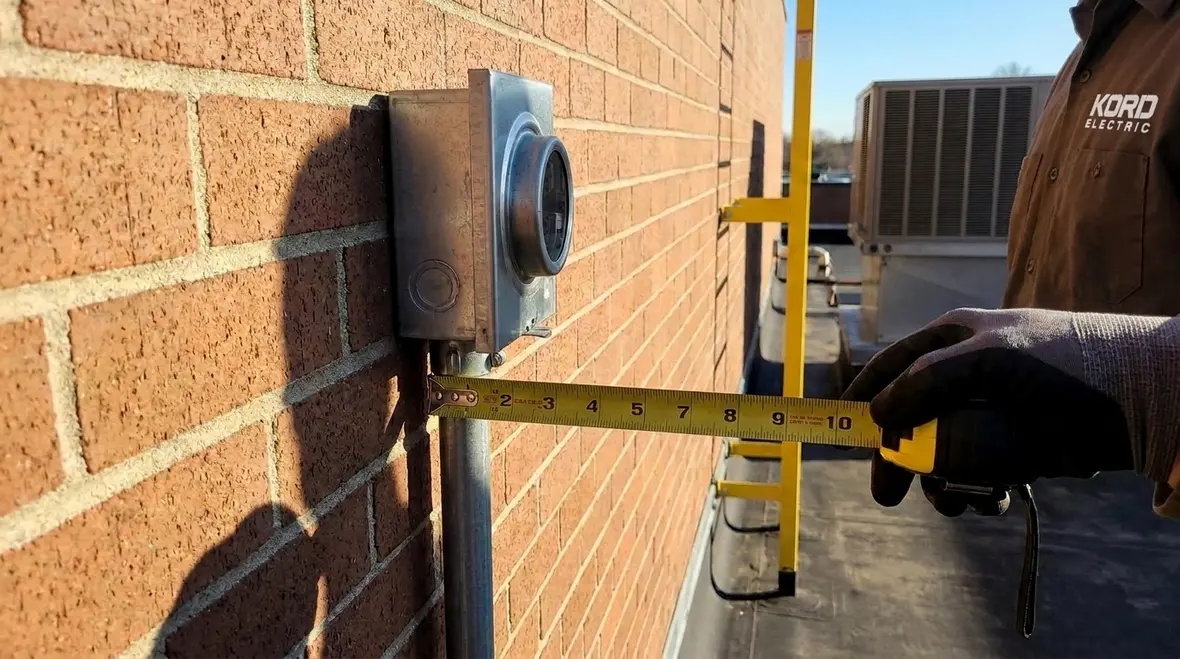
When inspectors walk up to a commercial or industrial site, they do not start with the paperwork. They start with space. In the first 100 to 150 words of this conversation, we point out that NFPA 70 Section 230.9 governs service clearances on buildings, and inspectors often measure it before they ever ask you for a single document. At Kord Electric, our technicians treat those distances like the quiet foundation of safe power delivery. They confirm the service conductors and the equipment have the right separation from buildings, roofs, and other parts. And yes, sometimes the field reality is more complicated than the textbook, because buildings do not always stay still, and neither do cables.
In the sections ahead, we explain what inspectors check, what causes common failures, and how we help commercial and industrial facilities stay compliant without turning every maintenance day into a comedy sketch.
NFPA 70 Section 230.9: what inspectors are really looking for
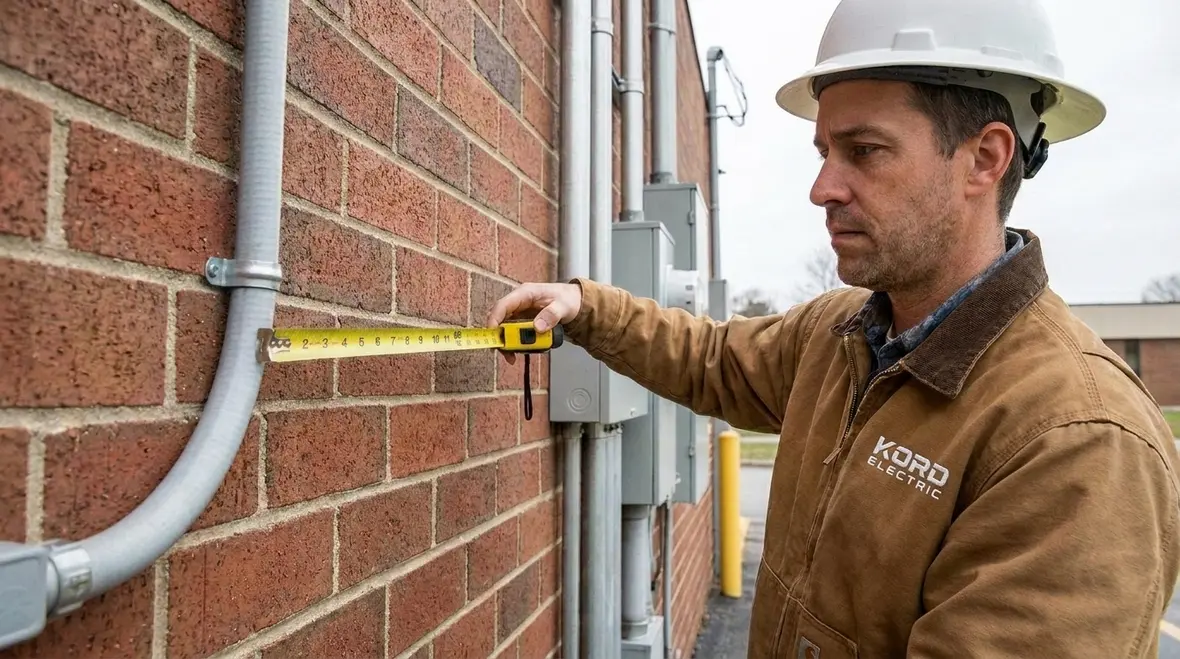
In practice, NFPA 70 Section 230.9 aims to keep electrical service conductors and associated equipment positioned so they do not create hazards under normal use or under reasonable conditions like rain, wind, or settling. Inspectors focus on three main themes. First, they verify clearance from the building surfaces and raceways. Second, they look at how conductors run near openings or building edges. Third, they confirm that no part of the installation creates an unsafe path for heat, arcing, or physical contact.
To make this clear, our expert service staff explains that this rule does not exist to “make life harder.” Instead, it helps reduce the risk that a conductor ends up too close to a roof, parapet, ladder access area, or other part of the building that people and equipment can reach. Therefore, the inspection often feels like a guided walk-through with a measuring tape and a calm but firm set of expectations.
For facility teams that want a wider background on how this section fits into the broader rulebook, we often point them to our NEC primers, including Understanding NFPA 70: The National Electrical Code Explained for 2026, which connects these clearance rules to the larger safety picture across commercial and industrial power systems.
How service clearances on buildings get measured on commercial sites
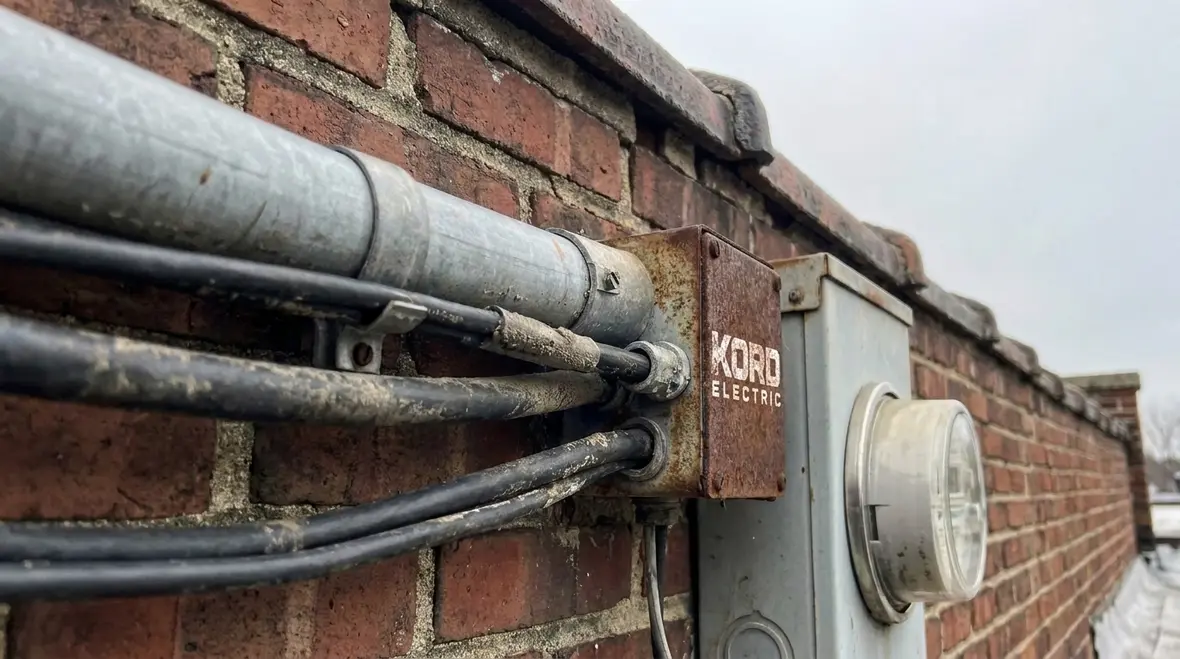
Now we get practical. On major property buildings, a clearance check usually happens in a sequence. Inspectors identify the service point and the relevant conductors, then they assess the route, then they compare the distances to what the code requires. After that, they look for nearby building features that can change the “real” working space. For example, roof access structures, overhangs, and installed equipment can shift where conductors sit relative to people, ladders, and maintenance activity.
Our technicians commonly find that the biggest mismatch is not that someone “ignored the code.” Often, the mismatch appears because the design assumed one routing plan, while construction changes moved the service entrance. Then later, someone added conduit supports, roof curbs, or landscaping blocks. Consequently, clearances drift over time even when the original contractor did a fine job.
Additionally, inspectors often check whether the installation includes proper fittings and supports. Loose routing can swing conductors, and even a small shift can create a clearance problem when wind or thermal expansion pushes things the wrong way. In other words, the code wants stable spacing, not a conductor that flops like a tie left on a chair.
Common clearance problems that trigger red tags
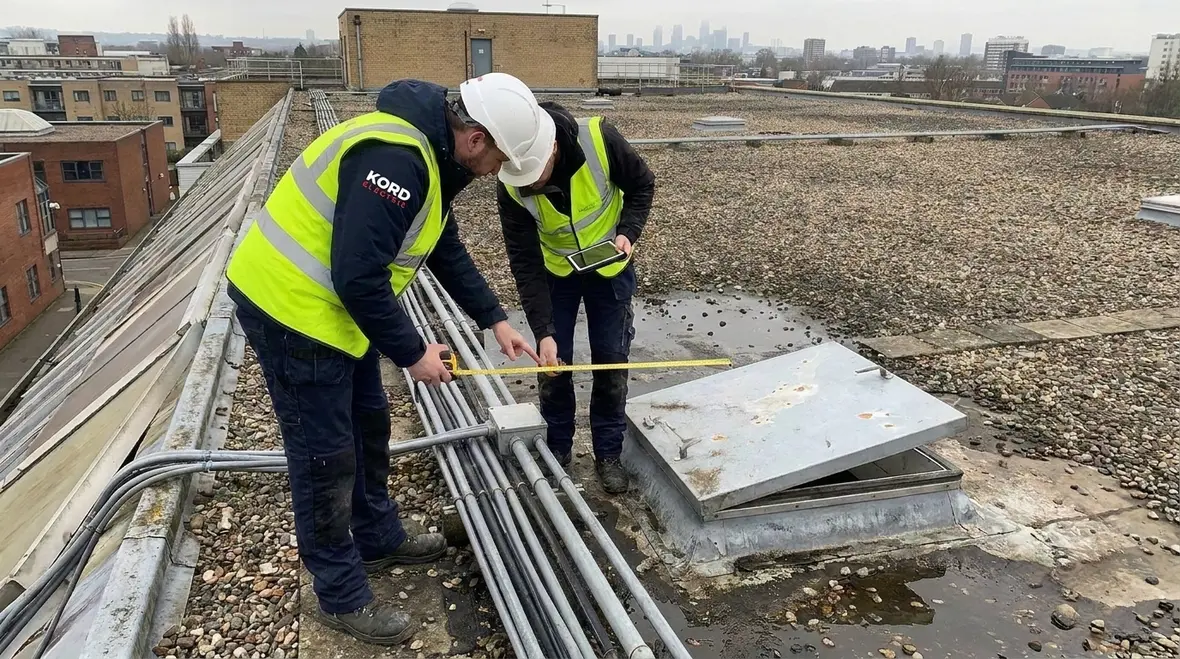
In the field, we see repeat offenders. First, service conductors run near roof edges or parapets where access and maintenance are frequent. Next, installations include fittings or terminations that do not match the required spacing. Third, some sites have modifications without a clearance recheck, which is like adding a new office desk without checking whether the door still opens. It seems fine until someone tries to use it.
Here are typical issues our team reviews for commercial and industrial facilities:
- Roof proximity surprises: Equipment added after the service was installed reduces effective clearance around the service route.
- Conductor routing changes: A contractor reroutes for convenience and unintentionally moves conductors closer to building surfaces.
- Improper transitions: Raceways, fittings, or entrance points create a local clearance gap even if the rest of the run looks correct.
- Damaged or unsupported sections: Wear, impact, or inadequate support can lead to sag or movement.
- Nearby building openings: Where conduits or conductors approach doors, windows, or other penetrations, the inspector checks for unsafe proximity.
When we talk with facility managers, we make the process calm. We do not deliver fear. We deliver clarity. Then we show what is measurably wrong and what can be adjusted without ripping the entire electrical system out.
Working with inspectors: how we help buildings pass smoothly
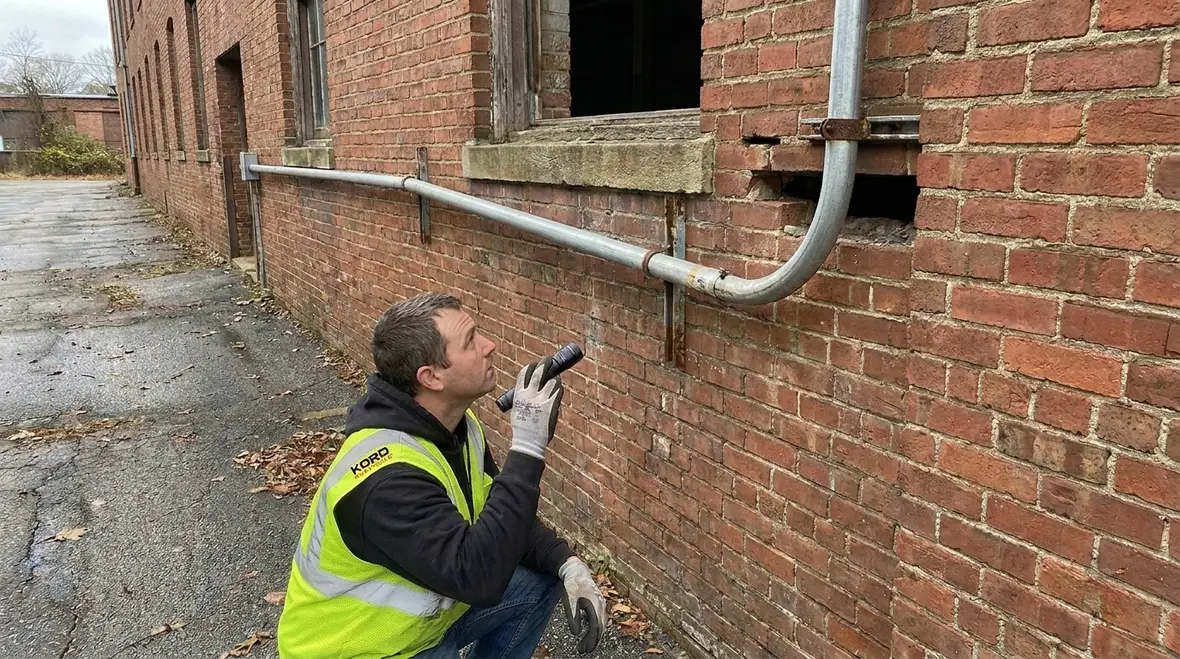
Inspectors are not trying to “win.” They want to confirm safety and code compliance using consistent criteria. So, we prepare the site like we prepare our tools. We review drawings, then we walk the route with our technicians, and then we validate field conditions. If the installation matches plans, great. If it does not, we document what changed and we explain what needs correction.
At Kord Electric, our approach supports commercial and industrial facilities and major property buildings only. That focus matters because these sites often involve complex service entrance configurations, shared utility infrastructure, and ongoing maintenance schedules. We coordinate access windows so our work does not interfere with operations. Meanwhile, we keep the inspection ready by ensuring pathways, supports, and connections align with the required standards.
Our team also uses the NEC framework in a practical way. We reference the intent and the structure of the National Electrical Code to help teams understand what is being verified, even when the exact details vary by installation. For additional context, we point clients to the guidance and summaries we share through Kord Electric and our NEC related resources, including the broad background at kordelectric.com and additional discussion at kordfire.com. When teams understand the “why,” they make better decisions during design changes and field updates.
Design choices that protect NEC service clearances on buildings long term
Short term compliance is useful, but long term safety is the goal. Therefore, we plan clearances with future changes in mind. For example, we consider where the building will add rooftop equipment, where maintenance crews will place ladders, and how cable supports will handle vibration and thermal movement. Then we build flexibility into the routing so minor modifications do not collapse the clearance picture.
Here are design habits we recommend for major property buildings and industrial sites:
- Lock in routing early: Confirm the service route during design, then revisit it during construction changes.
- Map access points: Identify roof access, ladder zones, and service access areas so clearances stay usable.
- Use stable support methods: Ensure conductors stay in place under reasonable movement and environmental load.
- Control add on equipment: When other trades add curbs, HVAC platforms, or anchors, confirm they do not reduce clearance.
- Document the field condition: Photos, measurements, and a simple record help future staff avoid repeating old mistakes.
To keep the tone light while the work stays serious, we tell clients that electrical clearance is like a good warranty. It matters most when you are sure you will never need it. And then, of course, the day arrives and you really do need it. Our job is to make sure that day ends with a pass, not a rework plan that eats your schedule.
How our service team documents results for commercial owners
Even when installations pass inspection, owners need clear records. So, our technicians provide practical documentation: what we measured, what we verified, and what we corrected if changes were required. This matters because commercial and industrial facilities often have multiple stakeholders, from property management to operations to maintenance contractors. As a result, a documented clearance check reduces confusion and helps teams coordinate future work.
We also explain the findings in plain language. Our expert service staff breaks down what the inspector is using to verify compliance. Then, if we adjust anything, we show the before and after condition. That way, you do not simply hear “it looks good.” Instead, you understand why it passes.
For teams that want broader NEC context, you can also explore related material and references we discuss in our publishing. Kordfire resources cover NEC background and electrical concepts, and those resources can help align your internal team’s language with what the code expects. The goal stays the same: make service clearances safe, measurable, and repeatable.
FAQ: NFPA 70 Section 230.9 and service clearances
Call Kord Electric for a clearance check that gets results
When your facility runs on uptime, an electrical inspection should feel steady, not stressful. We at Kord Electric send our expert service staff to verify NEC service clearances on buildings based on the real conditions your team lives with every day. Then we explain what inspectors look for, what we found, and what we will correct to keep your installation safe and compliant. If you operate a commercial or industrial property and want to avoid surprises, contact us today and let’s get your service entrance ready.
If you are planning broader upgrades or renovations around your service entrance, our team can also coordinate those efforts with our wider Los Angeles County electrical services, helping commercial owners align NEC service clearances, distribution changes, and inspection strategy in one coordinated plan.
From early design reviews to final walk-throughs, our goal is simple: keep your power reliable, your documentation clear, and your NEC service clearances on buildings ready for the next inspection round without drama.


