

NEC USE Cable Marking NFPA 70 Section 326.120
NFPA 70 Section 326.120 calls for NEC USE cable marking so the cables you install can be identified, maintained, and inspected with less guesswork and fewer late night calls. From the start, we at Kord Electric tell our customers that marking is not “extra paperwork.” It is practical jobsite clarity. And when our expert service staff explains it, we speak in plain terms: who needs the label, where it must appear, and how to keep the information readable when the building gets messy. Yes, job sites get messy. Even Batman needs good labeling.
Why NFPA 70 Section 326.120 cares about cable identification
In commercial and industrial facilities, systems do not sit quietly in the background. They feed panels, support life safety equipment, power process loads, and connect critical areas. Therefore, when something fails or changes, the people troubleshooting the system need instant certainty.
NFPA 70 Section 326.120 exists to prevent confusion. In other words, when a technician opens a pull box, cabinet, or junction point, the cable marking provides a reliable map. Instead of relying on memory, drawings, or hope, others can verify what is installed, how it is intended to function, and where it should go next.
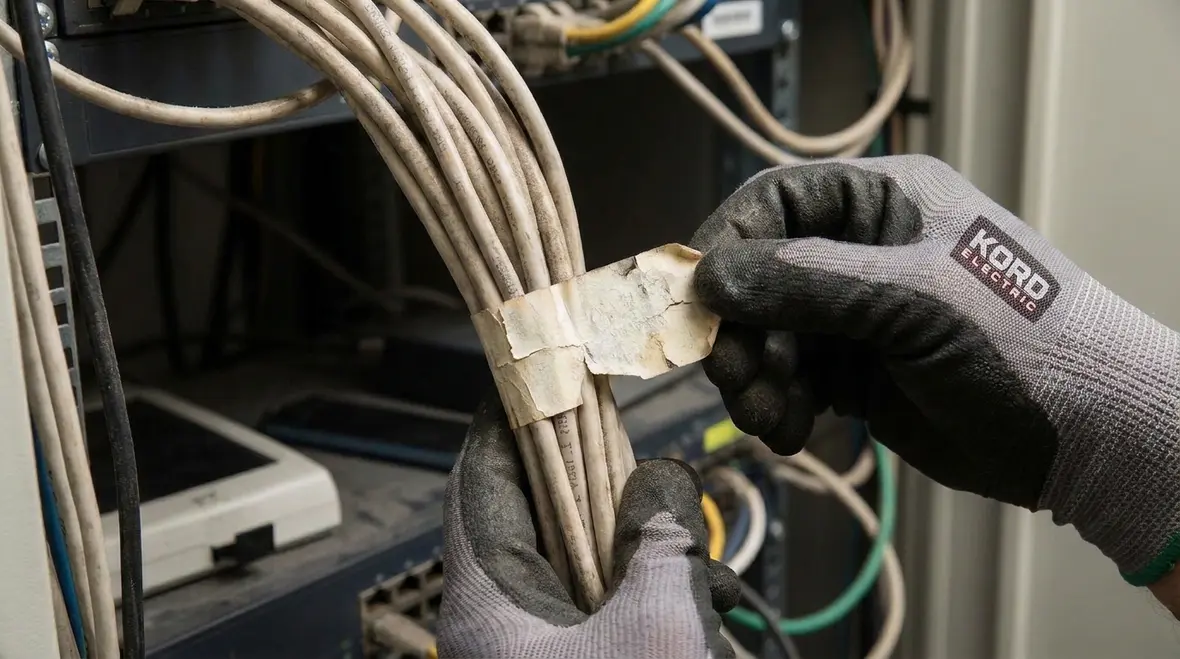
Our technicians and experienced service staff follow that mindset every day. They do not treat marking as a checkbox. They treat it as part of the wiring system itself. If the label fades, smears, or gets hidden, then the cable might as well be wearing a blindfold. And trust us, that is not a style we recommend for electrical work.
What the NEC USE cable marking must communicate on the jacket
As we explain to others on commercial projects, cable marking under NEC USE cable marking requirements aims to deliver specific, consistent information. Section 326.120 focuses on the practical “what” and “where” so the next person can make safe decisions.
Typically, the marking should help identify the cable type and its intended use. It should also align with the rest of the identification system in the facility, including the labeling approach used for panels, circuits, and documentation.
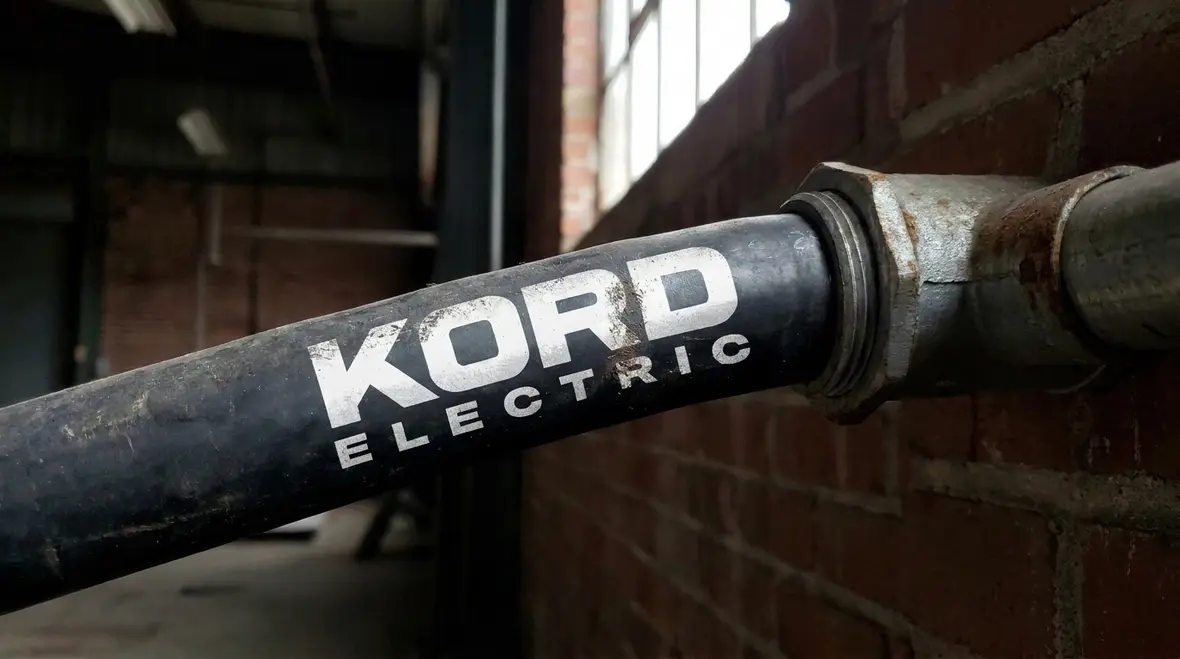
Just as importantly, marking must remain visible after installation. That means the mark has to survive real conditions, including handling, abrasion risk, and normal maintenance activity. If a cable label ends up facing the wall or gets buried behind equipment, then the marking loses its job. We see that mistake often during upgrades, and we fix it before it becomes a recurring problem.
How we apply NEC marking in real commercial and industrial builds
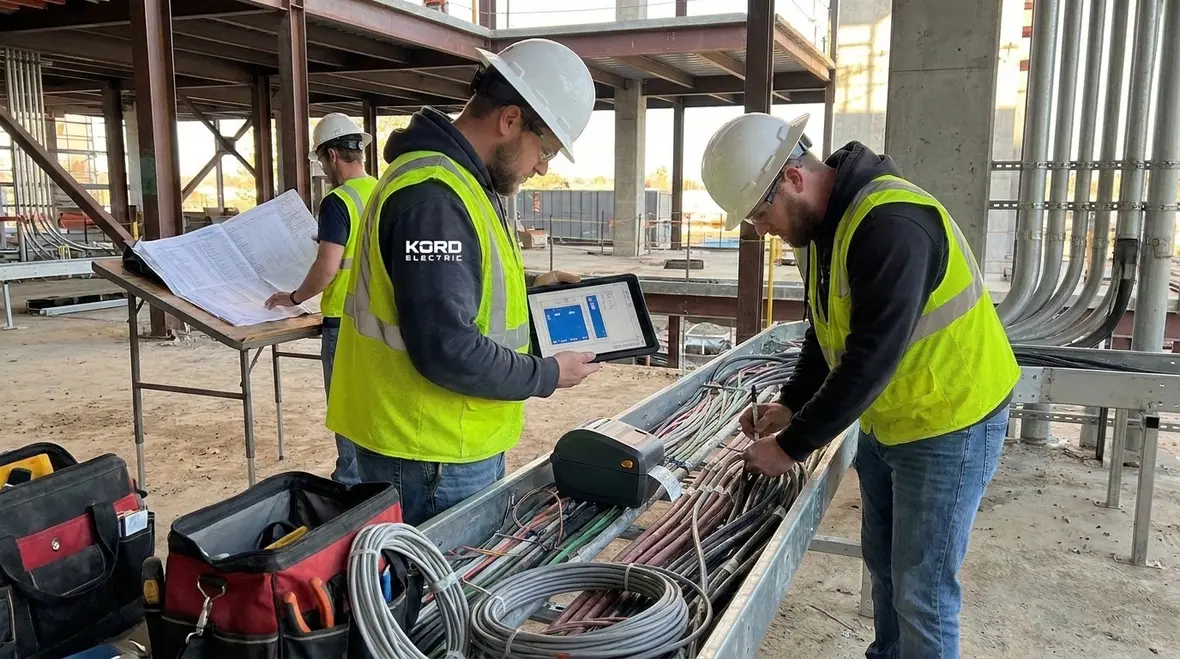
When Kord Electric works on major property buildings, we treat marking as a system. We start by coordinating with the team responsible for drawings, circuit schedules, and panel labeling. Then we confirm how cables route through conduits, cable trays, and underground runs where applicable.
Next, we make sure the marking strategy fits the physical layout. For example, in a tight mechanical room, we plan for where someone will actually stand while inspecting the cable. In a large production facility, we plan for walkways and service access. As a result, marking stays readable during commissioning and later maintenance.
Our expert service staff also checks whether the markings support field verification. In practice, that means we confirm that what you mark matches what you document. If the label says one thing but the schedule says another, then the label becomes decorative. And decorative electrical labeling is the kind of thing that turns a routine inspection into a scavenger hunt.
Common labeling mistakes that create costly rework
Even well run projects can stumble. However, we notice the same problem patterns when facilities need troubleshooting, expansions, or code based corrections.
- Labels get applied too late. When marking happens after cable pulling, access can be tight and visibility suffers. Then the mark ends up half readable or improperly positioned.
- Marking conflicts with documentation. If the cable identifier does not match the circuit schedule, field crews lose time verifying. Eventually, they stop trusting the markings.
- Marking becomes inaccessible. Cables routed behind equipment, bundled tightly, or placed where service personnel cannot reach it defeats the purpose.
- Unapproved or poor quality materials fail. Some tags fade, peel, or smear. And in harsh environments, weak labels fail quickly.
- Inconsistent formatting across systems. When one area uses one approach and another area uses a different approach, people make mistakes under pressure.
To prevent this, we guide our teams through a repeatable labeling approach tailored to commercial and industrial facilities. We also explain the logic to help others understand why good marking reduces risk. Think of it like writing a good instruction manual. You do not just want it printed. You want people to be able to use it.
NEC USE cable marking and inspection readiness for facilities
In our experience, inspection readiness depends on more than passing tests. It depends on the ability to show how the system is identified and how technicians can trace cables during maintenance.
Therefore, we help our clients prepare for inspections by aligning cable identification with the broader facility labeling and documentation set. This includes circuit descriptions, panel schedules, and field identification practices used across the building.
When others ask why we spend time on marking, we answer plainly. It reduces time spent on tracing circuits, speeds up commissioning, and lowers the chance of wrong terminations during changes. It also helps during emergency response, where decision speed matters.
And yes, we occasionally get asked if marking is “just code theater.” With a calm voice, we explain that code requirements prevent real hazards and real delays. The only theater we enjoy is movie night. Electrical work should stay grounded.
If you want a broader overview of how NFPA 70 ties all of this together, you can also review our guide Understanding NFPA 70: The National Electrical Code Explained for 2026, which walks through how the code supports safe design, installation, and inspection across commercial and industrial facilities.
Choosing a marking approach that stays durable in the field
For major property buildings, durability matters. Labels must remain legible across pull operations, thermal cycling, and normal maintenance. Our technicians consider the environment and the cable pathway, then match marking placement and materials to the job.
We also coordinate with other trade partners because the best marking plan collapses if other work hides the labels. For example, when cable trays get retrofitted or when finishes get installed around equipment, marking visibility can change. As a result, we plan and confirm field access points before labeling becomes locked in.
We apply practical rules on every project. Markings must not interfere with cable integrity. Markings must not create sharp edges or stress points. And markings must support the facility’s ongoing maintenance cycle, not just the day of inspection.
If you operate a commercial and industrial site, you already know the real value of planning. Downtime costs money. Confusion costs more. Durable identification protects both.
That is also why many facility teams connect clear identification with broader reliability planning, such as structured maintenance programs and electrical downtime prevention efforts. When your labeling supports the same calm, methodical approach you use for testing and repairs, inspections stop feeling like an awkward pop quiz and start feeling like a walkthrough of a system that was organized on purpose.
FAQ about NFPA 70 cable marking and Section 326.120
Get NEC compliant cable marking support from Kord Electric
Kord Electric supports commercial and industrial facilities that need reliable electrical identification, clear labeling, and inspection ready systems. Our technicians and expert service staff explain the marking logic in plain language, then apply it the right way in the field so others can trace cables fast and safely.
If you are planning new installs, expansions, or modernization work, contact us now. We will review your marking approach and help you build a system that stays clear long after the final cable pull. When those projects are part of a broader campus strategy, you can also connect cable identification with the wider scope of our Los Angeles County electrical services for commercial and industrial properties, so labeling, maintenance, and upgrades all point in the same direction.
Whether you are refining NEC USE cable marking on a single project or setting standards across multiple facilities, our team treats identification as part of the electrical system, not an afterthought. That way, when someone opens a pull box or panel years from now, the story on the cable jacket still matches the reality in the field.


