NFPA 70 225.20 Outside Wiring Physical Damage Protection
When teams plan NEC outside wiring physical damage protection, they protect more than cables. They protect uptime, safety, and budgets. In commercial and industrial facilities, outside wiring often lives a harder life than indoor runs, because it faces traffic, equipment vibration, weather, and the occasional “we’ll be careful” moment. Kord Electric helps facilities handle that reality with clear planning and reliable field support. And yes, we have seen enough job sites to know that “careful” sometimes means “as careful as a cat walking on a hot stove.”
In this article, a third person explains what NFPA 70 Section 225.20 requires for protection against physical damage, why it matters for buildings with real operational risk, and how Kord Electric technicians apply the rules in the field. The goal stays simple: systems stay intact, inspections go smoother, and people stay safe.
What NFPA 70 Section 225.20 actually demands
NFPA 70, the National Electrical Code, sets baseline safety rules for electrical installations. Section 225.20 focuses on one key issue: protection against physical damage for wiring methods used outdoors, subject to impact, or placed where people or equipment can strike them. In other words, the Code does not just say “install wiring.” It says “install wiring so it survives the real world.”
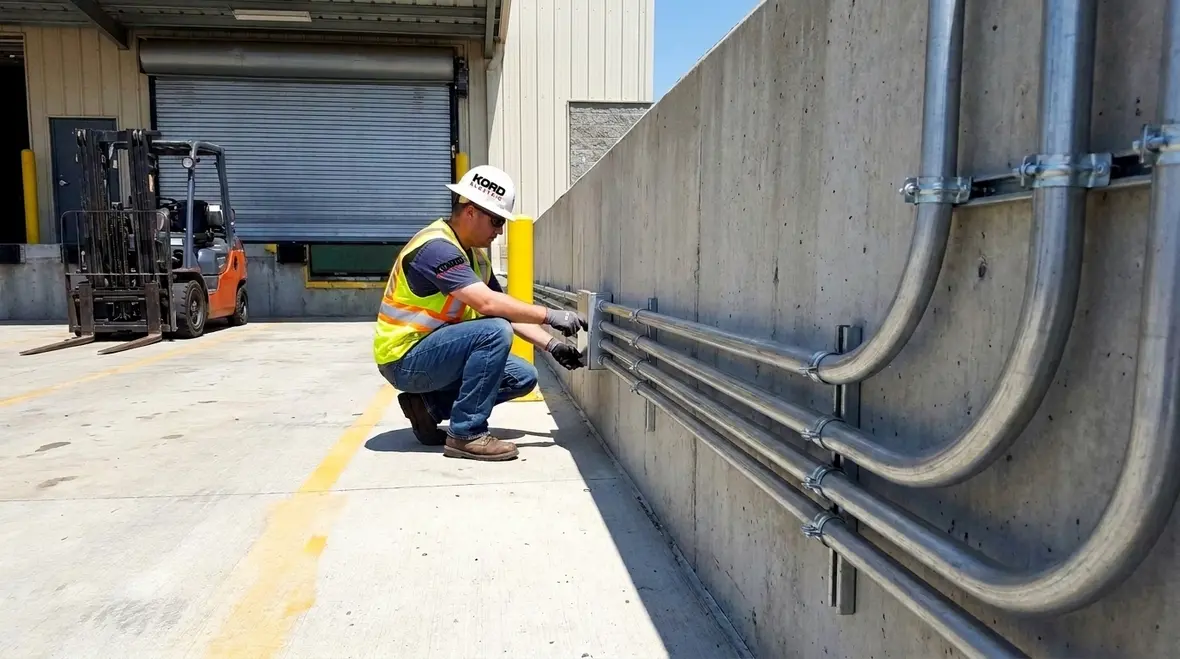
To make this practical, the requirement typically pushes facilities toward approved protection such as rigid conduit, electrical metallic tubing, or other suitable protective raceways and methods. Moreover, it requires that the protection match how the cable gets exposed. If the area sees vehicle contact, equipment movement, or frequent maintenance traffic, then the wiring method must reflect that risk.
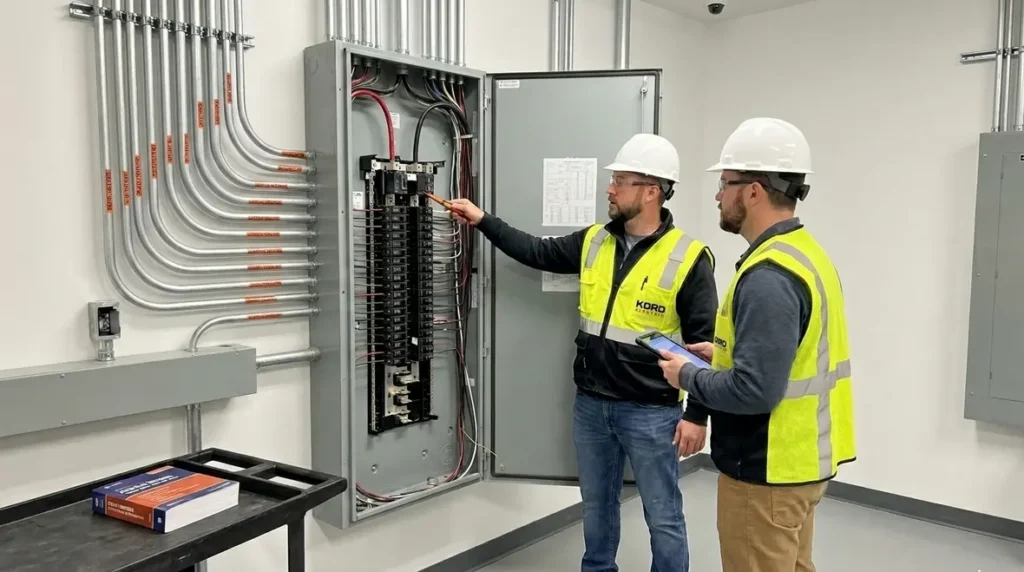
Kord Electric explains this in plain language during site walks. Our expert service staff looks at routing, height, access points, and surrounding operations. Then they translate the standard into a plan that works for commercial and industrial buildings, where downtime hurts and repairs rarely happen at convenient times. For teams who want a broader foundation on the rulebook behind these decisions, articles like Understanding NFPA 70: The National Electrical Code Explained for 2026 connect Section 225.20 back to the bigger NEC picture.
Where NEC outside wiring physical damage happens most
Even when teams follow good layout rules, physical damage still shows up where the job expects “normal use.” However, in real facilities, “normal” can mean dock traffic, forklift paths, ladders in and out of service, and utility access by contractors with their own timelines. Therefore, the highest-risk areas often include the following.
- Near entrances, loading bays, and exterior equipment pads
- Along walls and fences where crews move tools and materials
- Routes that run close to grade, curbs, bollards, or vehicle lanes
- Zones with recurring maintenance access or seasonal snow removal
- Sections passing through areas exposed to vibration or impact
As a result, Kord Electric technicians evaluate routing decisions early. They check whether wiring methods remain intact through normal operations, not just through the inspection day. Additionally, they consider how protective measures will hold up over time, because a “perfect” installation that deteriorates after one busy season becomes an expensive lesson.
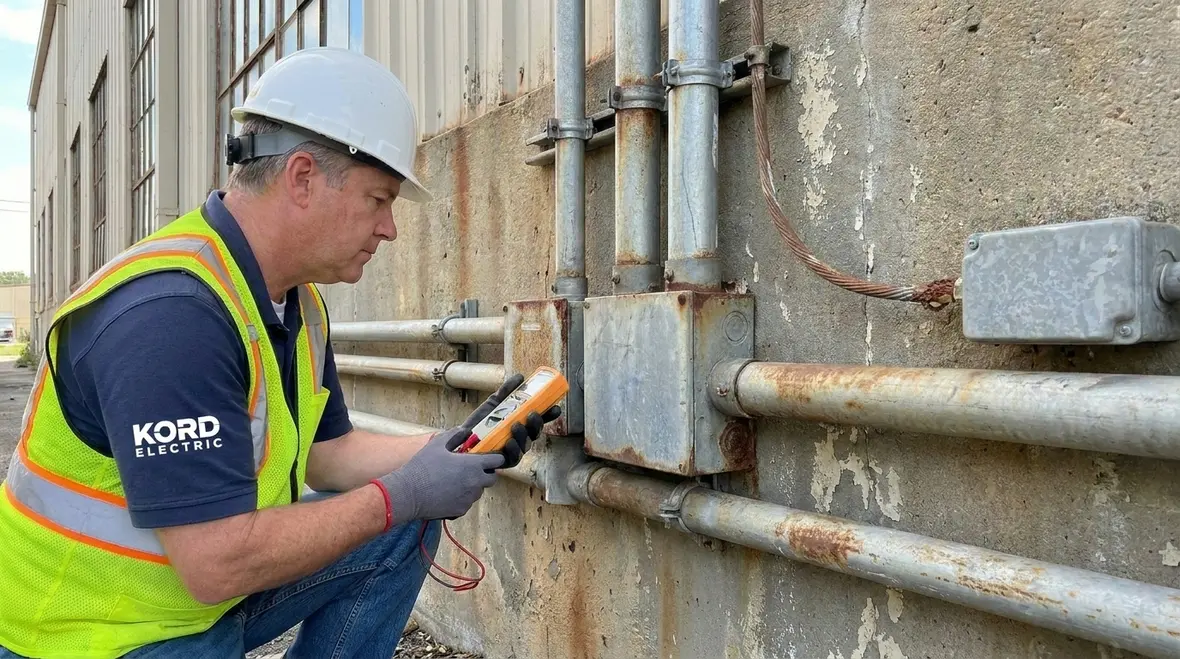
Choosing a protection method that matches the hazard
NFPA 70 Section 225.20 does not treat all damage risks as the same. Instead, it expects the installer to apply protective choices that fit the environment. For example, a cable in a protected trench may need a different level of protection than a cable run where equipment can bump it.
That is why Kord Electric focuses on method selection, not guesswork. Our expert service staff compares the wiring method to the expected contact risk, then recommends the appropriate raceway and hardware. In commercial and industrial facilities, we often see the biggest failures happen when teams choose the “easier path” rather than the safer one. And yes, electrical protection should not feel like a choose-your-own-adventure book where the ending is always “call us later.”
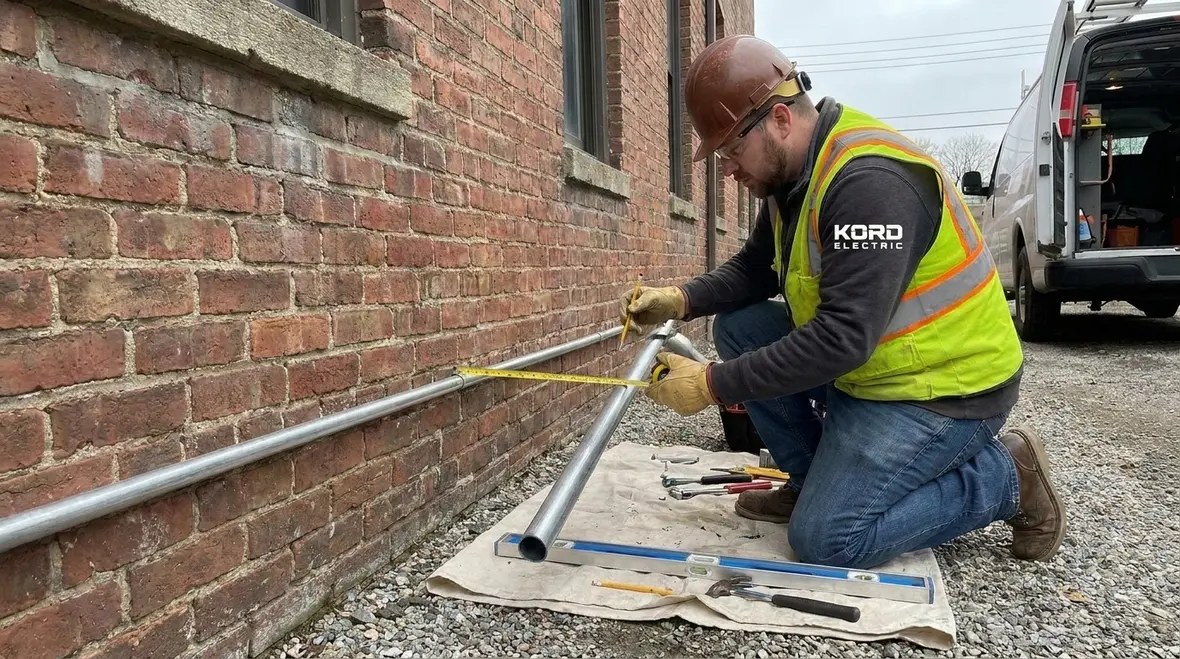
Practically, this can mean using rigid conduit where impact risk is higher, ensuring correct bending radii and support spacing, and using fittings that stay durable in outdoor conditions. Also, it means planning for future maintenance. If service techs need to access a run, protection should support that workflow without inviting damage.
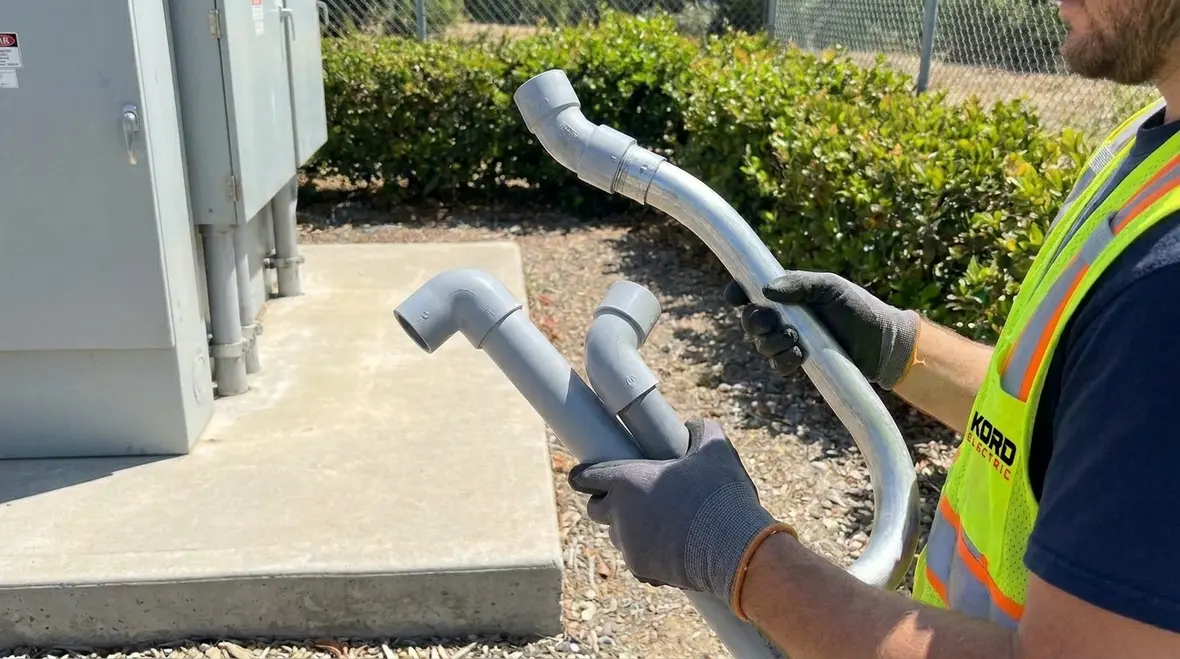
How inspections think about physical damage protection
For major property buildings and industrial campuses, inspections bring more than a checklist. Inspectors often look for consistency, code intent, and evidence that wiring methods remain safeguarded where damage can occur. Therefore, documentation and clean installation details matter.
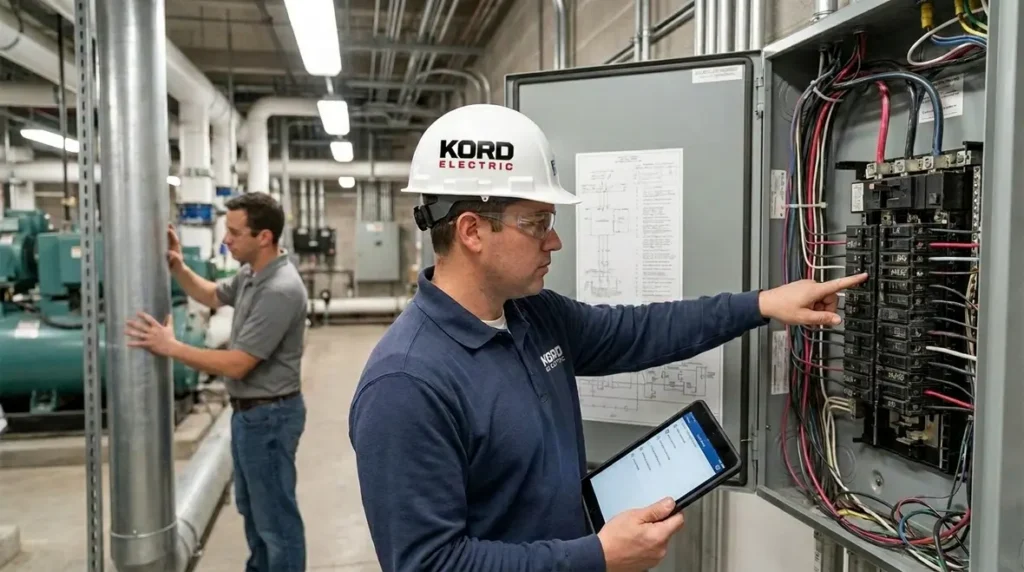
Kord Electric helps facilities prepare for that reality. First, our team reviews routing plans and identifies sections likely to face impact. Next, our technicians verify proper installation of protective systems, including secured raceways, correct bonding methods, and proper support. Then, if the job requires upgrades, we coordinate the work so it does not interrupt critical operations.
Additionally, we explain to stakeholders why protection choices matter. We do not hide behind jargon, and we do not act surprised when a building manager asks, “Why this conduit, not that one?” Our answer stays steady: because Section 225.20 pushes protection that matches the hazard, and the inspector expects the same logic.
Design and build steps that reduce future repairs
Physical damage protection works best when teams build it into planning. Once wiring is buried, rerouted, or covered, the opportunity to improve protection gets smaller and more expensive. So Kord Electric promotes earlier decisions that prevent later headaches.
Our expert service staff uses a practical approach for commercial and industrial facilities:
- Site review to map traffic patterns, equipment movement, and access points
- Routing review to limit exposure to impact and scrape zones
- Raceway planning to match the severity of exposure, not a one-size idea
- Support and fastening verification to stop sag, strain, and loose sections
- Outdoor considerations such as exposure to moisture, temperature swings, and corrosion potential
Moreover, when new projects connect into existing runs, we treat interfaces with extra care. The weakest point often appears where old methods meet new ones. As a result, we examine transitions, stub ups, and protection at entry points so systems do not become a patchwork of good intentions.
And if someone tries to “just tape it and move on,” we politely steer them away. Electricity may be stubborn, but code requirements are stubborn in a different way. They do not care if the tape looked confident.

Common mistakes facilities make with outdoor cable protection
Even strong teams can miss a detail, especially when projects run fast. However, errors around physical damage protection tend to repeat across sites. Kord Electric sees the same patterns, and we help clients avoid them.
- Using inadequate raceway types for locations exposed to impact
- Failing to secure raceways properly, which can lead to movement and eventual damage
- Skipping protection at entry points, stub ups, or transition areas
- Choosing routes that cross forklift paths or maintenance access lanes
- Underestimating long-term exposure such as weather and corrosion, which weakens protection over time
Then there is the “inspection day fix,” where teams attempt to retrofit protection too late. That approach can raise costs and slow schedules. Therefore, Kord Electric helps customers address physical risk during design and installation, so the facility avoids rework and keeps systems reliable.
FAQ on NFPA 70 Section 225.20 and physical damage protection
Wrap-up from Kord Electric technicians
Kord Electric helps commercial and industrial facilities apply NFPA 70 requirements with clarity, discipline, and real field experience. Our technicians and expert service staff review routing, identify where physical damage can occur, and select protection that holds up in the real world. Then we install and verify the work so your team avoids avoidable failures and reduces inspection friction.
If your outside wiring needs a health check or a plan for upgrades, you can connect this discussion of Section 225.20 with broader planning resources on the Kord Electric blog that explain how the National Electrical Code shapes real projects. When you are ready to turn those concepts into field-ready work across your site, explore how our Los Angeles County electrical services support code-compliant installations, upgrades, and maintenance for demanding facilities.
From first walkthrough to final inspection, Kord Electric treats outside wiring protection as part of a complete electrical strategy, not an afterthought. If your facility needs a site assessment or a structured plan to harden exposed runs, schedule time with our team and get protection done right the first time.