NFPA 70 250.109 NEC Nonmetallic Enclosures Bonding
At Kord Electric, we handle electrical work for commercial and industrial facilities and major property buildings, and we do it with one clear goal: keep metal and nonmetallic enclosures connected to the grounding system in a way that matches the rules. In the real world, that means we plan for NEC nonmetallic enclosures bonding where it matters, document what we did, and explain why it is needed. So when NFPA 70 Section 250.109 comes up, we do not treat it like a dusty rule book. Instead, our technicians and expert service staff walk people through it calmly, step by step, and with just enough humor to keep the day from turning into a rerun of “Grounding 101.”
NFPA 70 Section 250.109: what it actually requires
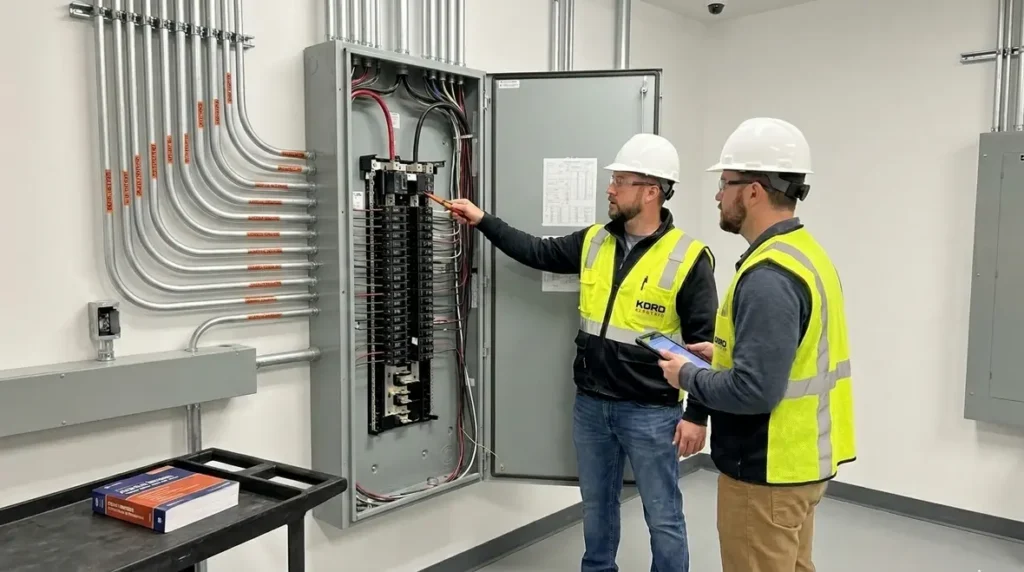
NFPA 70, the National Electrical Code, drives how we bond and ground electrical systems. Section 250.109 focuses on bonding metal and nonmetallic enclosures, and it matters because enclosures can become part of the electrical path during faults, damage, or abnormal conditions. In other words, if an enclosure is not treated correctly, it can turn into a problem instead of a protector.
When we work on commercial and industrial sites, we see common enclosure setups: metal pull boxes, nonmetallic conduits, boxes set in ceilings, exterior raceways, and equipment cabinets near service disconnects. Therefore, Section 250.109 pushes us to think about three practical areas: what the enclosure is made of, how it connects to raceways, and how the enclosure connects to the grounding electrode system and equipment grounding conductor.
More importantly, we do not just “check a box.” Our team applies the requirement with care, especially where nonmetallic items meet metal components. At Kord Electric, our expert service staff often says, “If the enclosure can move electricity around during a fault, we bond it like it matters.” And, honestly, it does.

For a broader look at how this section connects to the rest of the National Electrical Code, many facility teams also find it useful to review Kord Electric’s practical guides on how to read NFPA 70 step by step and how it shapes real-world installations across commercial buildings.
Why bonding matters for commercial and industrial buildings
Commercial and industrial facilities face higher risk than typical residential jobs, not because people are careless, but because loads, equipment density, and operating hours are intense. As a result, faults can start with something small: a damaged conductor, a loose connection, or a conduit fitting that did not get secured right. Then a fault can energize parts that should stay safe.
Bonding helps keep exposed metal parts at a controlled potential. So instead of letting voltage “wander” through the enclosure surfaces, bonding creates a low impedance path back to the source. That matters for reliable operation of protective devices and for reducing shock risk to workers and maintenance teams.
Meanwhile, nonmetallic enclosures can mislead people. They look “safe” because they do not conduct like metal. However, they still interact with metal parts, fittings, cable assemblies, and equipment housings. Even if a plastic box does not conduct on its own, other parts connected to it can become energized. Therefore, the correct approach depends on the overall assembly, not just the outer shell.

This is also where grounding and bonding basics come into play. When we help facility teams connect enclosure bonding decisions to the broader grounding system, it becomes easier to see how one loose or missing bond can affect the entire fault path instead of just a single box on the wall.
Where NEC nonmetallic enclosures bonding shows up in real installations
In practice, we see bonding needs in areas that affect building operations every day. When our technicians inspect or design electrical systems for major property buildings, the bonding conversation often appears in these zones.
Enclosure and raceway interfaces: Nonmetallic boxes or raceway sections often connect to metal fittings, sleeves, or hubs. Where those meet, we confirm the bonding path stays intact.
Conduit bodies and pull stations: Pull boxes may use nonmetallic parts with metal hardware. Cable pulling stresses the system, and any loose path can worsen over time.
Equipment rooms and vertical risers: Cable trays and conduits transition between floors and rooms. A correct bonding strategy helps keep fault clearing predictable.
Exterior and wet location areas: Corrosion and moisture can attack metal components at terminations. As conditions change, bonding helps maintain safety under fault scenarios.
At Kord Electric, we also coordinate bonding where facility upgrades meet older work. If a site remodel ties new nonmetallic enclosure systems into existing metal raceways, we handle the interface with the same seriousness as the rest of the system. Because yes, mixing old and new can feel like pairing yesterday’s coffee with today’s schedule. It usually works, but only if you plan it.

When we review these assemblies during electrical asset site analysis or during electrical infrastructure upgrade planning, enclosure bonding becomes one of the checkpoints that keeps faults from turning into expensive downtime.
How to bond metal and nonmetallic enclosures without missing key paths
Section 250.109 does not ask for guesswork. It asks for a reliable bonding method that fits the enclosure type and system design. Therefore, our process usually starts with the same disciplined steps.
First, we identify the enclosure parts that require bonding. We examine whether the enclosure is metal or nonmetallic, then we trace how it connects to raceways and other equipment. We also check the fittings: some fittings carry bonding responsibilities, while others can block it if installed wrong.
Next, we verify the bonding method. Our expert service staff evaluates how the enclosure connects to the grounding system, and we confirm that conductors are sized and routed correctly. We look for common failures like missing bonding jumpers, loose grounding screws, or worn contact surfaces.
Then, we confirm continuity and termination quality. Bonding is not a “set it and forget it” task. We ensure tight mechanical contact at terminations, then we confirm the system does not rely on paint, coatings, or corrosion ridden surfaces to carry current. If a surface looks fine but the contact is weak, the bond becomes a rumor instead of a connection. And unlike gossip, we want real electrical paths.
Finally, we document what we installed. For commercial and industrial facilities, documentation supports maintenance planning, inspections, and future upgrades. It also helps when a facility manager needs clear answers fast, like when an alarm event happens and everyone wants the timeline yesterday.
On larger projects, this same method ties into services like data-driven electrical design and code upgrade consulting, where enclosure bonding gets planned on the drawings and then verified in the field so nothing critical is left to chance.
Code coordination: how 250.109 fits with the rest of NFPA 70
Section 250.109 does not sit alone. We treat it as part of a bigger system of grounding and bonding requirements across NFPA 70. As we coordinate design and field work, we look at how bonding affects equipment grounding, conductor routing, and fault protection performance.
We also pay attention to how facility stakeholders interpret code language. Some teams read the code and get stuck on the word “enclosure,” then they stop thinking about the assembly. However, enclosures connect to raceways, raceways connect to boxes, and boxes connect to equipment. Therefore, the correct bonding plan depends on the whole chain, not just one item on a drawing.
When we collaborate with fire safety partners and facility teams, we align our approach with broader safety goals. For guidance on the National Electrical Code overall, our team follows updates and clarifications, including the kind of summary you can find in Kord Electric’s guide to understanding NFPA 70 for 2026 and related articles on how to read NFPA 70 in a practical, field-tested way.
You can also explore related code and electrical safety discussions through partners and industry groups like firepumps.org, especially when you need a broader view on how building safety systems work together across power, fire protection, and life safety equipment.

For facility leaders who want to connect enclosure bonding to broader code strategy, it can also help to review Kord Electric’s Electrical Infrastructure Upgrade Planning Guide and related resources that explain how NFPA 70 shapes real budgets, timelines, and risk profiles.
Inspection and service: what our technicians check on site
When it comes to real safety, the field matters. After installation, our technicians inspect bonding and continuity with a methodical approach that matches commercial and industrial standards. We focus on accuracy and repeatability because a bond that passes once can still fail later if the system was assembled poorly.
During service calls, we also watch for changes that affect bonding. Tenants may add equipment, facilities may upgrade lighting, and maintenance teams may replace conduit runs. Even small changes can interrupt bonding paths if someone swaps fittings or adds components without considering the enclosure bonding requirements.
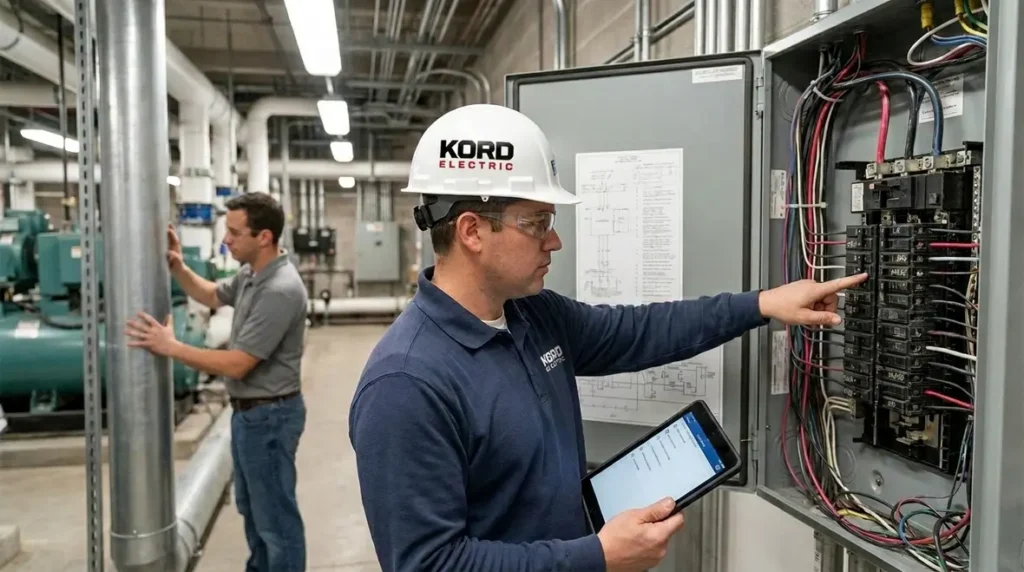
So, we ask and we verify. Our technicians walk through the enclosure assembly, confirm the integrity of connections, and explain what they find in plain language. We do not overwhelm people with buzzwords. Instead, we show what is correct, what is risky, and what we recommend, and we keep the conversation grounded in how commercial buildings operate.
And yes, we might make a joke about how “electricity always finds the path of least resistance.” That is not a punchline for fun. It is a reminder that bonding must be the planned path, not the accidental one.
Because of that, enclosure bonding often features in our electrical asset site analysis work, where we review how real-world operating conditions, maintenance history, and upgrades have changed the fault paths inside a building over time.
Common mistakes we see during bonding work
In commercial and industrial environments, mistakes often repeat because schedules tighten and the job moves fast. Therefore, we keep an eye out for predictable failure points.
Relying on mechanical contact alone: Some installers assume that mounting screws bond everything. However, contact can fail if surfaces are painted or corroded.
Skipping bonding at the metal and nonmetal interface: Nonmetallic enclosures can still connect to metal fittings. When the interface gets overlooked, the bonding path breaks.
Using the wrong fittings: Certain hubs, connectors, and couplings may not maintain continuity. If the fit blocks bonding, the enclosure protection becomes unreliable.
Inadequate conductor terminations: Loose terminations increase resistance. As resistance rises, fault clearing can become slow or inconsistent.
Our service staff handles these issues by treating bonding as a real workmanship task, not an afterthought. We slow down where it matters, and we explain the “why” so facility teams understand the stakes. That way, future maintenance decisions stay aligned with safety goals and match the broader commercial electrical safety protocols already in place across the facility.
How enclosure bonding fits into larger commercial electrical strategies
Enclosure bonding might sound like a small detail compared to transformers, switchgear, and large distribution panels, but it quietly supports all of them. When bonding and grounding work together, faults clear where they should, protective devices behave predictably, and maintenance teams can trust that metal parts will not surprise them during troubleshooting.
That is why we often fold NEC nonmetallic enclosures bonding into larger planning topics like modernizing commercial building electrical systems, upgrading aging infrastructure, and preparing facilities for new loads, technologies, and code cycles. When the small connections are right, the big investments deliver the reliability they were designed for.
For facilities across the region, Kord Electric’s Los Angeles County electrical services bring these ideas together in a practical way. We connect detailed field work like enclosure bonding to high-level goals such as uptime, compliance, and safe day-to-day operation for tenants and staff.
FAQ
Conclusion and call to action
At Kord Electric, we treat NFPA 70 Section 250.109 as a safety foundation, not a line item. Our technicians and expert service staff build and verify bonding for commercial and industrial facilities, including interfaces that involve NEC nonmetallic enclosures bonding. If your team is planning upgrades, responding to an inspection item, or improving fault safety in an electrical room, contact us. We will review the enclosure assembly, explain the findings, and help you move forward with confidence. Let’s make the code work for you, not against you.
Whether you are coordinating a full electrical infrastructure upgrade, modernizing a specific system, or simply trying to resolve questions about enclosure bonding on a single project, our team is ready to help you line up design, installation, and documentation so everything matches NFPA 70 expectations in the field, not just on paper.