NEC Specific Equipment Grounding Under 250.112 by Kord Electric
Kord Electric helps commercial and industrial facilities keep their electrical systems grounded the right way, and that starts with the rules in NFPA 70 Section 250.112 for grounding specific fixed equipment. We focus on NEC specific equipment grounding for things like fixed motors, appliances, and other stationary loads that stay put year after year. Then, we connect that practice to real site conditions, not just textbook diagrams. In other words, we make sure the protection scheme works when the environment gets loud, wet, dusty, or downright unpredictable. And yes, our expert service staff will explain it in plain language, because nobody should need a decoder ring to understand safe grounding.
Where Section 250.112 fits in the bigger grounding plan
In a properly designed electrical system, grounding does two jobs. First, it limits voltage to keep metal parts from becoming shock hazards. Second, it supports fault clearing so overcurrent devices trip fast enough to protect people and property. Section 250.112 focuses on one slice of that work: grounding specific fixed equipment. These are the stationary pieces that do not move like tools, and that means their grounding method must match the equipment’s installation style.
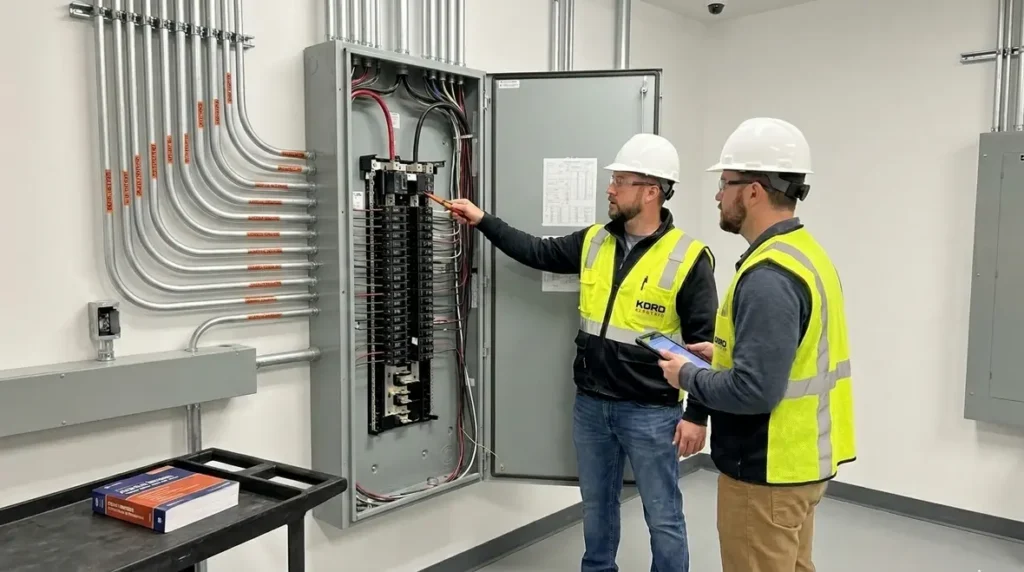
To keep things clear, Kord Electric’s team approaches this the way we’d approach a critical building system walkthrough. We start by identifying what the equipment actually is, how it is connected, and what metal parts need a stable connection to the grounding path. Then we verify how the equipment grounding conductor is routed and bonded, and how the grounding electrode system supports the overall safety design. As we do this, we remind our clients that grounding is not a “one and done” task. Instead, it is a system that must stay correct over time.
NEC specific equipment grounding for fixed equipment: the core idea
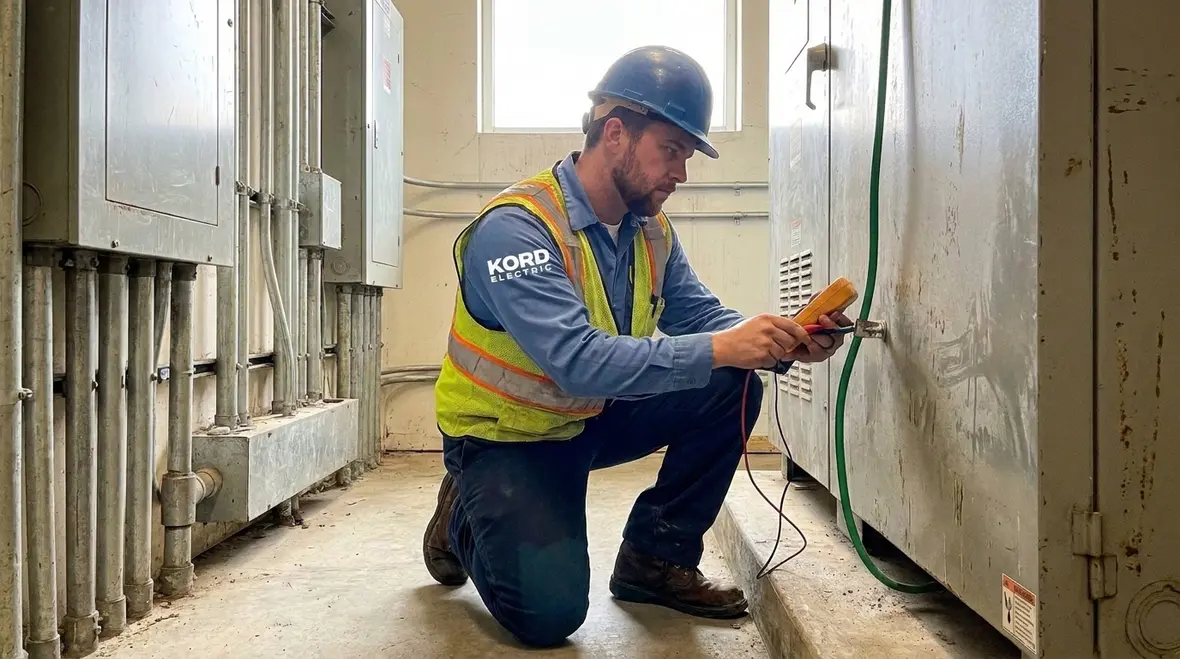
When we apply NEC specific equipment grounding rules, the goal stays consistent. We ensure that non current carrying metal parts of fixed equipment connect to the equipment grounding conductor or other approved grounding connection. This way, when a fault occurs, the system provides a low impedance path for fault current. As a result, breakers, fuses, or other protective devices clear the fault within safe time limits.
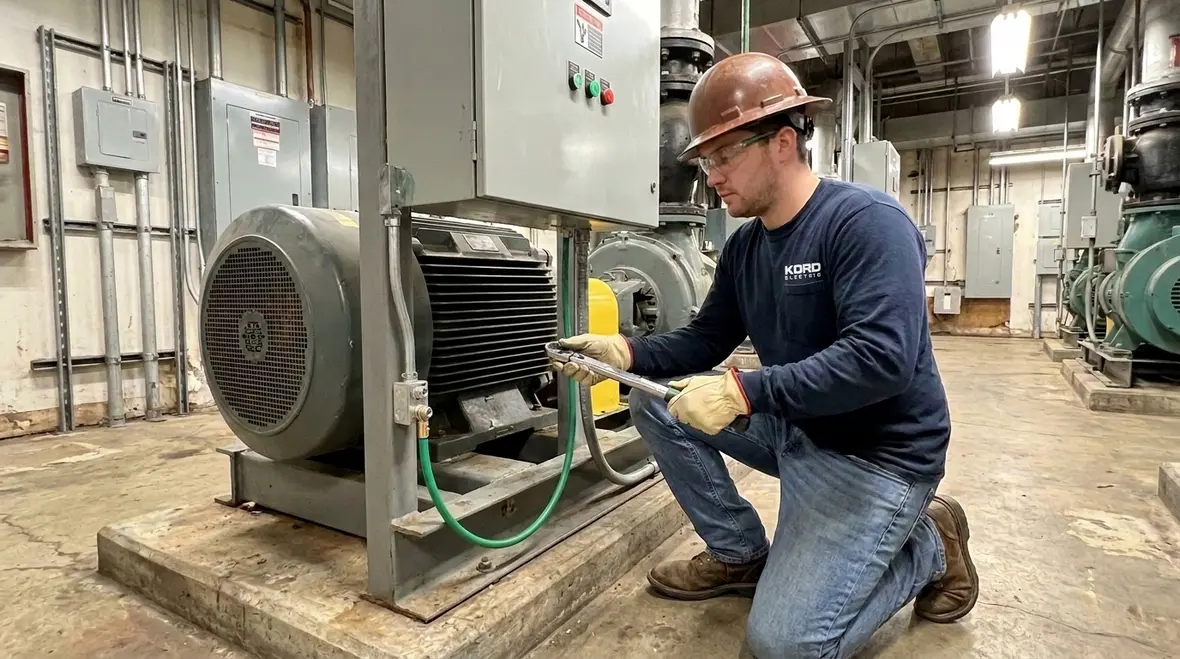
Now, fixed equipment is not all the same. For example, a permanently mounted motor in a pump room behaves differently from a heavy duty control cabinet. Furthermore, the equipment might be indoors in a damp location, outdoors under weather, or installed in a space with vibration and dust. Therefore, grounding methods must respect the installation environment. Our technicians account for cable type, conduit routing, terminations, and how the manufacturer expects bonding to be done.
Here is the practical part. Many failures start small. A loose termination. A corroded bond. A conductor that was replaced but never re bonded correctly. Then, the system “works” until it does not. And when it fails, it often fails at the exact moment the facility wants it most, like on a peak production day. That is not a fun plot twist, even if it sounds like a sitcom.

How installers should treat conductors, bonds, and termination points
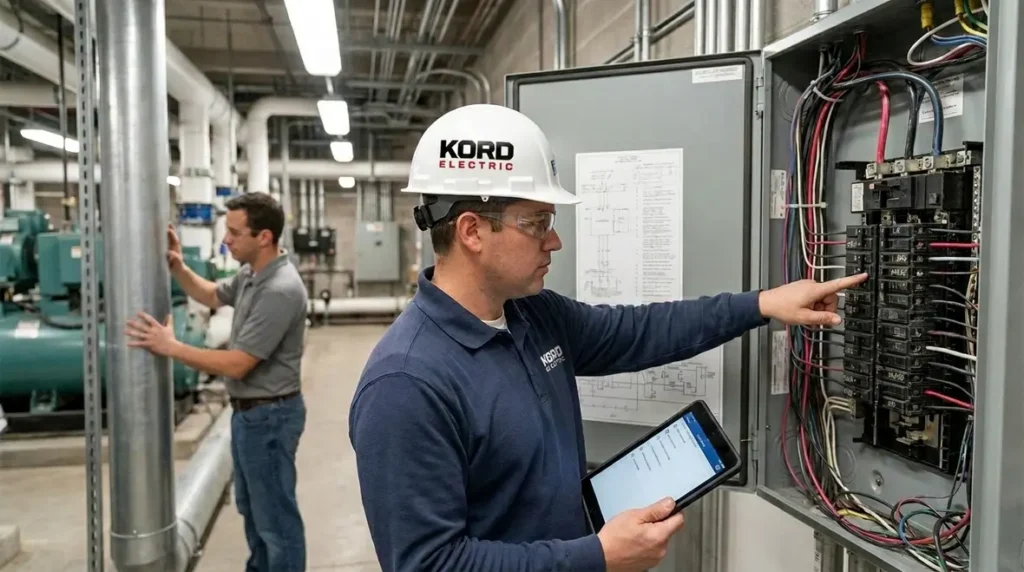
To meet the intent of the NEC, Kord Electric emphasizes the connection details. We see grounding problems often come from the parts people do not notice. That includes termination points, bonding jumpers, and how connections are made to the equipment frame.
Our expert service staff typically focuses on these checks:
- Conductor sizing and selection: We confirm the equipment grounding conductor size and material match the rules and the design. We do not “swap and hope.” We verify.
- Secure terminations: We torque and inspect lug connections where grounding conductors land on equipment and enclosures. We make sure they are not loose, stripped, or improperly layered.
- Bonding of metal parts: We connect metal enclosures, frames, and accessible non current carrying parts using approved bonding methods. We do not rely on paint or corrosion prone paths.
- Path continuity: We check that the grounding path stays intact through conduit, fittings, and transitions. If the path includes components that can loosen or separate, we address that.
Then we connect those checks back to the equipment’s behavior. For instance, fixed equipment often includes drives, motor starters, heaters, or control electronics. Even when these devices protect themselves internally, the external metal parts still need safe bonding. So, we treat grounding as the foundation that keeps every layer stable.

Common commercial and industrial pitfalls we see on site
Commercial and industrial facilities usually have one thing in common: equipment gets maintained, replaced, upgraded, and re routed. While that is normal, it creates opportunities for grounding mistakes. As the building changes, the grounding system must change the right way too. Otherwise, you get the electrical equivalent of a seatbelt that only works on Tuesday.
Kord Electric often sees these issues during service visits for major property buildings:
- Equipment swaps without grounding review: When a contractor replaces a piece of fixed equipment, the new unit sometimes lands on the existing grounding connection without verifying compatibility and termination method.
- Corrosion and moisture intrusion: Outdoor units, washdown areas, and humid plant rooms can create corrosion at bonds. We check for deterioration and re establish reliable contact.
- Improper bonding through conduit: Conduit can help, but it is not automatically a perfect grounding path in every installation condition. We verify continuity and approved bonding where needed.
- Neglected enclosure bonding: Enclosures and cabinets may get power wiring, yet their bonding points get overlooked during renovations.
- Unlabeled or misunderstood grounding conductors: Crews get busy. Then grounding conductors get re routed without clear documentation. We correct the labeling and restore the correct design path.
We keep the process calm and orderly. First, we document what we find. Next, we compare it to the NEC intent and the equipment grounding approach. Then we propose a correction plan that fits the facility schedule, so operations keep moving.

Testing, inspection, and ongoing maintenance for safety
Grounding verification is not only for the first day the equipment turns on. It is a living requirement. Over time, connections loosen, corrosion builds, and repairs happen. So, Kord Electric builds grounding work into inspection and service cycles for commercial and industrial customers.
Our technicians do more than look for obvious damage. They also examine how the grounding system behaves as part of the whole electrical setup. For example, we check bonding integrity at enclosures and equipment frames, confirm grounding conductor routing, and verify that connections remain durable under vibration and temperature changes.
In practice, we also help clients set a realistic maintenance rhythm. When a facility operates in demanding environments, we recommend more frequent checks. That might include facilities with frequent washdown, high airborne particulates, or heavy-duty mechanical vibration. In short, we match the maintenance plan to the risk profile, not to a generic calendar.
Additionally, we explain findings clearly, so facility managers understand what matters and why. Others can speak in acronyms all day. Our expert service staff translates the NEC logic into site reality, and we leave you with documentation you can use.
Practical compliance workflow for facility managers
Facility teams often ask, “How do we handle this without disrupting operations?” We usually recommend a step by step workflow. It keeps risk low and prevents the common “fix it later” trap that turns small grounding issues into larger outages.
- Inventory fixed equipment: We help identify which equipment qualifies as fixed and what metal parts need bonding.
- Review installation records: We compare existing field conditions to the planned grounding approach and any available documentation.
- Inspect equipment grounding points: Our technicians verify terminations, bonding jumpers, and enclosure connections.
- Verify grounding path continuity: We confirm the grounding path stays continuous and reliable through conduit and transitions.
- Correct and document: We repair non compliant or weak connections and record what we changed so future work stays accurate.
Then, once improvements are complete, we coordinate next steps with the facility so the electrical system remains dependable. This approach supports compliance while protecting your uptime, which, frankly, is usually the real success metric. Even the best grounding plan does not help if it breaks during the next shutdown window.
FAQ: NEC grounding for fixed equipment
A quick word on code context and safety culture
NEC rules work best when people understand the intent. Our team stays aligned with the National Electrical Code approach and supports our clients with clear explanations. If you want additional background on NEC coverage and how it applies to building systems, Kord Electric references the broader guidance in resources like Understanding NFPA 70: The National Electrical Code Explained for 2026, as well as articles hosted on Kord Fire. We also consider practical safety priorities similar to those emphasized by industry fire protection groups such as firepumps.org, because grounded systems support overall protection goals in the real world.
So while Section 250.112 may sound like a single rule tucked into a larger code book, it actually sits at the center of many safety outcomes. That is why we treat it with respect, and why our expert service staff explains the “why” along with the “what.”
Call Kord Electric for grounding review and expert service
If your facility runs motors, pumps, or other fixed equipment, do not leave grounding to guesswork. Kord Electric serves commercial and industrial facilities, and we help you verify and maintain NEC specific equipment grounding so metal parts stay safe and faults clear reliably. Our technicians inspect terminations, bonds, routing, and continuity, then document what we find and what we correct. Contact Kord Electric today to schedule a grounding review and get answers you can trust, without the boring fluff and without the midnight surprises.
For facilities planning larger upgrades or multi site improvements, you can also review our broader service coverage in Los Angeles County electrical services, where we outline how Kord Electric supports code compliant work across commercial and industrial projects.