
NFPA 70 320 108 Equipment Grounding Conductor in NEC NM Cable
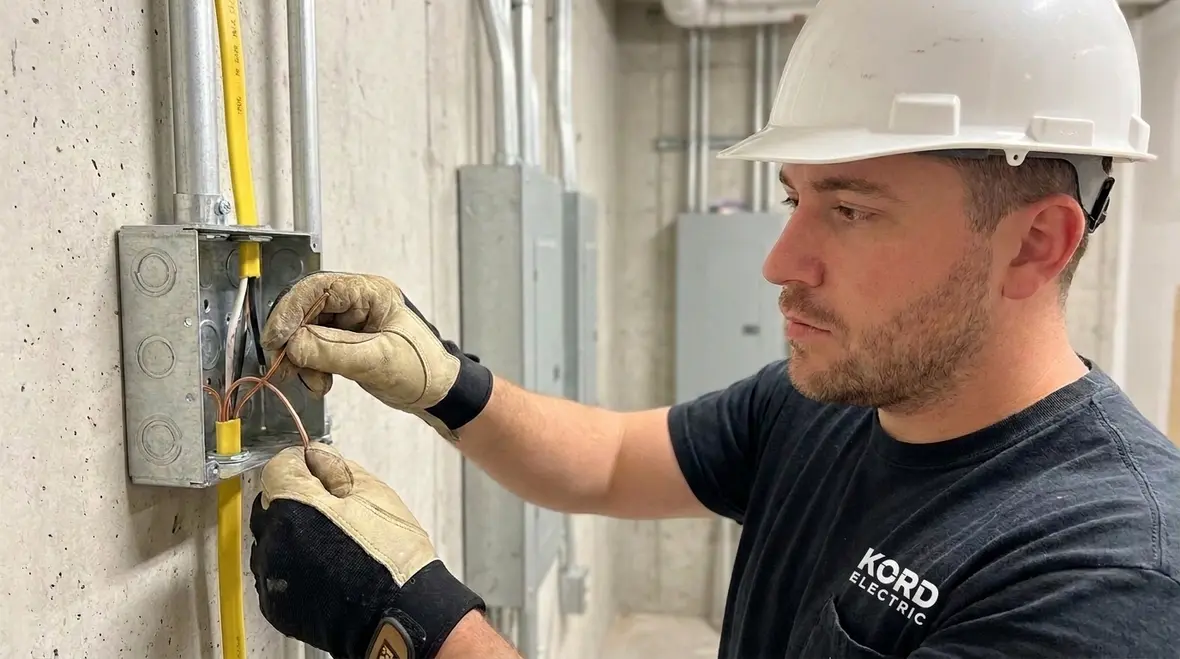
At Kord Electric, we help commercial and industrial facilities keep power systems safe and dependable, and it starts with how we handle grounding in NM cable. In this guide, we focus on NFPA 70 Section 320.108 and the rules for an equipment grounding conductor in NEC NM cable, so your system protects people and equipment the right way. And yes, we know grounding can sound like a snooze fest, like a superhero origin story nobody asked for. Still, when faults happen, grounding is the plot twist that saves the day.
Our team of licensed electricians and expert service staff explain these requirements in plain language and with real field experience. Therefore, if you maintain major property buildings, warehouses, hospitals, offices, or industrial campuses, you will get practical answers, not vague advice. As we walk through the code intent, conductor sizing, connection practices, and common installation errors, you will see why this section matters and how we verify it during service work.
NFPA 70 Section 320.108 and why it exists
NFPA 70 Section 320.108 addresses the equipment grounding conductor in NM cable. In other words, it tells installers what conductor path must exist so the metal parts of equipment do not become energized during a fault. When a wiring fault occurs, the normal circuit current should rise fast enough to operate overcurrent protection. Meanwhile, the grounding conductor provides a low impedance path back to the source. That action helps keep fault energy from roaming through steel framing, raceways, or equipment housings.
Also, the section exists because NM cable gets used in branch circuits, and branch circuit problems can affect whole facilities. If your grounding is missing or poorly bonded, you can see nuisance faults, overheated metal parts, damaged electronics, and a higher risk of electric shock. And frankly, we do not want your facility playing “who is shocked first” like it is a game show.
For facility leaders who also want to see how this section fits into the bigger rulebook, it pairs naturally with broader NFPA 70 guidance on grounding and bonding. Resources like Kord Electric’s overview of the National Electrical Code for 2026 help connect the dots between individual sections such as 320.108 and the rest of the safety “playlist” your system has to follow.
How NEC NM cable grounding conductor rules show up in real wiring
Commercial and industrial sites often use NM cable for specific branch circuit runs where conditions allow. However, when NM cable includes equipment grounding conductors, the system has to follow the requirements of NEC NM cable grounding conductor installation rules tied to Section 320.108.
At a high level, the code requires that the equipment grounding conductor be present and used correctly. Therefore, if your cable assembly provides a grounding conductor, you must terminate and bond it properly at terminations. Additionally, you must keep it continuous where required, and you must avoid assumptions like “the metal box will fix it.” Metal boxes help, but the equipment grounding conductor must still be connected in a way that matches the code intent.
Our expert service staff often see the same pattern during inspections. Someone wires the hot and neutral, then treats ground as optional because it feels redundant. Yet, during a fault, redundancy matters. Grounding acts like a well trained security team. It does not just stand around looking tough. It must connect, it must route properly, and it must respond fast.
This is also where NEC NM cable grounding conductor usage intersects with project planning. When you are mapping upgrades, renovations, or electrical infrastructure modernization, you cannot just swap cable types and call it a day. You have to confirm that grounding conductors in each run still form an unbroken, code-aligned path back to the source, even as branch circuits shift or get extended.
What counts as a proper equipment grounding path
To meet the intent of Section 320.108, the equipment grounding conductor must create a dependable path from the equipment back to the grounded system point. In practical terms, that means correct terminations at devices, fixtures, panels, and enclosures. Also, bonding must be secure and appropriate for the hardware you use.
We explain it this way: the grounding conductor does not “work someday.” It works during faults, which can happen at the worst time. Therefore, when we verify compliance for a major property building, we look at how the ground conductor ties into equipment grounding bars, device yokes, junction boxes, and any associated metal enclosures. Then we check that the conductor stays intact through routing and that no terminations loosen after commissioning.
Transition matters here. If you transition from one cable segment to another using connectors, junction boxes, or fittings, you must maintain the grounding path. Additionally, if you add devices later, you must extend or reestablish grounding correctly. A retrofit that “sort of grounds” a device may pass visually, but it can fail electrically.
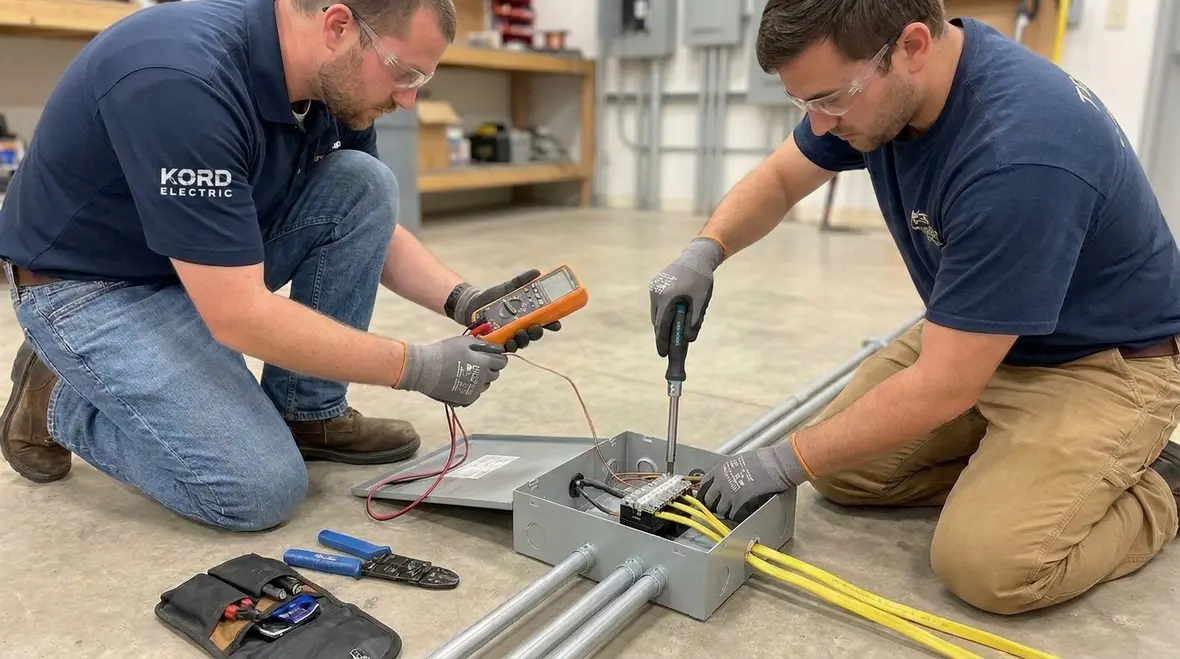
When our team checks grounding paths in the field, we treat them like critical infrastructure, not background wiring. That includes verifying how NM cable grounding conductors connect when circuits feed panels serving sensitive loads, life safety equipment, or other systems where a fault cannot be allowed to wander through metalwork or conduits.
Conductor sizing, termination, and connection quality
Section 320.108 connects grounding requirements with the broader NEC grounding and overcurrent design. That means conductor sizing and termination quality matter because a grounding conductor that is too small or poorly connected can create excessive voltage rise and heat. Consequently, your overcurrent devices may not operate as expected during a fault.
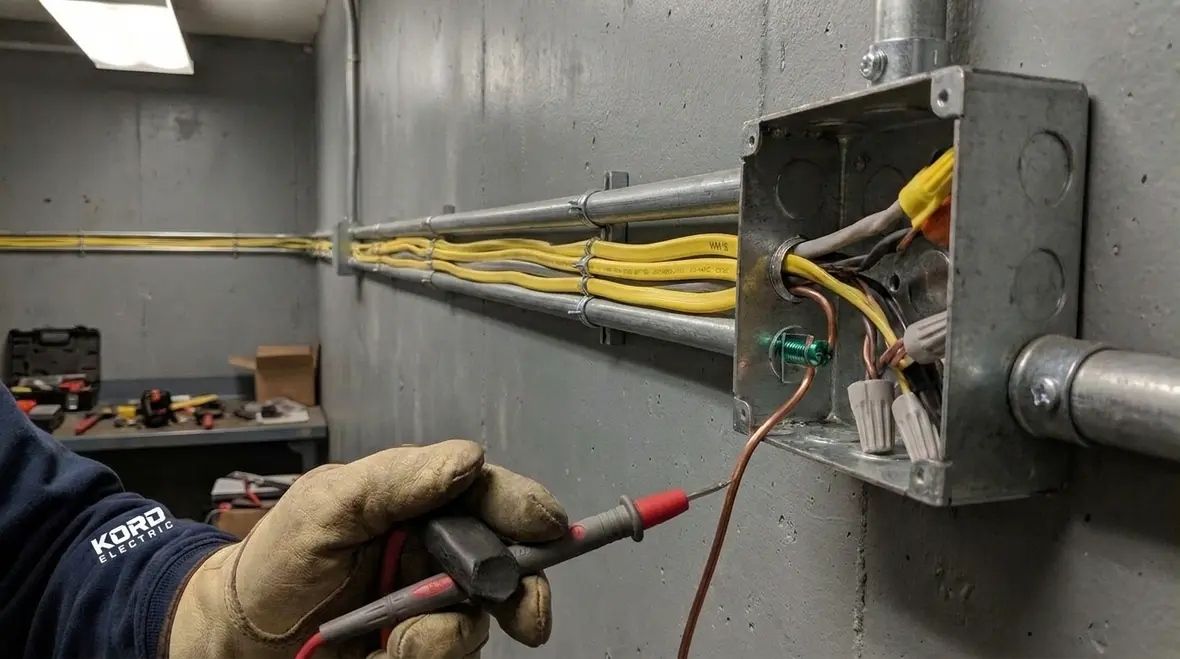
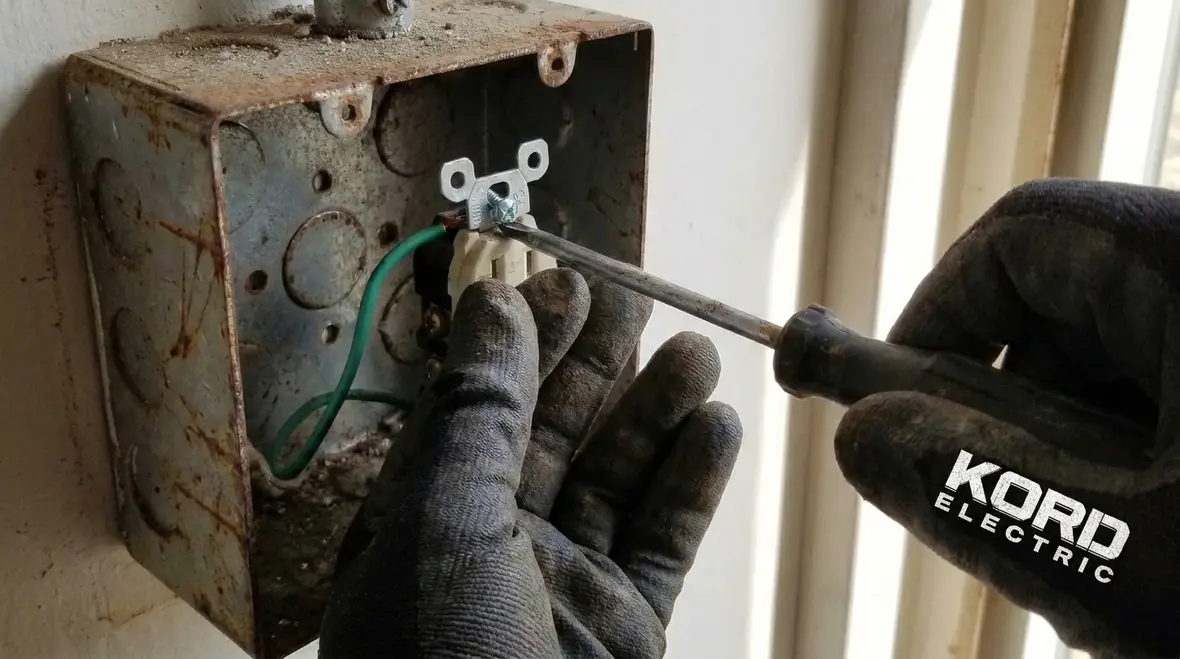
At Kord Electric, our technicians do not just install. They test, document, and verify. We focus on how the equipment grounding conductor in NEC NM cable interfaces with terminations. That includes ensuring conductor stripping is correct, terminations are torqued properly when hardware requires it, and no nicked conductor strands remain hidden under a connector. We also pay attention to device mounting. For example, if you mount devices in ways that isolate metal parts, you still need bonding that meets the code intent.
And yes, we have seen crews use “whatever screw is closest” to make a connection. That is like using a coffee stirrer to fix a hydraulic line. It might move, but it is not the right tool. Proper termination practices keep the grounding path dependable when current surges.
Conductor sizing choices also show up when facilities add new equipment or increase load on existing branch circuits. If the overcurrent protection changes, the fault current available to that NM cable can change too. That is why we confirm that NEC NM cable grounding conductor usage still aligns with the updated protection scheme instead of assuming an older sizing decision still works for today’s demand.
Common installation mistakes we catch on commercial projects
When we support commercial and industrial facilities, we often arrive after rough inspection cycles or during troubleshooting calls. Then we see patterns. Therefore, it helps to know what goes wrong with the NEC NM cable grounding conductor approach, especially where crews handle mixed cable types and later add-ons.
Here are some typical issues our technicians identify during service:
- Missing or disconnected ground conductor where NM cable is run but the grounding path never terminates at devices or boxes
- Poor bonding at metal enclosures where the metal box exists but the grounding conductor does not reliably bond to it
- Broken continuity after modifications, such as when someone replaces a device and fails to reattach the grounding conductor
- Wrong conductor routing where the cable is stapled, pinched, or pulled in a way that damages insulation or strains terminations
- Loose connections at terminations that appear acceptable during installation but loosen from vibration or thermal cycling
To reduce repeat problems, we align our work with how facilities actually operate. We schedule verification during commissioning, then again when teams add new circuits, move equipment, or refresh tenant spaces. That way, grounding stays consistent long after initial installation.
On larger projects, we also coordinate these checks with broader electrical code upgrade consulting. That helps owners avoid the situation where a renovation passes visual review but hides a loose, undersized, or missing NM cable grounding conductor that only reveals itself when a breaker refuses to trip during a real fault.
Verification, testing, and documentation for major property buildings
Code compliance is not just paperwork. It is a system that behaves predictably under fault conditions. Therefore, we verify installation quality and keep records that facility teams can use during audits, maintenance cycles, and future upgrades.
During our checks, we look at how the NM cable grounding conductor is terminated and routed, then we confirm bonding continuity across relevant components. We also consider the building environment. For instance, industrial areas may experience more vibration, humidity, or temperature swings. Additionally, some facilities run new circuits alongside existing ones, which creates opportunities for grounding mistakes during changes.
We also coordinate with facility stakeholders so the process stays calm. Nobody likes surprise outages, especially in active operations. So, we plan test timing, keep areas secure, and explain findings. Our goal is simple: you get a grounded system you can trust, and you understand why it passes.
When you pair this verification approach with a broader plan for commercial electrical systems and preventive maintenance, NEC NM cable grounding conductor usage stops being a one-time box to check and becomes part of your long term reliability strategy. Documentation from each inspection then feeds future projects, helping your team move faster without guessing what is hiding behind finished walls.
NEC context: how this section fits with the bigger wiring system
Section 320.108 does not live alone. It supports the broader NEC approach to grounding, bonding, and fault protection. That means the equipment grounding conductor rules tie into how the facility’s branch circuits connect back to the service and how overcurrent devices clear faults.
As a result, when you design or upgrade circuits in commercial and industrial buildings, you must treat grounding as part of the full electrical architecture. That includes panels, grounding electrodes, bonding jumpers, and the cable assemblies that carry circuit conductors. Also, it includes how later changes get integrated without breaking continuity.
Some people treat grounding like the “accessory” on a tool belt. But grounding is more like the base of a tripod. Remove that base and the whole system wobbles, sometimes in ways you only notice when something fails.
If you want a deeper dive into how individual NEC sections connect, pairing this topic with a guide on how to read NFPA 70 or a planning resource for electrical infrastructure upgrades can make the rulebook feel less like a maze and more like a map. Each branch circuit, each NM cable grounding conductor, and each panel then fits into a clear, predictable framework.
FAQ about equipment grounding conductor in NM cable
Below are some of the questions facility teams ask most often when they look at NEC NM cable grounding conductor usage and how NFPA 70 Section 320.108 impacts day-to-day work.
Get safe, code-aligned grounding with Kord Electric
If your commercial or industrial facility uses NM cable and you want grounding that actually holds up in the real world, Kord Electric is ready to help. Our technicians and expert service staff explain the requirements in clear terms, then we verify terminations, bonding, and continuity with a process designed for major property buildings. Reach out to us for an assessment, upgrade support, or documentation for your next inspection cycle. We will help you build a safer electrical system, one grounded connection at a time.
For facilities in Southern California, including complex Los Angeles County properties, that support can extend beyond individual circuits. Our team provides comprehensive commercial and industrial electrical services across Los Angeles County, tying NEC NM cable grounding conductor practices into panel upgrades, infrastructure modernization, and long term maintenance strategies.
If you are also mapping future code changes or planning a renovation, you can pair this grounding work with deeper NFPA 70 resources on the Kord Electric blog. That way, every grounded connection in your NM cable runs matches a bigger plan for safe, code-aligned electrical power across your entire facility.


