
NFPA 70 324.42 for NEC UF Cable Wiring Devices
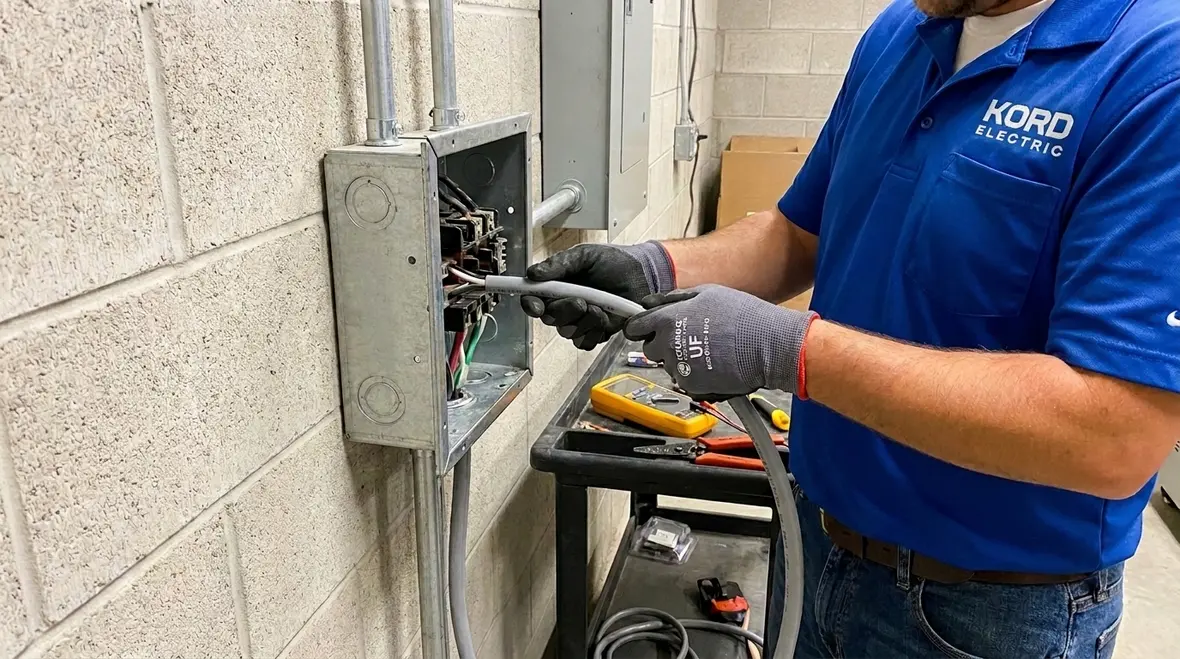
Kord Electric helps commercial and industrial teams move from “We think it’s fine” to “We verified it” when wiring projects involve NEC UF cable wiring devices. In this guide, we explain NFPA 70 Section 324.42 and what it means for UF cable connections, device mounting, and safe install practices. First, our approach stays practical: we rely on our trained technicians and expert service staff to walk through the details that often get missed in the field. Then, we connect those details to the rules that keep power where it belongs, and out of places it should never visit. If you have ever watched a contractor wing it and call it “engineering,” you already understand why the right wiring devices matter.
What NFPA 70 Section 324.42 covers for UF cable connections
NFPA 70 Section 324.42 deals with wiring devices used with underground feeder cable, including UF cable, when the cable transitions into locations where a device or box must accept it. In plain terms, the rule sets expectations for how UF cable ends get connected to wiring devices, and how those connections support safe use over time.
At Kord Electric, we do not treat this as trivia. We treat it as a safety and compliance checkpoint. Because even when the cable is rated and the run is correct, the transition point is where problems tend to start. Moisture, strain, improper sealing, and loose terminations can quietly build into failures.
For major property buildings, the stakes rise. You may have high duty cycles, long maintenance intervals, and teams that need predictable performance. Therefore, our technicians explain the code intent so facility managers and electrical contractors can confirm that the installation matches both the text and the real world use.
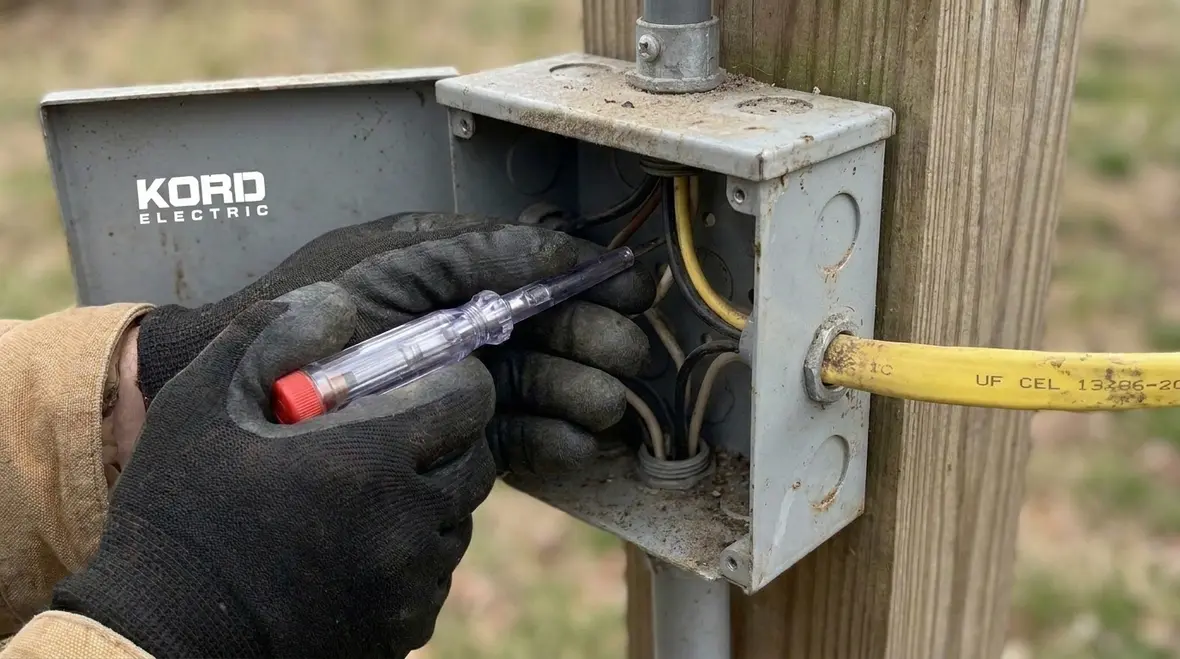
Across our NEC-focused resources, including in-depth explainers on how to read and apply the National Electrical Code for modern facilities, we return to the same idea: the written rule only works when the field installation respects it. That is why our Kord Electric blog series on NFPA 70 and our related Kord Fire code explainers stay tightly aligned with what technicians actually see near cable entries, device boxes, and terminations.
Choosing NEC UF cable wiring devices for the job, not for a truck roll
To follow Section 324.42 well, the selection of NEC UF cable wiring devices depends on where the device sits, how the UF cable enters the enclosure, and what protection the assembly requires. So we start with the environment: indoor versus outdoor, wet location risk, and whether the device sits where building occupants and cleaning crews might impact it.
Next, we look at the device type and the enclosure. Then we confirm the cable routing and termination method. When teams skip this step, they often end up with mismatched parts. The parts may “fit,” but they do not necessarily meet the sealing and strain relief expectations that help prevent water intrusion and conductor stress.
Our expert service staff at Kord Electric also focuses on future work. In commercial settings, someone will open that cover later, trace a circuit, and maybe add a label. If the wiring device choice and installation method make that process harder, the system becomes harder to maintain. And maintenance delays cost money, which is a kind of fire hazard that does not show up on a thermometer.
We also plug these decisions into the broader code picture. When facility teams dig into NEC overviews such as “Understanding NFPA 70: The National Electrical Code Explained for 2026,” they see how individual sections like 324.42 sit inside a structure that covers wiring methods, equipment protection, and long-term safety for large properties.
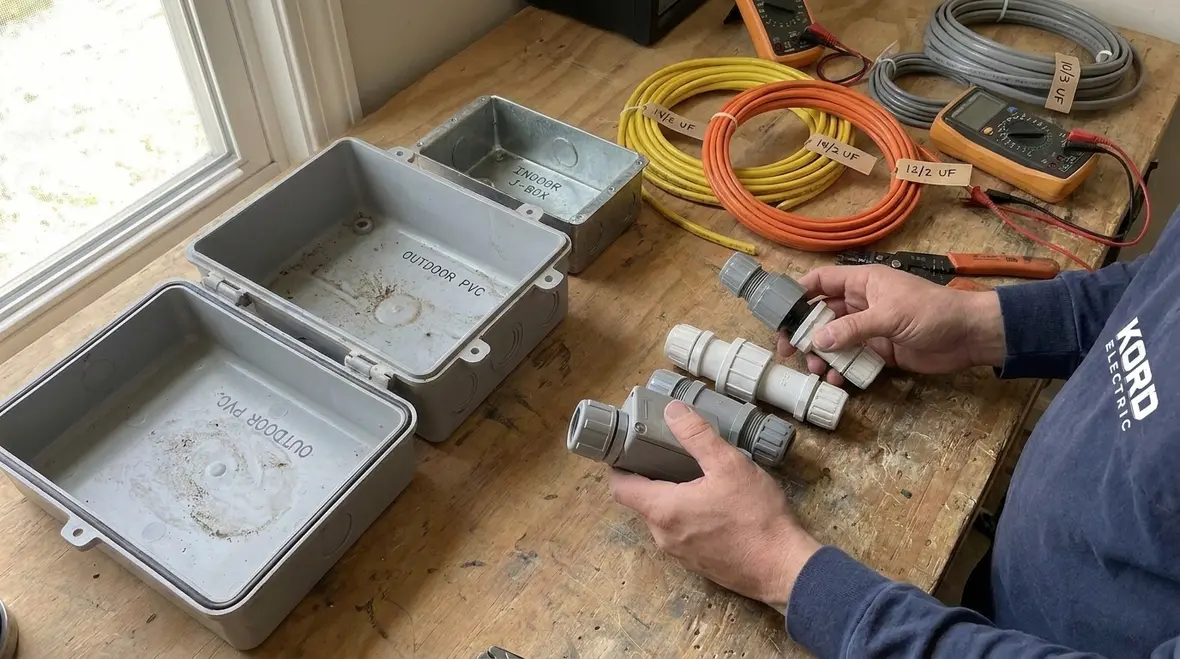
By aligning device selection with both Section 324.42 and the broader NEC guidance, we help owners avoid “creative” installs that look clever for a week and then cause trouble for years.
Proper device box and enclosure practices for commercial installs
Section 324.42 does not just talk about devices in isolation. It assumes the cable connects to an enclosure system that manages access, protection, and grounding needs. In major property buildings, we often see UF cable runs transitioning near service equipment, in perimeter utility corridors, or in exterior wall zones that face weather and vibration.
Therefore, we recommend the enclosure and box system be planned with the same level of detail as the cable run itself. That means you should verify compatibility between the box type, cover, cable entry, and any seals or fittings used for outdoor exposure. Also, we make sure the device is installed so the cable entry does not cause bending stress at the termination point.
To keep work smooth, we also coordinate with the rest of the project scope. If the building schedule includes wall finishes, facade work, or landscaping updates, those tasks can affect how and when UF cable enters enclosures. We remind teams that a “later” modification often becomes an “it will do” compromise. We would rather prevent that than rescue it.
In our NFPA 70 blog series, including articles on wiring integrity workmanship standards and service conductor rules, we connect these enclosure choices to NEC expectations for workmanship and durability. A device box that looks neat on day one but fails to protect UF cable under real load and vibration is not compliant in spirit, even if it briefly passes a quick glance.
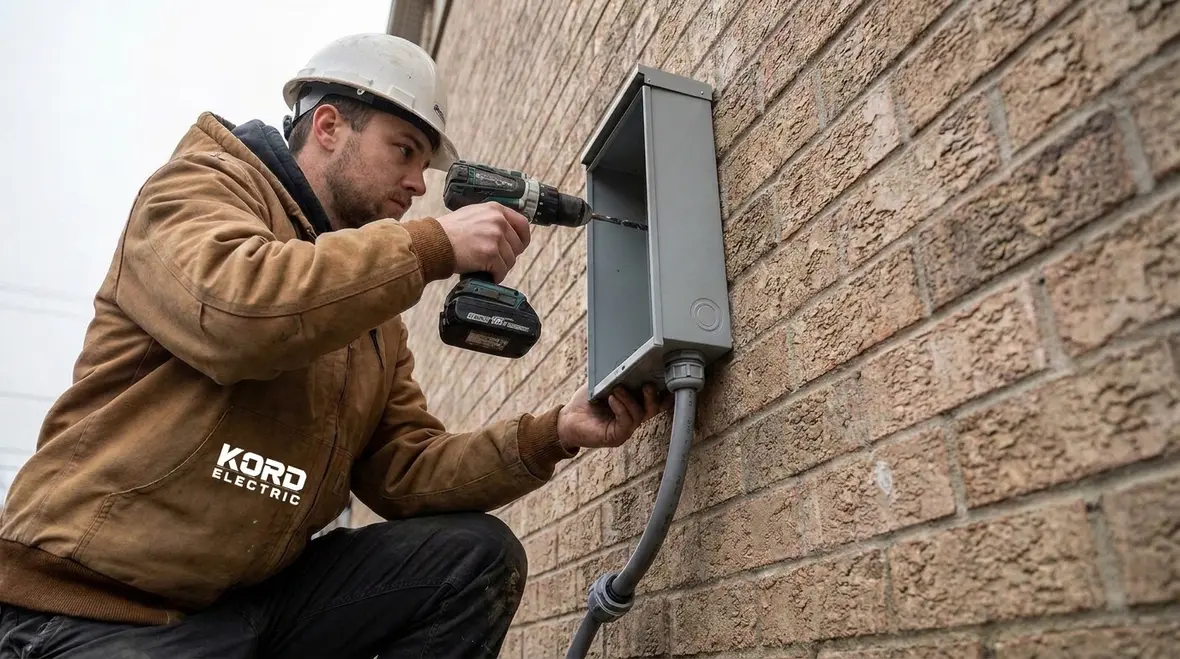
When we walk a site, we verify that each box used for UF cable entries meets the location class, supports proper cover hardware, and allows the conductors to sit calmly in place instead of fighting the geometry of the enclosure.
How grounding, sealing, and strain relief protect the system long term
When UF cable reaches a wiring device location, the goal is stable connections that stay stable. So we focus on three things: grounding, sealing, and strain relief.
Grounding: A correct grounding path protects both equipment and people. We have technicians who trace the circuit path step by step, verifying that the bonding and grounding methods match the system design and device requirements. In commercial and industrial facilities, grounding errors can create nuisance faults today and real damage later.
Sealing: Moisture is persistent. When a UF cable enters an enclosure, the entry method must resist water intrusion. We advise teams to use the right sealing approach for the location and to confirm that any gaskets or sealing methods remain intact after installation. In other words, do not seal it like you are packing a sandwich for tomorrow. Seal it like you expect the weather to show up, because it will.
Strain relief: Physical stress at terminations can loosen conductors over time. So we ensure the device assembly provides proper cable support and that the cable is not pulled, kinked, or twisted at the entry. Then we confirm that cover installation does not pinch wiring.
Our staff uses practical checklists that align with NEC concepts and good field outcomes. And if you want a broader read on the NEC framework behind these ideas, we point teams to the resources our partners discuss, including Kord Electric blog explainers such as the NEC overview for 2026, and the NEC guidance content published by our related brands.
Those explainers on topics like main bonding jumpers, grounding for nonelectrical equipment, and multiwire branch circuits all echo the same principle: small connection details shape big safety outcomes. At a UF cable device box, that principle is literally inside the cover screws your team tightens.
When we combine grounding verification, quality sealing, and solid strain relief, UF cable terminations become quiet, predictable parts of the system instead of recurring trouble tickets.
Common field mistakes we see when UF cable wiring devices are installed
Even careful crews sometimes get tripped up by the small steps. So we share the mistakes we see most in commercial and industrial facilities, because prevention beats troubleshooting. And troubleshooting is expensive in the way that slowly burning toast is “just a little problem” right up until it alarms the whole building.
Here are the usual trouble spots:
- Using a device or entry method that does not match the enclosure and location needs, which can lead to improper protection.
- Skipping or misapplying sealing methods where weather exposure is possible.
- Creating conductor stress at the cable entry because the routing does not allow natural cable movement.
- Forgetting to verify termination quality, including torque and wire placement, which can cause heat buildup.
- Assuming indoor practices apply outdoors or to wet location risk areas.
To correct these issues, we train teams to slow down at the transition point. Then we confirm the installation in context: not only “does it power up,” but also “does it remain safe and serviceable.” Our technicians explain what they see and why the fix matters. That way, the next install gets better, not just patched.
We also encourage coordination with fire and life safety planning. For example, when projects interact with fire pump rooms or fire protection control spaces, teams must align electrical installation practices with the broader system design. You can learn more about adjacent safety topics through firepump-focused resources like firepumps.org, and you can also explore related code discussions on NEC guidance pages from our partners, including Kord Fire’s overview on NFPA 70 and the National Electrical Code for 2026.
On the Kord Electric side, companion articles about multiwire branch circuits, wiring workmanship, and service conductors all reinforce the same message: if the installation around UF cable devices looks improvised, your risk curve is quietly bending in the wrong direction.
Keeping your team compliant while staying efficient on major properties
Commercial compliance does not have to mean slow work. In fact, when we plan correctly, we save time. So we start with documentation and field alignment.
First, we review drawings and identify where UF cable will connect to wiring device locations. Then we confirm the device and enclosure details before install. Next, we map the sealing and entry method expectations for each location class. This reduces rework and helps the facility team approve the work with confidence.
Then our technicians keep a steady rhythm. They verify grounding continuity, check cable routing, inspect device mounting, and confirm that access covers fit without stressing the cable entry. Finally, we provide clear communication to the building team, because owners and facility managers need plain explanations. They do not need a code book shoved into their inbox.
For teams referencing the NEC framework in larger planning, we point to guidance published by our brands, including Kordfire.com and region-focused resources like Kordfire.com.au. These explain the broader code mindset behind wiring decisions, while we focus on the Section 324.42 details that affect UF cable device connections in the field.
If your facility team wants to connect those concepts even more directly to real-world planning, our article “What Is NFPA 70? Understanding the National Electrical Code” and the deeper dive “Understanding NFPA 70: The National Electrical Code Explained for 2026” help link code text to project choices. Together, they give context for why a simple UF cable device box can either support long-term safety or stand in the way of it.
Dual column guidance for UF cable device readiness
Before install
- Confirm location class and exposure risk.
- Verify device compatibility with enclosure and cable entry.
- Plan cable routing to avoid strain at termination.
- Prepare sealing method and materials.
During install
- Check grounding and bonding path.
- Maintain proper cable entry, alignment, and support.
- Inspect torque and conductor placement.
- Verify cover installation does not pinch or pull cable.
We use this dual checklist on projects where UF cable runs serve critical outdoor loads, landscaped zones, or perimeter equipment. It keeps the team focused on the small steps that make a big difference during inspections and during the everyday life of the system.
In many buildings, these device locations sit far from the main electrical rooms, but the same NEC mindset applies. The same attention we give to feeder diagrams, bonding points, and service conductors also belongs at the last few inches where UF cable meets the wiring device.
FAQ about NFPA 70 Section 324.42 and UF cable wiring devices
NEC UF cable wiring devices and our promise to keep it right
We know Section 324.42 can feel like it lives in the land of paperwork, until something fails. Then it becomes the only thing anyone wants to talk about. Our technicians at Kord Electric bring calm, clear explanations, and we verify the details that protect your facility: correct device selection, proper enclosure practices, solid grounding, sealing where needed, and strain relief at every transition. If you manage a commercial or industrial property, contact us so we can help you plan, install, or audit UF cable device connections with confidence.
Because we work in complex buildings across Southern California, we also connect this UF cable work with services that keep your larger system steady. Our Los Angeles County electrical services support everything from code-driven upgrades to detailed verification walks, so the wiring devices serving your outdoor loads line up with the rest of your electrical strategy.
If your team wants to explore more code context while you plan the next round of improvements, you can also review our articles on how to read NFPA 70, multiwire branch circuits, service conductor rules, feeder diagram requirements, and grounding for nonelectrical equipment. Paired with NEC UF cable wiring devices installed the right way, those resources help you keep your system grounded in reality instead of guesswork.
When you are ready to turn “we think it is fine” into “we verified it and it passes with room to spare,” Kord Electric is ready to walk the run, open the boxes, and check every UF cable device transition with the same focus we bring to the rest of your electrical system.


