
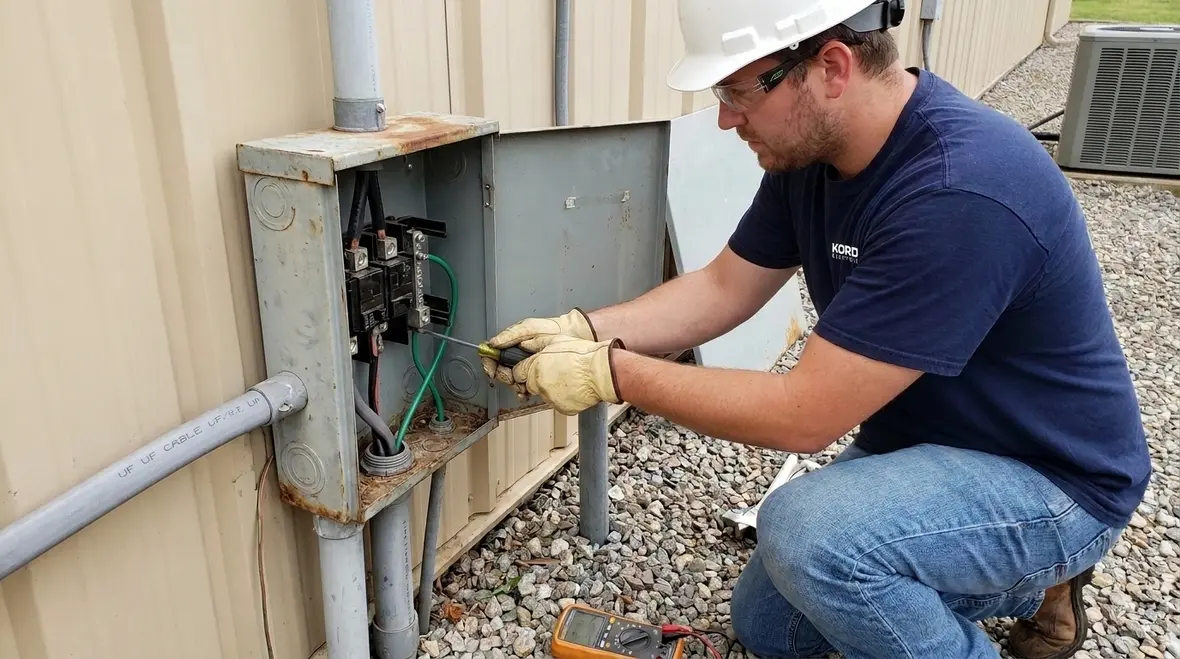
NEC UF Cable Grounding Bonding: Why It Matters
When a commercial or industrial facility runs power through UF cable, we treat grounding and bonding like the quiet part of the job that keeps everything safe and steady. At Kord Electric, our technicians and expert service staff explain how NFPA 70 Section 324.60 guides NEC UF cable grounding bonding, so we can stop “looks fine” installs from becoming “why is this humming” emergencies later. And yes, electricity has a sense of humor, but we prefer our surprises to be in movies, not panelboards.
In the sections ahead, we break down what the code expects, how UF cable connections should be handled, and what we verify during commissioning. We also cover common failure points we see in the field, plus the practical steps our team takes to keep commercial sites compliant and dependable.
NEC UF cable grounding bonding: why it matters on real jobs
Commercial and industrial facilities depend on predictable power. When UF cable runs underground between buildings, out to equipment pads, or across a property, it quietly does a lot of heavy lifting. The jacket shrugs off moisture and soil contact. The conductors push load current day after day. Yet if the grounding and bonding are not handled correctly, the system can turn from “quiet and boring” to “mysterious hum and tripped breaker” right when your operations need stability the most.
That is why we treat NEC UF cable grounding bonding as a core reliability task, not a box-check at the end of the day. Grounding protects people and equipment by providing a defined path for fault current. Bonding keeps conductive parts at similar potential, so unexpected voltage does not end up on the wrong metal surface. When those two ideas work together, equipment enclosures stay calmer, breakers trip the way they are supposed to, and maintenance staff can approach gear without wondering what surprise is hiding under the cover.
On real jobs, we see the difference in subtle ways. Facilities with solid grounding and bonding practices have cleaner fault-clearing behavior, fewer nuisance issues, and smoother inspections. Sites that treat it as an afterthought see glowing terminations, unexplained nuisance trips, and grounding paths that look more like guesswork than design. Our goal is simple: make your UF cable behave like part of a deliberate electrical system, not an improvised extension cord buried in the ground.
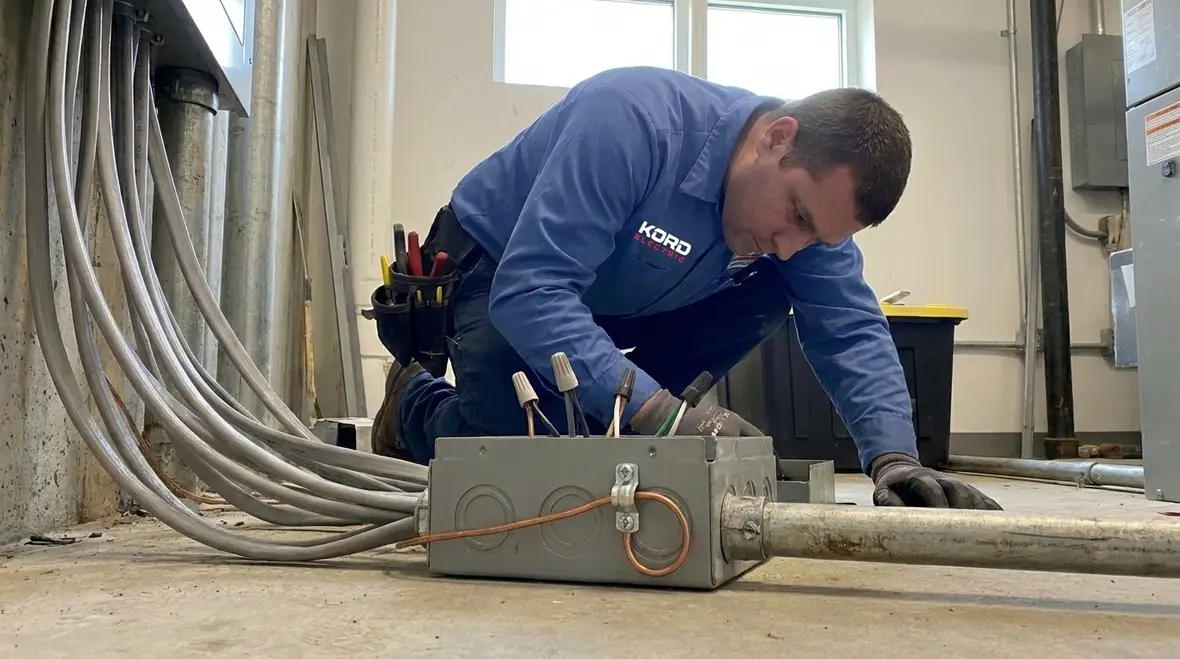
We approach every project with that mindset. From site walk-through to final testing, our technicians focus on making sure the UF cable’s grounding and bonding path is continuous, code-aligned, and documented. The payoff shows up later when your facility adds new equipment, passes inspections with fewer surprises, and survives power disturbances without turning the electrical room into an emergency meeting.
NFPA 70 324.60: what the code requires for UF cable grounding
Third person or not, the code speaks plainly: NFPA 70 Section 324.60 focuses on grounding and bonding for underground feeder and branch circuit cable, Type UF. This matters because UF cable is often buried, exposed to moisture, and connected across multiple enclosures. Therefore, the electrical path needs a reliable way to carry fault current safely back to the source.
First, the grounding conductor and bonding method must follow the rules for the type of wiring system being used. Next, installers must ensure the metallic parts that should be bonded actually get bonded. Then, the raceway or wiring method around terminations must support the grounding path. Finally, any transition from underground to aboveground wiring has to maintain continuity.
In plain terms, NEC UF cable grounding bonding prevents a fault from turning the building’s metal into a live “surprise exhibit.” Our expert service staff routinely notes that when field teams skip continuity checks, they are basically playing roulette with safety. And commercial facilities do not deserve roulette as a maintenance plan.
We see Section 324.60 as the part of the rulebook that quietly supports everything else. You can size conductors correctly, label panels perfectly, and route feeders with textbook precision, but if the grounding and bonding on that UF cable are incomplete, the first serious fault will tell a different story. Code-compliant grounding keeps that story short, controlled, and boring—exactly how electrical incidents should be.
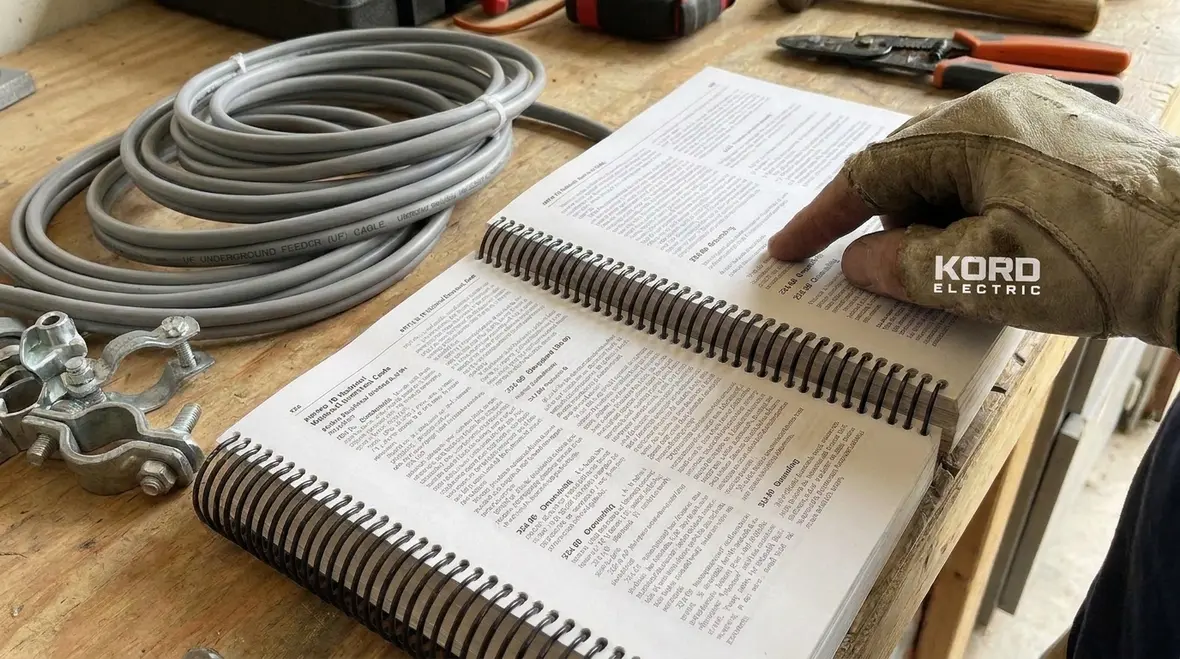
For facility leaders, the important takeaway is this: NFPA 70 does not bring up Type UF cable grounding just to fill space. It does it because buried conductors and out-of-sight terminations are easy to forget about until something fails. When we plan your project, we treat every underground-to-aboveground transition, every enclosure, and every bonding jumper as part of one continuous protective system, not a pile of separate parts.
Grounding versus bonding: we keep them straight on site
Many people confuse these two, so we clarify them early. Grounding directs fault current to the grounding system, while bonding ties conductive parts together so they stay at the same electrical potential. Because potential differences can drive current through unintended paths, bonding supports safe operation during faults and helps limit shock hazards.
On commercial and industrial projects, we often see UF cable that runs underground and terminates near equipment like transformers, disconnects, or service panels. However, if metallic housings are not bonded correctly, the grounding path can be incomplete. Consequently, a fault can create voltage on metal enclosures. In that scenario, personnel and nearby equipment face risk, and operations grind to a halt.
Our technicians follow a consistent workflow: we verify continuity of the grounding conductor, confirm bonding connections, then inspect terminations for proper clamping and conductor routing. Additionally, we document results so the facility team has proof during inspections and audits. That is not just good practice, it is how we keep schedules intact.
Think of grounding as the emergency exit route for fault current and bonding as the doors that make sure all the rooms open into the same hallway. If certain pieces of metal are not bonded, you end up with dead ends—places where voltage can build up and wait for somebody to touch the wrong surface. By keeping grounding and bonding clearly defined in our work plans, we remove guesswork from that emergency route and give fault current a predictable way out.
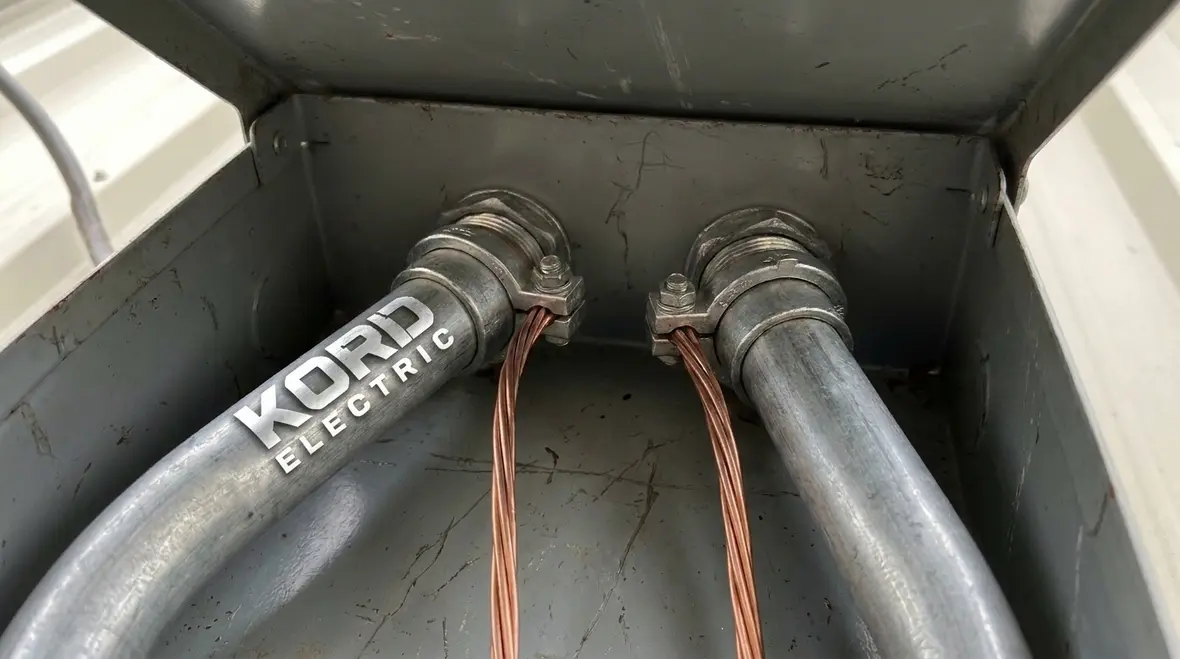
The bonus for facility teams is clarity. When grounding and bonding are clearly differentiated, maintenance staff know what they are looking at when they open a junction box or panel. They can see where the grounding conductors terminate, identify bonding jumpers, and verify that metallic raceways are doing their part. That knowledge reduces troubleshooting time and helps everyone spot trouble before it becomes an outage.
Where UF cable connections go wrong most often
Even skilled crews can get tripped up at the transition points. Underground sections rarely cause the first failure. Instead, problems often show up near terminations, junction boxes, and equipment connections. Therefore, our team looks closely where the UF cable meets the rest of the system.
Common trouble spots include damaged jacket areas where moisture can enter, loose fittings that weaken mechanical support, and bonding jumpers that are missing, mis-sized, or poorly connected. Also, we see “shortcut” routing where installers bury extra slack that later gets pulled tight at a termination. When pulling happens, conductors and insulation can get stressed, and the grounding path can suffer.
Another issue involves mixing components from different vendors without confirming compatibility with the enclosure and wiring method. In other words, it works until it does not. And when it fails, it fails in ways that cost real money: downtime, emergency service calls, and rework that interrupts normal operations.
We keep things calm and methodical. We inspect physical installation, verify electrical continuity, and ensure termination hardware supports bonding. Then, we test as required so the system behaves the way the code intends.

Those trouble spots are exactly why we treat UF cable transitions as checkpoints instead of afterthoughts. Before we sign off, we look for consistent strain relief, intact jackets, properly sized connectors, and bonding jumpers that actually land where the code expects them. The goal is simple: make sure every fault current path you paid for on paper still exists in the field after backfill, concrete work, and equipment installation.
How we handle grounding and bonding steps in the field
Every commercial and industrial site has its own constraints, so our process stays practical. First, we review the drawings and confirm how UF cable is routed, where it emerges, and which enclosures it connects to. Next, we plan the grounding and bonding path so it stays continuous across every change in wiring method.
Then our technicians execute a clear sequence. We land grounding conductors correctly at terminations. We bond metallic enclosures and other conductive parts that must be bonded. We use fittings and boxes that support the grounding path, and we keep connections secure and accessible for inspection.
After installation, we confirm continuity and check that bonding jumpers connect solidly. In addition, we document test outcomes for facility managers and stakeholders. That documentation matters because it turns a good install into a verifiable install, which helps when building owners need answers fast.
Our expert service staff also educates the onsite team. We explain what we did and why, so the facility crew can recognize problems early. Think of it as training your maintenance team in “electrical body language,” except without the dramatic music.
On multi-building campuses and major properties, that field process scales up nicely. We build repeatable checklists for UF cable runs so each termination, junction, and panel gets the same level of scrutiny. That repeatability keeps grounding and bonding quality consistent whether we are working on the first building or the twentieth, and it helps your internal team follow the same standard long after our trucks leave the site.
Compliance for commercial and industrial facilities: reducing risk
Commercial and industrial buildings operate on reliability. Power systems should support operations, not threaten them. For that reason, NFPA 70 rules for NEC UF cable grounding bonding are not “paperwork.” They are the foundation for safe fault clearing, stable equipment operation, and reduced shock hazard.
When our team aligns grounding and bonding with code requirements, we support multiple outcomes at once. Fault current has a defined path. Metallic enclosures stay at safer potential. And maintenance teams get clear evidence of what was installed and tested.
We also connect this work to the bigger NEC picture. For a deeper look at how the National Electrical Code is structured and how it impacts real installations, Kord Electric and our partners share practical guidance. You can review our explanation of the NEC for 2026 and how key sections fit together by checking the resources at kordelectric.com, as well as our additional NEC overview at kordfire.com for broader context.
And because buildings do not live in a vacuum, we coordinate with other site disciplines when fire and life safety systems are part of the project scope. When the work touches fire pump systems and related electrical components, we encourage teams to align with best practices used by organizations such as firepumps.org. In the end, safer wiring supports the entire life safety chain.
For owners and operators across regions like Los Angeles County, this level of attention shows up in fewer unplanned outages and smoother capital projects. When you pair solid UF cable grounding and bonding with a comprehensive electrical service plan, you give your building a safer long-term foundation. That is the kind of planning we bring to our broader Los Angeles County electrical services, where NEC compliance, practical design, and field-tested installation all move in the same direction.
FAQ: NEC UF cable grounding bonding
Schedule expert NEC support with Kord Electric
If your commercial or industrial facility needs UF cable work done the right way, we invite you to call Kord Electric. Our technicians and expert service staff handle grounding and bonding with a calm, thorough process that follows NFPA 70 expectations and focuses on real world reliability. We help you avoid risky shortcuts, improve commissioning outcomes, and protect operations from preventable electrical issues. Contact us to review your project scope and plan the safest path forward.
Whether you are updating existing underground feeders, planning new branch circuits between buildings, or coordinating life safety upgrades that depend on solid power infrastructure, our team connects the dots. We bring code knowledge, field experience, and clear communication together so NEC UF cable grounding bonding stops being an obscure section number and starts being a visible strength in your electrical system.
From the first design conversation to final testing, Kord Electric focuses on the same outcome: a grounded, bonded, and documented system that feels predictable on your busiest day. When you are ready to align your UF cable work with that standard, we are ready to help.


