
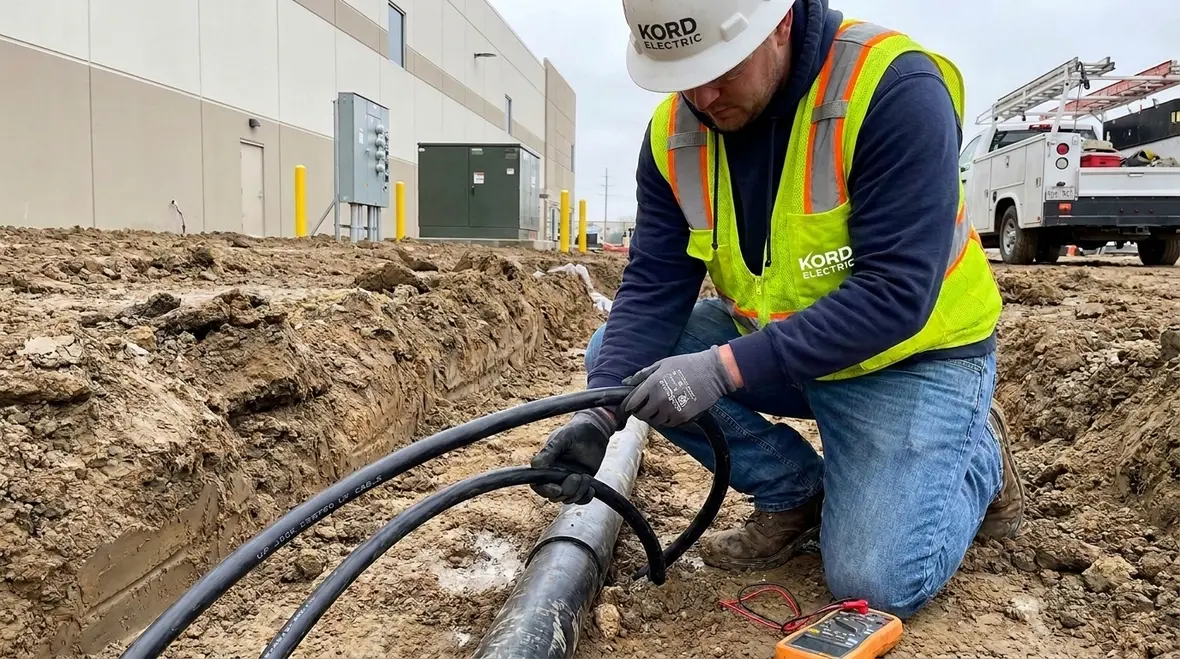
NFPA 70 Section 324.101 UF Cable Corrosion Resistance Guide
Kord Electric helps commercial and industrial facilities protect underground power with the right cable choices. In this article, we focus on NFPA 70 Section 324.101 and explain corrosion resistance of UF cable in plain language, so decision makers do not have to guess. And yes, we will cover the part other people skip because it is “too boring.” Still, this “boring” section can prevent expensive failures underground, the same way a good lock prevents a bad day. Kord Electric technicians and our expert service staff break it down step by step, then we translate the code into work you can approve without fear.
What NFPA 70 Section 324.101 requires for underground UF cable
NFPA 70 is the NEC, and Section 324.101 addresses how to handle corrosion resistance of UF cable when the cable runs where moisture and chemicals can attack it. In short, the code expects the cable system to survive the environment it is installed in. Therefore, it is not just about whether the cable works today, it is about whether it still works after years of soil contact, wetting and drying cycles, and exposure to salts or corrosive byproducts.
At Kord Electric, we follow the same logic. First, we look at the planned route and the likely site conditions. Next, we confirm the cable type and installation method that matches those conditions. Then, we document the reasoning for the team that will own the asset later. This approach matters for commercial and industrial facilities where downtime hits operations fast, and where maintenance budgets do not enjoy surprises.
Why corrosion resistance matters more than people think
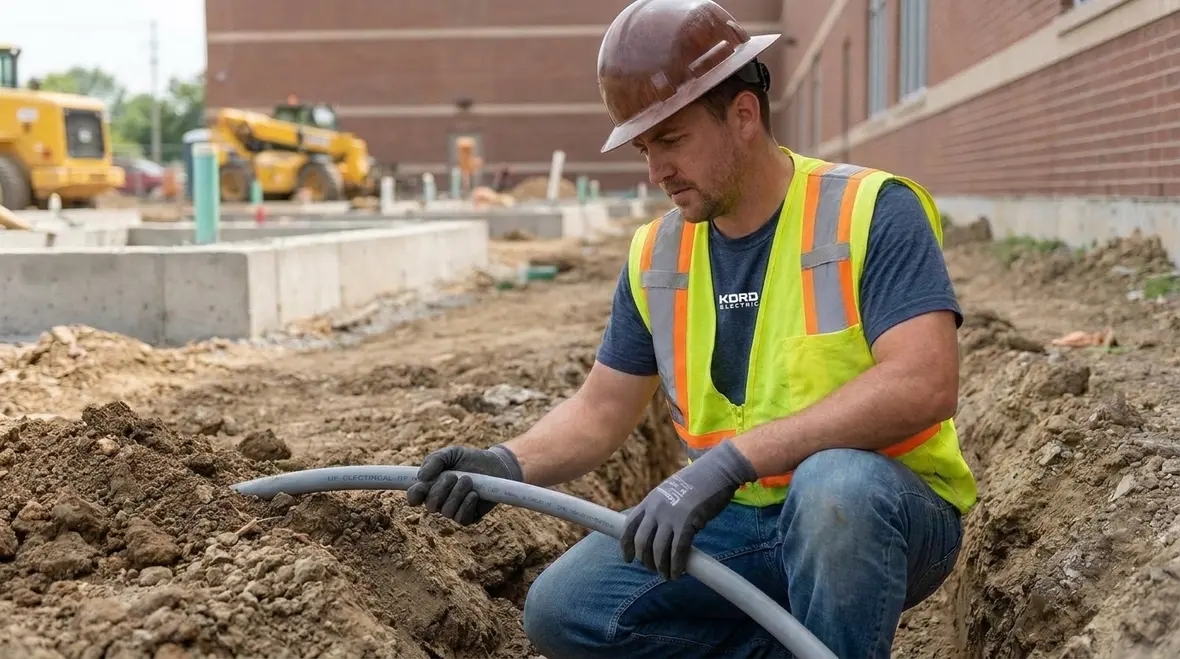
Corrosion resistance sounds like a small detail, but it controls long term reliability. For UF cable, the outer jacket and overall cable construction play a big role. When the environment attacks the jacket, moisture can find a path. After that, performance can degrade, insulation can weaken, and troubleshooting becomes expensive because the problem often hides under pavement or landscaping.
Also, corrosion does not care about schedules. It works quietly, then shows its impact when you least want it. In the field, we have seen how “it worked fine last year” turns into “why is this circuit failing now.” Meanwhile, our technicians explain these risks clearly because facility teams need to approve real solutions, not vibes.
And if that sounds dramatic, well, underground wiring does not get a chance to “stretch and recover.” It simply sits there, like a customer who never complains until the bill arrives. So we plan like we are preventing that call.
How Kord Electric assesses site conditions before selecting cable
Before we recommend any cable approach, our expert service staff evaluates the site in a way that ties directly back to NFPA 70 expectations. First, we review the installation plan, including routing depth, proximity to drainage, and areas where water collects. Then, we check for likely corrosive agents such as certain soil chemistries, industrial runoff areas, and locations near masonry or chemical storage zones.
Next, we consider how the cable will be physically protected. Even when cable is rated for underground use, installation details matter. For instance, how the conduit or protective method limits contact with corrosive conditions can change the real life outcome. Therefore, we look at both the cable and the installation method as a single system, because NFPA 70 does not separate them like they are unrelated.
Finally, we coordinate with the facility manager or general contractor so the work matches the approved design. This keeps the project moving, and it keeps us from having to explain later why a “minor” change turned into a major risk.
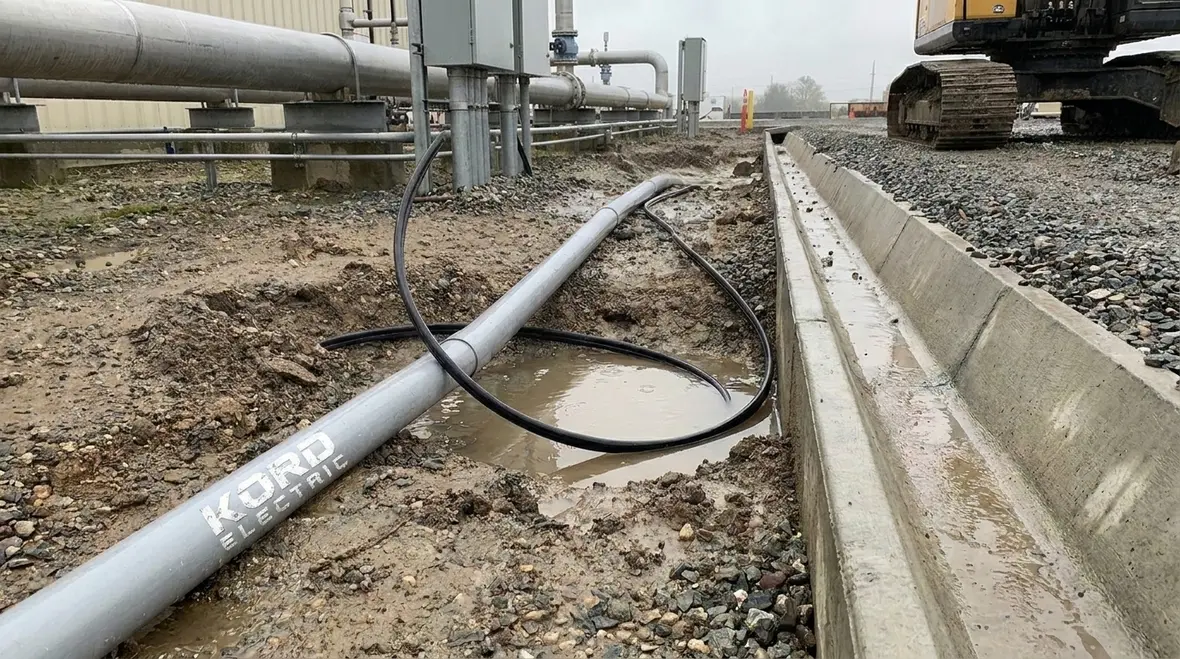
NEC UF cable corrosion resistance: practical examples we see in the field
In commercial and industrial facilities, UF cable routes often cross mixed environments. One job might include normal soil along a utility path, while another section runs near a washdown area or a drainage corridor. When those conditions differ, the NEC expectations for NEC UF cable corrosion resistance become more than a line in the book.
For example, we commonly see these situations:
- Moisture pockets forming near low spots in the site, where water sits longer than expected
- Chemical exposure zones near outdoor processing areas, where runoff can bring corrosive compounds into contact with the cable jacket
- Backfill differences, where one section uses clean material and another uses fill that holds more salts or holds water differently
- Protection gaps where cable passes under areas with future maintenance plans, like planned replacement of sidewalks or frequent ground disturbance
As a result, our technicians explain corrosion resistance in a way that links the code to the real environment. We do not just say “use a resistant cable.” We help teams understand how to support the cable choice with a route, depth, and protection plan that fits the site.
Installation details that strengthen corrosion resistance under NFPA 70
Even when a cable is designed for underground use, the installation process determines how well it holds up. So we focus on the steps that matter most for corrosion control. First, we confirm the cable type and rating before installation starts. Then, we verify the routing follows the design intent, including avoiding unnecessary exposure to water traps and chemical handling areas.
Next, we support proper separation and protection. For example, we plan cable paths so they do not rest directly where corrosive liquids are likely to collect. Additionally, we avoid shortcuts that leave jacket damage unaddressed. When installers nick or scrape jacket material, corrosion can start at the weakest point because it only needs an entry path.
Finally, we test and inspect as the project allows. That helps us find issues early, before they get buried. Put simply, we treat installation as an extension of the code requirement, not as a separate step with “trust me” energy.
Working with Kord Electric on commercial and industrial electrical projects
Kord Electric serves commercial and industrial facilities and major property buildings, and we keep that focus in every job. Because of that, we plan for what facility teams care about most: reliability, safe execution, and documentation that holds up during audits or internal reviews.
In practice, our team coordinates with the project schedule and with site constraints. Meanwhile, our expert service staff explains NEC related decisions in straightforward language so your team can approve the right course without a long guessing game. If you need guidance on how the NEC and NFPA 70 tie into your underground plan, we walk your team through it with calm clarity.
To explore more about how we explain code basics, you can also review our NEC related resources on our sites, including Kord Electric’s blog and the broader NEC guidance on Kord Fire and Kord Fire Australia. For a deeper grounding in the overall NFPA 70 framework, many facility teams start with our article Understanding NFPA 70: The National Electrical Code Explained for 2026, then connect those concepts to specific underground installations.
For a wider look at fire pump and related safety context, you can also explore FirePumps.org alongside the NEC-focused material from our Kord Fire partners. Together, these resources help tie electrical reliability, fire protection, and code compliance into one clear picture instead of separate, confusing checklists.
When projects extend beyond a single trench or feeder and into larger building work, our teams connect underground planning with broader design and reliability topics. Articles like our data-driven design and emergency power planning resources give facility leaders a consistent playbook from incoming service all the way down to the last buried run.
Linking NEC UF cable corrosion resistance to broader facility planning
UF cable decisions rarely live alone. They sit inside a broader plan that includes panel loading, protective device selection, and how circuits support critical equipment. When we talk about NEC UF cable corrosion resistance, we also ask how failure in that run would affect the rest of the building. Does it feed exterior lighting that supports security? Does it power pumps, controls, or communication gear that your team depends on during an outage?
By tying underground work to system-level thinking, our technicians help facilities avoid the trap of treating buried cable like a “set and forget” detail. Instead, we design around how failures actually show up in commercial and industrial operations, including nuisance trips, unexpected downtime, and expensive after-hours troubleshooting calls.
For facility teams in Los Angeles County and the broader Southern California region, that often means blending corrosion resistance with local soil behavior, climate, and development pressure. If a site expects future expansions, heavy vehicle traffic, or frequent landscaping changes, we factor those into how we protect cable and how we document routes. The goal is simple: years from now, your team should still know where the critical underground paths are and why they were built that way.
This is also where our regional experience with Los Angeles County electrical services for commercial and industrial facilities becomes practical. We understand how local permitting, inspections, and environmental conditions influence underground work, so we design UF cable and protection choices that satisfy both NFPA 70 Section 324.101 and local expectations.
FAQ: NFPA 70 corrosion resistance and UF cable
Choose reliability over guesswork for underground power
Underground electrical work should not rely on hope and the occasional prayer to the wiring gods. Kord Electric helps commercial and industrial facilities match cable selection and installation choices to NFPA 70 Section 324.101 expectations for corrosion resistance, using clear explanations from our technicians and expert service staff. If you plan an underground run, an upgrade, or a reliability review, contact us. We will assess your site, explain the NEC related decisions, and help you build a system that keeps performing, long after the trench is backfilled.
For facility teams who want to connect this detail-level work with broader NEC planning, our articles on what NFPA 70 covers and how to read the code are a helpful companion. They show how individual requirements like UF cable corrosion resistance fit into the larger picture of safe design, reliable operation, and inspections that do not come with surprises.


