
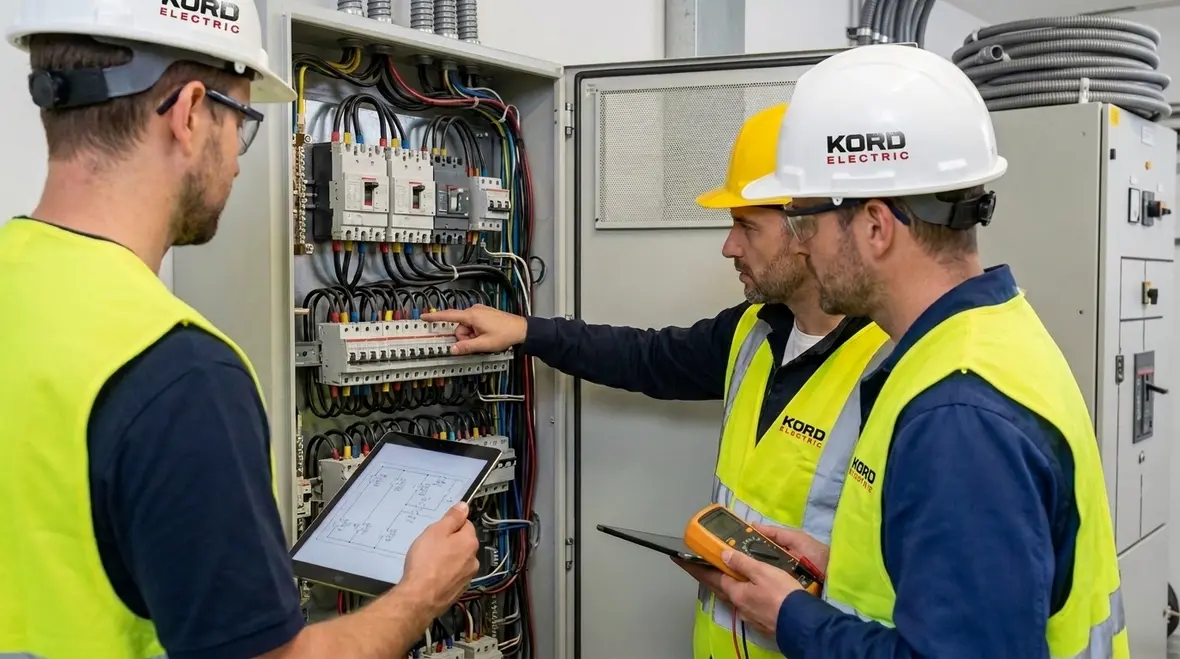
NFPA 70 NEC 2026 multipole branch circuit connectors
NFPA 70 and the NEC for 2026: what commercial and industrial teams must know
At Kord Electric, we support commercial and industrial facilities and major property buildings, and we treat code compliance like a living system, not a binder on a shelf. Early in every project, we explain the wiring rules that keep people safe and operations stable. For example, when teams plan feeder and branch wiring, we often review NFPA 70 Section 640.41 multipole branch circuit connectors because these connectors help manage how conductors join and transition in listed equipment. Then, we build the rest of the plan around how the NEC for 2026 expects those parts to work together. And yes, we know code language can feel like it was written by a committee that never met a human electrician. Still, our expert service staff translate it into practical steps your team can execute.
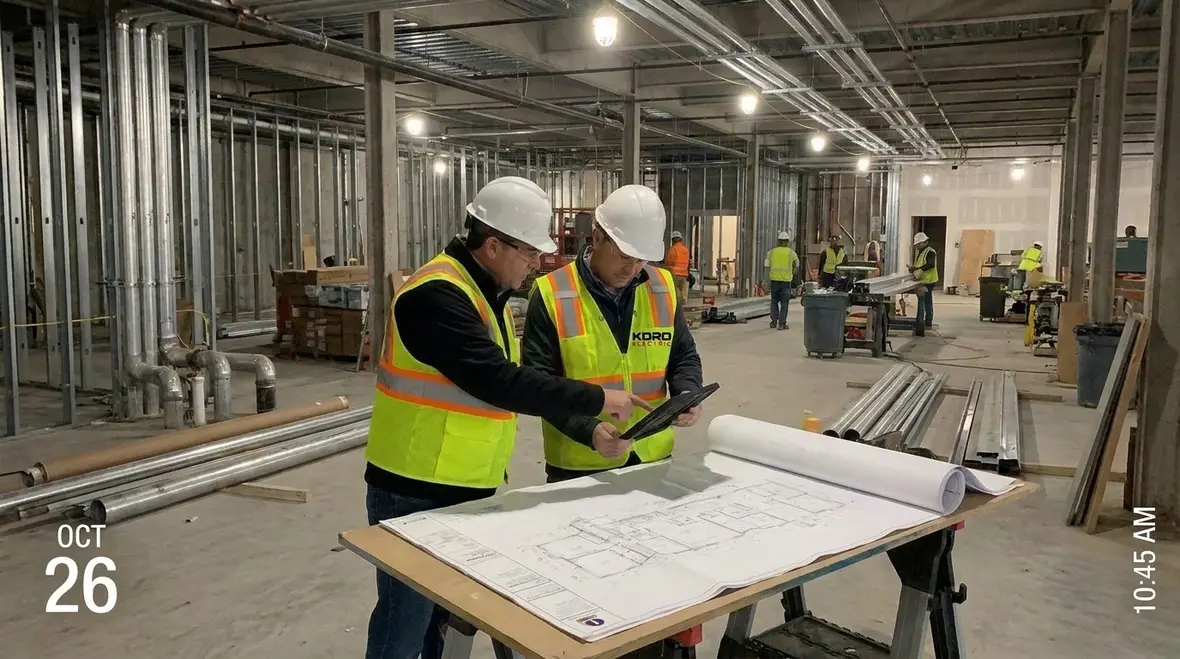
Connecting NEC 2026 updates to day-to-day electrical work
The NEC, which is also known as NFPA 70, gets updated so it can keep pace with new methods, new products, and lessons learned from real job sites. For commercial and industrial electrical systems, small rule shifts can affect design intent, install methods, inspection documentation, and even commissioning timelines. Therefore, we do not treat these updates as “paperwork.” Instead, our technicians review how the changes ripple through layout, conductor sizing, equipment interconnections, and termination rules.
Moreover, when a facility operates daily, downtime costs money. So we help teams plan compliance without slowing down delivery. To do that, we look at three things in sequence: first, where the rules apply in your specific occupancy; second, how your design already matches those requirements; and third, where the field install could drift from the plan. That last part is where mistakes happen, because people can interpret “close enough” in very creative ways.
For project leaders who want a broader grounding in how NEC 2026 directions fit together before they dive into specialty topics like multipole connectors, we often recommend reviewing our educational resource Understanding NFPA 70: The National Electrical Code Explained for 2026. It pairs well with the detailed branch and feeder planning that drives commercial and industrial work.
NFPA 70 Section 640.41 multipole branch circuit connectors in plain business terms
Section 640.41 focuses on how listed multipole branch circuit connectors support conductors and provide safe connections within the scope of the NEC. In our work, we see that this topic shows up in places where systems rely on reliable branching and clean routing, such as lighting feeds, power distribution assemblies, and other building electrical layouts tied to commercial equipment.
To keep it clear, our expert service staff break it down like this. First, the connector needs to be suitable for the wiring method and the intended use. Second, the connector must support proper conductor termination so the connection stays secure under normal operating conditions. Third, the install must follow the connector listing and the NEC rules tied to that application. Put simply, we help your crews avoid the classic situation where a connector “fits,” but the installation does not meet the performance or construction intent.
Additionally, we remind teams that “listed” matters. If it is not listed for the conditions you plan to use, your compliance position gets weaker. Then, inspections become harder, and rework becomes expensive. Nobody wants an electrical correction job after the ceiling tiles are already installed. That is not bravery; that is just paying twice.
How NFPA 70 Section 640.41 ties into broader NEC thinking
Multipole branch circuit connectors do not operate in a vacuum. They sit inside a larger NEC framework that covers branch circuits, feeders, equipment listing, overcurrent protection, and conductor sizing. When we talk with facility leaders about NFPA 70 Section 640.41 multipole branch circuit connectors usage, we place it in that larger picture so the design does not become a patchwork of one-off decisions.
Our technicians use a straightforward flow. We first check the circuit configuration and load characteristics. Then, we align connector selection with conductor ampacity and overcurrent protection logic. Finally, we verify that the mechanical arrangement and routing respect both the listing and the workmanship expectations captured throughout NFPA 70. That way, the connectors behave as part of a system, not as isolated hardware that someone grabbed from a bin because it was nearby.
How we apply NEC rules to real commercial and industrial electrical layouts
Even when the NEC feels like it lives on a page, our technicians make it real in the field. For commercial and industrial facilities, we typically follow a method that reduces guesswork. Therefore, we start with the drawings and schedules, then we confirm equipment listings, then we map the routing path. After that, we align the termination plan with the rules for connectors, conductor handling, and required clearances.
Next, we coordinate with the rest of the site team so installation does not fight other trades. If your electrical scope crosses with fire protection, HVAC, or building automation, small changes to routing can force crews to bend conductors more than expected, or stretch termination tolerances. So we help teams lock the layout before installation begins.
Furthermore, we keep documentation in motion. Kord Electric supports inspection-ready records, including how components were selected and installed. When your facility is a major property building, documentation helps with acceptance testing and helps building managers explain maintenance decisions later.
Linking planning steps to NEC 2026 guidance
Our field-proven sequence lines up with the way the NEC is structured. We confirm scope and application expectations, then we step through wiring methods, overcurrent protection, and equipment listing. This mirrors how standards such as NFPA 70 Section 90.1 and 90.2 define what the code covers, while more targeted articles and sections drill into branch circuits, feeders, and conductor protection.
Because we support major property buildings and complex commercial facilities, we frequently connect layout and connector choices to related NEC topics like feeder minimum ratings, conductor overcurrent protection, and branch circuit scope. That cross-reference work keeps multipole connector decisions aligned with the upstream and downstream behavior of the system, instead of treating them as one-off parts.
What “listed and compliant” looks like during inspection
Inspections do not only check the final wiring. They also check whether the installed system matches the code and the listed product intent. In practice, our expert service staff coach crews to verify three items before they call it done. First, we confirm the installation method matches the listing requirements. Second, we ensure terminations follow the expected torque or connection method described by the manufacturer. Third, we make sure the wiring and connector arrangement supports safe heat dissipation and mechanical stability.
Moreover, we help teams prepare for the questions inspectors actually ask. For example, inspectors often look for evidence that conductors stay within permitted construction practices and that connections do not rely on improvised parts. If your team wants a smooth inspection, the easiest path is to build it right the first time, and keep notes along the way.
And if anyone on site thinks code compliance is a vibe, we gently correct that. Code is not a feeling. It is a standard.
How our inspection prep reduces rework
When we support a commercial or industrial site, we treat inspection prep as part of the job, not an afterthought. Our teams organize documentation that shows how the design, material selection, and installation line up with NEC 2026 expectations. Then, when inspectors focus on multipole branch circuit connectors, conductor sizing, or the way branch and feeder systems interact, the answers are already documented instead of improvised in the hallway.
This approach also helps future audits. When facilities undergo safety reviews or insurance-driven assessments, having a clear record of connector listings, installation methods, and code references keeps the conversation grounded in facts. Our technicians and expert service staff stay ready to walk stakeholders through those details in the same plain language we use on site.
Common failure points we prevent in commercial power distribution
Based on what we see across commercial and industrial work, the same few problems return. Therefore, we focus training and QA on the spots that cause the most trouble during commissioning and later maintenance. Here are the most frequent failure points we help prevent:
- Improper conductor preparation which can lead to poor termination quality and heat stress over time
- Connector mismatch where the chosen component does not align with the listed application and installation method
- Over-stressed routing where bends, tension, and layout changes push connections beyond safe handling
- Documentation gaps that make inspections slower and increase rework risk
- Field shortcuts like “we will fix it later,” which often turns into never, or into extra cost
Then, we add a practical layer: we train technicians to spot issues early, before the system becomes hard to access. When crews catch small problems sooner, the entire project moves faster. That is not just safety. It is also smart project management.
Turning recurring problems into training opportunities
Instead of treating every field mistake as a one-off event, we treat patterns as training signals. If we see repeated connector mismatch issues, we adjust how we review NFPA 70 Section 640.41 multipole branch circuit connectors during pre-job meetings. When documentation gaps slow inspections, we revise our checklists so that recording listing information and torque values becomes as normal as pulling wire.
This mindset scales across portfolio properties. For owners who manage multiple commercial or industrial sites, we can use lessons from one building to improve the next. Over time, that consistency reduces emergency calls, lowers rework costs, and builds a safety culture that matches what the NEC is trying to achieve in the first place.
A dual view of compliance and fire safety coordination for major buildings
Because commercial and industrial facilities require coordinated safety strategies, we align electrical compliance work with fire safety goals. While electrical codes drive how power systems get built and connected, fire safety planning drives how those systems get protected, monitored, and maintained. In Australia and across major property sites, teams often reference guidance from fire safety organizations and standards bodies like Kord Fire and resource groups such as FirePumps when they plan system performance under emergency conditions. At Kord Electric, we keep this coordination practical: we reduce electrical rework that disrupts fire systems, and we help ensure electrical components do not create new hazards near protection equipment.
In addition, we work with building stakeholders to keep the safety story consistent. Therefore, your maintenance team knows what matters, and your operations team understands why specific connector selections and install methods support long term reliability.
When facilities want to align broader NEC direction with this dual focus on electrical and fire safety, resources such as Kord Fire’s NFPA 70: All About The National Electrical Code (NEC) support the same story from the fire protection side. Together, those perspectives help owners plan power distribution, fire pumps, alarms, and life safety systems as one integrated risk picture instead of a scattered collection of projects.
How Kord Electric supports multipole connector decisions across a project lifecycle
Our support does not end when the drawings are stamped. We help teams manage multipole branch circuit connectors and related NEC requirements from planning through operation. During design, we review connector and conductor combinations for suitability and future maintenance access. During construction, our technicians and expert service staff verify that field conditions still match the assumptions baked into the plans. During operation, we help maintenance teams understand where connectors live, how they are listed, and what signals suggest inspection or replacement.
For regional and national clients, we also adapt to jurisdictional adoption patterns. Different areas may move to the 2026 NEC edition on different timelines, but the underlying safety reasons behind Section 640.41 stay consistent. We explain those reasons in plain terms so your crews know why we are asking for a particular connector or installation detail, not just that “the book says so.”
When projects involve complex power distribution upgrades, we often combine our NEC expertise with targeted service offerings that cover everything from panel upgrades and feeder changes to emergency power coordination. For organizations managing large facilities in Southern California, our Los Angeles County electrical services connect that detailed code understanding with on-the-ground crews who can execute safely under real deadlines.
FAQ: NFPA 70 and multipole connectors for commercial sites
Conclusion: bring Kord Electric into the compliance plan early
If your team manages a commercial or industrial facility, you cannot afford last minute surprises. Kord Electric helps you interpret NEC expectations, plan connector and termination choices, and install to the standard so inspections move with less friction. Our technicians and expert service staff explain the “why” behind the rules, then we execute with field-ready clarity.
By bringing us in early, you gain more than code references. You gain a partner who understands how NFPA 70 Section 640.41 multipole branch circuit connectors, conductor sizing, overcurrent protection, and fire safety coordination all connect in the same building. Whether you are planning a focused upgrade or a complex multi-phase project, we help you keep safety, schedule, and operations aligned from kickoff through closeout.
Contact us now to review your project scope and build a compliance plan that keeps your building safe, operational, and on schedule.


