
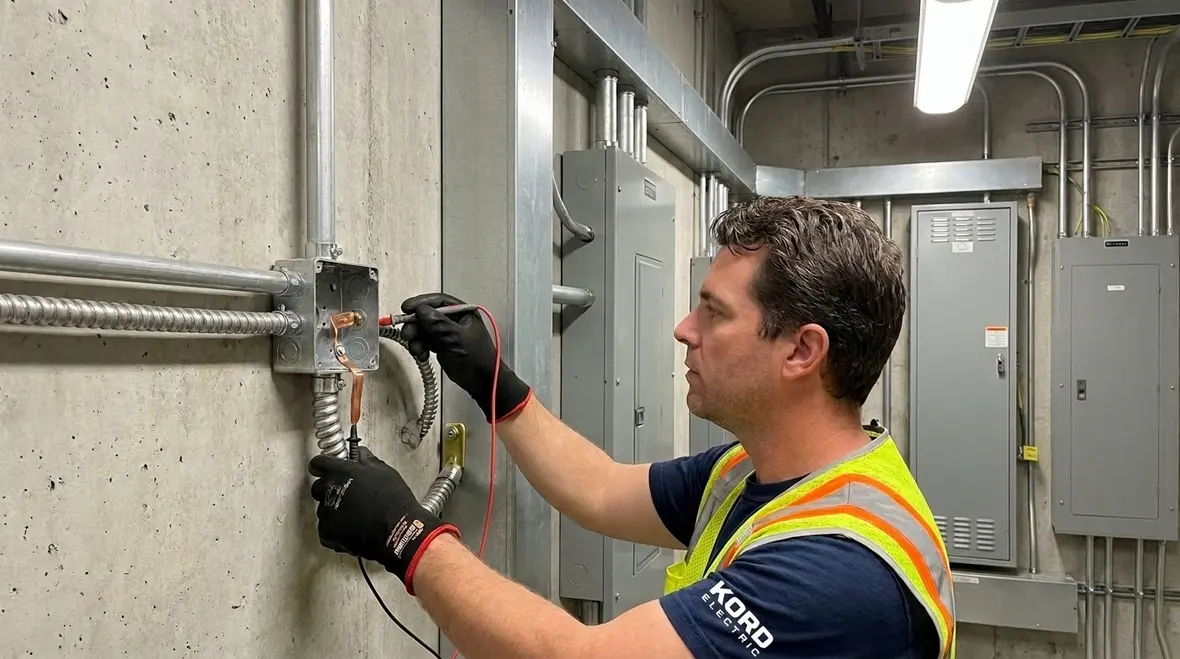
NFPA 70 NEC 250.132 wiring for compliant short raceway
NFPA 70 NEC 250.132 and the wiring choices that keep buildings compliant
In commercial and industrial facilities, we do not guess with electrical design. We verify. That mindset starts with NFPA 70 Section 250.132 and its focus on Short Raceway and Cable Armor Sections. Early on, we often see teams treat these rules like background noise, the way people ignore the side quest in a video game until it ruins the main mission. Then an inspector shows up, and suddenly everyone remembers there is a rulebook.
Our technicians at Kord Electric explain these requirements in plain terms for facility owners, electrical contractors, and property managers. We also connect the dots between code language and real installation behavior, because in the field the smallest routing detail can turn into the biggest delay. This article walks through how Section 250.132 works, what you should check during design and installation, and how our expert service staff supports compliance in major commercial and propertied buildings.
What Section 250.132 covers for short raceways and cable armor

Section 250.132 addresses how grounding connections should be handled for short runs where raceways or cable armor sections come into play. In other words, the code does not want you to treat short sections as “close enough.” It wants a consistent method so the grounding path stays reliable.
Our approach is practical. First, we help others interpret the intent: bonding must remain effective even when the section is short. Then we translate that into what to look for on site. For example, teams sometimes connect other system parts but leave a raceway segment that breaks the continuity of the bonding path. As a result, the grounding system can become more like a chain with a missing link. And yes, chains are only as strong as their weakest link, even in pop culture movies where the hero insists they can “totally improvise.”
We also remind people that NFPA 70 ties bonding and grounding together with safety goals. So while 250.132 focuses on short raceway and cable armor sections, it still connects back to the broader grounding and bonding requirements you see throughout the NEC. For a deeper dive into how those system-wide rules work, many of our readers also review our related guide on NFPA 70 Section 225.12 NEC open conductor supports explained, which follows the same field-based, plain-language style.
NEC short raceway sections in the real world: continuity, connection, and inspection
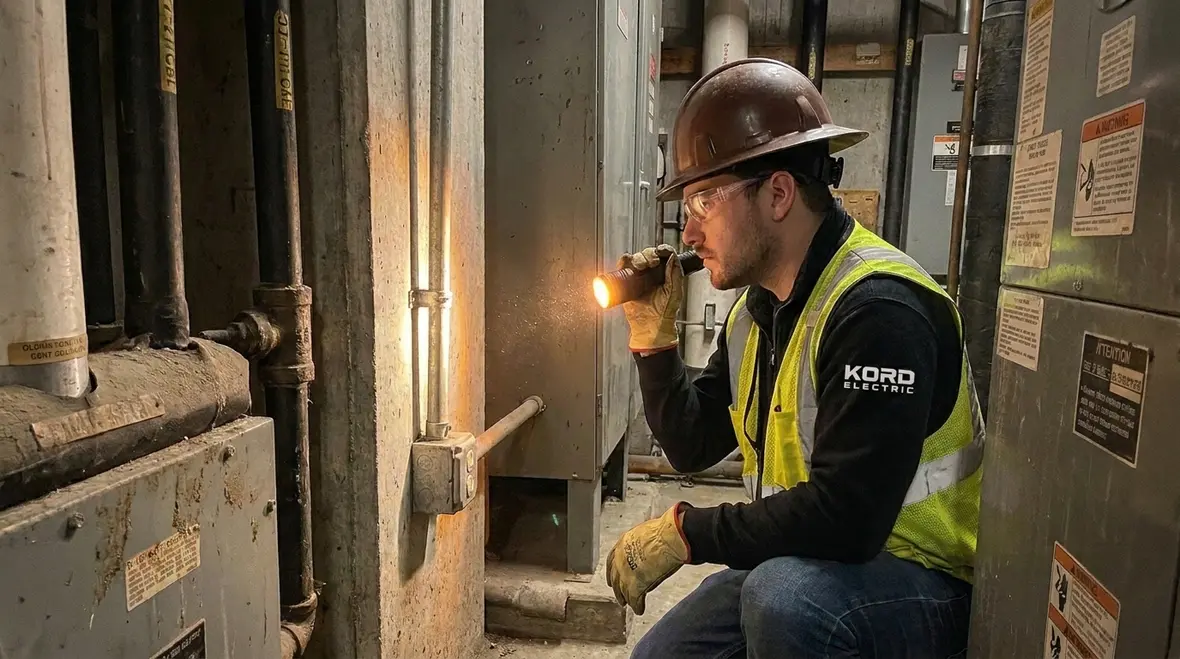
When we review plans or walk a site, we treat NEC short raceway sections as a high risk zone. Not because short runs are inherently dangerous, but because short runs often get skipped during detailed verification. Installation crews move fast. Designers assume the bonding method carries over. And sometimes the “armor” gets handled like it is decoration instead of a protective electrical component.
Here is what we focus on for continuity and connection:
- Bonding method consistency: We confirm that the grounding path does not rely on parts that cannot provide a stable bond.
- Correct connection points: We verify where bonding jumps happen, especially at transitions between raceway types or at changes in enclosure geometry.
- Secure hardware and proper terminations: We do not accept loose fittings, damaged threads, or incomplete tightening, because those issues can grow with vibration and thermal cycling.
- Armor treatment: We check that cable armor is managed as the code expects, not treated as optional.
Then, we support the inspection process. Our technicians explain what the inspector usually wants to see, and we help teams document what was installed and why. That reduces back and forth. It also prevents the classic scenario where someone says, “We meant to do that,” which is great for excuses and terrible for compliance.
Bonding versus grounding: how we help teams avoid common mix ups

In many commercial and industrial projects, we see a pattern. People mix up bonding and grounding, and the whole installation starts to drift. Bonding creates an intentional electrical connection between conductive parts. Grounding ties the system to earth or a grounded reference point. They are related, but they do different jobs.
Section 250.132 sits in the bonding neighborhood, because short raceway and cable armor sections need an effective bonding path. If bonding fails, exposed metal parts can become unpredictable during a fault. And when that happens, safety margins shrink. So we step in early and help others map the bonding path end to end.
Our expert service staff explains this in a calm, structured way during site walk-throughs. We usually start with a simple question: “Where does the fault current return through the bonding path?” Then we trace the path in the physical install. If a short raceway section breaks continuity, or if cable armor connections are incomplete, the return route changes. That is when problems appear, not in the happy hours after commissioning, but during the high stress moments when the building is under load.
Also, we remind teams that “metal parts” can include raceway bodies, cabinets, and certain cable accessories. So we treat the whole metal system as one coordinated network, not separate islands. Otherwise, you get an electrical version of that sitcom where everyone lives on different floors and never meets, while the building’s safety plan assumes they are connected.
Design and installation checks for short raceway runs and cable armor

We help commercial owners and contractors use a repeatable check list. First, we confirm the design details. Then we verify the installation details. Finally, we align documentation so you can show compliance with confidence.
During design, we recommend teams pay attention to:
- Path planning: We look for where short raceway segments appear, especially near transitions, equipment sets, and enclosure entries.
- Material and assembly matching: We confirm the raceway and fittings do not create hidden discontinuities.
- Interface locations: We identify where cable armor and raceway parts meet, then define how bonding should occur.
During installation, we verify:
- Bonding continuity: We check each short section so the path stays intact across the run.
- Termination quality: We inspect terminations for secure attachment and correct installation practice.
- Labeling and documentation: We help teams record the bonding method used, so the as built install matches the intent.
And because schedules matter in major properties, we work in a way that reduces rework. We coordinate with on site teams and keep instructions clear. If someone needs to adjust a detail, we make sure they understand the “why” behind it. That is how we prevent the same issue from showing up in the next bay, the next floor, or the next building in the portfolio.
Why expert service matters on major propertie buildings and facilities
Commercial and industrial sites bring complexity. You have shared systems, multiple trades, strict downtime limits, and documentation requirements. In those environments, the difference between a correct install and a problematic one can be a short raceway section that did not get bonded as intended.
We lean on experience, but we also lean on communication. Our technicians and expert service staff explain the code intent and show what “good” looks like in the field. For many teams, that becomes a faster path to correction when something is off. Instead of arguing about interpretation, we point to the actual installation behavior and how it aligns with NFPA 70.
When we support compliance at the facility level, we also keep safety goals in view. We do not treat compliance like paperwork theater. We treat it like risk control. That mindset fits how our electrical and fire related resources are shared across our ecosystem, including guidance you might find through Kordfire Australia and Kordfire. For facilities working through broader NEC changes, many of our clients also reference Kord Fire’s educational piece on NFPA 70: All About the National Electrical Code (NEC) as a companion to this short raceway discussion.
We also stay aligned with broader safety education from industry groups like Fire Pumps, because real safety systems do not live in silos.
And if you are thinking, “Sounds like a lot,” you are right. It is a lot. That is why we do not leave bonding and grounding decisions to hope. We help teams build the right electrical foundation the first time, so the building performs the way it should.
FAQ: NFPA 70 Section 250.132 short raceway and cable armor
Next steps with Kord Electric for compliant grounding and bonding
If you manage a commercial or industrial facility, do not treat NFPA 70 Section 250.132 like trivia. We help you validate NEC wiring details for short raceway and cable armor sections with a clear, field based approach. Our technicians and expert service staff review your design intent, verify continuity during installation, and support the documentation that inspectors expect.
For many teams, the work around NFPA 70 NEC 250.132 is part of a larger push toward stable, code-aligned power. If you are planning broader upgrades, you can also see how we approach system-level projects in resources like our guide on building electrical system design and our coverage of zero-downtime strategies. Those same principles apply when short raceway decisions sit upstream of critical loads, emergency systems, or long feeder runs.
If you are coordinating multiple sites or complex properties across the region, you can align this NEC bonding work with our wider Los Angeles County electrical services. That way, NEC short raceway sections, grounding paths, and panel-level decisions all live inside one consistent electrical strategy instead of a series of disconnected fixes.
Visit Kord Electric and contact us to schedule a focused compliance check. Let’s get your electrical system right, on purpose, the first time.


