
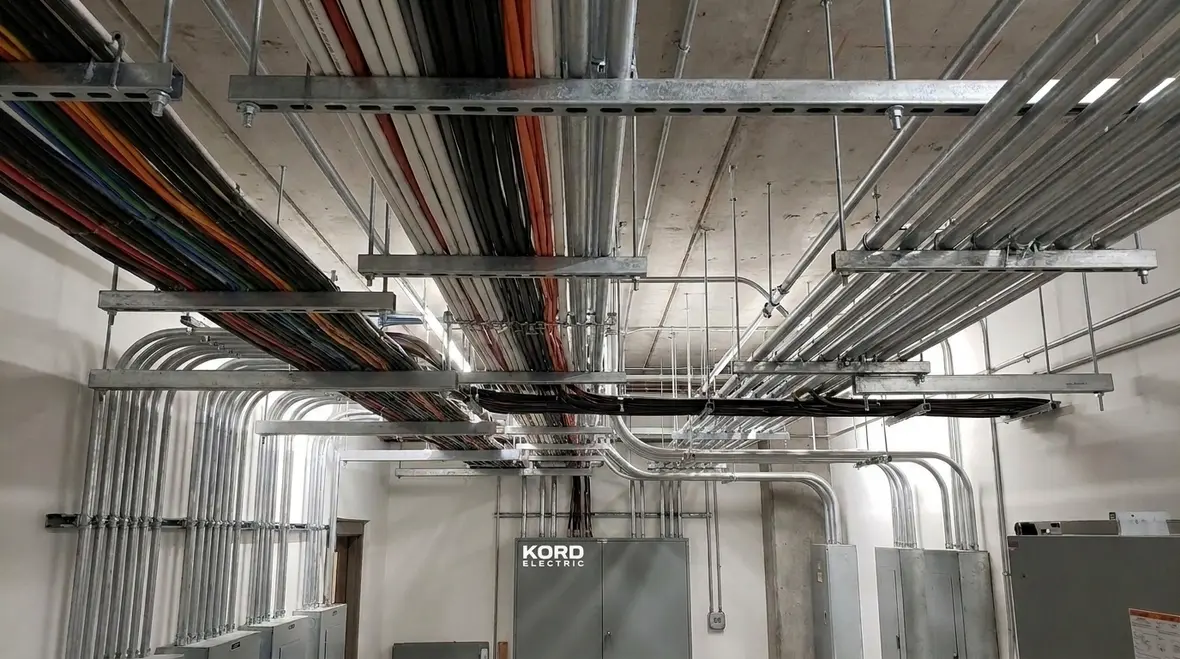
NFPA 70 Section 225.12 NEC Open Conductor Supports Explained
At Kord Electric, our team often gets called in when someone notices sagging wiring, worn hardware, or a support plan that looks like it was built during a “quick fix.” That is why we explain NFPA 70 Section 225.12 and the practical side of NEC open conductor supports explained early, in plain language, before anyone makes costly assumptions. In the first conversation, our expert service staff points out that open conductors need the right support so they stay safe through vibration, heat, moisture, and the everyday chaos of real buildings. And yes, we have seen cables supported like they are auditioning for a magic trick. Let’s keep that magic for movies, not for electrical systems.
NFPA 70 225.12 sets the tone for open conductor support
In most commercial and industrial facilities, the electrical system carries more than power. It carries responsibility. So when we reference NFPA 70 Section 225.12, we treat it like a rule that prevents failures before they start. Section 225.12 focuses on how open conductors should be supported, guided, and kept from damage. That matters because open conductors often sit where the environment can reach them. They may face building traffic, maintenance access, temperature changes, and mechanical stress.
Furthermore, we explain to our clients that support is not just about “holding something up.” Support controls strain, reduces movement, and protects conductor insulation. If a conductor shifts, rubs, or droops, it can create weak points. Later, those weak points can lead to overheating or faults. In other words, proper support keeps the wiring in its lane, like a conductor on a train route.
Our technicians also remind clients that code compliance is not a paperwork exercise. It is a safety system. When we follow NFPA 70 and apply Section 225.12 correctly, we reduce risk, extend equipment life, and protect operations.

What counts as “open conductor” in real building work
Many people hear “open conductor” and think of wires sitting loosely in air. In practice, open conductors can appear in several exposed arrangements where conductors are not fully enclosed in raceways or cable assemblies. They can be visible in mechanical spaces, service areas, near equipment, or in locations where building design leaves conductors exposed. Therefore, teams must plan support methods with care.
Also, “open” does not mean “uncontrolled.” It means the conductor is exposed to conditions around it. That exposure increases the need for proper support so the conductor stays at a safe distance from other components and does not experience unnecessary stress. When we inspect a facility, we look at routing paths, transitions, bends, and anchor points. Then we confirm the support plan matches the conductor type and the installation setting.
To keep it simple, we treat open conductor support like good building design: it should handle load, movement, and time. If the support cannot handle vibration from fans, compressors, or nearby equipment, problems will show up eventually. Usually at the worst time, when everyone else is busy.

NEC open conductor supports explained: spacing, strength, and routing
This is where the work becomes detailed, and where NEC open conductor supports explained becomes more than a phrase. Under Section 225.12, support requirements tie to keeping conductors secure and protected. We focus on three practical areas that show up in commercial and industrial projects: support spacing, mechanical strength, and routing discipline.
1. Support spacing that prevents sag and strain
When support points sit too far apart, conductors can sag or sway. That movement increases stress on terminations and can also lead to insulation damage over time. Therefore, we plan support spacing to limit movement and keep conductors aligned. Our technicians verify the entire run, not just the nearest visible point.
2. Hardware rated for the job
Support hardware has to perform under load and conditions. If a clamp, strap, or bracket is weak, it can loosen, bend, or fail during vibration or thermal cycling. So we select hardware that fits the installation environment and the conductor size and type.
3. Routing that avoids rub points
Routing errors create abrasion. When conductors pass close to sharp edges, rough structural steel, or moving equipment, the conductor can wear down. As a result, we check clearances and routing paths, then correct contact risks before they turn into recurring maintenance.
In addition, we coordinate with facility stakeholders so support work does not disrupt operations more than it needs to. Because in major property buildings, downtime costs money. And nobody wants electrical work that behaves like an unexpected sitcom plot twist.
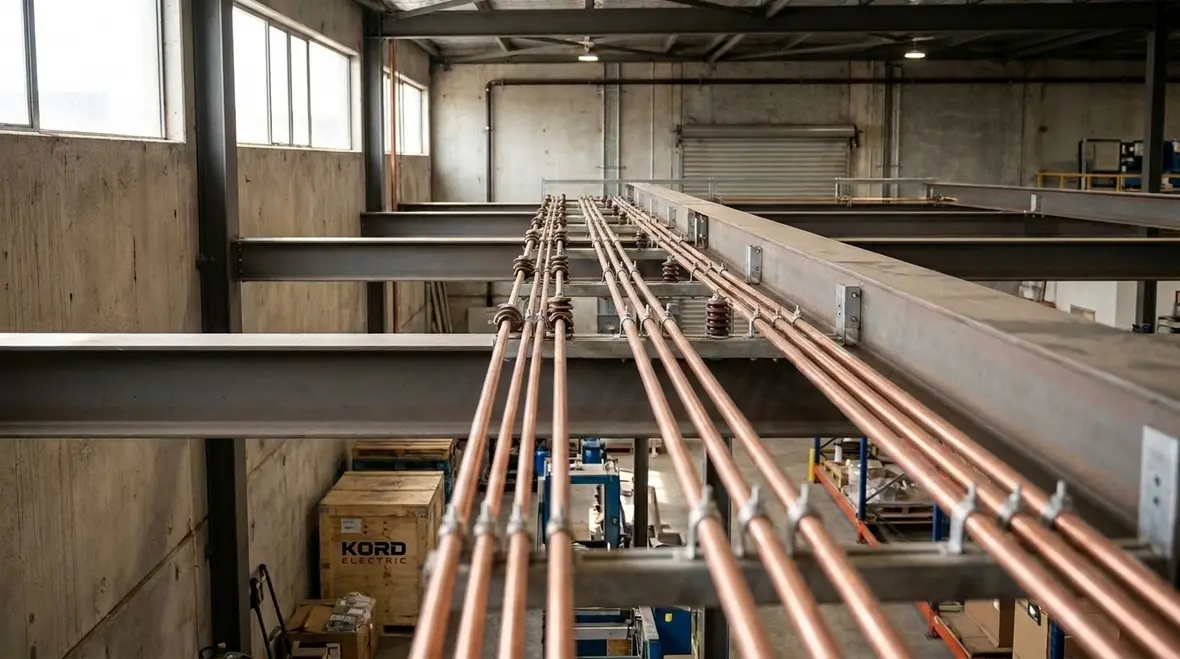
How NFPA 70 and NEC structure support decisions across systems
Code sections do not live in isolation. They interact with other rules for wiring methods, equipment, and installation practices. So when we apply NFPA 70 to open conductors, we consider how those conductors connect to the rest of the system.
For example, where conductors transition between exposed runs and other wiring methods, the support plan must remain consistent with safe mechanical behavior. Termination points also matter. A termination may meet electrical requirements, but if the conductor shifts due to poor support, the connection can still weaken. Thus, support planning protects both the conductor and the connection.
At Kord Electric, we follow a methodical approach that our expert service staff can explain on-site. We review the one-line style layout, the physical routing, and the mechanical conditions in the space. Then we confirm the installation approach supports the conductor through normal building life, not just during the first inspection.
Clients often ask how this fits with broader code guidance. We point them to the idea that the NEC, as part of NFPA 70, aims to set minimum safe installation standards for electrical systems. We also connect this focused topic to broader resources such as our Kord Electric blog article Understanding NFPA 70: The National Electrical Code Explained for 2026, which helps teams see how detailed rules like Section 225.12 fit into the full code framework. When we install and inspect with that mindset, fewer surprises show up later. And in our world, fewer surprises usually means fewer urgent callouts.
Inspection and documentation that keep commercial operations moving
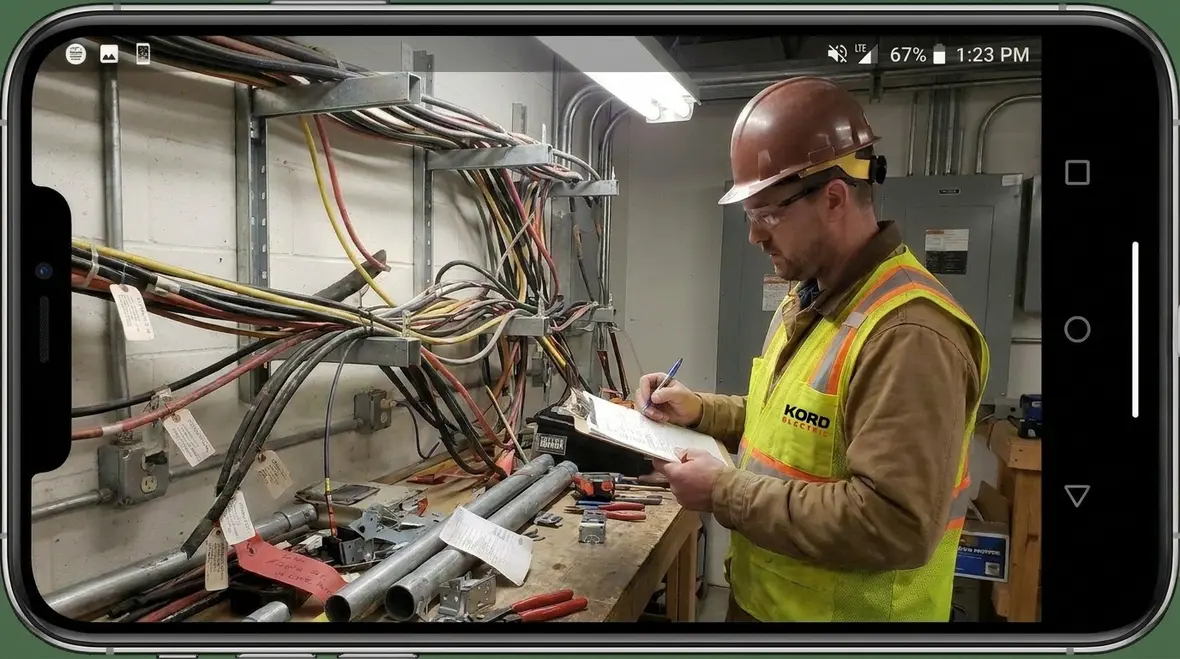
Commercial and industrial facilities need more than “it looks okay.” They need proof. Therefore, our technicians document support locations, identify risk areas, and capture what we changed during corrective work. We also communicate what we see, using clear language facility teams can use for planning.
To make the process easy to understand, we organize findings in two columns once during project walkthroughs so stakeholders can quickly act. This approach helps both engineering teams and property managers align on next steps.
Observed issue
- Uneven sag or movement
- Potential abrasion at edges
- Hardware showing looseness or wear
- Insufficient support near transitions
Our correction focus
- Adjust support spacing and confirm secure anchor points
- Reroute or add protective positioning to stop rub points
- Replace with appropriate-rated supports and tighten to spec
- Stabilize conductor at change points to protect terminations
Additionally, we coordinate work sequencing so operations stay safe. We also confirm that support changes do not create new conflicts with access panels, fire protection components, or other building systems. When we plan carefully, we reduce rework and keep the electrical room calm.
Common mistakes we catch on major property buildings
Over time, our expert service staff has seen repeating patterns. And while every building has its own personality, the mistakes tend to rhyme.
Misplaced supports that ignore the conductor path
Sometimes supports are added where they feel convenient, not where they control conductor movement. That creates weak sections along the run. Later, those sections become the first place vibration shows up.
“One size fits all” hardware choices
Different conductor types and installation conditions require matching hardware. If someone swaps hardware without regard for rating, the support can lose effectiveness under heat and mechanical stress.
Skipping checks near transitions and terminations
Supports that work in the middle of a run can still fail near transitions. Terminations need stability. So we inspect the ends, bends, and points where the conductor changes direction or wiring arrangement.
Assuming maintenance access equals safe routing
In real facilities, people open panels, carry equipment, and move around. If the conductor support plan does not account for that traffic, the installation can degrade through repeated contact risks.
In short, we treat support as a system. It connects the conductor to the building structure in a way that must remain reliable over time. Code helps guide the minimum requirements, and good engineering helps exceed them where practical.
FAQ: NFPA 70 Section 225.12 and open conductor supports
Conclusion: get the support plan right before problems show up
If your facility serves people, runs equipment, or hosts critical operations, you cannot treat conductor support like an afterthought. Our technicians at Kord Electric help commercial and industrial property teams understand and implement the requirements tied to NFPA 70, including Section 225.12, using clear guidance and careful field work. If you want a real inspection, a practical correction plan, and documentation your team can trust, we can help. Contact Kord Electric today and let us keep your electrical system steady.
For facilities that need broader help beyond NEC open conductor supports explained, our team also provides comprehensive regional services such as Los Angeles County electrical services for commercial and industrial properties, so your support plan, distribution design, and everyday operations stay aligned under one coordinated strategy.


