NFPA 70 Section 225.15 NEC Supports Over Buildings Code Guide
At Kord Electric, we focus on commercial and industrial facilities, and major property buildings, because electrical safety deserves more than a quick glance and a shrug. In our experience, the NFPA 70 Section 225.15 ties directly into what building owners and facility managers need when they plan, retrofit, and keep power systems reliable. Early on, we explain how NEC supports over buildings code requirements align with the way the Supports Over Buildings Code works in real projects, not just on paper. And yes, we’ve seen “it’ll probably be fine” become a real ticket. So, we break it down in plain terms, while our technicians take the time to explain the why behind every rule.
What Section 225.15 actually requires in the field
NFPA 70 Section 225.15 sets expectations for supports for conductors and equipment that run through or serve buildings, with special attention to safety and stability. In other words, the rule aims to prevent electrical systems from becoming loose, overloaded, or structurally compromised in ways that could create hazards. While the wording can feel formal, the goal stays practical: protect people, protect property, and keep essential systems working when conditions change.
For commercial and industrial sites, this often shows up during structural changes, major renovations, tenant improvements, and service upgrades. Therefore, we treat this as a life safety and reliability topic, not a box to check. Moreover, our expert service staff helps teams understand where failure usually starts, such as poor support spacing, unclear load paths, or installation that does not match the mechanical design intent.
And if you think support requirements are boring, we get it. But so is changing the oil in your car. Still, you do it, unless you enjoy dramatic engine noises that sound like a superhero movie. Electrical failures can be just as dramatic, and far less fun.

How supports connect to power reliability for major property buildings
Major property buildings depend on stable electrical delivery for critical operations. That includes lighting for life safety, power for security systems, elevators, HVAC controls, and communications. When supports fail or get improperly installed, the wiring and equipment can shift under vibration, thermal cycling, wind loads, or normal building movement.
As a result, reliability issues do not always show up immediately. Instead, they can develop over time as insulation stresses increase, connectors loosen, and equipment alignment shifts. Consequently, the electrical system begins to behave like a playlist with the wrong track order. You keep pressing play, but the sequence never works right.
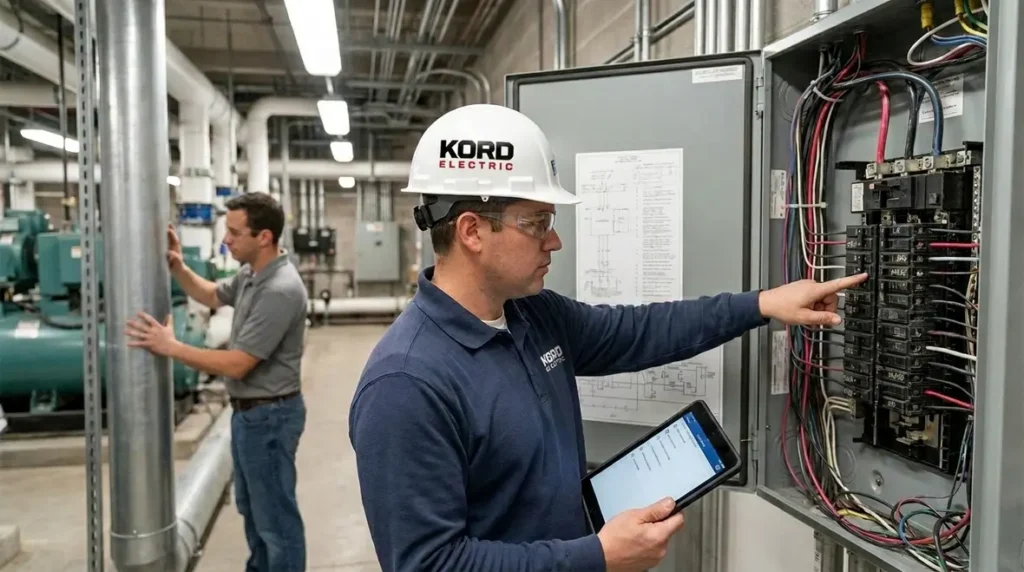
Our technicians look at the entire support picture, not just the visible conduit. For example, they consider how cables route through building sections, how transition points connect, and whether the support system matches the operating environment. Then we help teams document the installation approach so the building department, maintenance staff, and insurers understand the intent and execution.

NEC supports over buildings code and structural coordination
Section 225.15 does not exist in isolation. It works alongside building rules that manage how systems physically live within structures. That means coordination between electrical design, structural engineers, and field installation teams matters. When the building layout changes or when construction schedules force shortcuts, support and routing plans often get altered. And when plans change, the support design must still hold up to the rule set described by the NEC and related building coordination requirements.
In practice, our team supports the project from planning through completion. First, we clarify the requirements with the project stakeholders. Next, we review typical failure points: missing supports, supports spaced too far apart, supports that cannot handle the load, or field modifications that remove required restraint. Finally, we verify that the installed system aligns with the NEC supports over buildings code expectations.
Because Kord Electric serves commercial and industrial facilities and major property buildings only, we do not waste time on generic guidance. We help people that manage real loads, real schedules, and real uptime expectations. And in our world, “real” includes coordination with the mechanical trade, not just a diagram on a whiteboard.

Common installation mistakes we see during electrical upgrades
We’ve supported many retrofit and upgrade projects, and patterns repeat. Therefore, knowing the usual mistakes helps teams prevent costly rework. Below are issues we frequently spot during inspections, pull tests, and field walkthroughs:
- Support spacing that matches the “old way,” even after design updates change cable type, routing length, or load assumptions.
- Improper attachment method where the support point cannot handle the expected mechanical forces.
- Routing changes during installation that move cable runs away from the documented support locations.
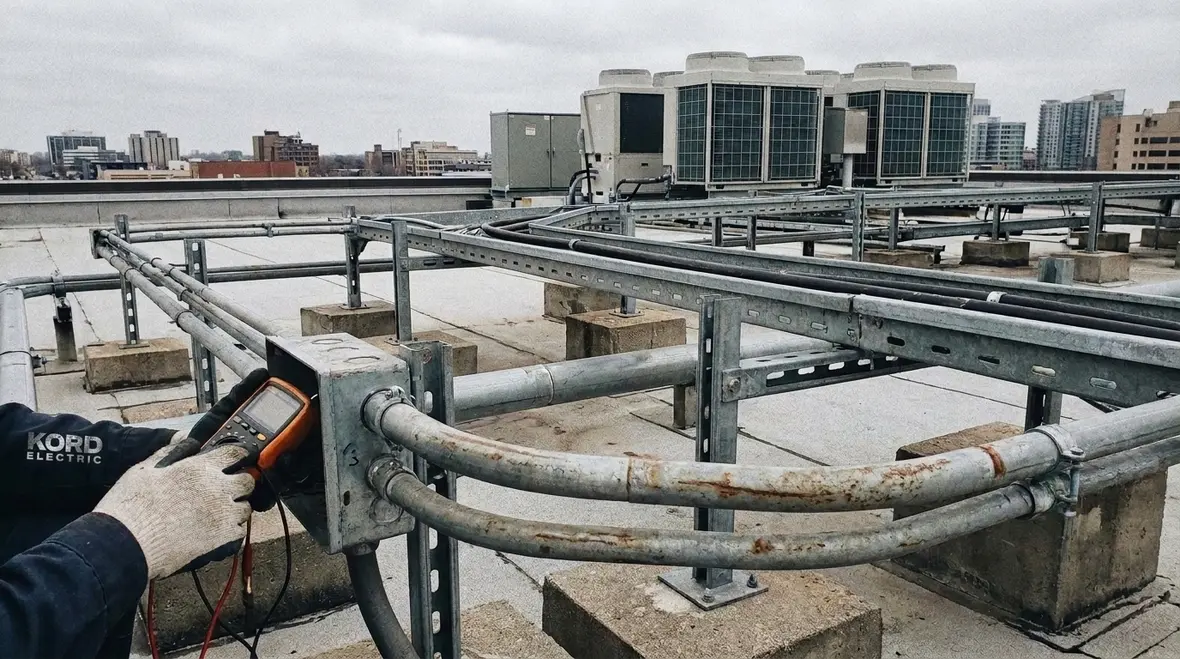
- Overlooking thermal and vibration conditions that apply to commercial and industrial equipment environments.
- Skipping documentation updates when the field version diverges from the original plan.
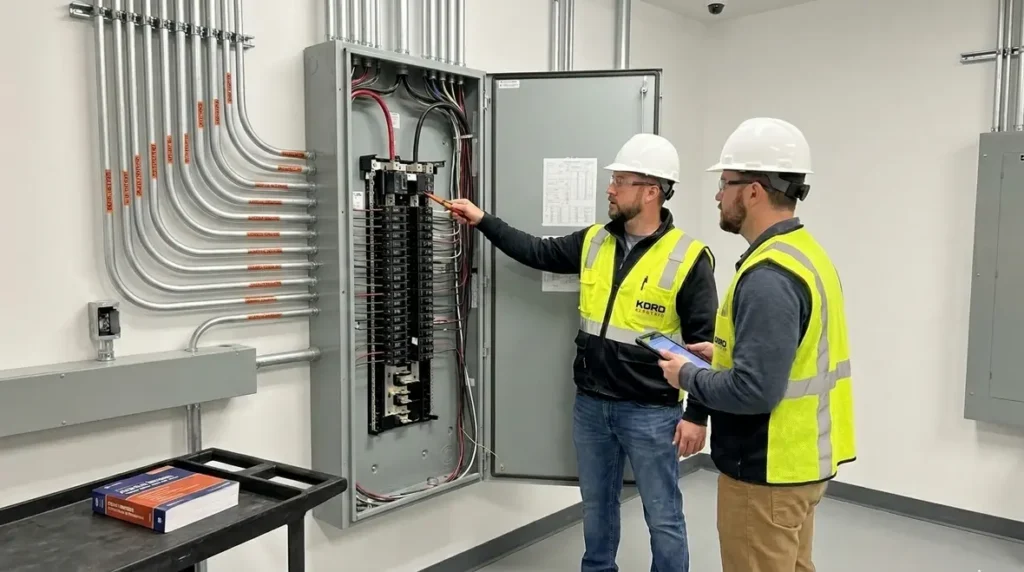
Now, we don’t come in swinging like a villain with a clipboard. Instead, our approach stays calm and structured. We walk the site, explain what we see, and then we show options that keep safety and code intent intact. Our expert service staff explains the reasoning step by step, because when people understand the “why,” they stop repeating the same mistakes like it’s tradition.

Inspection readiness and documentation that actually helps
When a project relies on code compliance and long term reliability, inspection readiness matters. We help teams prepare documentation that ties together electrical design decisions with the field install method. For commercial and industrial facilities, this reduces delays and lowers the chance of correction requests that disrupt operations.
Typically, we help facilities assemble the details inspectors and stakeholders look for: support methods, routing verification, and evidence that installation matches the approved design intent. Then we make sure facility teams can maintain the system later. Because future service work should not require a detective novel.
Furthermore, we keep communication clear. Our technicians explain what they recommend, what they verify, and what it means for ongoing maintenance. Therefore, even non electrical facility leaders can make smart decisions without guessing. And yes, we know not everyone enjoys reading technical notes, but we translate them into practical actions that make sense.
Why good support systems reduce risk during emergencies
Commercial and industrial buildings often face threats beyond routine wear and tear. Electrical pathways run through environments where water intrusion, impact events, and emergency operations occur. While no support system prevents every disaster, good support and secure installation reduce the chance that a system becomes dangerously unstable during abnormal conditions.
When supports hold correctly, wiring and equipment maintain safer positions, connections stay more secure, and accessibility for emergency response improves. Additionally, stable routing helps crews isolate affected sections during troubleshooting. Consequently, response time improves and damage can become more contained.
Also, when we train and explain these concepts to building teams, people understand that support is not only a construction requirement. It is a safety feature. Think of it as the seatbelt for the electrical system. You don’t notice it every day, yet when you need it, you are very glad it exists.
Related code context and where our team focuses
Because electrical code includes many interacting provisions, we keep our service decisions aligned with the bigger framework. Resources from our electrical and fire focused platforms help us maintain a consistent understanding across code updates and practical applications. We also coordinate with industry guidance from fire and pumping communities when projects include life safety systems, standby components, and related building infrastructure.
For our clients at Kord Electric, we focus only on the environments that require real engineering discipline: commercial and industrial facilities and major property buildings. We do not stretch our scope into small residential work, because the documentation, testing expectations, and operational requirements behave differently. In other words, we treat each project like a serious system, because it is.
Then, our expert service staff explains the code logic in a way that supports faster planning and fewer surprises. If your project team wants a clear path from requirement to installation, we help build that path, step by step. For a deeper dive into how NFPA 70 shapes that path, many facility teams also review our Kord Electric resource Understanding NFPA 70, the National Electrical Code Explained for 2026, which connects high level NEC direction to real building decisions.
FAQ
Call Kord Electric before small support issues become big problems
If your commercial or industrial facility needs an upgrade, renovation, or code focused review, Kord Electric can help you handle NFPA 70 Section 225.15 with clarity and confidence. Our technicians explain what matters, verify the installed system, and help your team document decisions in a way that supports inspections and real world reliability. Don’t wait for a loose cable run to remind you that gravity always wins. Contact us today for a project walkthrough and a practical plan forward. For facilities in Southern California, our Los Angeles County electrical services team can support code driven upgrades, NEC supports over buildings code reviews, and long term reliability planning for major property buildings.
If your facility leadership wants to connect NFPA 70 Section 225.15 to broader National Electrical Code direction for 2026, you can also explore related resources on our electrical and fire platforms, including the Kord Electric guide Understanding NFPA 70, the National Electrical Code Explained for 2026 and other code focused articles that show how NEC supports over buildings code usage fits into the larger safety and reliability picture for major property buildings.