
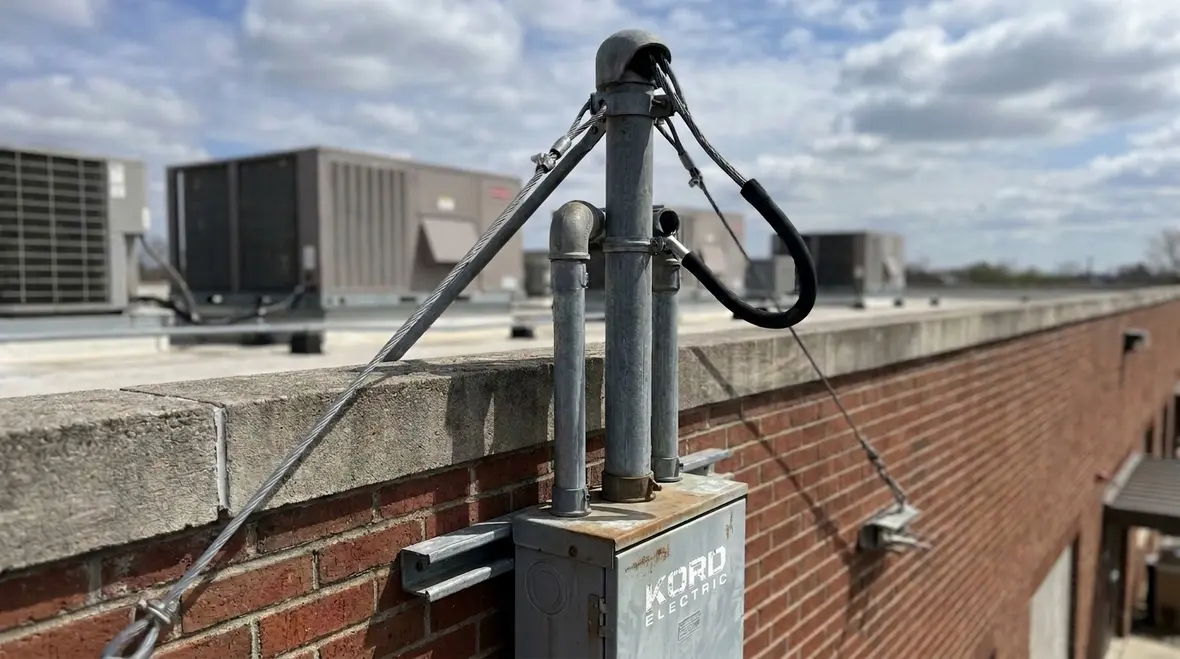
NFPA 70 Section 225.17 NEC masts as supports explained
NFPA 70 Section 225.17: NEC masts as supports explained for safer overhead installs
NFPA 70 Section 225.17 addresses how a mast acts as a support for service equipment and related conductors, and it sets rules that keep the installation stable, grounded, and safe. In practical terms, our goal at Kord Electric is simple: we want the overhead setup to hold up in real life, not just on paper. Therefore, when others plan, inspect, or maintain a commercial or industrial facility, they often need clear guidance on what the code expects, where the risk hides, and how to meet the rules without guesswork.
Now, picture a mast like a stage prop that also carries real power. If it looks sturdy but fails under wind, load, or corrosion, the whole show goes off the rails. So, our expert service staff explains the details step by step, then helps teams build and maintain systems that stand firm.
What Section 225.17 actually cares about
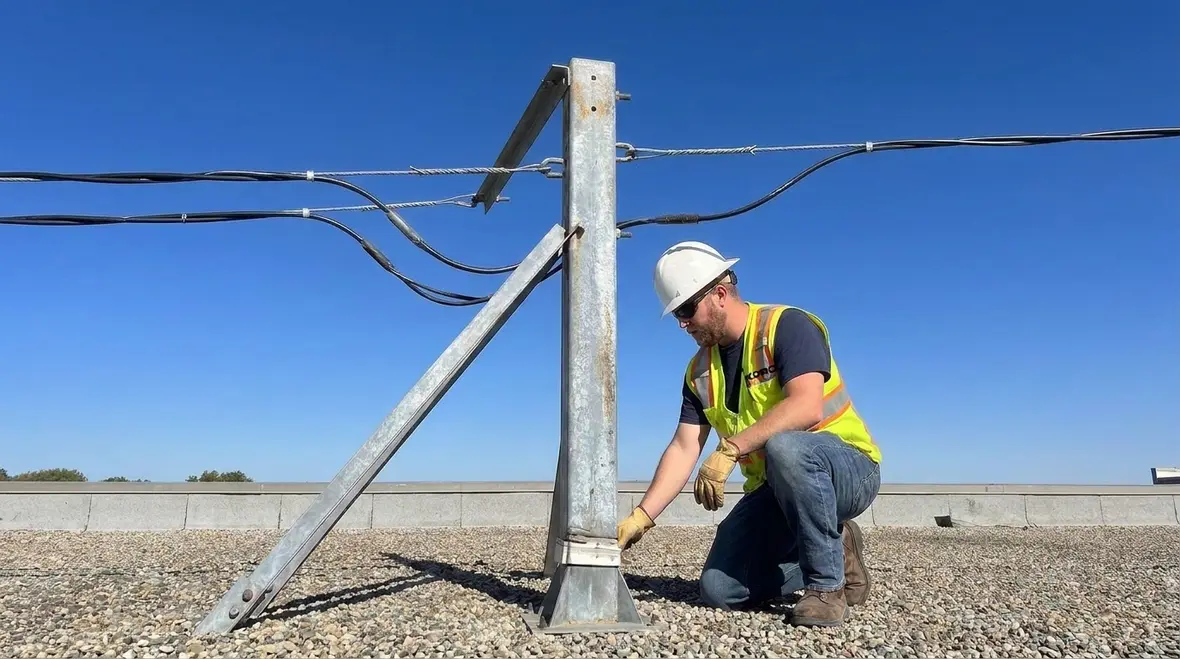
Most people read Section 225.17 and ask what it truly demands. We see it as three core ideas: support, stability, and correct attachment. Accordingly, a mast used as a support must be installed so it can withstand the forces that occur in typical conditions. Additionally, it has to connect in a way that prevents loose joints and unsafe movement over time.
Also, the code does not treat the mast as “just a pole.” Instead, it treats it as part of the electrical system. For that reason, our technicians look beyond the visible parts. They check how the mast ties into the structure, how it routes the conductors, and whether the setup prevents damage from vibration and weather.
In commercial and industrial settings, these details matter even more. A minor defect can become a major problem when a building has foot traffic, forklifts, rooftop traffic, or frequent maintenance. And yes, while Murphy’s Law loves everyone equally, it also loves shortcuts the most.
How we evaluate the supporting structure
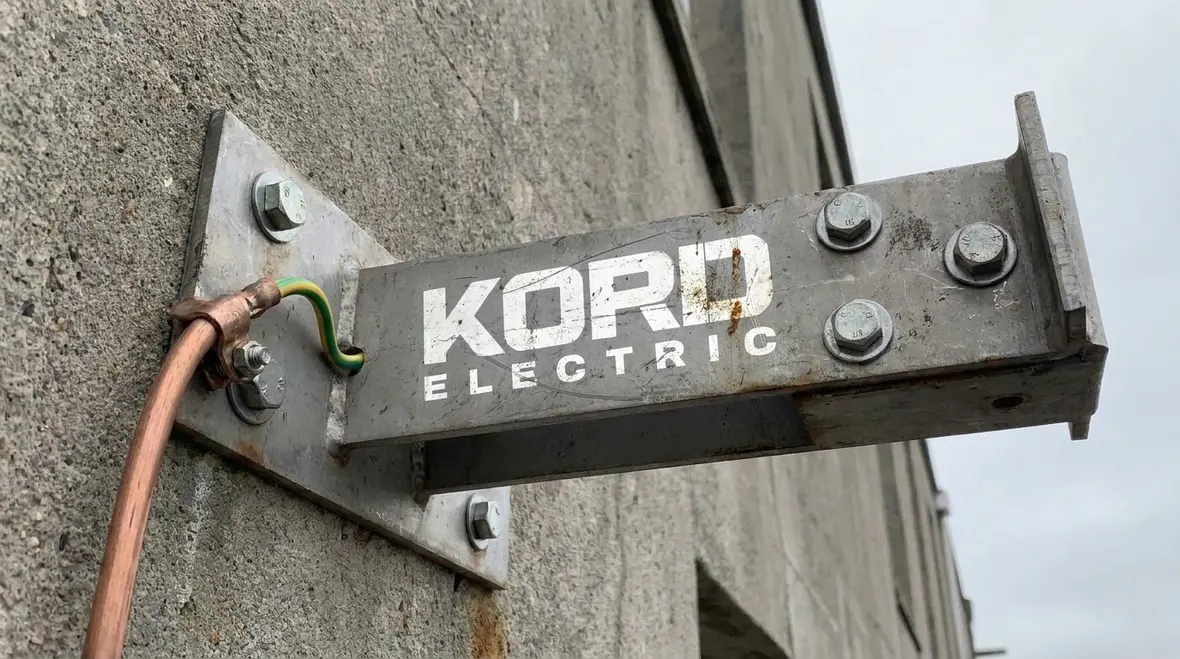
Before any mast is chosen, we evaluate the supporting structure. Then we match the mast requirements to the building. That means we look at the roof framing, wall structure, and mounting method. If a team mounts to something weak or questionable, the mast may meet the letter of the code but fail the spirit of safe engineering.
Our expert service staff typically uses a simple process: assess, verify, and document. First, we confirm the structure can handle the mechanical loads associated with the mast and the connected equipment. Next, we verify that the mounting method provides a secure connection. Finally, we document findings so the facility team can plan maintenance and keep a clear record for future work.
Because weather keeps changing, and because materials age, we also think about long term performance. Corrosion, thermal expansion, and rooftop vibration can loosen connections slowly. Therefore, we recommend systems that maintain integrity through time, not systems that just pass the first inspection.
Attachment details that prevent movement and damage
Movement is where overhead systems start to fail. Therefore, we focus on attachment methods that reduce sway and strain. In a proper installation, the mast remains aligned and protected. Meanwhile, the conductors stay within safe limits and do not rub against sharp edges or degrade insulation.
Section 225.17 influences how contractors treat fittings, joints, and the interface between mast and equipment. When joints loosen, even slightly, forces transfer where they should not. As a result, the system may experience fatigue that grows over months or years.
Our technicians also pay attention to practical factors that teams forget. For example, rooftop clutter can interfere with clearances. Then, maintenance crews may step in ways that press against the mast area. And if a facility later adds equipment on the roof, it can change loading patterns. So, we plan the installation and then we plan for the life of the building, not just the day of commissioning.

Routing, clearance, and protection for real world conditions
Even when a mast stands firm, the conductors and connected components must have the right routing and protection. We advise commercial and industrial clients to plan for wind driven rain, ice buildup in some regions, and rooftop maintenance access.
Furthermore, clearance and routing tie into how safely the system avoids contact with building parts. When routing causes strain at bends or forces the cable path against metal edges, wear starts quietly. Then, the damage can progress until inspection finds it too late.
At Kord Electric, we align installation choices with the facility’s layout and traffic patterns. We also coordinate with other trades. So, when a roofing contractor returns for a patch or a mechanical contractor adds new units, our team helps protect the mast support area from accidental disturbance.
We sometimes tell clients that if the mast area becomes a “catch all zone,” the system will eventually pay the bill. It is like putting your coffee mug near a printer. It seems fine until it is not, and then everyone acts surprised.
Grounding, bonding, and system safety
Safety does not stop at support. A mast system needs proper electrical grounding and bonding to reduce shock risk and stabilize voltage behavior. Therefore, we connect the electrical system components using the requirements that apply to the installation type and service configuration.
In practice, grounding and bonding protect people and equipment. Additionally, they help manage fault current paths so protective devices can operate as intended. When grounding is incorrect, a facility may see nuisance trips, unstable equipment behavior, or worse, a hidden hazard that only appears during a fault event.
Our approach stays methodical. Our technicians verify conductor termination quality, check continuity where it applies, and confirm that bonding points remain secure and accessible for inspection. We also make sure the facility team knows what to look for at routine maintenance intervals. Because commercial and industrial sites cannot pause operations for every small issue, we aim for fixes that hold up between service cycles.
And yes, we do laugh sometimes, because people often say “grounding is boring.” But then, when a fault hits and the protective device works as it should, suddenly everyone loves boring.
Inspection and maintenance planning for major property buildings
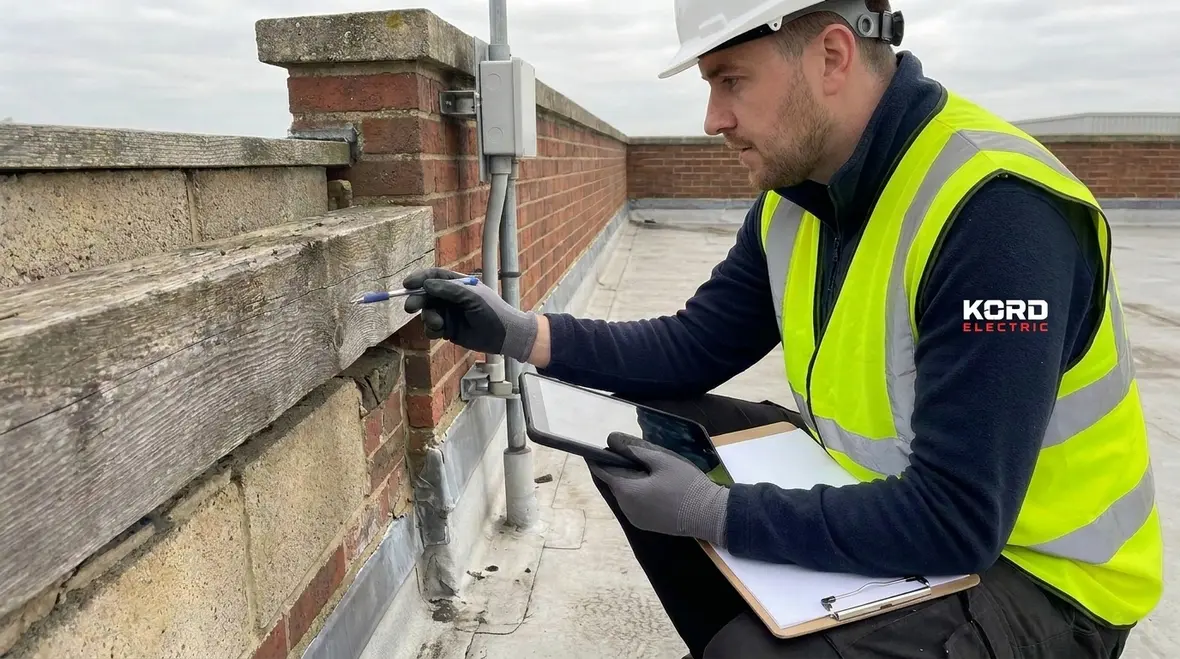
After installation, the work continues. Overhead systems see daily impacts from weather and time. Thus, we recommend a maintenance plan that includes visual inspection, checking for corrosion, verifying that connections remain tight, and confirming that conductors show no signs of abrasion or degradation.
Commercial and industrial facilities need consistent schedules, not random visits. So, we help property managers and facility engineers plan inspections that fit building operations. We also coordinate with ongoing roof projects and scheduled outages.
In addition, our expert service staff explains what trends matter. For example, facilities often notice early warning signs: rust at mounting points, small shifts after storms, or repeated service calls tied to equipment behavior. When teams track these patterns, they can address issues before a failure becomes urgent.
How Kord Electric supports NEC compliance on projects
Kord Electric focuses on commercial and industrial facilities and major property buildings. That focus matters because these sites carry heavier loads, stricter uptime needs, and more complex rooftop and structural constraints. Therefore, our teams bring practical experience to every phase: planning, installation support, testing, documentation, and maintenance guidance.
We also align our guidance with the broader NEC approach outlined by our internal education materials and partner resources. For example, our blog and related fire and code resources emphasize how the National Electrical Code supports consistent safety outcomes for service and equipment installations. You can review our NEC explainer content at the links on our sites, including the Kord Electric blog article Understanding NFPA 70, the National Electrical Code Explained for 2026 and the Kord Fire resource NFPA 70: All About The National Electrical Code (NEC) 2026, to see how we translate code text into jobsite actions.
And if you are wondering whether we actually read the code, here is the quiet truth. We do. Then we explain it to people who need to build it safely, not just memorize it for a quiz.
For facility teams that want broader help beyond mast work, Kord Electric also supports projects like electrical troubleshooting and preventive maintenance across Los Angeles County, as well as code conscious upgrades and service for complex properties. When you are planning larger changes, specialized consulting for Los Angeles County electrical services can help you keep NEC compliance, uptime, and long term reliability on the same page.
FAQ
Final thoughts and next steps from Kord Electric
Kord Electric helps commercial and industrial facilities handle overhead service support with confidence. We interpret NFPA 70 Section 225.17 in a way that leads to stable, safe mast installations and clean long term maintenance planning. If your team is designing, upgrading, or troubleshooting an existing overhead setup, we can assist with expert review, field support, and practical compliance guidance. Contact us today to schedule a consultation and get a plan that keeps your building steady when the weather tests it.


