
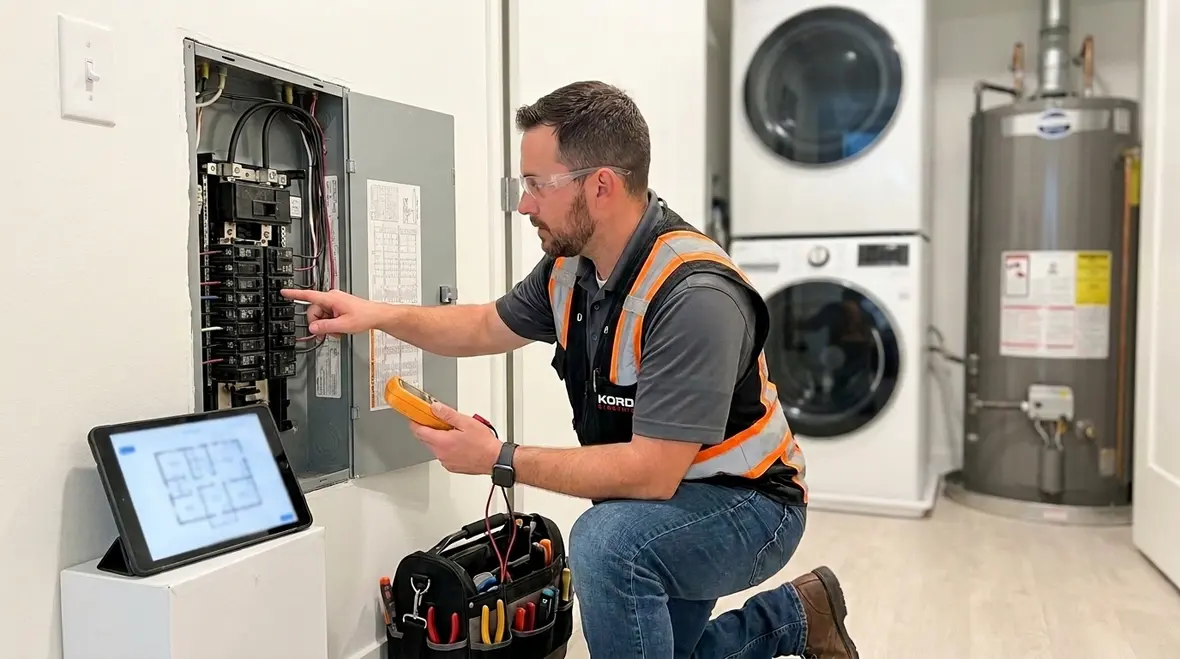
NFPA 70 Section 120.53 Appliance Loads and NEC Planning
NFPA 70 Section 120.53 sits inside the bigger story of how we size and protect electrical service for dwelling units, and we use that lens when we help clients with load planning. In fact, our NEC dwelling appliance load calculation gives a practical way to estimate what many appliances demand, so electrical systems can handle real life, not just the diagram. In this article, we explain what Section 120.53 covers, how technicians from Kord Electric interpret it on site, and why smart load planning prevents costly surprises later. And yes, we promise this stays more “clear and calm” than “three hour seminar with no snacks.”
What NFPA 70 Section 120.53 requires for appliance loads
NFPA 70 Section 120.53 addresses how appliance loads must be treated in dwelling units. The core idea is simple: electrical equipment in a home or similar unit does not draw power all at once, but we still need a method to account for the devices that will. Therefore, the code focuses on appliance loads that affect branch circuits and overall capacity planning.
However, you should not treat the section like a plug and play calculator. Instead, we interpret it through the rules of load determination and demand where allowed, then we connect those results to the service and feeder design. In other words, we do not guess; we calculate, then we verify with field context. Our experienced technicians and expert service staff explain each step clearly, because too many people learn the hard way that “close enough” is not a standard.

How our NEC dwelling appliance load calculation fits real projects
When a building includes many dwelling style spaces, the planning gets tricky fast. So, we rely on a consistent approach that aligns with NEC dwelling appliance load calculation concepts and the way the NEC handles appliance category loads. Even though your facility may be commercial or industrial in the bigger scope, units that resemble dwelling arrangements still require careful appliance load planning.
To do this well, our team looks at:
- Which appliances exist and how many units include them
- Where the loads land on the electrical one line and panel schedule
- How systems operate together during peak use windows
Then, we connect that to protective device sizing, conductor selection, and panel capacity. In addition, we consider how the facility operates. For example, a major property building may have turn over schedules, maintenance modes, and staggered tenant use patterns. These details change what feels like a theoretical load on paper.
What people miss when sizing appliance branch circuits
Even strong designs fail when someone skips the “boring” parts. And yes, we say boring with love, like a contractor who fixes the issue and makes sure nobody else has to deal with it again. The most common misses involve how appliance loads interact with other loads, and how installers think about simultaneous use.
Here is what we typically see during our review:
- Appliance loads treated as if they run continuously, when the code intent often assumes typical usage patterns
- Panel schedules that list equipment, but do not reflect the actual appliance count per unit
- Conductor sizing decisions made before the appliance load totals are confirmed
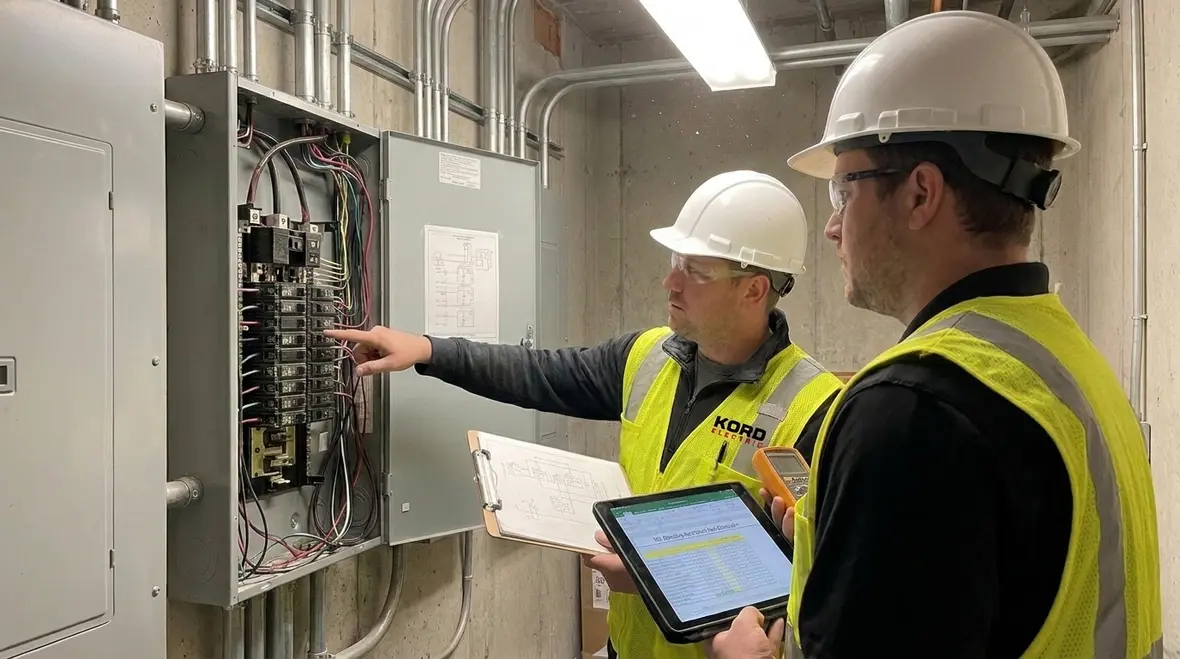
Next, we explain it in plain language. Our technicians walk facility managers through what the totals mean, and why a small change in appliance lineup can shift breaker sizing or require bus capacity upgrades. As a result, fewer projects end up with last minute revisions that delay installation and frustrate everyone involved.
Load planning for major property buildings and multi unit systems
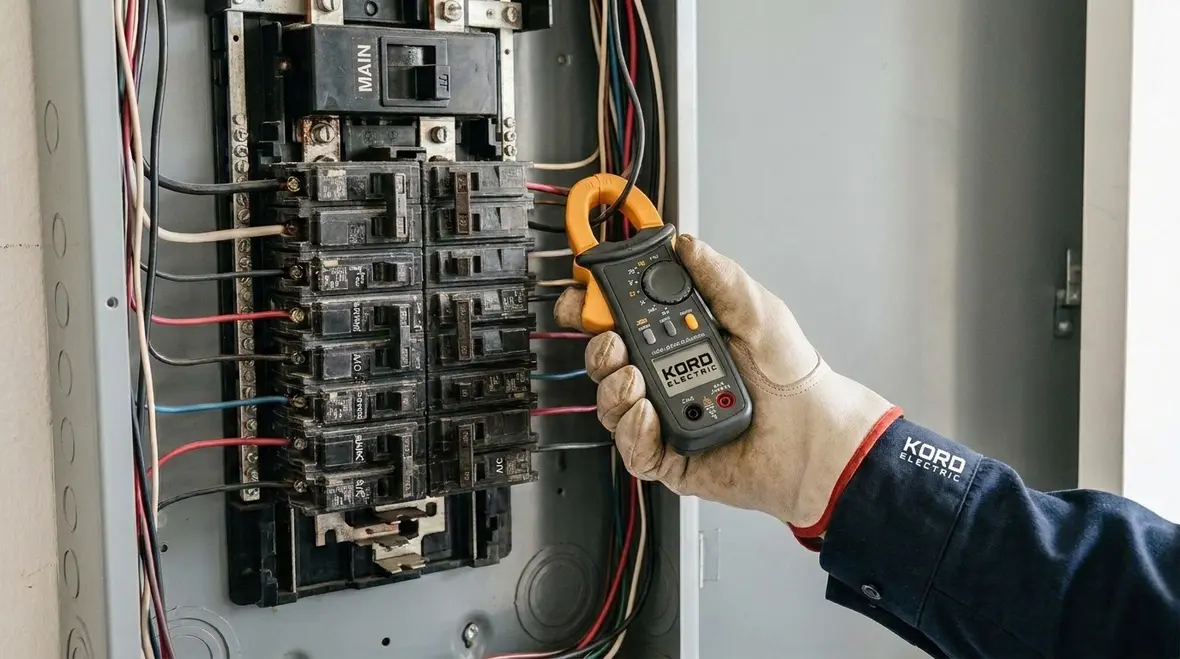
At Kord Electric, we focus on commercial and industrial facilities and major property buildings. Therefore, our approach scales beyond a single home. Still, dwelling style loads do not disappear just because the address has “Office Park” in the name. When units include cooking, laundry, and similar appliance categories, we treat them with the same discipline.
We also account for how building management changes the math. For instance, a property may include:
- Staggered occupancy and maintenance cycles that shift load peaks
- Common upgrades that affect all units at once, like new HVAC or upgraded water heating equipment
- Tenant specific appliance upgrades that may exceed the base spec
Then we translate those conditions into a load estimate that supports the service and feeder design. Additionally, we coordinate with other trades to ensure the electrical plan aligns with equipment placement, rough in constraints, and commissioning steps. In short, we help projects avoid the “we sized it for the brochure, not for the tenant” problem.
Interpreting NEC dwelling appliance load calculation with real equipment
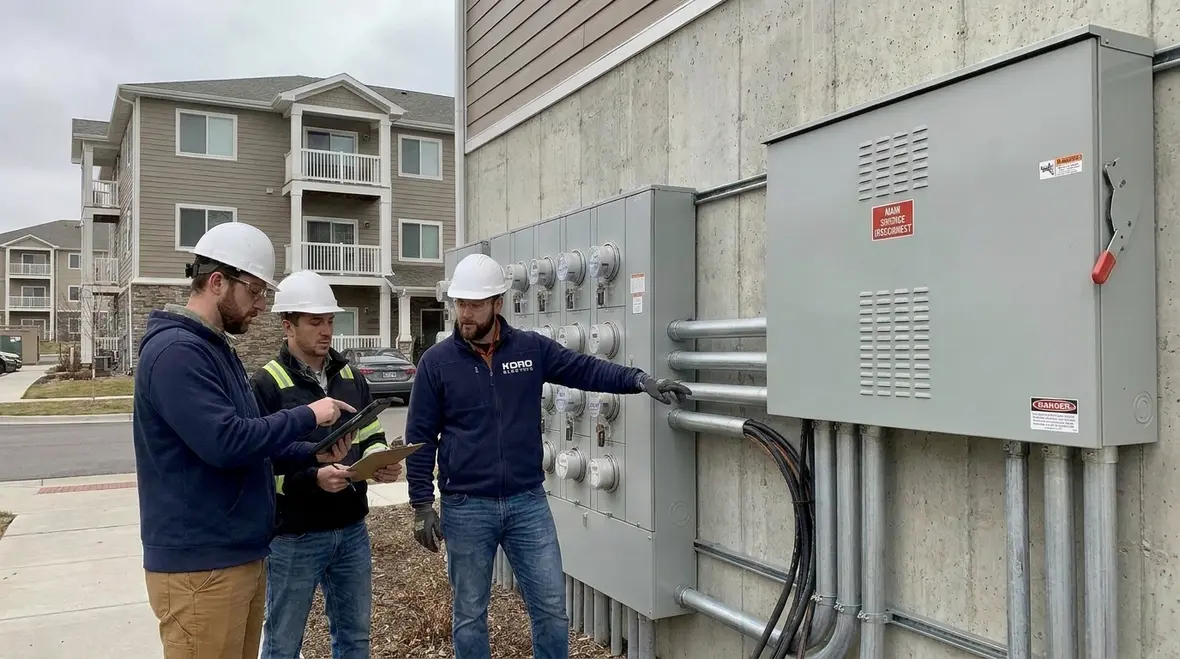
We often hear, “But the appliance label says this many watts.” That statement sounds confident, but it can mislead. Labels can show rated power, yet actual use depends on cycle type, duty cycle, and control systems. So, we treat equipment data as a starting point, then we map the load to what the NEC dwelling appliance load calculation approach expects for the appliance category.
Our expert service staff does not just compute totals. Instead, we interpret the results and confirm they match what the system will do during operation. That includes checking:
- Whether appliances share circuits in a way that affects totals
- Whether any loads fall outside expected appliance categories
- Whether voltage, phase, and installation method impact conductor and breaker choices
And if you are thinking, “This sounds like a lot of work,” you are right. It is. However, it is also the work that prevents nuisance tripping, overheating, and premature equipment failure. Nobody wants a breaker that behaves like a drama queen, flipping the moment someone runs a second appliance.
Coordination with panels, protections, and ongoing service
Once we determine appliance loads, we still have to execute. That means aligning load totals with breaker layout, panel bus ratings, and conductor routing. Moreover, we plan for accessibility, labeling, and future tenant or maintenance swaps.
For a major property building, the best practice involves planning service continuity. When we service these facilities, we prioritize safe work windows and clear shutdown steps. In addition, we document what we observe so the next maintenance visit does not start from scratch. Our team explains what we find, then we recommend fixes that improve reliability rather than only passing inspection.
Also, we keep in mind the broader NEC context. If you want more background on how the code is organized and how NEC guidance supports planning, you can review related resources like Understanding NFPA 70: The National Electrical Code Explained for 2026 from the Kord Electric blog, along with connected insights from Kord Fire. Those references help connect the dots between code intent and how systems behave in the field.
FAQ about appliance loads and code compliance
Ready for appliance load planning that holds up under pressure?
When appliance loads get overlooked, the result is rarely dramatic, but it can be expensive. Kord Electric helps you plan and verify electrical capacity for major property buildings with the discipline your project needs. Our technicians and expert service staff explain the NEC dwelling appliance load calculation in plain terms, then we connect it to panel design, protection, and long term service. If you want a load plan that supports real equipment and real usage, contact us today for a review. We keep it calm, clear, and compliant.
For facility leaders planning broader system work, you can align appliance load decisions with your larger upgrade path by reviewing how Kord Electric handles regional projects in resources such as the Los Angeles County electrical services overview, then pairing that strategy with focused NEC guidance from articles like Understanding NFPA 70: The National Electrical Code Explained for 2026.
Note: For broader NEC context and related guidance, clients may also explore resources from our connected code focused references, including materials published by Kord Electric and Kord Fire.


