
NFPA 70 Section 120.55 and NEC Electric Cooking Load Planning
How NFPA 70 Section 120.55 Shapes NEC Electric Cooking Appliance Load Planning
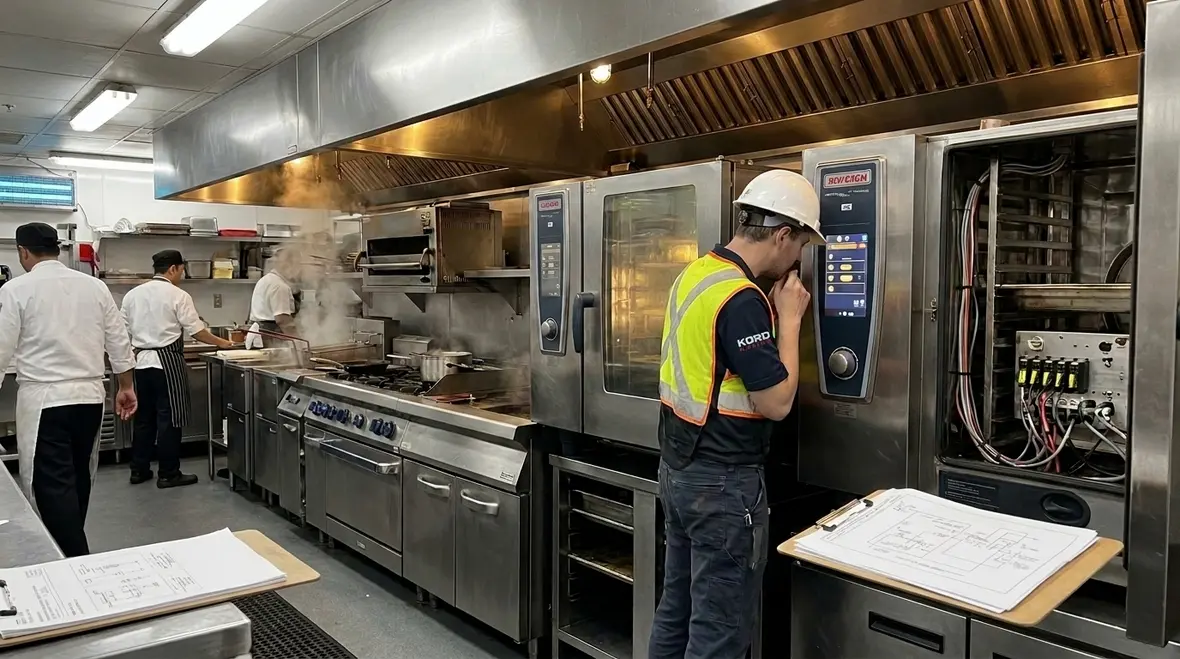
When commercial and industrial facilities plan electrical capacity, NEC electric cooking appliance loads cannot be treated like an afterthought. Within the first layer of planning, teams must follow the intent of NFPA 70 Section 120.55, especially for how electric cooking equipment connects to branch circuits and how the facility accounts for demand and load behavior. In other words, we do not guess. We design. And yes, while some people treat kitchen power like it is background noise, the code treats it like a serious guest who shows up on time and stays for the whole meeting.
At Kord Electric, our experienced service staff and trained technicians explain these rules in plain language so the electrical plan matches reality. Therefore, the rest of this guide walks through the practical load rules, how to apply them for commercial cooking systems, and how to avoid common design mistakes that lead to late upgrades, nuisance trips, or costly rework.
NFPA 70 Section 120.55 in plain business terms

NFPA 70 Section 120.55 deals with electric cooking appliance load rules and focuses on how to size and account for loads connected to cooking equipment in a safe, consistent way. In practical terms, the rule helps designers decide what to count when equipment operates, and it sets boundaries so electricians and engineers do not oversize in a way that wastes money or undersize in a way that creates hazards.
Because commercial kitchens can draw power in bursts, planning needs more than a single label on an equipment data sheet. Instead, we look at the equipment type, how it is fed, and how it runs during normal and heavy use. Then, we align that understanding with the NEC approach to load accounting.
Our technicians often say the biggest misconception goes like this: “If the equipment has a rating, we are done.” However, ratings alone do not always capture how cooking loads behave across multiple circuits and operating conditions. Consequently, Section 120.55 exists to keep the design process steady, repeatable, and code aligned.

Where load rules show up in real commercial kitchens
In major property buildings and industrial facilities, cooking spaces rarely behave like small break rooms. Instead, they function as production areas, full service dining operations, or institutional kitchens that run on schedules and peak periods. During those peak windows, many appliances can operate together, and electrical demand rises fast.
So, when designers apply Section 120.55, they must consider how the circuits and feeders serve the cooking equipment. Additionally, designers should map equipment to circuits in a way that reflects the real operating plan. For example, if a facility runs a station-based workflow, the design should reflect which appliances turn on during that workflow.
At Kord Electric, we guide teams to treat the electrical system as a coordinated set of parts, not a pile of separate circuits. That mindset reduces surprises when the kitchen goes from “soft launch” to full operations.
And yes, if you have ever watched a busy kitchen during service, you already know power demand has its own rhythm. It is a bit like a TV show with cliffhangers. Then everything powers up at once, and suddenly you find out who planned the season finale.
How we translate code into engineering decisions
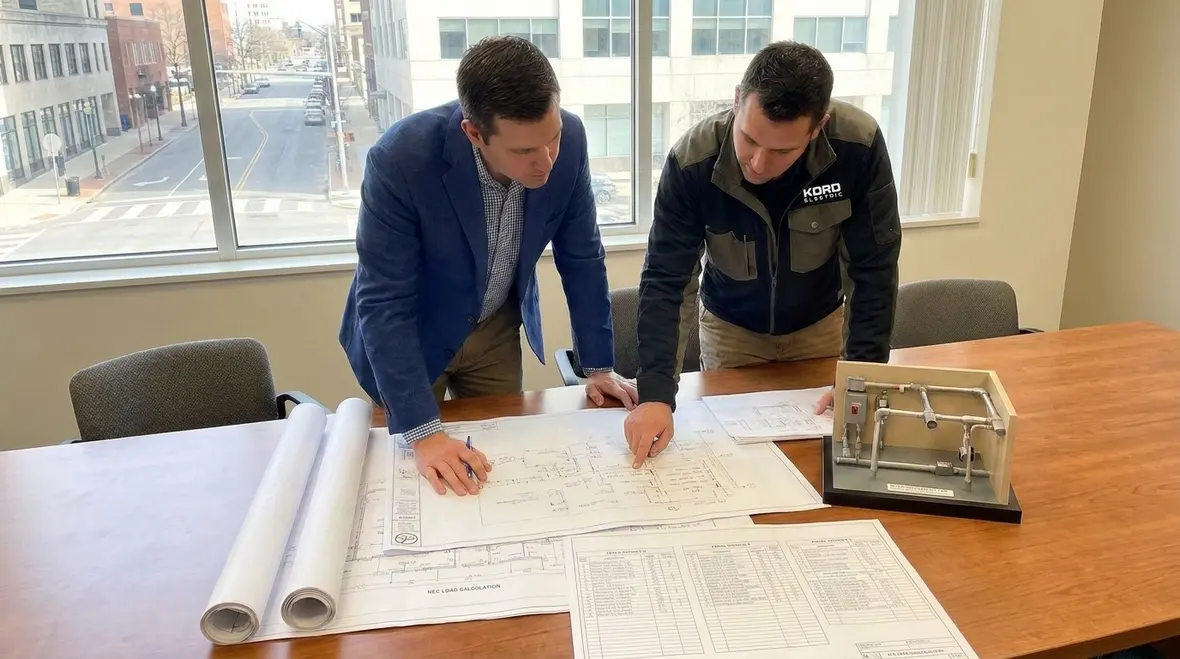
We take Section 120.55 and translate it into decisions that matter in the field. First, our team reviews the facility type, cooking lineup, and equipment connections. Next, we align the load accounting with the electrical design method being used for the rest of the building.
Then, we verify compatibility with the panel schedules, feeder sizing, conductor ratings, and overcurrent protection. After that, we check the system for practical operation issues such as voltage drop, circuit coordination, and the likelihood of nuisance tripping under real use.
Finally, we explain the “why” so your team does not just receive a calculation. Our technicians and expert service staff walk through the logic with facility managers and engineers so the documentation is not a mystery novel. It is the kind of story you can actually maintain.
We also remind teams of a simple truth: load rules affect more than the main service. They influence how the entire distribution plan performs. When those choices work together, the electrical system supports safe operation with less downtime.
Common mistakes when applying cooking appliance load rules
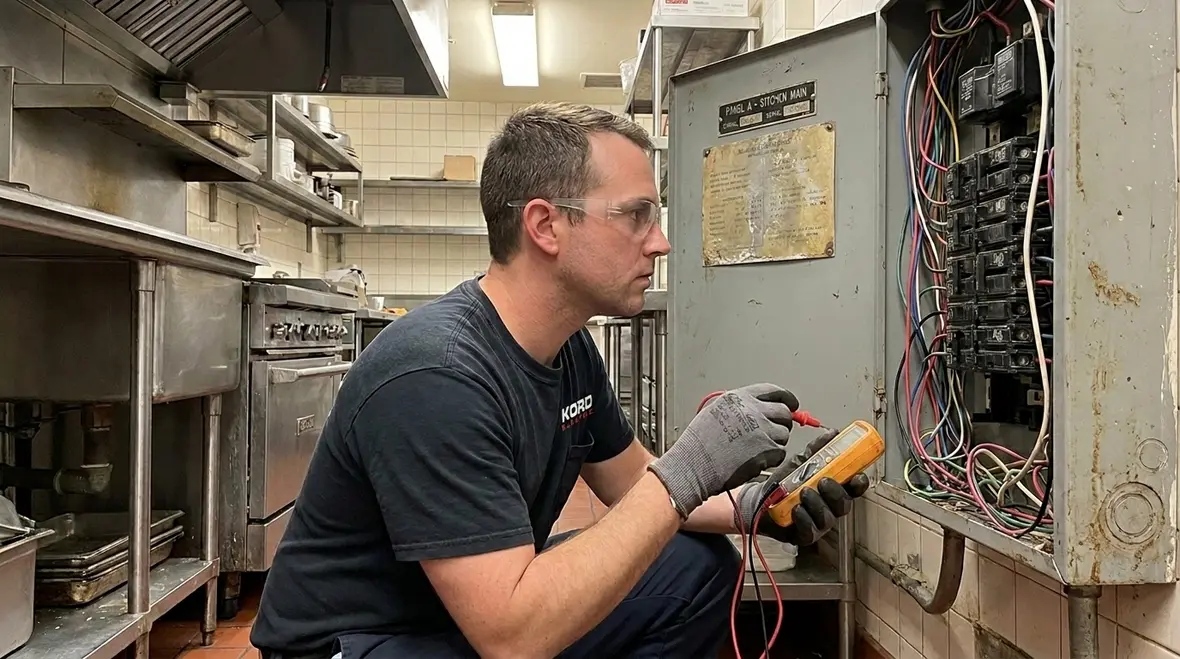
Even careful teams make mistakes. The difference is whether they catch them early or pay for them later. One common issue involves mismatched assumptions. For instance, a design may assume certain appliances never run together, yet the real operation pattern allows them to overlap.
Another issue involves circuit mapping. Sometimes drawings list equipment, but the panel schedule or wiring plan does not match the actual equipment feed layout. As a result, the load accounting becomes less accurate. Meanwhile, field modifications during construction can quietly change how circuits end up serving the equipment.
There are also design teams who rely too heavily on a single appliance’s nameplate. However, nameplates do not automatically tell the full story when multiple appliances operate during service. Consequently, Section 120.55 guides how to account for those realities.
At Kord Electric, we stress a workflow that prevents the “we will fix it later” habit. We review load calculations against the equipment schedule, then we verify that the electrical infrastructure supports safe operation under peak conditions. When we do this, we reduce surprises and help buildings move from commissioning to everyday use smoothly.
And if you are thinking, “But we installed the breakers already,” well, breakers do not solve load planning. They only protect circuits. The planning comes first, then the protection follows. That is just good adulting.
Coordinating with NEC and facility electrical strategy
Cooking areas must coordinate with the broader electrical strategy of the building. That means the approach used for general power, lighting, HVAC, and standby systems should connect logically to how cooking loads get counted and distributed. Otherwise, one part of the design might look clean while another part struggles under demand.
Therefore, teams should align kitchen feeder planning with the overall load profile and ensure the distribution system supports the planned demand. In major property buildings, that alignment matters even more because multiple tenants, shared kitchens, or multiple food service zones can share common feeders.
In addition, some facilities need clear plans for maintenance access and safe isolation of cooking circuits. Good load planning also supports operational continuity because maintenance staff can understand what gets shut down and what stays live.
Our commercial and industrial focus helps us keep the strategy realistic. We work with projects where reliability matters, where downtime costs money, and where compliance matters just as much. For teams navigating NEC updates and code intent, resources like our internal educational materials and code-focused guidance help explain how national standards connect to practical work. For more background, you can also explore our broader NEC and NFPA explanations through Kord Electric’s NEC overview for 2026 and our code resources at Kord Fire as applicable to the facility planning context.
FAQ on cooking loads, Section 120.55, and commercial compliance
Next steps with Kord Electric for code ready kitchen power
If your facility is planning, upgrading, or commissioning a commercial or industrial kitchen, we help you apply NFPA 70 Section 120.55 correctly and build a design that works in the real world. Our technicians and expert service staff explain the calculations, then verify the electrical setup so your panels, feeders, and protection match the cooking equipment schedule.
As you review options, it can also help to connect your kitchen planning with broader system strategy. Resources like our NEC overview articles and our data-driven design guidance show how cooking areas fit into long term reliability and capacity planning for major property buildings. For facilities that need a full system view, pairing this work with Los Angeles County electrical services for commercial and industrial buildings ensures kitchen loads, distribution upgrades, and reliability projects move in the same direction.
Contact Kord Electric to review your electrical plan, confirm NEC electric cooking appliance loads accounting, and move forward with confidence. Let us handle the code, so you can handle service.


