
NEC EVSE Load Calculation 2026 and NFPA 70 120.57
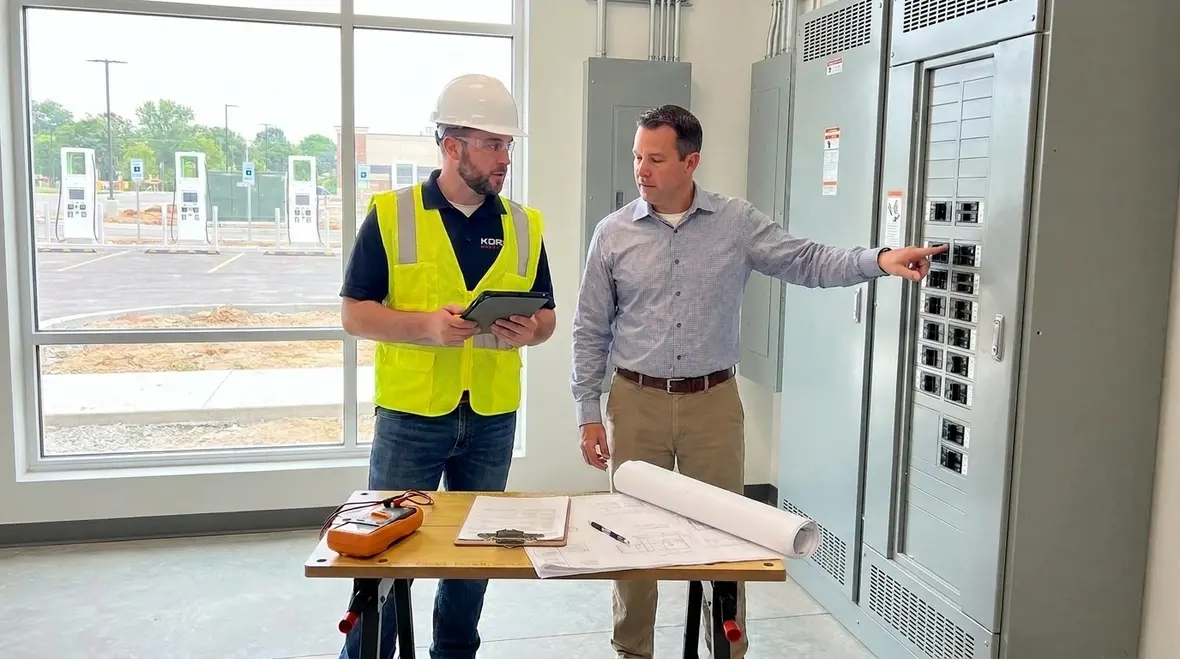
Kord Electric helps commercial and industrial facilities plan and install EV charging with clarity and confidence. In our NEC EVSE load calculation 2026 approach, we follow the logic behind NFPA 70 Section 120.57 so teams can size supply circuits, panels, and feeders without guessing. And yes, we have seen plenty of “seat of the pants” math in the wild, usually right before a breaker trips like it just heard a bad joke. In this article, a third person explains how EVSE load calculations work, and how our technicians and expert service staff break the steps down in plain language. From there, we connect code intent to real jobsite decisions for major property buildings, campuses, and multi tenant sites.
What NFPA 70 Section 120.57 actually requires for EVSE planning
In simple terms, NFPA 70 Section 120.57 tells designers and electricians how to calculate the electrical load of EV charging equipment. It also helps prevent the common problem where a project looks “fine” during installation, but later the electrical system cannot support expected demand. Therefore, the method supports proper sizing of feeders, service equipment, and upstream overcurrent protection. In other words, it protects equipment and people, not just budgets.
Importantly, our technicians at Kord Electric treat this as a planning tool, not a paperwork exercise. They review the facility’s existing electrical capacity, then map expected EVSE operation to the electrical distribution design. In addition, they coordinate with electrical designers so the calculation matches the real equipment schedule, including the number of outlets, the rated output, and the operating mode.
Our expert service staff often explains that this section aims to standardize how loads get estimated across projects. That means the calculation should not depend on who is holding the clipboard that day. Instead, it follows a consistent code backed method that commercial and industrial facilities can trust.
NEC EVSE load calculation 2026: the inputs that decide the final number
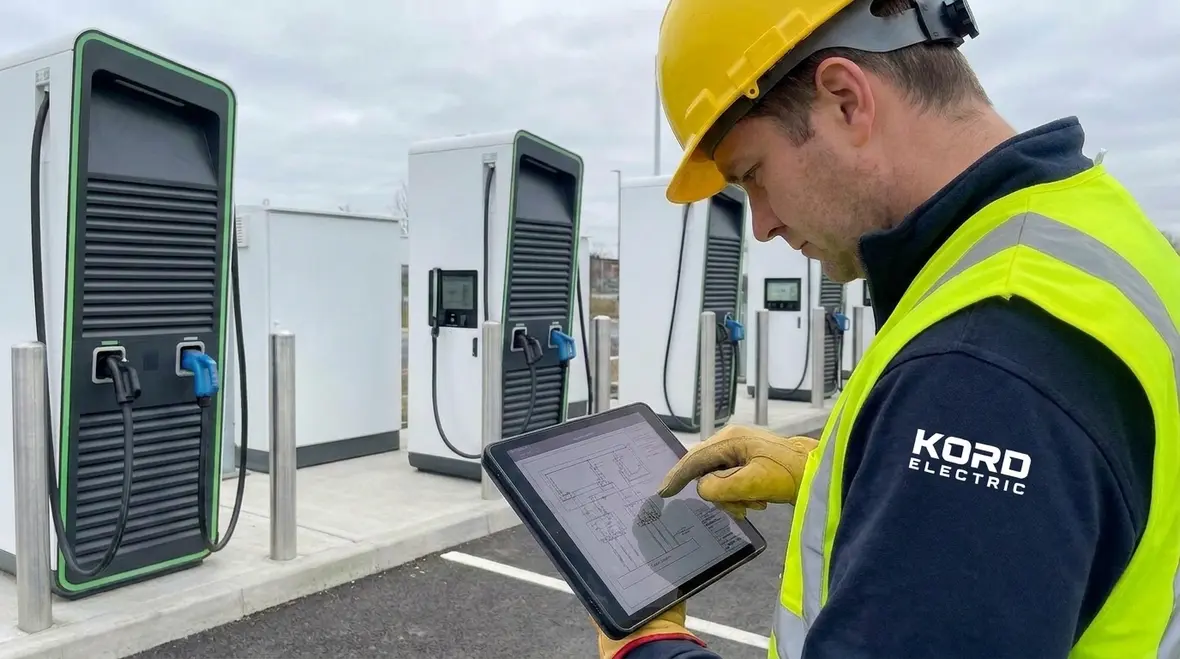
When teams do an EVSE load calculation, they start with inputs. Then they apply the code rules for demand and connected load where required. However, many mistakes happen before any arithmetic begins. So we have our service staff walk clients through the “data first” phase.
- EVSE configuration: number of charging outlets and whether they share a circuit
- Output ratings: nameplate voltage and current at the EVSE
- Operating mode: whether units charge simultaneously or use load management
- Supply arrangement: feeders, branch circuits, and equipment ratings
- Future expansion: whether additional charging will come later
Then, the team compares these inputs to the intent of the NEC. As a result, they do not just calculate what is installed today; they plan for how the site will behave in real use. In many large property buildings, the “peak moment” matters more than average use. And that is where the code logic earns its keep.
How demand factors and connected load work together
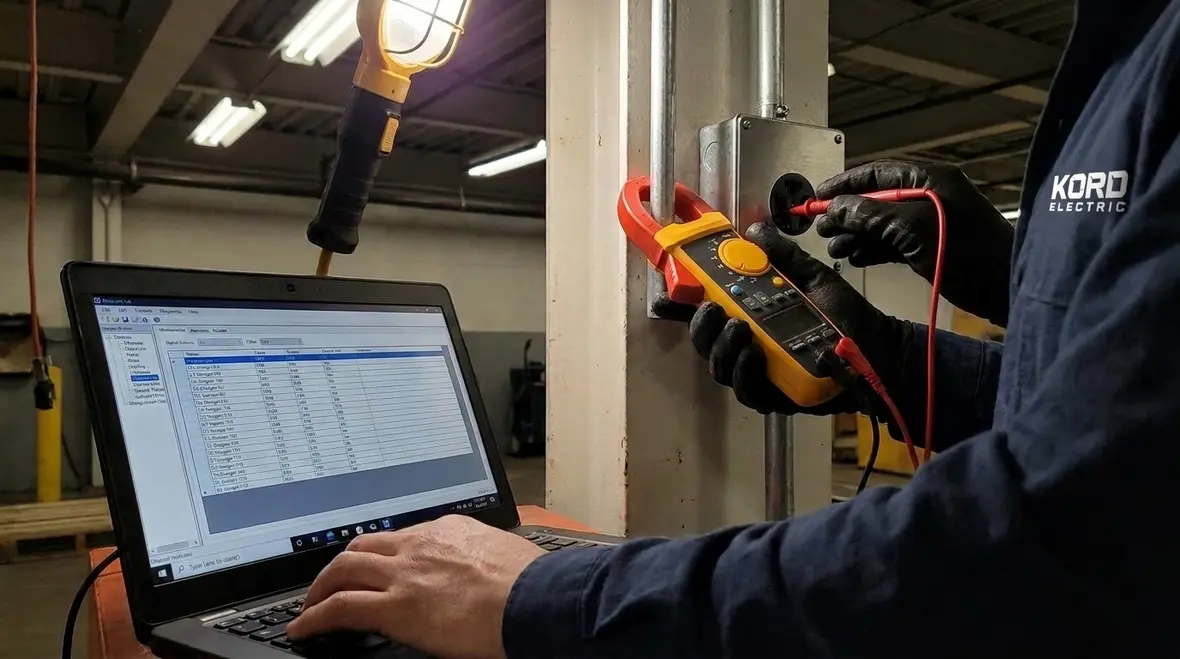
Demand is the part that trips people up. Connected load describes the total equipment capacity if everything worked at full output at the same time. Demand factors then estimate how much of that connected load you should account for when sizing conductors and protective devices. Therefore, the calculation balances practicality with safety.
At job scale, our technicians often see a pattern: teams either oversize and waste money, or they undersize and create service interruptions. And neither outcome is what a facility owner wants. So we guide decisions so the system supports expected use without turning the electrical room into a museum of unused capacity.
Additionally, load sharing and load management can reduce the effective demand, but only when the design properly implements those functions. If the electrical design cannot guarantee the reduced demand behavior, then the calculation must reflect that limitation. In other words, the code does not reward wishful thinking. It rewards correct engineering.
For major property buildings, that distinction matters. A campus might have predictable usage windows. A mixed use building might see uneven demand. Meanwhile, industrial sites can have shift patterns that create short peaks. Consequently, the calculation should align with the real operating plan, not just the equipment list.
Branch circuits, feeders, and panel sizing decisions that follow
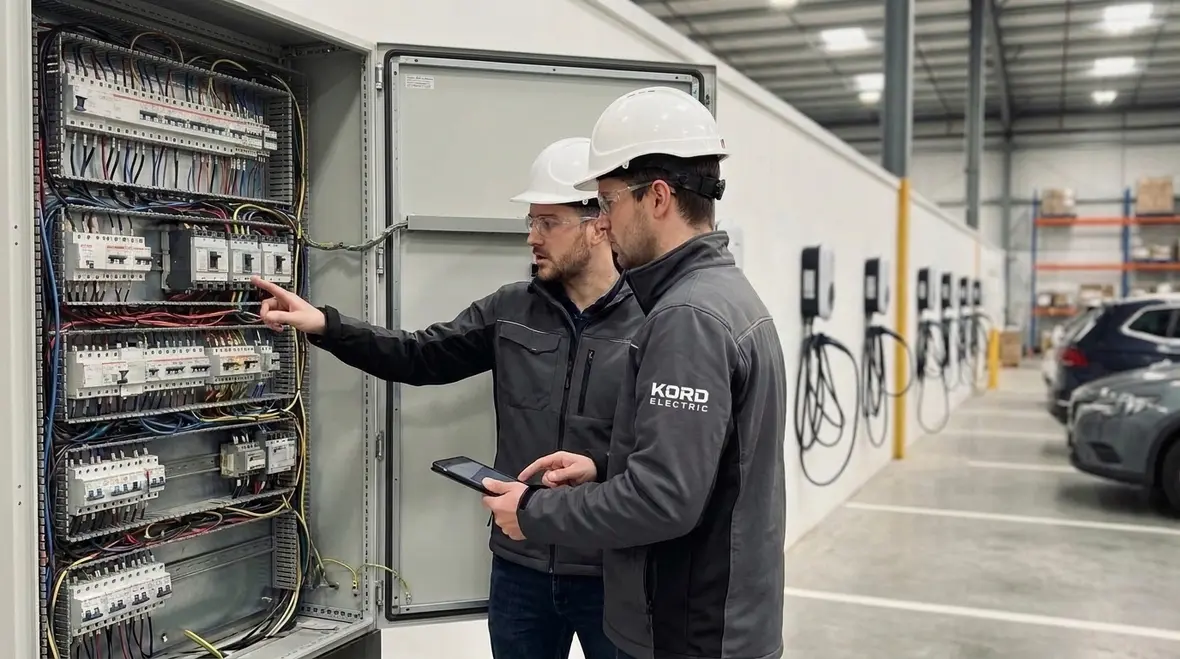
Once the EVSE load calculation is established, the work shifts to distribution design. That is where practical questions show up. For example: Should the charger outlets share a raceway and breaker? Do the feeders require a larger conductor size? Does the panel have enough spare capacity for the new breakers and terminations?
Kord Electric approaches this in a disciplined sequence. First, we ensure the downstream overcurrent devices match the circuit requirements. Next, we verify that the feeder conductors can handle the calculated demand. Then we check that the service equipment rating supports the combined facility load, including the EV charging portion.
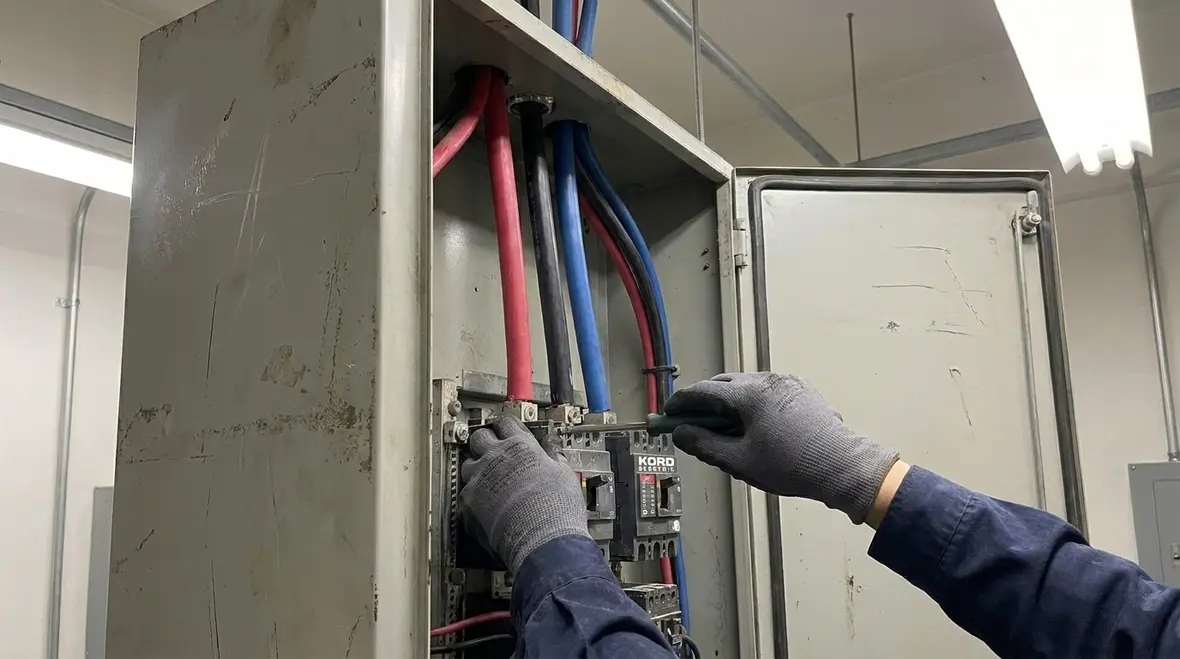
To keep the process calm and clear, our technicians explain each step as they go. If a facility has an existing panel schedule, they compare it against the EVSE requirements. If the building uses load management, they confirm the control logic. And if the project includes upgrades, they explain what changes in the distribution layout and why.
It is a bit like setting up a playlist before a party. Sure, the music exists, but the flow matters. The same idea applies here: distribution sizing must “flow” with the calculated load, or the system will feel unstable later.
Coordination issues in real commercial sites
In large projects, EVSE design does not live alone. It interacts with lighting, HVAC, elevators, kitchens, process loads, and any other major loads the building carries. Therefore, the NEC EVSE load calculation 2026 process cannot ignore the rest of the electrical story.
So our expert service staff coordinates early with the electrical design team and the facility stakeholders. For example, they confirm where the EVSE equipment will land physically, whether the conduit routes affect fill and derating, and how the site plans support future charging additions.
They also address the “timing” problem. If the chargers come online in phases, the electrical system may need interim capacity planning. Meanwhile, if a contractor schedules panel work while other trades build out the same space, it can create delays. However, smart coordination reduces change orders and avoids the classic outcome where everybody blames everybody, like a superhero movie with too many villains.
Where code references and local practice meet, our teams stay methodical. They align the design approach with the relevant NEC guidance and with the client’s operational goals. And if questions arise about how the building will use the chargers, they ask them early, while design decisions still matter.
Safety, compliance, and documentation for owners and operators
Compliance is not a “sign and forget” task for commercial and industrial facilities. It requires documentation and clear handoff to the owner and facilities team. Therefore, Kord Electric focuses on records that support inspection and ongoing operation. That means the EVSE load calculation includes the key inputs, the calculation approach, and the basis for any demand assumptions.
In addition, our technicians help teams understand what the result means for daily operation. If load management exists, the owner should know what conditions trigger different behavior. If the design assumes certain charger use patterns, the operator should understand how changes in usage could affect performance.
We also support long term reliability by verifying terminations, breaker matching, and labeling. In many major property buildings, maintenance staff need clear guidance, not guesswork. Thus, we help reduce risk at both install time and future service visits.
Finally, we connect this work to broader code awareness across the NEC framework. For readers who want wider context, Kord Electric points to resources that explain how the National Electrical Code fits into real projects, including how commercial facilities handle major updates over time. For a deeper background on the rulebook itself, you can explore our guide Understanding NFPA 70: The National Electrical Code Explained for 2026 along with additional code resources on kordelectric.com, kordfire.com, and kordfire.com.au.
How NEC EVSE load calculation 2026 fits into broader power planning
EV charging rarely arrives as an isolated upgrade. In many commercial campuses and multi tenant sites, the same capital plan that funds EVSE also touches panel upgrades, added distribution equipment, or renovations that change how power flows through the building. That is why our teams treat NEC EVSE load calculation 2026 as one layer in a larger power planning stack, not a one-off form to fill out.
When our technicians review a site, they look at the existing one-line diagrams, panel schedules, and known future projects. If an owner plans to add data rooms, new production lines, or expanded HVAC loads, those plans shape how much capacity should be reserved for EV charging. The goal is to avoid the trap where a building squeezes chargers into “leftover” power and then discovers, two years later, that nothing is left for a critical expansion.
This is also where upstream code concepts such as NEC application scope and AHJ enforcement come into play. Kord Electric often pairs EVSE planning with systematic code reviews, drawing on related resources like their NEC scope and enforcement guides to keep the project aligned with both the written rules and the local inspection culture. The result is a smoother path from first sketches to energized chargers, without surprise rewrites when the plans land on an inspector’s desk.
For facilities that want a more thorough look at how power planning and NEC requirements intersect, Kord Electric’s broader electrical system planning articles show how these EV specific calculations connect to feeder arrangement, equipment locations, and construction sequencing for large commercial buildings and industrial sites.
Tying EVSE planning to Los Angeles County electrical services
Because Kord Electric serves a wide range of commercial and industrial clients in Southern California, the same crews who complete a NEC EVSE load calculation 2026 review can also execute the field work that follows. That includes upgrading service equipment, installing new raceways and panels, and coordinating with utilities and inspectors so EV chargers go live on schedule instead of living in “almost done” status.
For owners and property managers across the region, this integrated approach shows up in practical ways: fewer handoffs, clearer communication, and a single team that stays responsible from early planning to the final commissioning walk. When a campus or multi site portfolio needs consistent execution, that continuity can be the difference between a clean rollout and a months long puzzle of partial installs and change orders.
If your facility is in Southern California and you are planning new EVSE, load upgrades, or coordinated electrical renovations, you can connect this planning mindset directly with field proven crews through Kord Electric’s dedicated Los Angeles County electrical services. That way, the same understanding that shapes the load calculation also shapes conduit runs, panel choices, and the way the finished system behaves under real-world demand.
FAQ
Closing: get EVSE sizing right before the electrical room fights back
Kord Electric serves commercial and industrial facilities that cannot afford guesswork. Our technicians and expert service staff help teams apply NEC EVSE load calculation 2026 concepts using the intent behind NFPA 70 Section 120.57, then translate the result into real panel, feeder, and circuit sizing decisions. If your project is planning new EV chargers, capacity upgrades, or phased commissioning, contact us. We will review your inputs, align the design with code logic, and help you move forward with confidence.
For facilities in Southern California, that support extends from planning through installation and long term service. Whether you are coordinating across multiple buildings, rolling out EV charging in phases, or pairing chargers with broader system upgrades, Kord Electric’s field teams and expert service staff bring the same disciplined, code conscious mindset to every step so your electrical room feels calm, not combative, when the first vehicles plug in.


