
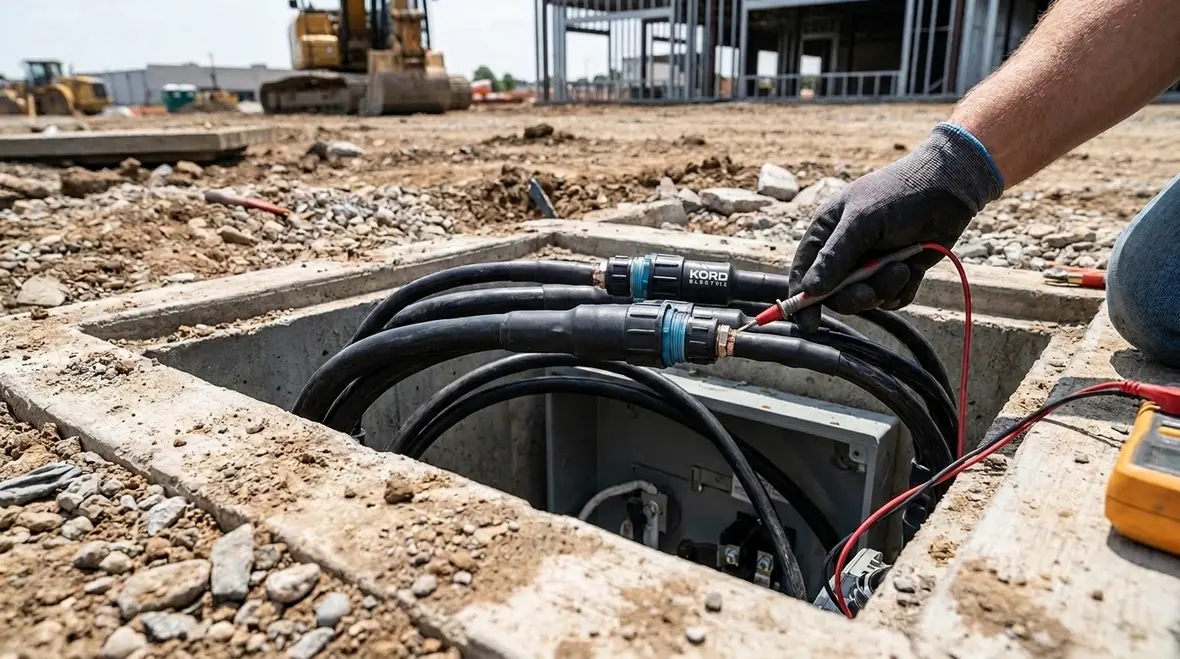
NFPA 70 Section 230.33 NEC Spliced Underground Service Conductors
NFPA 70 Section 230.33 and NEC spliced underground service conductors for commercial sites
At Kord Electric, we deal with the electrical parts of commercial and industrial facilities that have to stay dependable, especially when the ground is involved. That means we often see questions about NFPA 70 Section 230.33 and what it allows for NEC spliced service conductors in underground service runs. In practice, our clients want clear rules, clean installs, and documentation that holds up when inspections, audits, or maintenance turn up later.
To be honest, underground work is like a slow cooking show. You cannot rush it, you cannot guess it, and you cannot “wing it” without consequences. And while pop culture loves shortcuts, electrical code does not. So we break down what Section 230.33 allows, what it does not, and how our technicians explain the process step by step on major property buildings.
What 230.33 allows for spliced underground service conductors

NFPA 70 Section 230.33 focuses on splices in underground service conductors, and it draws a hard line between what is acceptable and what is risky or prohibited. The big idea is simple: if you must splice conductors underground, the splice must follow specific conditions so the installation performs safely for the life of the building.
First, Section 230.33 permits splicing only under the rules that support safe electrical continuity and reliable insulation and protection. In other words, the splice cannot become the weak link. Next, it requires proper methods that keep conductor integrity intact, even though the splice sits below grade where moisture, soil chemistry, and temperature changes do not take breaks.
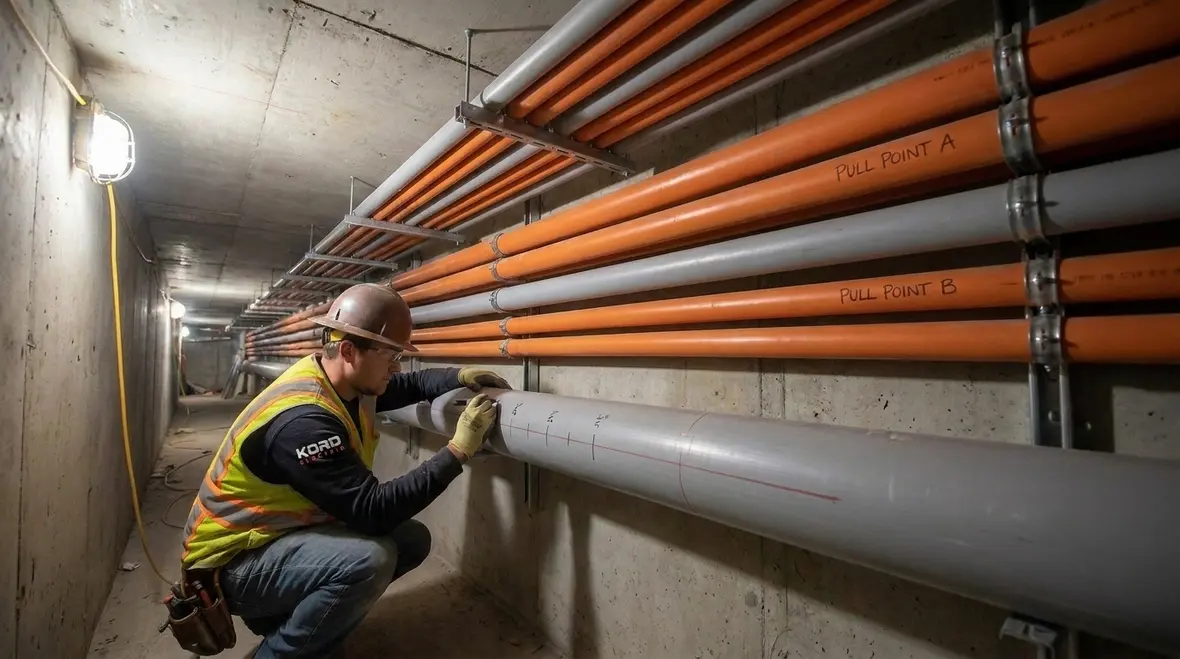
Third, the rule pushes installers to plan splices carefully, rather than dropping them wherever they fit. Therefore, the design and conduit layout matter. When our expert service staff reviews a site plan, we look at route lengths, pull points, and where splice locations would land before we ever touch a tool.
Where splices belong and how conduit planning reduces problems

A lot of trouble starts before the splice exists. Contractors might treat underground runs as “just cabling,” but commercial and industrial projects run on tight schedules, long conductor lengths, and strict safety needs. So, we plan the route like we are planning for inspections, not just for today.
When a project calls for splice locations, we make sure they line up with workable access for testing, inspection, and future service. Also, we coordinate conduit type and routing so conductors can be pulled without damage to insulation. If you nick insulation on the way in, the splice will not magically fix that. It will only make the problem harder to spot later.
Meanwhile, we confirm that any splice method used at a commercial facility fits the environment. Underground service spaces can include harsh conditions, and even “minor” mistakes can lead to heat rise, corrosion at terminations, or insulation failures.
Our technicians explain this clearly to facility managers: if you treat the run like a disposable cable, you get disposable performance. If you treat it like critical infrastructure, you get stable service.
Permitted splice methods for NEC spliced service conductors in the underground path
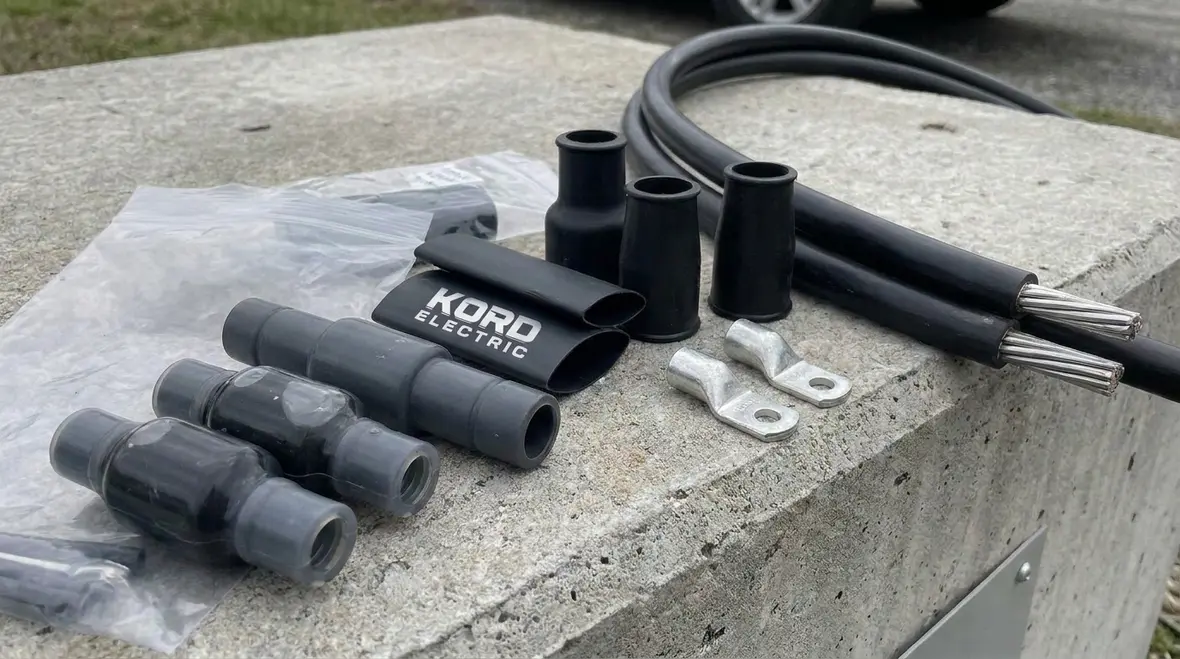
Section 230.33 emphasizes that splices must use approved or suitable methods. That means the splice has to maintain electrical performance and provide mechanical and insulation protection equivalent to the conductor’s original design. Therefore, the splice system must handle heat, moisture, and soil conditions without degrading.
We typically see best results when teams use splice materials that are designed for underground service use and that pair with proper installation procedures. Then, they seal, secure, and support components as intended. In most commercial installs, the splice system must also integrate with the conduit and jacket behavior so the splice area does not become a moisture entry point.
And yes, we say this like a calm voice in a crowded room because it matters. A splice installed underground is not like a quick home repair where you can open a panel, swap a part, and call it a day. For major property buildings, you plan for long service life and predictable maintenance.
Insulation, protection, and moisture control below grade
Underground work lives in the real world, not in theory. Soil contains moisture, and soil chemistry changes from place to place. So we focus on three layers of protection: insulation integrity, mechanical protection, and environmental sealing.
First, insulation integrity means the splice must not compromise the conductor insulation. If the splice setup does not match the conductor insulation characteristics, heat and breakdown can start at the splice area, which is exactly where you least want stress.
Second, mechanical protection matters because underground runs experience movement, vibration, and settling. A splice that lacks solid support can shift, and a shift can stress the joint.
Third, moisture control is where many installs fall behind. If a splice assembly fails to seal properly, moisture finds pathways. Then corrosion and tracking can develop over time, and the failure often arrives after the project team has moved on to the next job. We have seen it. Facility staff rarely enjoys scheduling repairs that could have been avoided during install.
To keep this from becoming a “season finale” problem, our expert service staff walks clients through what we do to protect splices in the underground path, and we document the approach for long term maintenance planning.
Inspection readiness, testing, and documentation for commercial facilities
Commercial and industrial owners do not only want a working system. They want confidence. Therefore, we build for inspection readiness and for the kind of maintenance that does not derail operations.
During the install, our team verifies the splice system selection, confirms installation steps, and checks for workmanship issues that can hide under surface layers. Then, we coordinate with the larger electrical scope so the splice area stays consistent with the rest of the service conductor setup.
After installation, we support testing and documentation so others can verify compliance without guesswork. In practice, that includes keeping records that identify splice locations and methods used. This matters because when someone later traces a fault or plans an extension, they will need to know where critical connections exist.
We also explain these items in plain terms for facility teams. If a manager asks, “What did we install and where,” our technicians answer directly, not with a vague shrug. We might joke about it being like “labeling the leftovers,” but the goal stays serious: clarity reduces downtime.
Common mistakes we prevent on major property buildings
Even careful contractors can make mistakes when schedules tighten. Still, most issues trace back to a few repeat patterns. We see these and we stop them early.
Mistake one: installing splices in places that create access problems. If the splice location becomes hard to inspect later, the system becomes harder to manage.
Mistake two: using splice materials or methods not suited for underground service conditions. A splice system must match the environment, not just “fit the conductor.”
Mistake three: poor planning of conduit and pull strategy. If conductors get stressed or insulation gets damaged during pull, that harm can show up later.
Mistake four: weak moisture control at splice assemblies. Underground moisture is persistent. If seals and protections are not treated as critical, failure risk rises.
Our technicians prevent these errors by using a disciplined workflow: plan, verify materials, follow approved installation steps, then document. In short, we treat NEC spliced service conductors as infrastructure, not as a box to check.
Related code context: how 230.33 ties into the larger NEC picture
Section 230.33 sits within the broader framework of NFPA 70 and the NEC requirements for service conductors and underground installations. Therefore, the splice rule does not stand alone. It works with requirements for wiring methods, conductor protection, burial considerations, and installation practices.
So when we plan a commercial electrical service upgrade, we do not just ask, “Is splicing allowed.” We also ask how the entire service system supports safe operation. That includes how conductors transition from underground to above ground, how terminations connect, and how the installation protects against heat and physical stress.
If you want a helpful way to think about it, imagine the service as a chain. Section 230.33 protects the links under the ground. Other NEC requirements protect the rest of the chain, above grade and at terminations. When every link does its job, the whole chain holds.
For deeper code background, we often point clients to our knowledge resources and code explainers across our blog, including our detailed guide Understanding NFPA 70: The National Electrical Code Explained for 2026. We also reference the broader NEC and safety discussions available at kordfire.com and the related site home at kordfire.com.au. Alongside that, we stay aligned with safety community guidance through resources like firepumps.org, because the real world cares about both electrical safety and fire protection planning.
FAQ about NFPA 70 Section 230.33 and underground splices
Conclusion: schedule a code aligned underground service review with Kord Electric
If you are planning a service upgrade or a new commercial or industrial installation, do not leave underground splice decisions to last minute assumptions. At Kord Electric, we use our experienced technicians and expert service staff to help you plan NEC spliced service conductor work that aligns with NFPA 70 Section 230.33, supports long service life, and improves inspection readiness.
We review your site conditions, route plan, and service conductor strategy so your underground system performs the way it should. For facilities across Southern California, including major property buildings in Los Angeles County and surrounding areas, our Los Angeles County electrical services team can support everything from new underground service planning to code-driven upgrades. Then we all get to sleep better knowing the work under your feet is as reliable as the rest of your electrical infrastructure.
If you are also evaluating broader code strategy beyond service conductors, our NFPA 70 explainers and NEC-focused resources can help you connect underground details with panels, distribution, and protection. That way, your next project is built on a clear, code-aligned playbook instead of last-minute guesses.


