
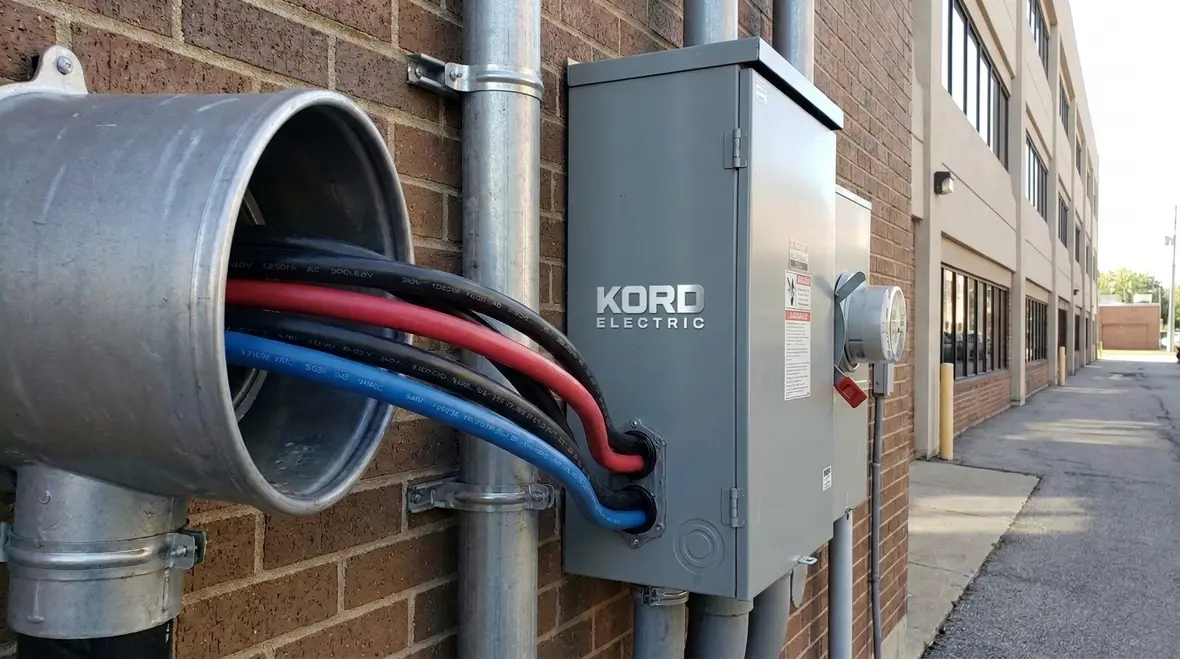
NFPA 70 230.41 Service Entrance Conductor Insulation
NFPA 70 Section 230.41 and NEC service entrance conductor insulation, explained for commercial buildings
At Kord Electric, we handle power entrances for commercial and industrial facilities and major property buildings, where details matter and mistakes can get expensive fast. That is why our NEC service entrance conductor insulation checks start with NFPA 70 Section 230.41, which sets the insulation expectations for conductors that feed a service. In practical terms, we make sure the insulation level matches the job conditions, so the wiring stays safe where it has to work the hardest. And yes, we know that reading electrical code can feel like watching a slow cooking show where the reveal is still ten minutes away. Still, our technicians explain it step by step, and they keep the conversation grounded in real field conditions.
As we move through this guide, a trained technician or expert service staff at Kord Electric will help connect the code words to what we actually see on commercial sites: service mast setups, raceways, weather exposure, and utility interface points. Then, we wrap it in a clear checklist you can use with confidence.
For teams that want to zoom out and see how this fits into the broader National Electrical Code picture, Kord Electric’s resource on understanding NFPA 70, the National Electrical Code explained for 2026 ties Section 230.41 back into overall electrical safety planning and inspection readiness across commercial facilities.
What Section 230.41 requires for insulation on service-entrance conductors
NFPA 70 Section 230.41 focuses on insulation for service-entrance conductors. In other words, it addresses what insulation the conductors must have, and how that insulation must be acceptable for the environment where the service conductors run. Specifically, the insulation must be suitable for the use and location, including exposure to moisture, temperature, and the physical setting of the entrance.
When our technicians inspect a commercial service entrance, they do not treat this as a paperwork exercise. Instead, they verify that the conductors installed on site align with the insulation type required for that application. This matters because service entrances sit at the boundary between utility equipment and your building. And that boundary is where small oversights can turn into large problems, like a door that sticks because someone painted it the wrong color. It might look fine, but it will fail when people need it most.
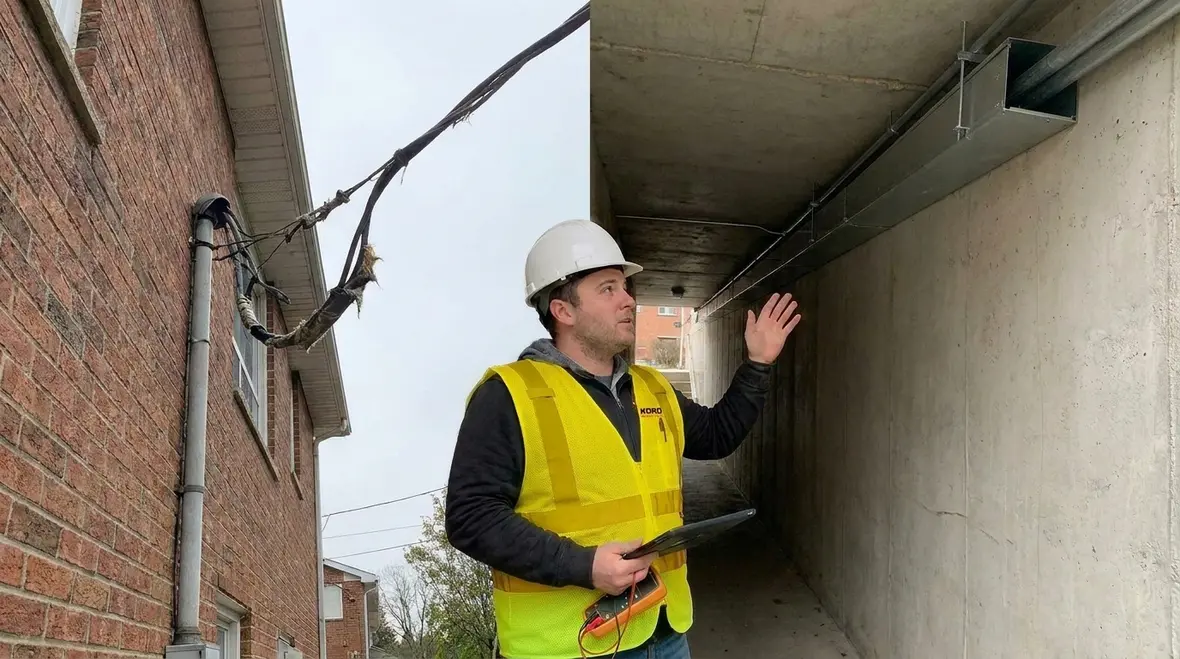
At the same time, we coordinate those insulation expectations with related NEC requirements for services, including topics like how many services are permitted at a building and how they must be arranged. That means when our team looks at Section 230.41, we also think about how it interacts with other service rules so the entrance design works as a whole and remains inspection-ready from day one.
Why insulation suitability changes from site to site
Now, let us talk about the part people skip, and then later regret: conditions. Even within commercial and industrial properties, service entrance layouts differ. One building might have overhead conductors with direct weather exposure. Another might have runs in raceways with different temperature rise and mechanical stress. A third property might have a more complex entrance route through partially sheltered areas.
Therefore, NEC service entrance conductor insulation cannot be treated as a single, universal choice. We evaluate where the conductors are installed and how the insulation will perform over time. Our expert service staff also considers how the insulation type holds up during the life cycle of the building, not just the day of installation.
Also, we keep in mind that commercial sites often involve schedules that move fast. If a project team wants a shortcut, we slow things down. Why? Because safe service wiring does not benefit from “good enough.” It benefits from “correct,” and then inspected.
In many of our commercial and industrial projects, that slower, more deliberate choice of insulation type pays off when the Authority Having Jurisdiction walks the site. Inspectors notice when insulation types, raceway methods, and service equipment all match the NEC story line, instead of looking like they were improvised the night before.
How our field checks translate code into safe commercial practice
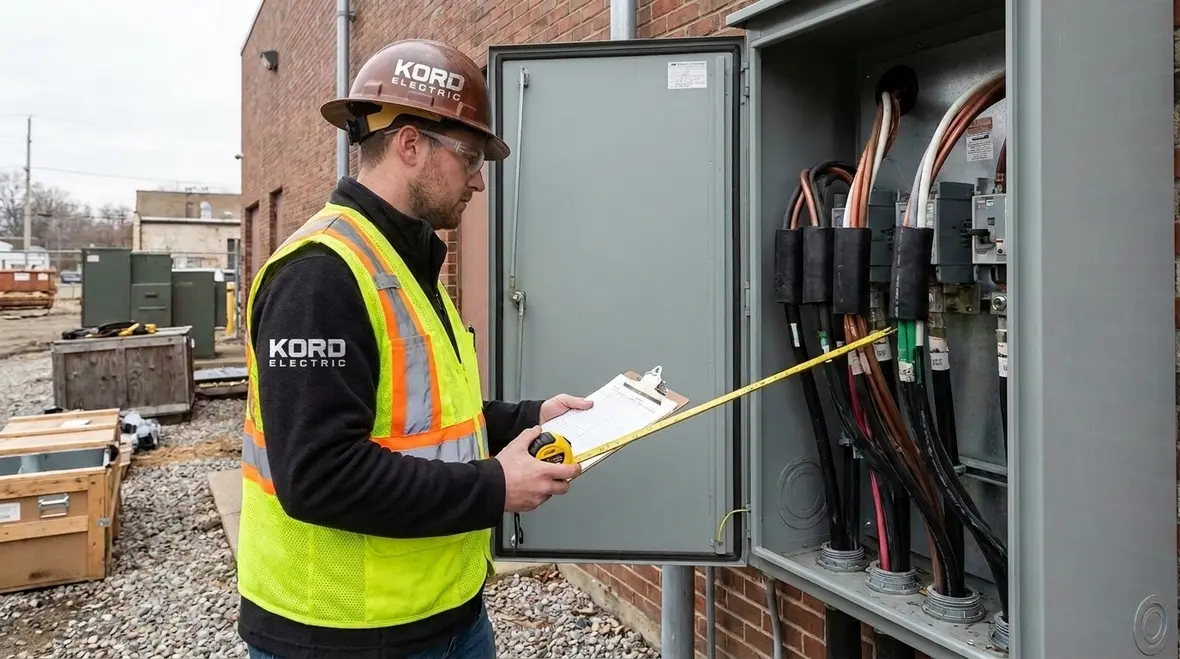
At Kord Electric, we approach Section 230.41 like a system, not a single checkbox. First, we gather site data. Then we compare it to the conductor insulation requirements and installation conditions. After that, our technicians verify physical details that inspections often catch: routing, protection from damage, support spacing, and the way the conductors enter service equipment.
Next, we confirm the insulation is suitable for the environment at the service entrance. If the conductors run in a way that exposes them to moisture or temperature extremes, we do not assume the insulation will magically behave. Instead, we ask the direct question: is the insulation type expected for that location and use? And if the answer is unclear, we clarify it before the power is energized.
Finally, we document our findings in a way that helps facility managers and electrical contractors. We explain what we found, what it means, and what to do next. And if you are thinking, “I will just ask the code later,” well, that is like saying you will check tire pressure after the highway exit. You can try, but it rarely ends well.
Those documentation habits also make life easier the next time you plan a change. When your future project team can see how insulation decisions were made, which NEC sections were referenced, and how the conductors were protected, they can build on a clear foundation instead of guessing what someone meant years ago.
Common installation pitfalls we see on major property buildings
Commercial and industrial facilities are busy. When teams juggle tenants, expansions, and equipment upgrades, service entrance conductor details can get missed. We still see recurring issues, even when a project uses good intentions.
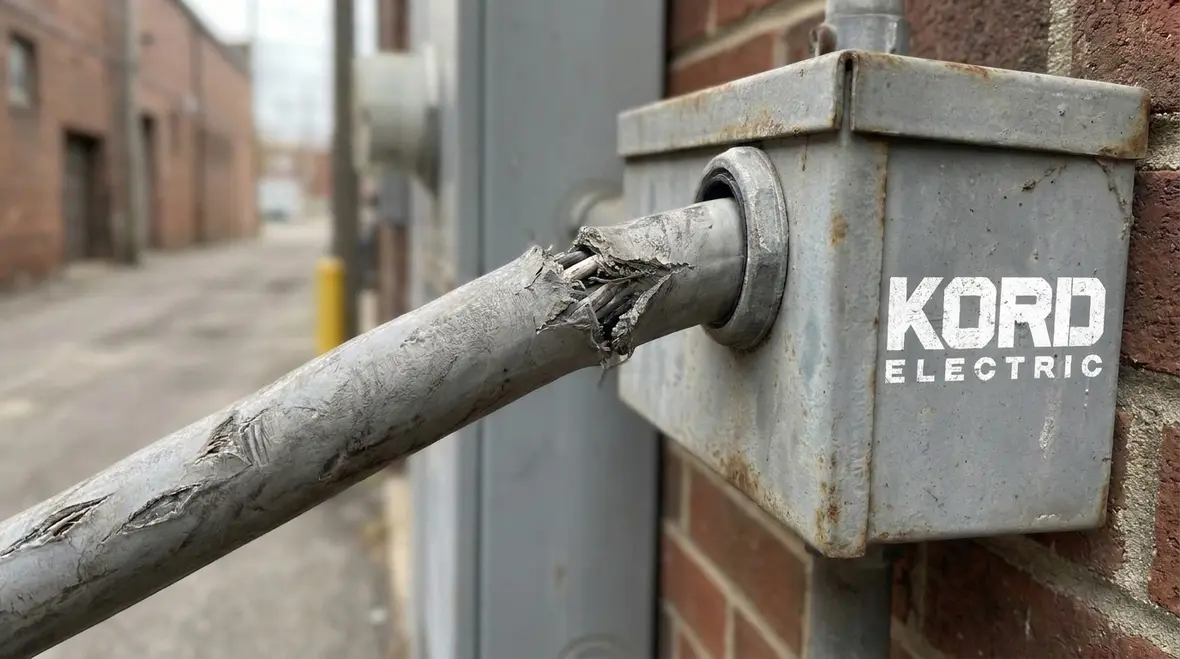
One common pitfall involves conductor insulation that does not match the expected location conditions. Another involves conductors being routed in a way that increases exposure or physical stress beyond what the insulation was meant to handle. We also see cases where the entrance transition points, such as where conductors enter enclosures or service equipment, do not receive the protection or preparation the installation needs.
Additionally, some projects treat insulation requirements as the responsibility of a distant party. Then everyone points at everyone else. Our approach keeps accountability close. Our team reviews the plan, verifies what arrives on site, and then checks what is installed.
For those who want a broader view of the National Electrical Code, Kord Electric also references the way the NEC is commonly explained for 2026 in our blog, and we build our installation mindset from that same clear approach. We keep it practical, and we keep it safe.
Coordination with service-entrance design: raceways, protection, and interfaces
Insulation rules do not live in isolation. They work with the overall service entrance design, including raceway use, protection methods, and the interfaces where conductors meet service equipment. That means NEC service entrance conductor insulation decisions connect to how the conductors are enclosed, supported, and protected from impact.
In real commercial builds, design and installation must align. If the conductor type requires certain protection, but the layout leaves it vulnerable at the entrance, the project creates risk. Likewise, if a raceway plan does not match the conductor insulation needs, our technicians catch it early. This is especially important in major property buildings, where service upgrades happen while parts of the facility stay operating.
In addition, we coordinate with those who handle the broader facility picture. While this article stays focused on Section 230.41 and insulation expectations, our service team understands that service entrances tie into electrical rooms, equipment connections, and power quality planning. So we help stakeholders make decisions that keep the building stable and compliant.
Keeping your staff confident during inspections and upgrades
We also care about how people feel when they face an inspection or a change order. So our technicians explain insulation expectations in plain language, and they do it in a way that matches how facility teams actually work. After all, the best field note is the one someone can use the next day.
When we explain Section 230.41, we do not just quote rules. We connect them to visible things: the conductor route, the environment, the protection at transitions, and the way the insulation handles the setting. This builds confidence because it turns “mystery code” into “measured reality.”
And if you are wondering where to start for broader code context, Kord Fire also supports education around the National Electrical Code through its resources. We use that knowledge to help the industry understand safe electrical practices across categories. Meanwhile, for those involved in fire and pump systems, groups like firepumps.org help show how electrical safety intersects with emergency equipment planning.
Now for the punchline, because every serious job deserves one: if you treat service entrance conductors like they are indestructible, electricity will eventually correct you. Electricity does not get angry. It just fails in a very calm, very expensive way.
FAQ
Conclusion and next steps for Kord Electric
NFPA 70 Section 230.41 sets the tone for insulation on service-entrance conductors, and commercial and industrial buildings need that detail treated with respect. At Kord Electric, our technicians and expert service staff translate the code into what your site actually needs, then we verify insulation suitability, installation conditions, and protection at the entrance. If you manage a major property building and you are planning an upgrade, a replacement, or an inspection-ready review, contact us. We will help you move forward with clarity, compliance, and confidence.
If your facility is located in Southern California and you are evaluating where to start, our Los Angeles County electrical services cover service entrance work, commercial upgrades, and NEC-focused consulting so your project has a clear path from design through inspection.


