
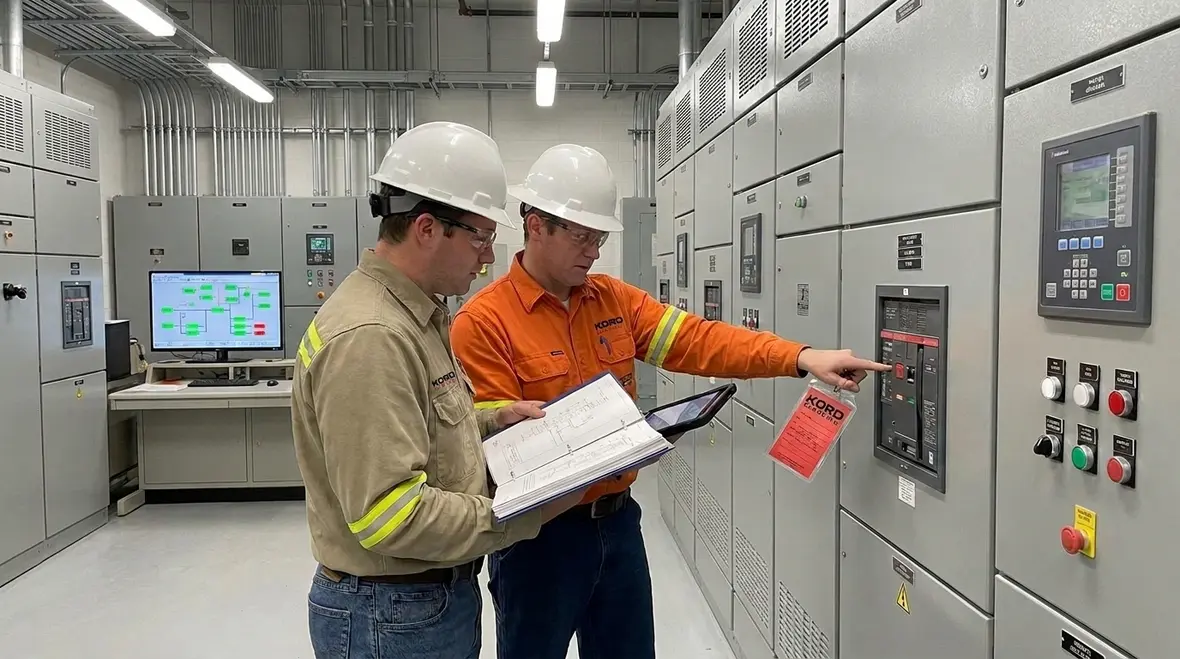
NFPA 70 Section 240.12 Orderly Shutdown Requirements
NFPA 70 Section 240.12 and orderly shutdown you should know
Third person, here is the calm truth: when a facility needs to go dark safely, NEC orderly shutdown requirements under NFPA 70 Section 240.12 tell everyone how to shut things down in an organized way. Within the first minutes of an abnormal event, people do not need guesswork, they need steps. Therefore, Kord Electric focuses on helping commercial and industrial facilities follow those steps so critical loads stop in a controlled sequence and restart plans stay clear. And yes, we have seen what happens when shutdown becomes a group chat instead of a procedure. It is funny until the lights do not come back, and then it is just… not funny.
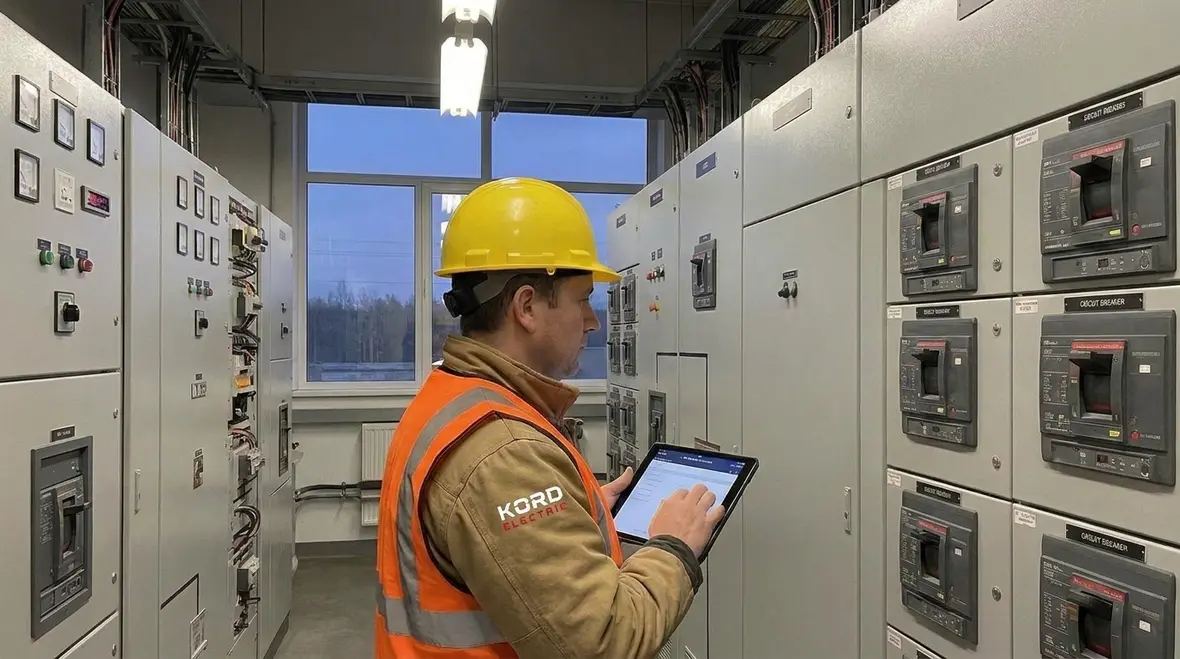
For facilities that want a broader grounding in how the NEC shapes electrical safety, our related guide on understanding NFPA 70 and the National Electrical Code for 2026 helps connect the code language to real world decisions.
What 240.12 really requires during an emergency shutdown
NFPA 70 Section 240.12 requires an orderly shutdown where the system does not drop everything at once in a chaotic fashion. Instead, the design should allow equipment to shut down in a planned manner. This matters because some loads must remain powered longer, others must stop immediately, and many systems need time to settle or release energy safely. In practice, this means the electrical distribution and control strategy should support a sequence that aligns with the facility’s safety goals.
Moreover, the requirement does not exist just for theory. It connects directly to how disconnects, switching devices, control circuits, and protective elements behave. If a facility uses one panel as a switchboard for everything, then the orderly shutdown plan becomes a lot harder, and the margin for error shrinks. That is why Kord Electric and our expert service staff talk about the “why” before they touch the “how.” We explain the intent of the code, then we translate it into field-friendly steps engineers and operators can use.
Meanwhile, we also remind property stakeholders that shutdown is not only about cutting power. It also concerns preventing dangerous states, limiting arcing risk, and keeping control logic from restarting unexpectedly during restoration.
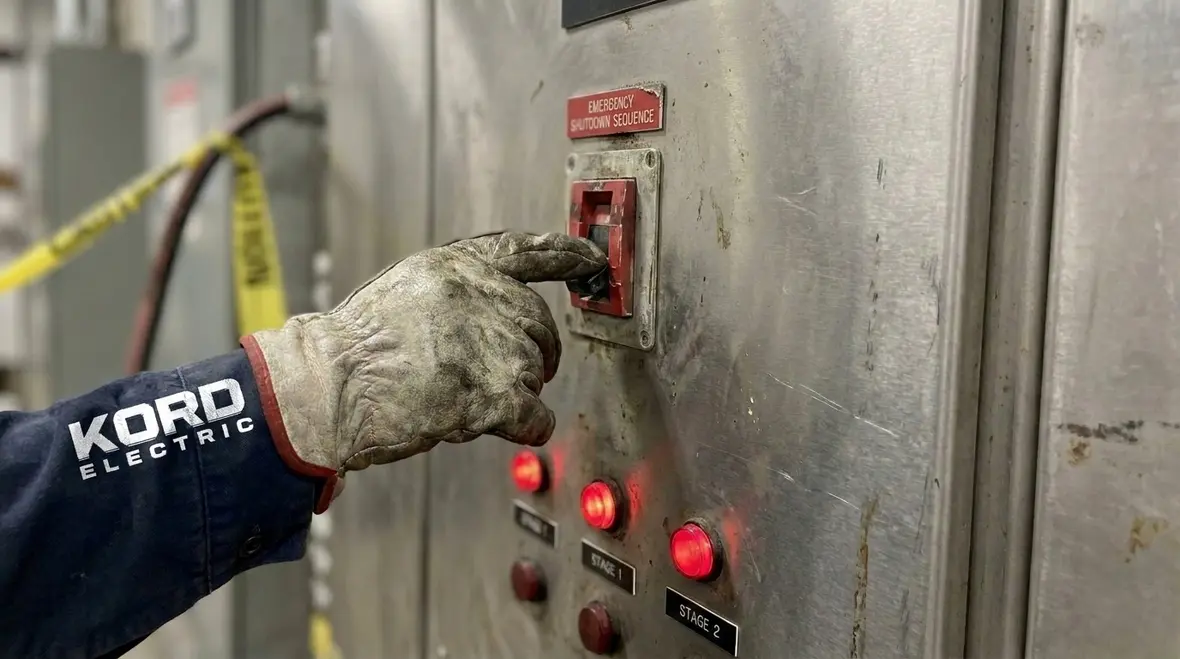
Why commercial and industrial facilities should treat shutdown sequencing as part of design
In large buildings, electrical systems operate like well practiced musicians. When one instrument cuts out at the wrong moment, the whole performance sounds off. Therefore, the orderly shutdown approach belongs in the design phase, not after an incident forces a plan. Kord Electric works with commercial and industrial facilities and major property buildings, where the stakes include process safety, tenant operations, and compliance documentation.
For example, many facilities run equipment that cannot tolerate sudden power loss without proper settling. Others need ventilation, fire pump systems, or critical control power to remain available until a safe state is reached. In addition, some loads might be time sensitive during shutdown, such as manufacturing lines, refrigeration controls, elevators, and communication equipment. When these loads are handled the same way, the shutdown sequence fails to match reality.
As a result, our technicians often map loads first. Then we align the distribution and control scheme to that map. In other words, we do not treat the shutdown plan as paperwork. We treat it as a real operating process that survives stress and still works on day one of an emergency.
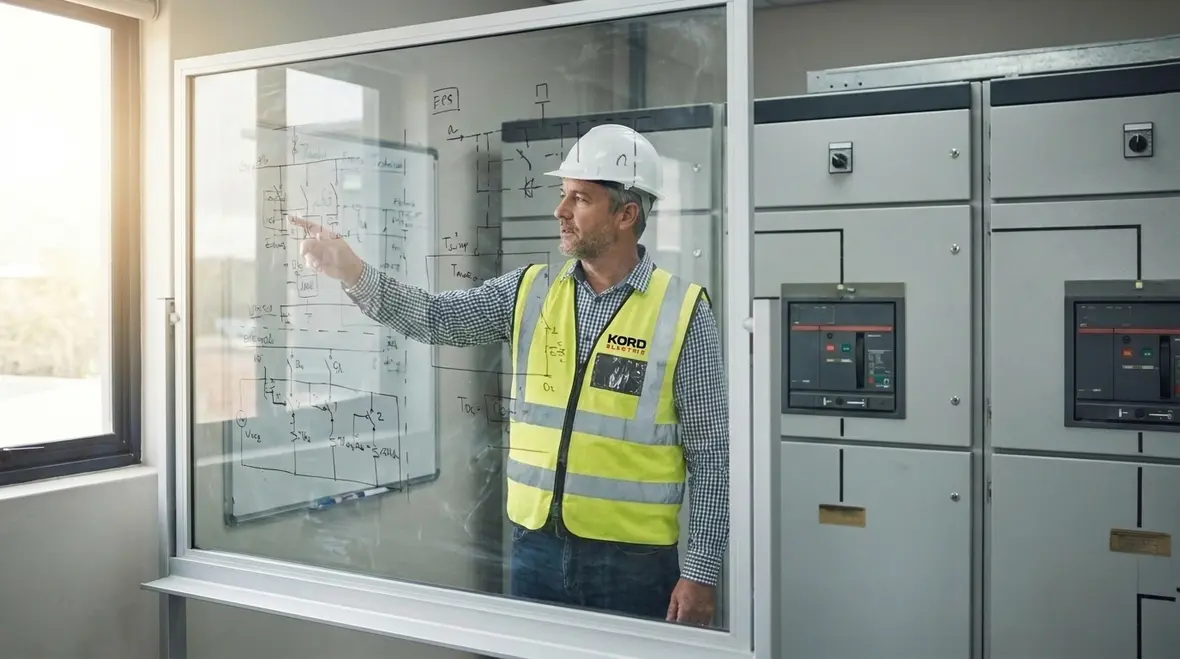
Common shutdown approaches and where they break down
Facilities use several shutdown approaches. Some rely on central breakers. Others use remote control switches tied to a control system. Some facilities use a fire and life safety interface that triggers shutoff. These methods can work, yet each one has failure modes if it ignores orderly sequencing.
First, centralized shutdown can be too blunt. If the system drops critical control power too early, protective devices might not complete their safe actions. Next, control circuits can behave unpredictably if logic resets during abnormal events. Then, restoration can create its own hazard if loads re-energize without checking conditions.
Additionally, the sequence can fail if devices are selected without considering contactor timing, interlocks, and the behavior of undervoltage and shunt trip functions. Even well installed equipment can act differently when wiring control circuits, pilot devices, or auxiliary contacts do not match the intended logic. And if the facility staff never rehearses the steps, the best design will still get defeated by human nature. People rush. People second guess. People forget where the manual override is, because it is always “somewhere else.”
That is why Kord Electric’s expert service staff explains the shutdown workflow to the operators who will actually run it. We also help document how the sequence works so the facility can train effectively.
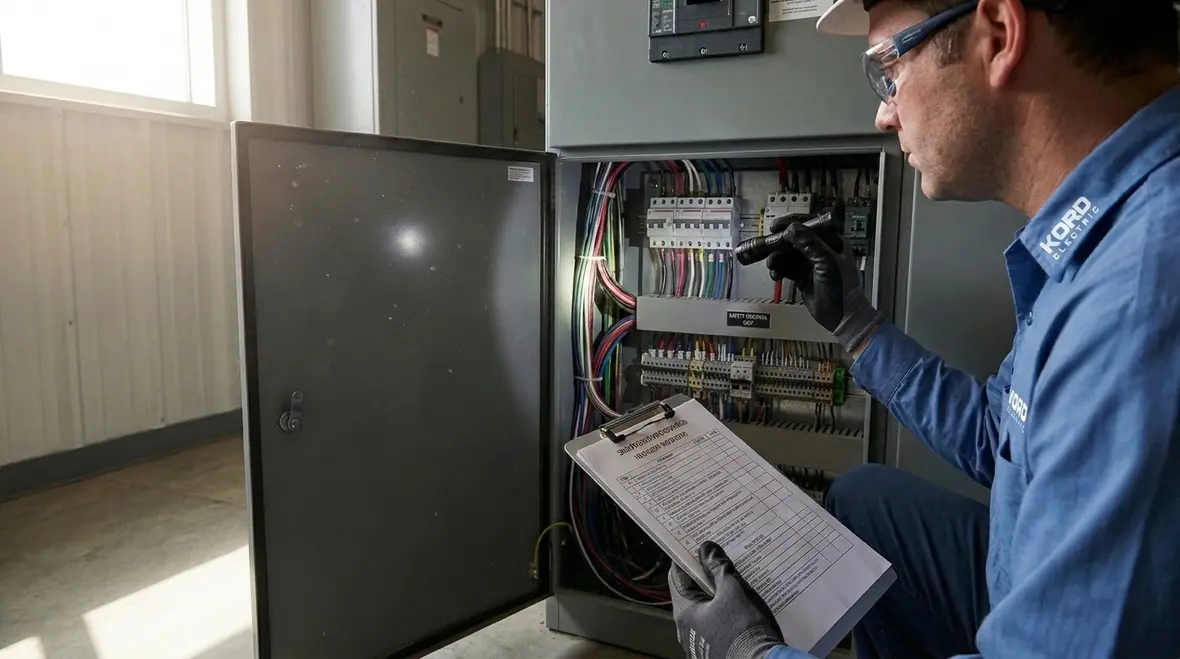
Controls, interlocks, and documentation that keep shutdown orderly
Orderly shutdown does not live only inside one breaker. It lives in controls, interlocks, and the way the system communicates state. Therefore, effective solutions connect the electrical distribution with the control scheme that drives it.
For example, facilities often need interlocks that prevent certain steps from running in the wrong order. They also need timers or logic that provide safe delays. In addition, undervoltage or shunt trip behavior must align with the shutdown goal. If a system resets during a fault, the operator should not see a loop of on, off, on again like a bad sitcom sketch.
Kord Electric typically supports a process that includes load mapping, device review, sequence definition, and field verification. Then we document what happens and what operators should expect. We do this for commercial and industrial sites where clear training reduces downtime and protects equipment. We also support the idea that restoration should follow a controlled approach, because a messy restart can create new faults even after the original event ends.
As we explain it in our materials, the goal is simple: the design should help people make correct decisions under stress. That is the spirit behind the code, and our teams treat it with respect.
NFPA 70, NEC interpretation, and how Kord Electric supports compliance
NFPA 70, often discussed as the NEC, covers the electrical rules that many jurisdictions enforce. Since standards get updated, facilities must keep their approach aligned with current requirements. Kord Electric stays focused on how NEC rules apply in the real world, especially for commercial and industrial buildings and major property structures.
During project support, our technicians do not just say “it meets code.” Instead, we explain what the requirements mean for the facility’s actual operating sequence. In turn, the facility team can maintain the plan over time, even as equipment changes. And yes, when a tenant swaps out a motor controller, the shutdown sequence can change too. It is not personal. It just happens.
For property owners and managers, we recommend treating the orderly shutdown requirements as part of lifecycle management. That means reviewing changes, verifying device operation, and updating training when the electrical layout evolves. Kord Electric also coordinates with relevant stakeholders so the documentation matches how the system behaves in the field.
Where facilities are planning broader electrical improvements, resources like our NEC overview and related articles on power quality, redundancy, and emergency power can help align shutdown planning with the rest of the electrical strategy.
Practical steps to build and verify an orderly shutdown plan
Here is a practical, field friendly way to move from theory to a working plan for commercial and industrial facilities.
Inventory loads and critical functions. Identify what must stop first, what must stop later, and what must remain available for safety.
Define a clear shutdown sequence. Write it as actions, not vague intentions. Include timing and expected device states.
Review distribution and control devices. Check breaker arrangements, contactor timing, auxiliary contacts, and trip logic.
Verify interlocks and logic. Ensure control circuits do not reset into unsafe states. Confirm that the sequence stays consistent.
Test and document. Field test the sequence and record results so staff can train and so the facility can maintain compliance.
Train operators and maintain the plan. Update documentation after changes. Our expert service staff can help explain the sequence in a way that sticks.
Facilities that already invest in emergency power, redundancy, and power quality programs can fold these steps into their existing commissioning and testing routines, rather than treating shutdown planning as a one-off task.
Dual column reference: shutdown sequence checks
Use this as a quick internal checklist. Kord Electric encourages facilities to verify these items during commissioning and after major electrical changes.
Check |
What it prevents |
Sequence timing and safe delays |
Premature loss of needed control power |
Interlocks across switching devices |
Wrong order switching during stress |
Auxiliary contact wiring and logic reset behavior |
Unexpected re-energization cycles |
Trip and reset functions verified in the field |
“Looks good on paper” failures |
Operator training and walkthroughs |
Human error during real events |
As part of broader reliability planning, these checks pair well with services that focus on emergency power systems, power quality, and data-driven electrical design so shutdown behavior matches the rest of the facility’s risk profile.
FAQ
Conclusion and CTA
Kord Electric helps commercial and industrial facilities turn NFPA 70 Section 240.12 into a shutdown process people can actually follow. First, our technicians map loads and sequence intent. Then we review controls, interlocks, and device behavior so the shutdown stays orderly under real conditions. Finally, our expert service staff explains the workflow clearly and supports documentation that keeps the plan usable over time.
For facilities across the region, our Los Angeles County electrical services team supports both new projects and upgrades, aligning NEC orderly shutdown requirements with broader reliability and code compliance goals.
If your facility needs a cleaner, safer shutdown strategy, contact Kord Electric today for a practical compliance and verification discussion. Our team will help you connect the code language to the equipment on your floor, so your next abnormal event feels like a plan, not a guessing game.


