
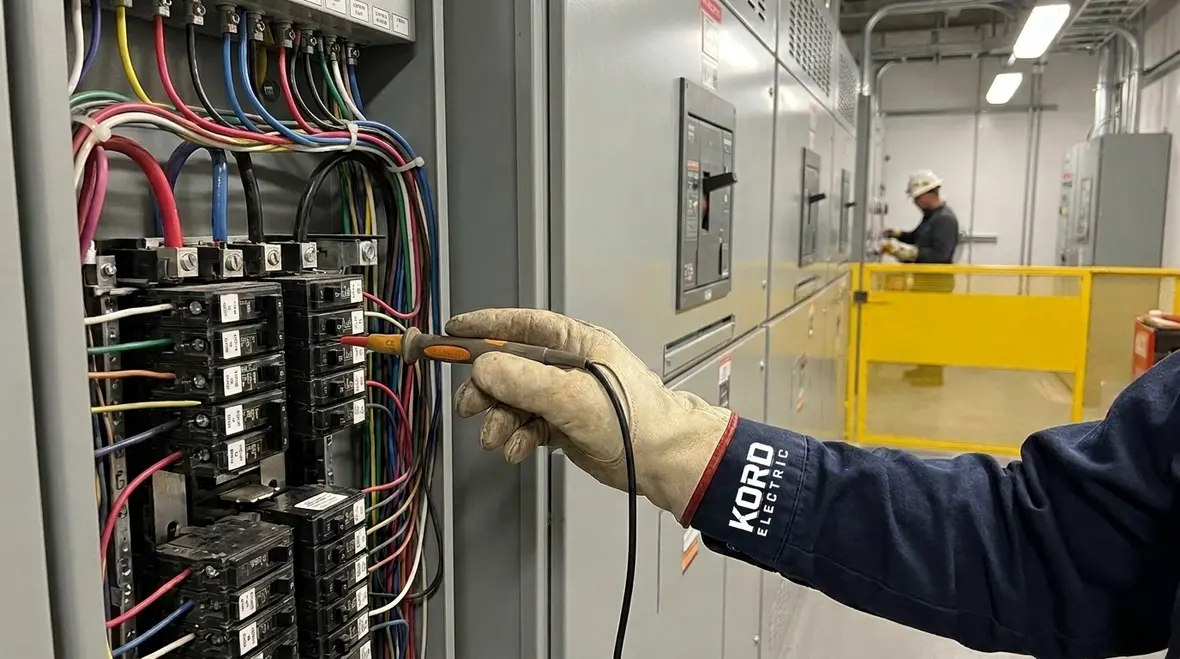
NFPA 70 Section 240.2 NEC Overcurrent Device Listing
At Kord Electric, we see the same theme show up again and again in commercial and industrial electrical rooms: people trust devices, but they only truly trust them when those devices meet the NEC overcurrent device listing expectations. In particular, NFPA 70 Section 240.2 sets listing requirements for overcurrent protective devices, so the equipment used to protect people and property earns its keep through testing and qualification. And yes, we agree that paperwork sounds about as exciting as reading a warranty at a car dealership, but it matters. Because when a protective device is listed properly, it behaves as intended when faults happen, not when the inspector is already standing there with their clipboard like a silent movie detective.
In the rest of this article, we explain what Section 240.2 means, why it shows up in the field during commissioning, and how our technicians and expert service staff walk facility teams through the practical side. Third party testing, labels, and proper use can feel dry, yet we treat it like a safety playbook that keeps downtime low and risk lower.
How NFPA 70 Section 240.2 protects your building, not just your wiring
NFPA 70 Section 240.2 focuses on a simple idea with serious consequences. It tells us that overcurrent protective devices must meet listing requirements, which means the device must be evaluated for safety and performance under defined conditions. As a result, the device earns the right to be installed in the ways the NEC describes. Furthermore, the listing ties together key characteristics like trip behavior, construction, and ratings.
For commercial and industrial facilities, that connection matters because loads vary, fault currents differ, and systems evolve. Therefore, you cannot just “fit a breaker in the panel” and hope for the best. When a device is listed for its use, it gives the building a consistent response to faults, which helps prevent damage and supports safe shutdown.
Our expert service staff often compares it to a seatbelt that looks correct but is not certified. The look may be fine, but the performance under crash conditions is the entire point. In electrical work, the “crash test” is the fault event, and the listing is how we know the device will respond.

NEC overcurrent device listing means you get the right device at the right place
Once teams understand Section 240.2, the next step is understanding where mistakes typically happen. In practice, we see three common problem patterns. First, someone installs a device that is not listed for the specific application, even if it seems physically compatible. Second, teams substitute equipment during maintenance without confirming ratings and listing details. Third, a device gets installed in a location that changes the duty or environment beyond what the listing supports.
Here is the calming truth: listings are not vague. The device label and the listing information point to the correct use and constraints. So, when we review a site, our technicians do not just check the panel schedule. They also verify the protective device details needed for safe operation.
In addition, the listing requirement works with other NEC rules. For example, conductors, enclosure types, and interrupting ratings all interact with the protective device. Therefore, compliance becomes a system conversation, not a single checklist item.
How listings connect to broader NEC planning
Because Section 240.2 does not live in isolation, facility teams often pair it with higher level NEC resources so they can see the whole picture. Articles like Understanding NFPA 70: The National Electrical Code Explained for 2026 give a broader code context, while listing rules make sure each protective device actually performs to that standard. Together, they support safer design, clearer documentation, and smoother inspections across commercial and industrial projects.
What “listed” looks like in real commercial panels
Facility managers often ask us what they should look for without becoming full time circuit detectives. Our technicians focus on clear, practical items that match how labels and documentation show up in the field. Typically, they verify the manufacturer identification, device type, rating, and the listing marks recognized for electrical products. Then they compare those details to the equipment’s intended application in the panel schedule.
Next, they consider the conditions the listing assumes. Does the device support the duty needed for that load profile? Does the enclosure and mounting align with the device instructions? When a facility team uses a disciplined approach, the electrical room stays calmer, and call backs stay rarer.
Also, we have to be honest. In many warehouses and large office towers, things change fast. Someone adds equipment, remodels a wing, or swaps out a controller. Consequently, a device that was acceptable during original buildout can become questionable after load changes. That is why our service teams encourage periodic review for commercial and industrial facilities, especially after major modifications.
Keeping listing information visible for your team
One of the simplest ways to protect listing integrity is to make sure critical information does not disappear into binder limbo. We recommend storing panel schedules, device data sheets, and one line diagrams in a way that keeps them accessible for maintenance, inspections, and upgrades. When teams can quickly see how a breaker was meant to be used, they are less likely to make “good enough” substitutions that quietly break the NEC overcurrent device listing intent behind Section 240.2.
Interrupting ratings and fault performance: why the listing is not trivia
Even with a properly listed breaker, the job does not end. We still must confirm that the protective device can interrupt the available fault current at its installed location. When the interrupting rating and system fault levels do not align, the device may not clear the fault safely. In that situation, the device can fail to protect the downstream equipment the way the design expects.
Therefore, Section 240.2 listing ties into the bigger performance story. The listing supports the device’s capability within defined conditions, but the electrical system still must match the design basis. As a result, proper coordination between source characteristics and protective device ratings becomes a key step during design review and commissioning.
Our expert service staff approaches this with a methodical mindset. First, we review documentation, then we verify field conditions, and finally we help teams tie the plan back to real operating scenarios. That sequence reduces surprises. And yes, it keeps the “why did this trip at 2 a.m.” phone calls from becoming the business’s newest recurring event.
Why interrupting ratings, listings, and system studies should match
Short circuit studies, coordination studies, and arc flash assessments are only as good as the data in them. When we perform these reviews for commercial and industrial facilities, we make sure the protective devices modeled on paper are the same listed devices installed in the field. That alignment is what lets a NEC overcurrent device listing move from a catalog entry to a real, protective behavior when a fault event hits the system.
Field verification: how our technicians explain listing requirements during inspections
Inspections can feel like a spotlight, but our technicians aim to make them more like a guided tour. When we support commercial and industrial facilities, we explain listing requirements in plain terms, then we connect those terms to what the inspector actually looks for. After all, nobody wants a last minute scramble where the panel is open, the paperwork is missing, and everyone is acting like they just heard the alarm for the first time.
So we walk facility teams through a clear flow. We review what the system design intends, then we confirm the protective device details in the panel, and then we cross check against documentation. If something looks off, our team flags it early with options to correct it without creating new risk.
Additionally, we help teams avoid “silent replacements.” These happen when maintenance swaps components without updating documentation or verifying listing and ratings. In older buildings, that can turn into a trail of guesswork. However, when our technicians document the actual installed condition, the facility gets clarity that lasts.
Turning inspections into learning opportunities
When we prepare for inspections, we also use the time to train facility teams. We point out how labels, documentation, and NEC overcurrent device listing details align with the code, so the next round of work starts from a stronger baseline. Instead of treating an inspector’s visit like an exam, we treat it like a checkpoint in the ongoing story of how your building manages risk, uptime, and fire life safety.
Common compliance traps in commercial and industrial buildings
Because commercial and industrial buildings carry more complex loads, compliance traps tend to show up more often than people expect. One trap involves using devices with the right general type but the wrong listing scope. Another trap is mixing device models where rating details differ. Even if two breakers look nearly identical, their performance and listing conditions can vary.
Then there is the trap of “it worked last time.” That phrase often shows up after a device swap, like a confident magic trick. Yet, the NEC overcurrent device listing and the broader system design still determine whether the device protects properly. Additionally, load growth can change fault current and operating conditions over time.
Our recommendation is simple and practical. Facilities should keep a clean panel schedule, maintain accurate documentation, and ask for a review when equipment additions happen. Kord Electric supports this approach for commercial and industrial sites, because that is where the cost of a mistake often includes downtime and equipment damage.
Using NEC resources to avoid repeat issues
Many of the common traps we see around Section 240.2 also show up when teams navigate other NEC topics like wiring integrity, calculated loads, and working space. That is why we often cross reference internal standards with articles such as Kord Electric’s guides to NFPA 70 workmanship, calculated load determination rules, and working space clearances. By treating these topics as a connected framework instead of isolated rules, we help facility leaders spot patterns before they turn into downtime.
Where Kord Electric fits into NEC and fire life safety planning
Electrical safety does not live in one corner of a building. It ties into fire life safety planning, emergency response, and ongoing maintenance practices. That is why Kord Electric and our related resources keep the NEC conversation grounded for facilities. We also know that major properties need continuity, not interruptions.
In practical terms, we coordinate electrical protective device choices with how systems operate in the real world. Therefore, facility teams get support that fits their schedules and their risk profile. We also explain how standards connect, so decisions are made with real understanding rather than guesswork.
And to make it easier, our expert service staff communicates clearly. If something in the field changes, we document it. If an upgrade is recommended, we explain why. Then we help the facility team move forward with confidence.
For facilities that want to align listing requirements with broader infrastructure planning, services like Los Angeles County electrical services bring design, installation, and long term support into a single, code-conscious strategy.
FAQ
Conclusion and call to action
If your commercial or industrial facility uses overcurrent protective devices, we recommend you treat NFPA 70 Section 240.2 as a must own standard, not a “nice to have” item. At Kord Electric, our technicians and expert service staff help you verify listing details, match ratings to system needs, and keep documentation clean. When you want fewer surprises, safer operation, and faster resolution during inspections, contact us for an electrical compliance review. We will help you move with clarity, not guesswork.
To see how Section 240.2 fits into your broader NEC strategy, our team can also connect your overcurrent protection review with load calculations, wiring integrity checks, and working space verification, so your system behaves like a coordinated whole instead of a collection of parts.


