
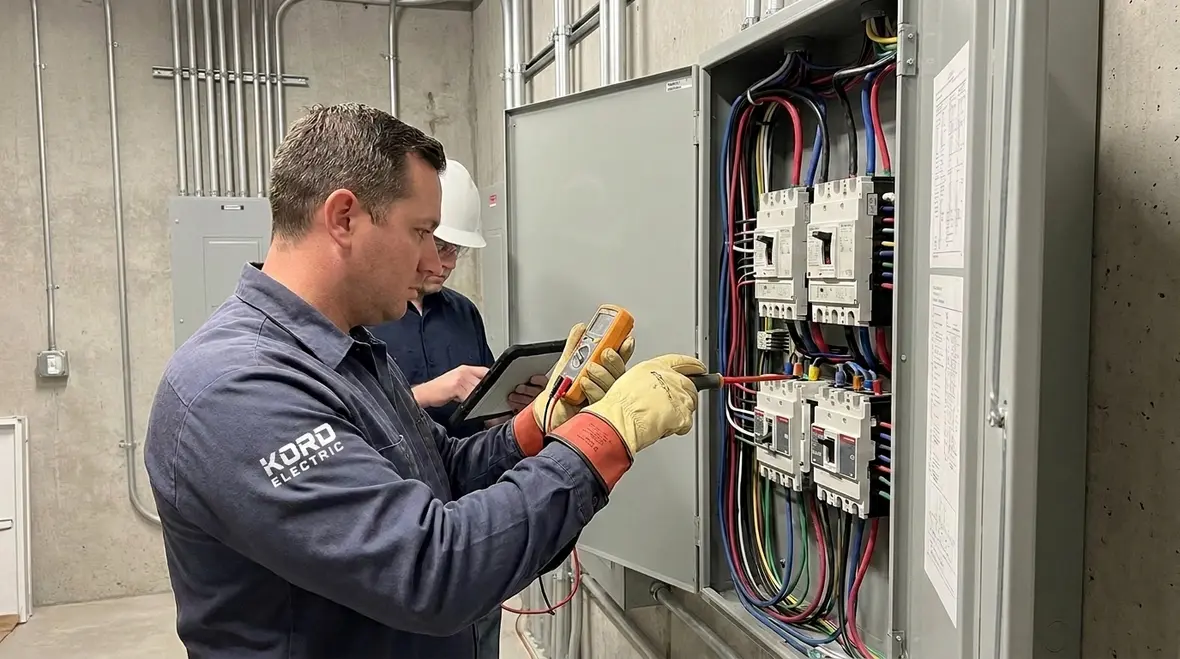
NFPA 70 Section 240.85 Guide to NEC Circuit Breaker Applications
Kord Electric guides commercial and industrial facilities through the real world of NEC compliance, not just the theory. In this article, we focus on NFPA 70 Section 240.85 and what it means for NEC circuit breaker applications in breaker usage. Our technicians and expert service staff explain it in plain language, because the code should work for people, not the other way around. And yes, we hear the same complaint often: “The breaker trips, but the building still needs to run.” So we walk through how the NEC helps prevent that kind of electrical drama before it happens.
What NFPA 70 240.85 controls in power protection
NFPA 70 Section 240.85 addresses circuit breaker applications and the way breakers get used for conductors and equipment loads. It does not exist to make contractors memorize fine print. Instead, it sets rules that help balance three goals: safety, correct overcurrent protection, and proper breaker performance under fault and overload conditions. When facilities treat these rules casually, they pay in nuisance trips, worn components, or worse, a system that does not protect as intended.
At Kord Electric, we do not ask “Is a breaker installed?” We ask “Does the breaker match the application, the wiring, and the risk?” Therefore, our expert service staff reviews the job like a detective, looking for the gap between what gets installed and what the NEC requires.
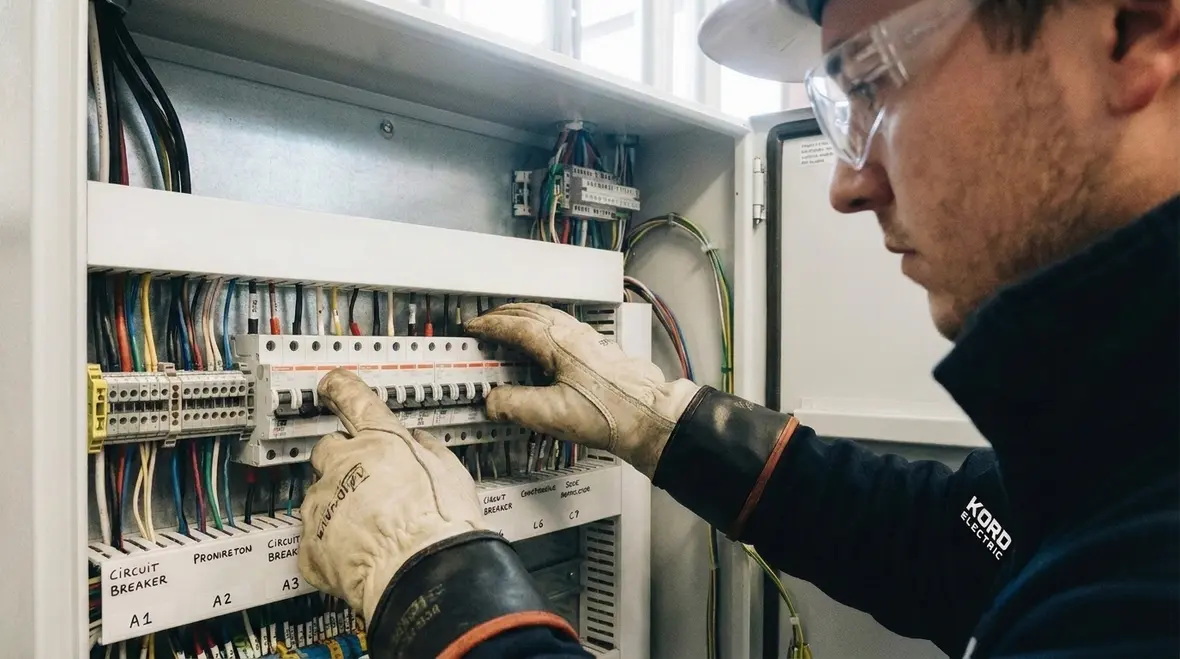
How NEC circuit breaker applications affect real business loads
Commercial and industrial buildings rarely run on simple schedules. One floor might see constant HVAC, another hosts process equipment, and another runs intermittent but high inrush loads. Consequently, the breaker chosen for a circuit must handle the expected current profile and also limit damage during faults.
To keep things steady, we focus on the conditions that drive breaker selection. These include the design load, expected starting current, conductor ampacity, and fault levels. Moreover, we confirm that the breaker type fits the intent of the protection requirement. In other words, we avoid the classic mistake of treating all breakers like they are interchangeable. They are not, and your electrical system will not thank you for the shortcut. It will just trip at the worst time, like a pop quiz you studied for zero seconds.
When you align NEC circuit breaker applications with the actual load behavior, you reduce downtime and keep maintenance predictable. And that matters, because facility leaders want dependable operations, not constant troubleshooting.
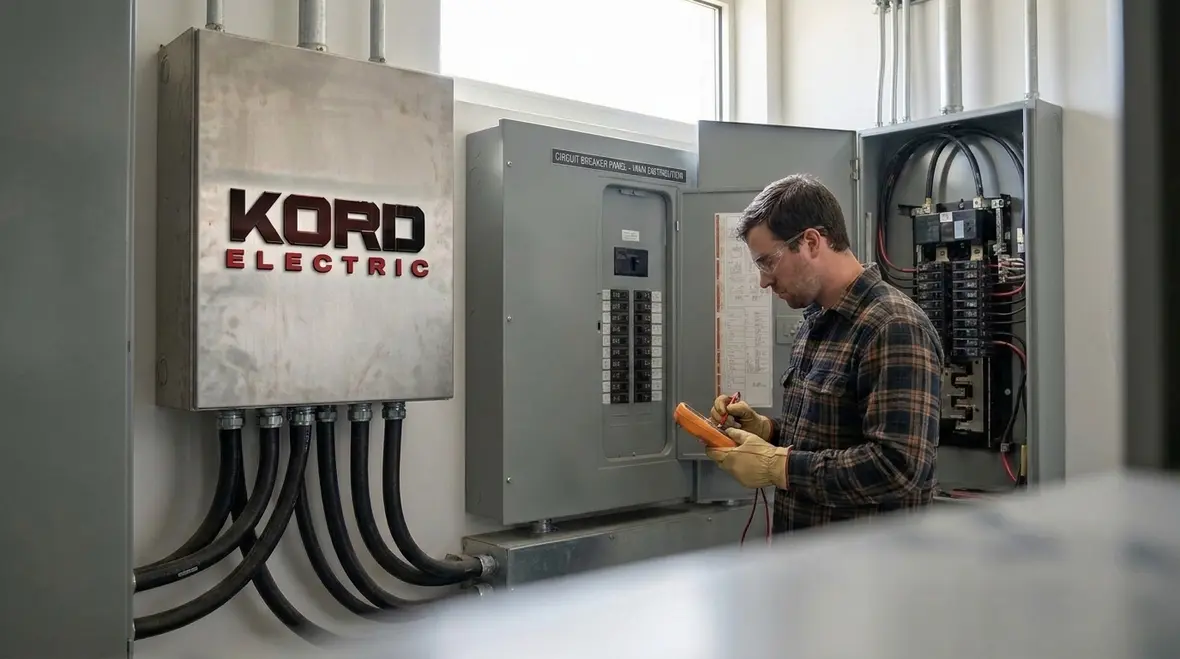
Breaker ratings, conductor rules, and the protection chain
Many failures in the field come from a broken protection chain. One weak link can turn the whole plan into guesswork. For that reason, we emphasize conductor sizing and breaker ratings as a coupled decision, not two separate tasks.
First, the breaker must coordinate with the conductor. If the conductors cannot safely handle the current level, the system needs changes, not hope. Next, the breaker must provide protection within its design limits. Finally, the installation must support proper operation, including termination quality and correct temperature assumptions.
Our approach is direct. Our technicians verify the key data during commissioning and during major upgrades for commercial and industrial facilities. Then they document the reasoning so the facility team can maintain the system confidently. This practice aligns with how Kord Electric reviews the National Electrical Code, including the broader context found in our code-focused resources such as Understanding NFPA 70: The National Electrical Code Explained For 2026.
When people skip this step, you get situations like a breaker that never trips until it should have. Then, when a fault happens, the protection does not behave the way the design assumed. That is not “an electrical nuisance.” That is a safety and performance problem.
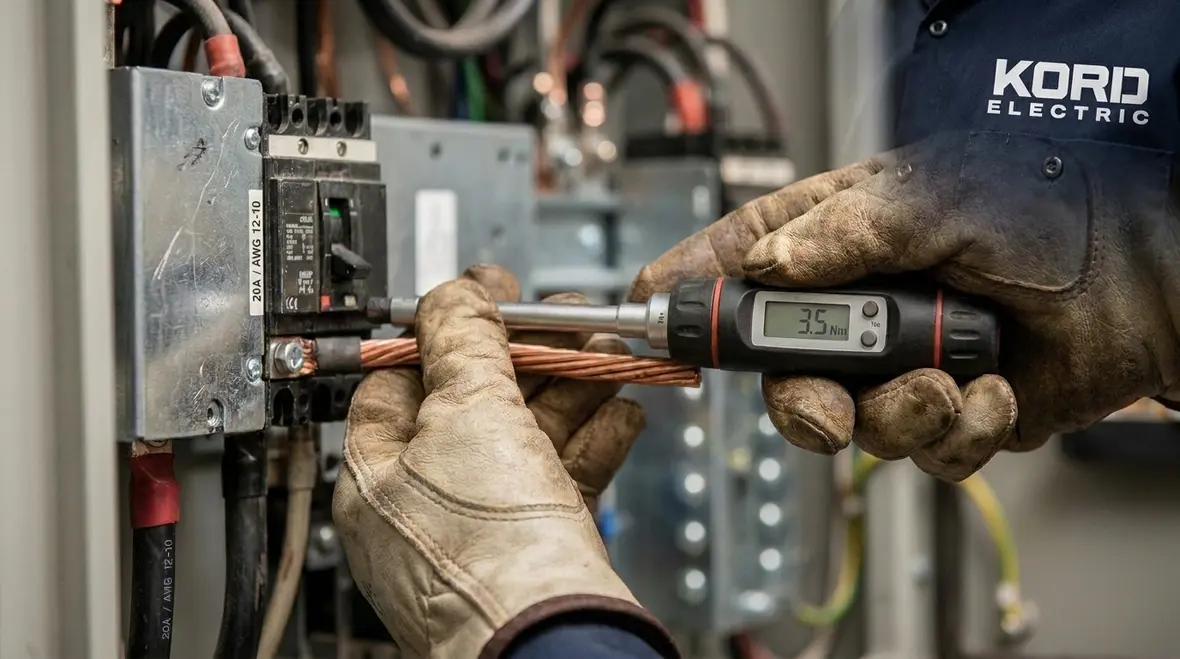
Where 240.85 meets short-circuit and fault energy realities
Breaker performance does not only depend on trip settings. It also depends on what happens during a fault event. During short-circuit conditions, the system must withstand the forces and energy long enough for the breaker to clear. Therefore, facilities must consider the fault current environment and the breaker capability.
Kord Electric helps teams connect the dots between upstream equipment and downstream branch circuits. In practice, that means evaluating switchgear or panel sources, transformer ratings, conductor routing, and the expected fault current levels. Then we select breakers that can safely handle that environment.
In addition, we pay attention to the practical side. For example, proper labeling and correct circuit identification reduce service time later. Also, the right breaker application reduces the chance that the wrong team resets the wrong device. It sounds small, but anyone who has watched a building operator reset something that was never meant to be reset knows the risk.
We also keep an eye on how conditions change over time. A space that adds equipment, expands processes, or remodels a suite can alter load profiles and fault conditions. So our team advises facility leaders to recheck breaker fit during major changes.
Coordination strategies that reduce trips without ignoring safety
It is tempting to chase nuisance trips by adjusting settings. Yet we treat coordination like a system goal, not a bandage. If a breaker trips too easily, the facility suffers. If it trips too late, safety and equipment protection suffer.
So we coordinate using a clear method. First, we identify which circuits protect which equipment. Then we match breaker behavior so a downstream fault clears quickly while upstream breakers maintain stability. Next, we confirm that the selection supports the NEC requirements for the given installation type.
Our technicians explain these choices to the facility team, step by step. We do this because electricians and facility managers do not share the same language for electrical risk. However, they both need the same clarity. When we train others on what the breaker should do under load, it reduces confusion during alarms, after outages, and during maintenance.
And yes, we occasionally make a joke. Electrical coordination can feel like trying to organize a family reunion with everyone arriving at different times. But coordination gives you a predictable outcome: the right device clears the problem and the rest of the building keeps operating.
Common failure points we see in major property buildings
Commercial and industrial facilities often share the same root issues. However, each site has its own patterns. Based on our field work, here are the areas that most often create problems tied to NFPA 70 Section 240.85 breaker use and related compliance needs.
- Mismatched breaker type for the load behavior, especially where starting currents are high
- Incorrect conductor fit where ampacity, installation method, or temperature assumptions do not match the design
- Missing or unclear documentation so later upgrades break the original protection logic
- Poor circuit identification that slows troubleshooting and increases reset risk
- Outdated assumptions after remodels, expansions, or equipment swaps
To address these, Kord Electric focuses on disciplined review. We support teams through design checks, field verification, and service response when problems appear. We also coordinate with trusted fire and life safety partners when systems interact with emergency power or building protection needs, which matters in major property buildings.
Working with Kord Electric for code compliant breaker decisions
Our customers come to us because they want stable operations and safe installations. Therefore, we build our process around reliability. We start with site context for commercial and industrial facilities. Then we apply the NEC framework so the breaker decisions reflect real wiring conditions and actual loads.
In the same spirit as the code explanations we publish, we show how the National Electrical Code fits into the larger goal of safe power distribution. For example, our code guidance and service support align with the resources found on Kord Electric and Kord Fire properties, including how the code shapes safe outcomes for buildings and infrastructure. Facility teams who want a broader view can explore Kord Fire’s overview in NFPA 70: All About The National Electrical Code (NEC) alongside Kord Electric’s practical guides.
For teams who manage fire pumps, emergency power systems, or life safety circuits, we also respect the operational expectations discussed by groups focused on pump and life safety practices, and we coordinate that knowledge with our NEC-focused work so the electrical side supports those systems correctly.
Most importantly, our expert service staff explains the “why,” not just the “what.” That way, facility leaders can plan upgrades with confidence and avoid reactive maintenance that steals time and money. When those upgrades involve broader infrastructure changes or multiple locations, it also helps to understand how our Los Angeles County electrical services for commercial and industrial facilities support inspections, repairs, and long term reliability planning across your portfolio.
FAQ about NFPA 70 240.85 and breaker applications
Conclusion: get breaker decisions that stay steady when it counts
When a facility treats breaker installation like a checkbox, it pays interest later in trips, repairs, and compliance risk. Kord Electric helps commercial and industrial leaders apply NFPA 70 Section 240.85 with sound breaker selection, correct conductor fit, and practical coordination. Then our technicians explain the reasoning in plain language so your team can operate and maintain with confidence. If you are planning upgrades or dealing with repeating trip issues, contact us. We will review your NEC circuit breaker applications and help you move forward the safe, reliable way.


