

NFPA 70 Section 245.21 for NEC Circuit Interrupting Devices
Kord Electric works with commercial and industrial facilities, and we take one simple promise seriously: when a system trips, it should do it the right way, the right time, with the right protection. In our work, we often discuss NEC circuit interrupting devices, especially where optical fiber shows up in modern control and communication setups. That is where NFPA 70 Section 245.21 becomes more than a textbook line. It becomes a practical rule that guides how circuit interrupting devices behave when optical fiber enters the picture.
Now, let’s slow it down. We will explain what Section 245.21 expects, how it affects real installations, and why our technicians and expert service staff walk customers through the details with clear, calm guidance. Because nobody wants the electrical equivalent of a plot twist during a building emergency.
What NFPA 70 245.21 requires for optical fiber safety
NFPA 70 Section 245.21 addresses circuit interrupting devices that work with optical fiber. In simple terms, the Code aims to prevent hazards when those fiber based circuits carry power, signals, or control functions that can still create dangerous conditions.
First, the rule pushes the design and installation toward devices that can interrupt the circuit when they must. Then, it focuses on performance and coordination, so protection does not fail when the system detects abnormal conditions. In other words, the optical fiber part does not remove the need for electrical discipline. If anything, it increases the need.
Next, we see why this matters in commercial and industrial facilities. Buildings often run complex networks across floors, equipment rooms, and utility interfaces. Therefore, a failure in one section should not escalate into a bigger outage or a safety event. Our expert service staff typically explains this like a good manager explains deadlines: nobody argues with the requirement once the consequences show up.
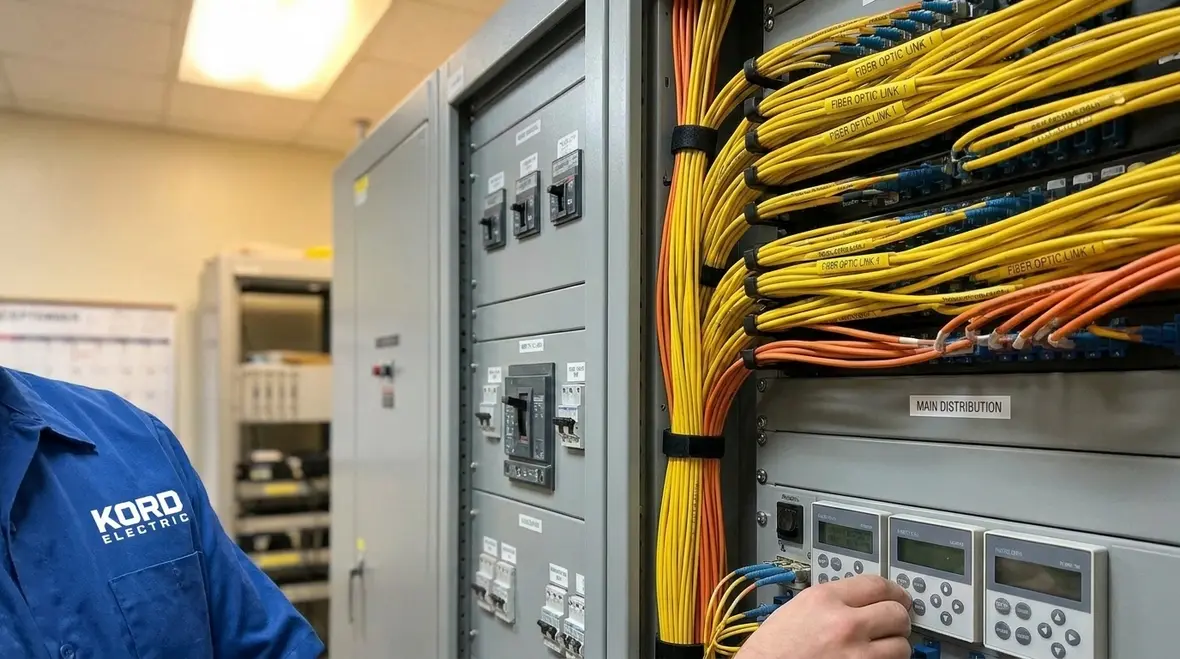
If your team is just starting to connect the dots between section-level rules and the bigger code framework, resources like Kord Electric’s guide Understanding NFPA 70: The National Electrical Code Explained for 2026 give useful context before you zoom in on Section 245.21 and how it shapes protection for optical fiber interfaces.
How NEC circuit interrupting devices work with fiber based systems
In a typical setup, circuit interrupting devices separate a faulted part of the electrical system from the rest. So when something goes wrong, the device should open and stop the dangerous condition from spreading. With optical fiber involved, that task still depends on how the system detects a problem and how the interrupting device responds.
Additionally, modern buildings may use optical fiber for communications, sensing, or other control paths. Even then, the electrical safety requirements stay anchored to core NEC principles: clear fault detection, proper ratings, and correct installation methods.
Our technicians often help property managers connect the dots between the fiber path and the interrupting function. Sometimes teams assume the optical fiber “just carries data,” and therefore safety rules feel optional. Yet in practice, fiber interfaces can connect to equipment that can still create electrical hazards. That is where coordinated protection and correct device selection become non negotiable.
Think of it like a red light at an intersection. The light might use electronics and a control network, but it still has to stop cars when it turns red. Optical fiber does not change the job, it only changes the way the signal gets delivered.

Where businesses see risk during fault conditions
Commercial and industrial facilities face real risks that show up fast. A fault can cause heat, arcing, damage to equipment, or loss of critical operations. Therefore, we treat Section 245.21 as part of a broader reliability and safety strategy, not a narrow compliance checkbox.
Common risk points include areas where fiber based systems connect to electrical equipment, where control cabinets sit, and where multiple pathways converge. Furthermore, spaces with heavy mechanical loads or frequent equipment starts can create steady stress on components. If protection does not interrupt correctly, equipment damage follows, then downtime follows, and then everyone starts searching for someone to blame. We prefer the more boring path: correct protection the first time.
In major property buildings, the building owner cares about continuity. Yet continuity cannot come at the cost of safety. So we align our approach with the Code mindset that protects people first, then equipment, then operations. Our expert service staff explains what this means for schedules, testing, and documentation so teams can plan without surprises.
Installation details that influence Code compliance
Even when the right interrupting devices get specified, installation details can make or break performance. That is why NFPA 70 requirements must turn into field actions, not just design drawings.
First, we ensure proper routing and protection of fiber related pathways where they interface with electrical equipment. Next, we verify labeling and identification so technicians can trace the circuit without guesswork. Then we confirm that termination methods and mechanical support align with the manufacturer’s instructions and the NEC rules.
Also, the devices need the right coordination with upstream and downstream protection. That means fault clearing times and ratings should match the system behavior. Otherwise, a device may trip too quickly, or it may fail to clear when it should. When that happens, crews get called at 2 a.m., and nobody’s favorite superhero arrives. The fire department might, but not to fix paperwork.
Our process stays practical: we review design intent, we inspect workmanship, and we verify the system’s protection behavior. Moreover, our service staff will explain what they find in plain terms, because compliance without understanding does not last.
NEC approach across key sections and practical coordination
The National Electrical Code operates as a connected system. Therefore, when we address Section 245.21, we also consider how the surrounding NEC requirements support safe operation of the overall installation. Kordfire and Kord Electric resources help teams connect these dots, especially for facilities that plan upgrades over time.
In the field, we treat fiber interrupting devices as part of the protection ecosystem. That ecosystem includes protective device ratings, installation practices, and how the system clears faults. When electrical teams coordinate properly, the result looks calm: equipment stays protected, faults get cleared, and operations resume with minimal impact.
So we recommend that facilities plan for coordination during design and during any retrofit. If a building changes equipment, expands zones, or upgrades controls, the protection strategy should evolve too. The Code mindset supports this reality, and our technicians support it with inspection and service work.
To those who think “we will handle it later,” we politely disagree. Later usually arrives wearing a hard hat and a very expensive bill.
Inspection and testing in real commercial environments
Inspection and testing matter because paper compliance does not keep the lights on. For commercial and industrial facilities, we focus on a steady routine that supports safety, reliability, and audit readiness. Our expert service staff explains the plan and the purpose behind each step so teams know what to expect.
Typically, we verify device condition, verify proper labeling, and confirm the system behavior aligns with the expected protection scheme. Then we review documentation, including device identification and installation records. If any gaps appear, we recommend corrections based on Code intent and the manufacturer’s guidance.
Additionally, we help customers schedule work so it does not disrupt critical operations. For major property buildings, a careful timeline matters. Equipment rooms are busy. Loading docks exist. Offices need uptime. Our approach keeps safety first while respecting the building’s operational needs.
When customers ask how often they should test or inspect, we answer based on their risk profile, operating patterns, and history. We do not treat every building the same. We treat it like its own system, because it is.
Dual view: design intent vs field readiness
| Design intent | Field readiness |
| Protection strategy matches expected fault conditions | Devices install correctly with proper routing and termination |
| Coordination plan supports safe clearing | Testing confirms behavior and documentation stays accurate |
| Optical fiber interfaces stay within safe system boundaries | Labels, access, and workmanship support maintenance |
| Schedules align with project milestones | Service plans reduce downtime during inspections |
This dual view also shapes how we approach broader electrical upgrades. When a facility in Los Angeles County needs deeper support with complex distribution, coordination, and inspections, we often connect those plans with our dedicated Los Angeles County electrical services so field work and NEC planning stay unified from the first walkthrough to the final test.
FAQ about NFPA 70 Section 245.21 and interrupting devices
Conclusion and call to action
At Kord Electric, we help commercial and industrial facilities meet NFPA 70 expectations with practical field execution. Our technicians and expert service staff explain Section 245.21 in a way your team can use, then we verify the installation, labeling, coordination, and testing needed for safe interruption when optical fiber systems connect to electrical equipment. If you are planning an upgrade or you need a protection review for a major property building, contact us today. We will bring calm, clear answers, and we will help you avoid the late night surprises.
If you are also reviewing broader NEC requirements across feeders, remote control circuits, or calculated load rules, you can pair this guidance with other Kord Electric resources on NFPA 70 and use them as a roadmap for your next round of design, coordination, or maintenance planning.


