
NFPA 70 Section 250.8 NEC Grounding Bonding Connections
Kord Electric sets the standard for NEC grounding bonding connections on commercial and industrial facilities, because when equipment is connected correctly, the whole electrical system behaves like it is supposed to. In this article, our expert service staff walks through NFPA 70 Section 250.8, which governs how grounding and bonding equipment get joined. We do it slowly, clearly, and with the kind of care that keeps trouble from showing up uninvited, like a late customer who still asks for “one quick thing.” And yes, we will explain it without turning it into a sleep aid.
What NFPA 70 Section 250.8 actually requires
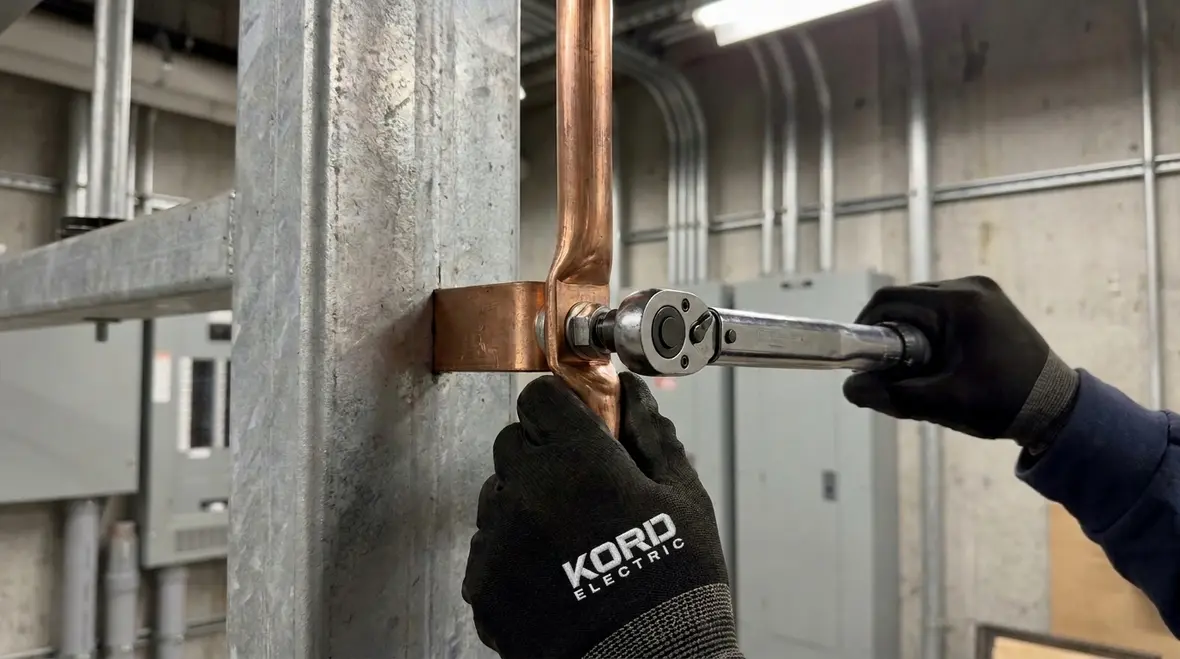
Section 250.8 focuses on one simple goal: connecting grounding and bonding equipment so it stays reliable over time. To be clear, the rule does not exist for paperwork. It exists for safety and for fault current paths that work when something goes wrong. So, when we connect grounding electrodes, bonding jumpers, and other grounding parts, we use methods that keep the path low in resistance and stable in real site conditions.
When our technicians explain this in the field, we usually start with a plain idea. If the connection loosens, corrodes, or gets damaged, then the system may not bond the way it should. As a result, protective devices can act late, touch voltages can rise, and equipment can become a risk. Therefore, compliance under NFPA 70 is not about guessing. It is about making the correct connection with listed and approved parts, and then verifying it as part of a job done right.
How we build grounding and bonding connections that do not fail
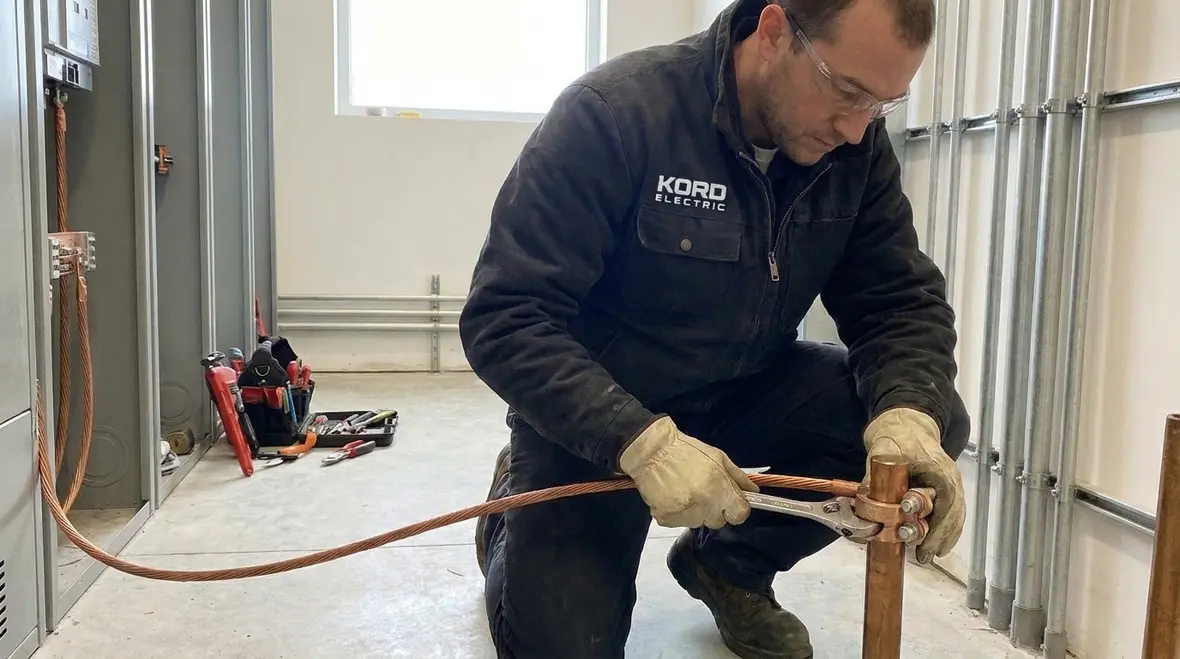
In commercial and industrial electrical work, “good enough” does not survive long. Our expert service staff therefore stresses that the connection method must match the use, the materials, and the environment. That includes wet areas, chemical exposure, temperature swings, and the mechanical stress that comes with maintenance activities and vibration.
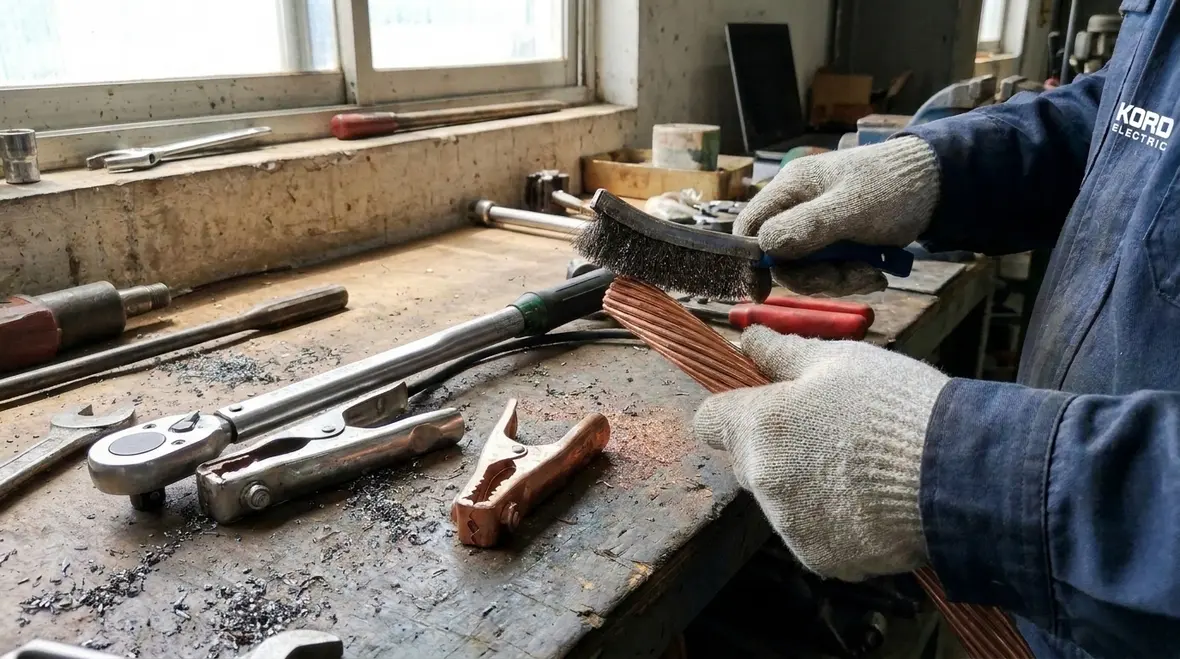
First, we prepare conductors and bonding points so the contact surfaces stay clean and solid. Next, we use approved fittings and connectors designed for the wire type and size. Then we secure connections with proper hardware and torque where required by the installation instructions. Finally, we check routing so the connection does not get pulled, cut, or stressed later.
Here is where a lot of crews get tempted to improvise. They might think a patch or a “close enough” clamp will work. It usually does not. Electricity does not care about optimism. It cares about contact area, corrosion resistance, and a durable mechanical bond. So we guide our clients toward the method that NFPA 70 supports, and we document the installation practices so future work teams do not reinvent the wheel.
What bonding and grounding equipment includes on real projects
NFPA 70 does not treat grounding and bonding like a small side quest. In major buildings, the bonding system touches multiple parts of the power and low voltage environments. Thus, our team looks at the full set of grounding and bonding equipment involved in the job.
Depending on the facility design, that can include
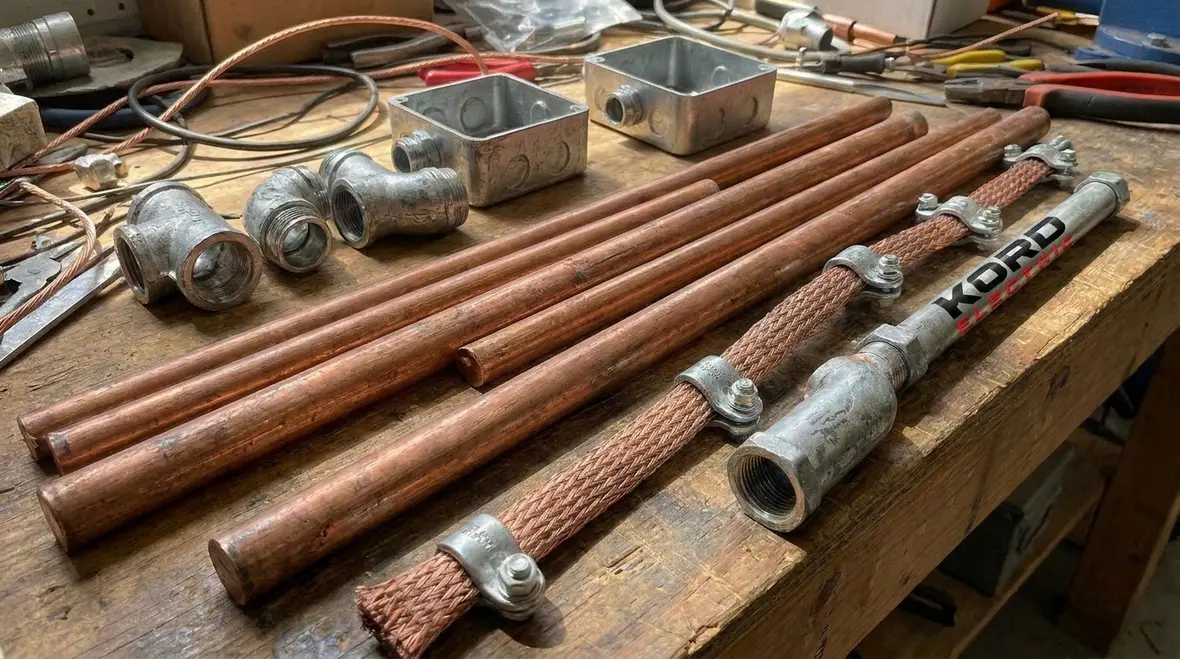
- Grounding electrodes and their conductors
- Bonding jumpers that connect metal parts and equipment frames
- Metal raceways and enclosures that must maintain continuity
- Service equipment and distribution equipment bonding points
- Grounding conductors connected to system components
Because the facility is built to last, we also consider future modifications. When a new panel, switchboard, motor control center, or fire pump interface gets added later, the bonding system must remain intact. Consequently, we plan the connections so additions do not break existing continuity.
And if someone says, “We will connect it later,” our technicians respond with a gentle smile. Later has a way of arriving as a problem. In the real world of commercial and industrial sites, schedules change, contractors overlap, and shortcuts become expensive.
Connection quality, corrosion risk, and long term reliability
On job sites, the biggest enemy of grounding and bonding connections is not electricity. It is time. Therefore, we design for long term reliability in environments where corrosion, moisture, and mechanical wear show up.
Corrosion control starts at the material choice. We match compatible metals and use connectors intended for the conductor and enclosure. If dissimilar metals meet without proper measures, then galvanic action can appear. Over time, that weakens the bond and increases resistance. Then, protective systems might behave differently during faults.
Next, we focus on mechanical stability. A bonding connection must stay firm even when equipment gets serviced, vibration exists, or weather affects outdoor runs. As a result, we secure conductors properly and prevent strain. We also avoid routing that forces sharp bends, abrasion points, or repeated contact with other materials.
Finally, we verify. After installation, we use commissioning style checks and documentation methods so the facility team can trust the grounding and bonding system. In other words, we do not just install. We also confirm.
Where this ties into the National Electrical Code and facility safety

For facility owners and electrical managers, it helps to connect the details to the bigger picture. NFPA 70, also known as the National Electrical Code, aims to prevent hazards through consistent installation rules. When Section 250.8 connects grounding and bonding equipment, it supports safety goals such as limiting shock risk and helping fault protection devices operate correctly.
On commercial and industrial projects, we see these requirements show up at the service entrance, along feeders, and around equipment that supports life safety, operations, and critical load. For example, fire pump installations and emergency systems need stable grounding and bonding practices so the equipment performs when it matters.
So while the rule sounds focused on connections, the real effect reaches farther. It supports predictable protective device operation, reduces the chance of floating metal parts, and helps keep system reference points consistent across the building.
If your team wants a broader background on how this fits into the rest of the National Electrical Code, you can pair this section with resources like Kord Electric’s guide Understanding NFPA 70: The National Electrical Code Explained For 2026, which walks through how the code framework supports safer installations across an entire facility.
How Kord Electric and our technicians approach NFPA 70 compliance
Our company works with commercial and industrial facilities and major property buildings. We therefore treat grounding and bonding as a core system discipline, not an afterthought. When we walk through a project, our technicians explain the intent of the code, and then we translate that into build steps that fit the site conditions.
To make this clear, we use a process that typically looks like this
- We review plans, equipment listings, and existing field conditions.
- We identify bonding points, grounding electrode connections, and continuity paths.
- We confirm compatible materials and approved connectors for each connection.
- We coordinate installation so later work does not break continuity.
- We document the approach so facility teams can maintain it.
And yes, we sometimes get the classic request: “Can we make it cheaper by using whatever we have?” Our expert service staff answers with calm honesty. If the wrong method leads to poor contact, corrosion, or loss of continuity, then savings vanish fast. In a critical facility, risk does not come with a discount code.
|
Common site issue What it looks like during inspection
|
What we do instead How we keep the system stable
|
Keeping NEC grounding bonding connections correct during upgrades
Grounding and bonding rarely stay frozen in time. As facilities add new equipment, expand services, or modernize fire protection and mechanical systems, the number of connections grows. Each new panelboard, transformer, or feeder tie brings another opportunity either to reinforce good practices or to create a weak point.
We encourage clients to treat NEC grounding bonding connections as part of a long term electrical strategy, not a single project checkbox. When planning upgrades, we look at how new work will change fault current paths, how it will interact with existing grounding electrodes, and whether bond paths between metallic systems stay clear and intentional instead of accidental.
On renovation and expansion projects, we also coordinate with any parallel initiatives driven by code upgrades or capital planning. For example, when a facility undertakes broader Los Angeles County electrical services work, such as feeder replacements or panel consolidation, we align bonding and grounding reviews with that schedule. This avoids the frustration of discovering a missed bonding jumper only after walls are closed and production is back online.
By carrying grounding and bonding considerations through design, construction, and maintenance planning, we help commercial and industrial sites avoid the quiet kind of failure: a connection that looks fine during a quick walkthrough but does not behave correctly under fault conditions.
FAQ about NFPA 70 Section 250.8 and grounding bonding equipment
Facility teams often ask similar questions when they first step into the details of NFPA 70 Section 250.8. Clear answers make it easier to plan projects, review contractor work, and explain expectations to internal stakeholders who just want the system to “work” without surprises.
Final call to action for safer installations
If your commercial or industrial facility needs grounding and bonding installed or verified, Kord Electric can help you do it the right way. Our technicians explain the intent behind NFPA 70 and translate it into solid installation steps that hold up under real site conditions. We also document the work so your team can maintain it confidently.
Whether you are planning a targeted grounding upgrade, tackling a larger service change, or coordinating multiple NEC-driven projects across a campus, our team can align NEC grounding bonding connections with the rest of your electrical strategy. That means fewer surprises during inspections, more predictable fault response, and a clearer picture of how your system will behave during the moments that matter most.
Reach out to Kord Electric today and let us review your current setup or support your next electrical project with dependable service that keeps safety and code compliance at the center of every decision.


