
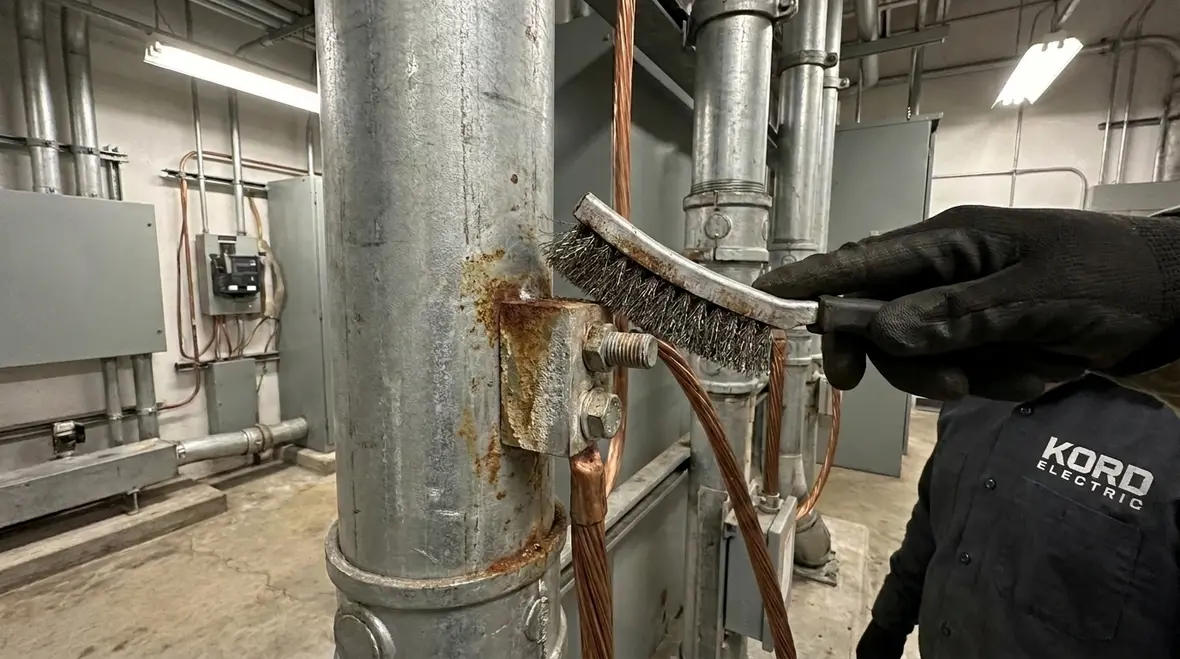
NFPA 70 250.12 Clean Surfaces Grounding by Kord Electric
Kord Electric builds safer electrical systems for commercial and industrial facilities, so we pay close attention to details that many people skip. One of those details shows up in NFPA 70 Section 250.12, which requires clean surfaces grounding at grounding connections. In plain terms, we make sure the contact surfaces where grounding wires connect are not covered with paint, rust, scale, or other buildup. And yes, that means we treat those spots like they matter, because they do. If you have ever watched someone “tighten it and hope for the best,” you already know why this matters. Our technicians explain the rules clearly, then apply them on site with calm, careful work that holds up under real-world conditions.
Why NFPA 70 Section 250.12 exists on job sites
When a grounding system fails, it does not usually fail in a dramatic movie way. Instead, it fails quietly, over time, as corrosion and poor contact build resistance. As a result, the path that should carry fault current can become unreliable. NFPA 70 Section 250.12 steps in to address that risk by focusing on the quality of the connection surface.
In most commercial and industrial buildings, grounding touches everything from service equipment to metal raceways and bonded parts. Therefore, clean contact matters at multiple points, not just one “important connection.” Meanwhile, the facility keeps running, crews keep working, and conditions keep changing. So, we cannot rely on good intentions. We rely on good preparation.
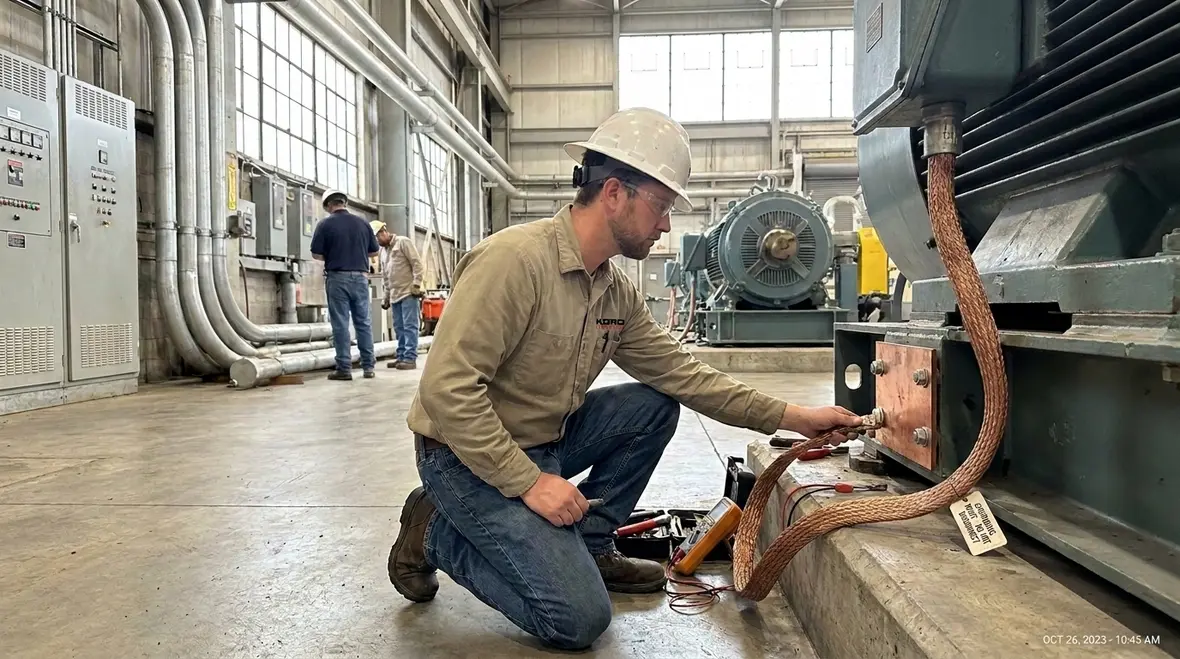
For facility leaders who want a deeper code overview alongside this detail, our team also points to resources such as Understanding NFPA 70: The National Electrical Code Explained for 2026, which connects rule sections like 250.12 to the broader NEC framework used in design, installation, and inspection planning.
What counts as “clean” for grounding connections
In our experience, people hear “clean surfaces” and imagine a vague idea, like “wipe it down.” However, NFPA 70 250.12 goes further in practice. The connection surfaces need to be free of materials that prevent electrical contact. That includes dirt, paint, enamel, oxidation, and corrosion. It also includes any buildup that acts like insulation.
Our expert service staff explains it this way: grounding is not about decoration, it is about conduction. Then, we make the surface ready before we bond. We inspect, we clean, and we verify that the connection points allow metal-to-metal contact where it matters.
Also, we do not treat different building types the same way. A large industrial facility faces heavy vibration, moisture exposure, and sometimes chemical vapors. Consequently, the surface preparation process must match actual site conditions, not just the calendar. That is why, during planning reviews tied to NEC clean surfaces grounding, we align our field steps with the facility’s risk profile, equipment layout, and operating schedule.
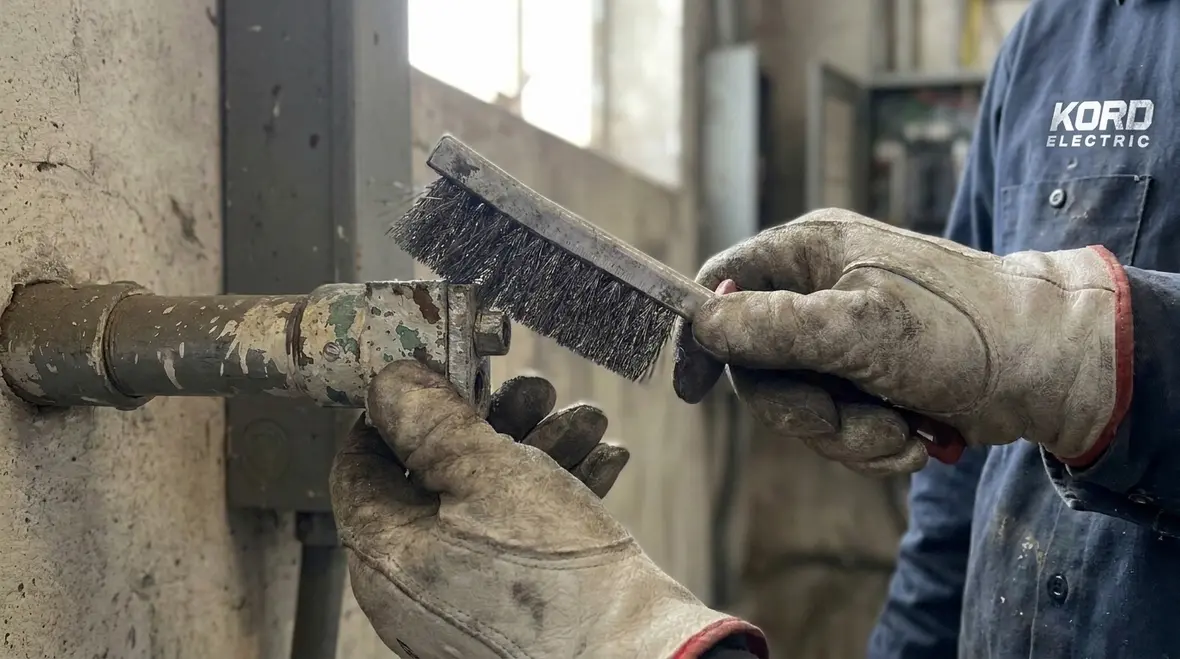
How grounding connection problems show up later
Many issues start small and stay hidden until someone tests the system, experiences a nuisance trip, or notices abnormal performance during a fault event. Then the questions begin. Why did the grounding resistance rise? Why did the bonded metal not behave as expected? Why does the equipment still seem “mostly fine”?
In most cases, the cause traces back to poor contact and surface contamination. Over time, even a “good enough” connection can develop higher resistance due to oxidation or continued coating buildup. Additionally, water and air work their way into crevices, and the bonding interface becomes less reliable. So, when the building needs the grounding system most, it may not perform to the level expected.
We have seen similar situations in other codes and standards, including general best practices referenced in the NEC education materials published for major property owners and facility managers. At Kord Electric, we apply that same mindset to grounding bonds: treat preparation as part of the installation, not an optional step. Otherwise, you end up paying twice, first in labor and later in troubleshooting.
That is one reason our internal training pairs detailed topics like terminal identification, service equipment barriers, and NEC open conductor support requirements with clean surface prep at bonding points. When technicians see how each detail supports fault current paths and protective device performance, they are less likely to treat grounding interfaces like a background task.
Where clean surface prep shows up in the NEC workflow
Commercial and industrial electrical work follows a sequence. First, crews install equipment and raceways. Next, they bond and ground. Then they label, test, and document. If surface prep happens too late, or not at all, the project still finishes. But the grounding system carries extra risk.
Our technicians build a repeatable workflow. They identify the specific bonding locations tied to grounding conductors and metal parts. Then they prepare the metal surfaces before making the connection. After that, they assemble the bond with the right hardware and proper tightness. Finally, they move forward to verification steps that fit the facility’s requirements.
This process matters because bonding does not live in isolation. It connects to the rest of the system: fault current paths, bonding grid behavior, and protective device function. So, we treat surface prep as a system step. When we do it correctly, we reduce the chances of “mystery faults” that show up months after the last inspection.
During scope reviews for upgrades and new installs, we often reference companion guidance such as our NEC application requirements and scope resources to help facility teams see clean surfaces grounding as part of a bigger picture. When everyone understands how Section 250.12 supports broader NFPA 70 compliance, it gets easier to defend the extra few minutes spent on each bond.
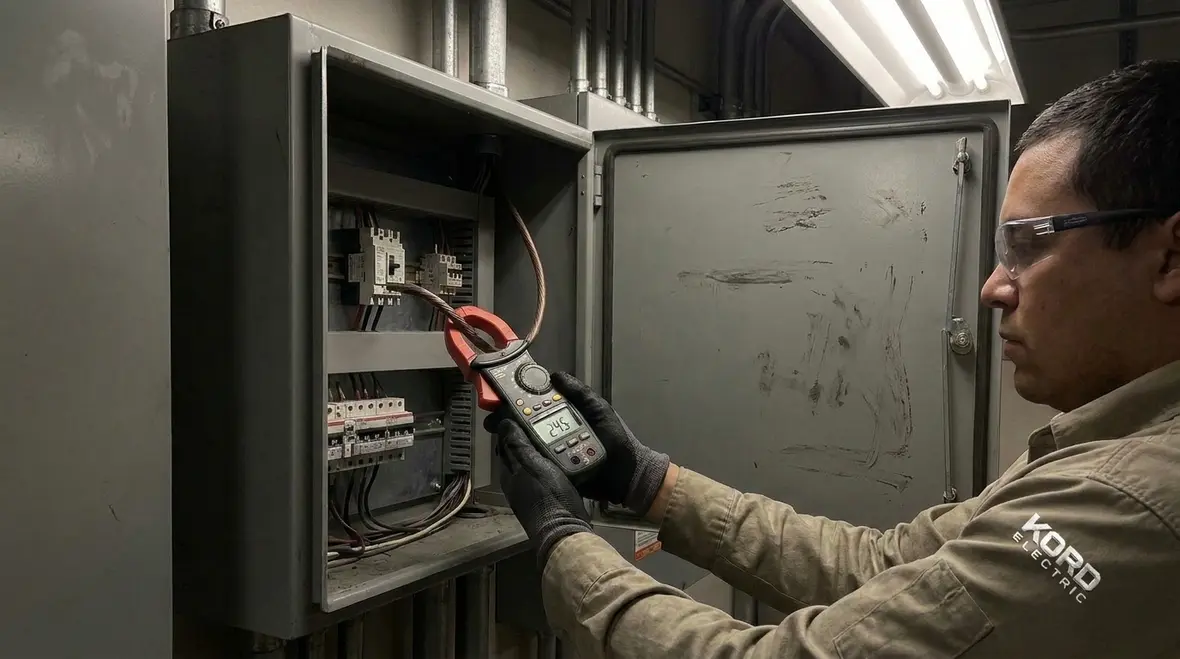
Common conditions in commercial buildings that foul bonding interfaces
Facility managers and contractors often ask what causes bonding surfaces to get contaminated in the first place. The answer usually includes a mix of jobsite realities and ongoing operating conditions. For example, we frequently see:
Paint overspray from maintenance work that lands near bonding points, even when nobody meant to cover them
Rust and scale on structural steel, enclosures, or raceway sections exposed during construction or retrofit
Dust and debris that collects in threaded areas and under bonding straps
Moisture and condensation in mechanical rooms, warehouses, and utility spaces
Coatings and anti corrosion treatments applied for protection, but which need correct handling at connection points
And yes, we have joked internally that grounding points seem to attract paint like a magnet attracts, well, metal. Yet the fix remains straightforward: we clean surfaces to restore reliable electrical contact at the bond interface, then we proceed with the connection assembly.
In many larger properties, this also becomes a coordination topic. When painting contractors, mechanical trades, and electrical crews share tight spaces, unprotected bonding pads can disappear under a “helpful” coat of finish. We use pre-job meetings and labeling practices to flag NEC clean surfaces grounding points so everyone knows where not to spray, tape, or stack materials.
How Kord Electric handles clean surfaces grounding at the professional level
Kord Electric serves commercial and industrial facilities and major property buildings, and we bring an approach that fits that responsibility. We do not rush the bonding points, because rushing creates the exact problems NFPA 70 250.12 aims to prevent. Instead, our expert service staff explains each step, and then we execute it with care.
Our team follows these principles on projects:
We inspect before we connect, so we catch coatings, oxidation, and debris early
We prepare the specific contact surfaces instead of relying on “general cleanliness”
We support the work with clear documentation, so facility teams can maintain confidence during future upgrades
We coordinate with other trades to protect prepared surfaces from new contamination
We also encourage our customers to plan surface protection during the build. When crews keep moving, connection points should not end up as a casual casualty of the next paint pass, the next material drop, or the next “quick touch up.” That is how we prevent rework and maintain electrical reliability.
For organizations that manage multiple facilities, we often recommend pairing this detailed grounding work with broader NEC education, including internal refreshers based on resources like our guides to reading NFPA 70 and understanding how the 2026 code direction affects design and inspection. When staff hear consistent messages about clean conductors, clear labeling, and controlled access to service equipment, they are more likely to protect high quality bonds over time.
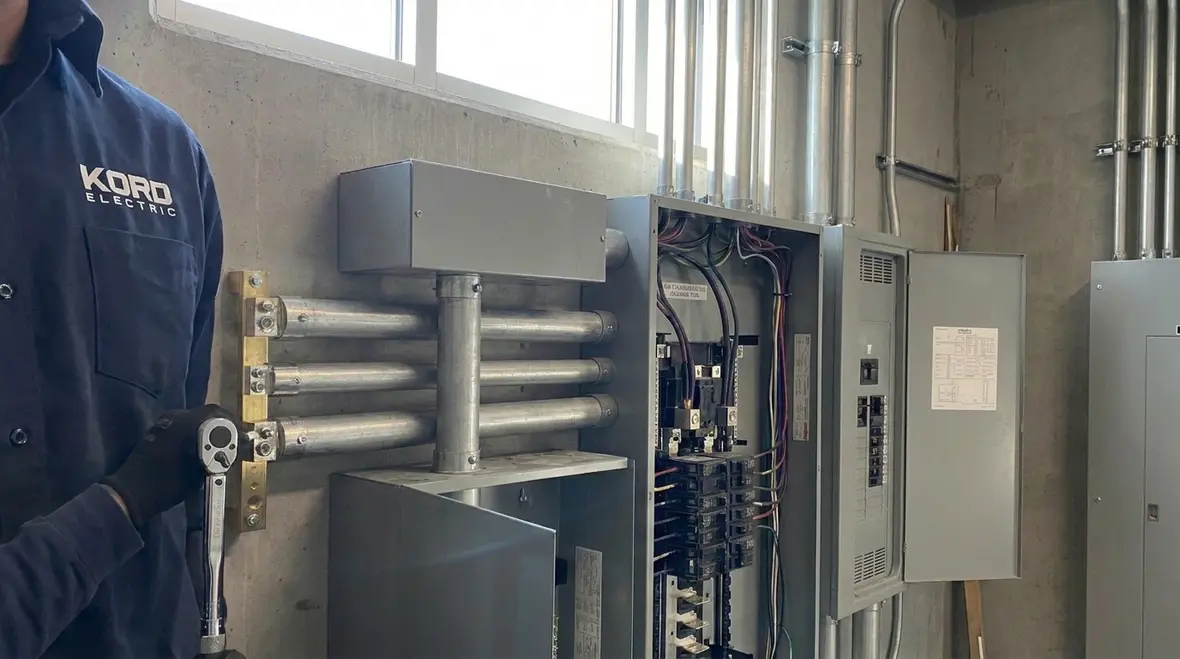
Featured snippet FAQ
Facility managers often look for fast answers to recurring questions about clean surfaces grounding. The following quick FAQ reflects what we explain in conversations, job walks, and commissioning meetings.
Quick note: For facility owners who want broader context, Kord Electric also connects its field practices to NEC guidance discussed in NEC overview resources, including educational posts from Kord Electric, Kord Fire, and related industry organizations that explain how detailed rules like 250.12 support overall electrical safety.
Next steps for managers and electrical teams
If you manage a commercial or industrial facility, you already know that electrical risk rarely announces itself early. Instead, it shows up later, often when budgets feel tight and schedules run long. So, we recommend a practical plan. First, we review grounding and bonding points during commissioning, inspections, and major maintenance. Next, we confirm prepared contact surfaces wherever bonds connect metal parts. Then, we document what we did so future teams understand the reasoning, not just the outcome.
And if anyone says, “It looks fine from here,” we smile politely. Then we check the surface, because NFPA 70 250.12 clean surfaces grounding is not a vibe. It is a requirement built for reliability.
For facilities across Southern California, one straightforward way to put this into action is to schedule support through our dedicated Los Angeles County electrical services. That service framework connects code-focused planning, field-proven troubleshooting, and routine maintenance workflows, so NEC clean surfaces grounding becomes part of a stable, long-term strategy instead of a last-minute concern.
Conclusion: call Kord Electric for grounding that holds
Kord Electric helps commercial and industrial facilities build and maintain reliable grounding connections by following NFPA 70 Section 250.12 clean surfaces grounding requirements with careful prep and clean bond interfaces. Our technicians and expert service staff explain what they see and why it matters, then they deliver the work with documentation facility teams can trust. If your building needs grounding inspection, retrofit support, or a bond prep review, contact Kord Electric today and move from guesswork to confidence.
If you are also planning broader NEC upgrades, you can pair this focused grounding work with code-level guidance from internal Kord Electric resources that unpack NFPA 70 scope, application requirements, and section-by-section expectations for 2026. Together, they give facility leaders a clear roadmap from first design conversations through final inspection.


