NFPA 70 Section 267.34 NEC Grouping of Disconnects
At Kord Electric, we often explain the NEC grouping of disconnects rule in a way that actually helps teams make decisions. In NFPA 70 Section 267.34, the code addresses when and how disconnects can be grouped, and it sets clear expectations so equipment stays serviceable and safe. We are talking about real-world setups too, like when a facility has multiple circuits feeding large loads, and someone needs a dependable way to shut things down without turning the whole site into a guessing game. And yes, we hear the joke every time: “If it is labeled, it is safe.” Unfortunately, the code does not laugh at that one.
Our team, including our experienced technicians and expert service staff, walks building owners and electrical managers through what the rule means for commercial and industrial facilities and major property buildings. In this article, third person voice guides the facts, while Kord Electric keeps the tone calm, practical, and steady, the way good shutdown procedures should feel. For readers who want a larger code backdrop, Kord Electric also maintains explainers like Understanding NFPA 70: The National Electrical Code Explained for 2026, which sets the stage for how these details fit into the bigger NEC picture.
NFPA 70 Section 267.34: what the code actually wants
NFPA 70, which people often call the NEC, covers electrical safety in the built environment. Section 267.34 focuses on the grouping of disconnects for specific systems and arrangements. The core goal is straightforward: teams must be able to disconnect power in a controlled way, and the physical layout must support safe operation. That means the code expects grouping to happen under defined conditions, not by habit, not by convenience, and certainly not because the panel enclosure was on sale last week.
Because these rules apply to specific electrical systems, facility staff should not treat this section like a generic “label and move on” requirement. Instead, they should treat it like a safety plan. Even when a facility uses a modern electrical room layout, grouping rules still affect how disconnects are installed, how they are arranged, and how service work gets done. For teams who want more background on how NFPA 70 shapes projects, articles such as Kord Electric’s scope and application guides help frame where Section 267.34 sits alongside topics like outside supplies, bonding, and circuit breaker applications.

Why grouping matters for commercial and industrial sites
On commercial and industrial properties, multiple loads often live close together. A building may include distribution equipment for HVAC systems, lighting loads, process equipment, emergency loads, and more. Therefore, operators need fast access to the right disconnect. At the same time, maintenance teams need clear separation between work zones so they can follow lockout and tagout without guesswork.
As conditions change, grouping can improve both speed and safety. For example, if a facility reorganizes equipment, it can either keep disconnects organized and compliant or create a confusing maze that slows response during a fault. In this sense, the NEC grouping of disconnects concept becomes operational, not just legal. And operations teams usually feel it first, because downtime costs money and patience costs more.
Grouping also touches how other NEC themes play out in the field. When a site reviews topics like the NEC number of outside supplies or service disconnect rules, it inevitably comes back to one idea: people must know what to shut off, in what order, and why. Well-designed disconnect groups give them that clarity before the pressure shows up.

How NEC grouping of disconnects reduces risk during service work
When disconnects are grouped correctly, service teams can isolate specific equipment without accidentally energizing parts of a site they did not intend to touch. In practice, this supports safer testing and troubleshooting. Furthermore, it helps crews verify the correct circuit is de-energized. That verification step matters because field work rarely follows a perfect script. Someone gets a call mid shift. A test leads to an unexpected reading. Then everyone needs calm, correct isolation.
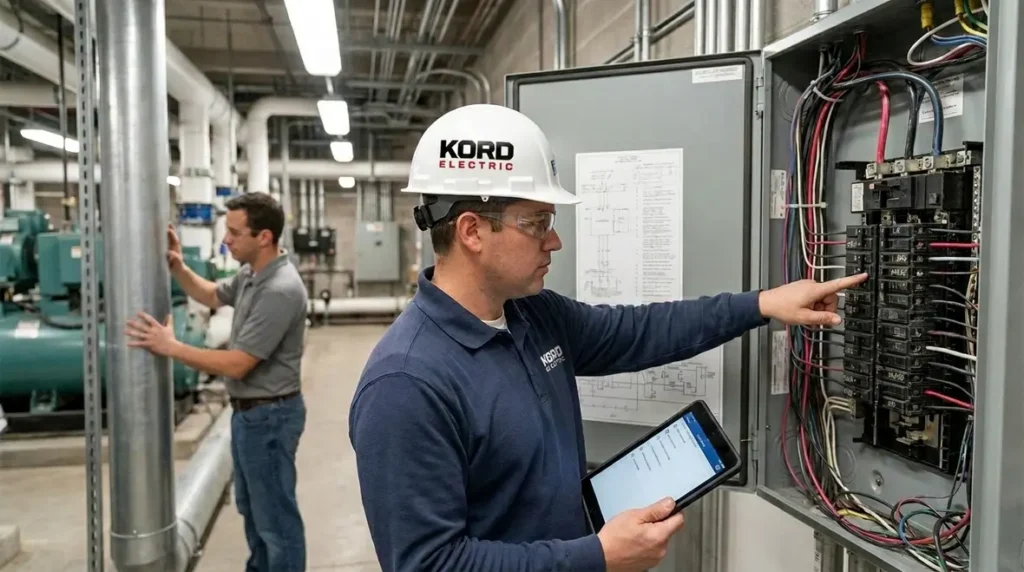
Our technicians at Kord Electric explain the sequence as they inspect wiring and equipment layouts. They focus on how disconnects should be installed and presented so a qualified worker can act with clarity. Then, they connect those expectations to the site’s actual workflows, including how maintenance schedules interact with shutdown windows.
And yes, the “always just flip the main” mindset still pops up. That approach can work for a sitcom plot. For an industrial facility, it can turn a minor issue into a major outage. Grouping done right keeps the incident smaller. It also pairs well with other protection strategies, such as surge protection at the service disconnect and correct circuit breaker applications, which Kord Electric covers in related NEC-focused resources.

What installers and engineers must check before they group disconnects
Even when a design intends to group disconnects neatly, field conditions can create compliance problems. Therefore, installers and engineers should verify key details before final mounting and labeling. While every project differs, the practical checks often include the physical arrangement of disconnect devices, the accessibility of the group, and the clear association of each disconnect with its equipment. If a disconnect group hides behind other gear or forces workers to cross energized boundaries, then “grouping” becomes a risk factor, not a safety feature.
Next, teams should confirm that the grouping aligns with how the system is intended to operate. For example, circuits may require specific shutdown behavior. So the grouping cannot only be about proximity. It must match the purpose of disconnecting. When a project uses multiple sources or complex loads, careful planning prevents mismatches that later create unsafe work conditions.
At Kord Electric, our expert service staff supports these checks during commissioning and inspections. They look beyond the drawing set and confirm that the installation matches the safety intent. Then they explain the “why” in plain terms so facility stakeholders can maintain the system with confidence. When questions about broader NEC structure come up, they often point teams to companion explainers on how to read NFPA 70, so the language in Section 267.34 feels less like jargon and more like a usable tool.

Common mistakes facility teams make with disconnect grouping
Most issues do not come from malicious intent. They come from speed, shortcuts, and the human desire to “finish the job.” However, when teams ignore NEC requirements for grouping, the consequences show up later during service and emergencies. Here are common mistakes that we see on commercial and industrial projects.
Mistake
Disconnects are grouped, but the labeling does not match the field configuration. In this case, the crew spends time confirming what feeds what.
Why it matters
Poor identification can lead to delayed isolation. It also increases the chance that someone works on equipment that is still energized.
Mistake
Disconnects are placed so that access requires removing barriers or stepping into unsafe clearances.
Why it matters
If the group is hard to access, then safety procedures slow down. That delay matters during faults, troubleshooting, and emergency response.
Mistake
Teams group disconnects for convenience without confirming how the system needs to be shut down and serviced.
Why it matters
If shutdown behavior does not match the code intent, then service work becomes more complex and more dangerous.
Mistake
Disconnect groups are modified over time without updating documentation, one line diagrams, or training.
Why it matters
When documentation lags behind reality, even a well-intended team can misinterpret how a group operates under fault conditions or during an emergency shutdown.
Moreover, some mistakes build over time. A facility changes equipment. Then someone reuses wiring spaces and leaves disconnect logic behind. Over years, the disconnect group becomes less accurate. This is why scheduled inspections and updates matter for major property buildings, and why it helps to pair grouping reviews with broader NEC assessments that look at bonding, outside supplies, and service disconnect behavior as a system, not as isolated code lines.
Field inspection approach: how Kord Electric verifies grouping compliance
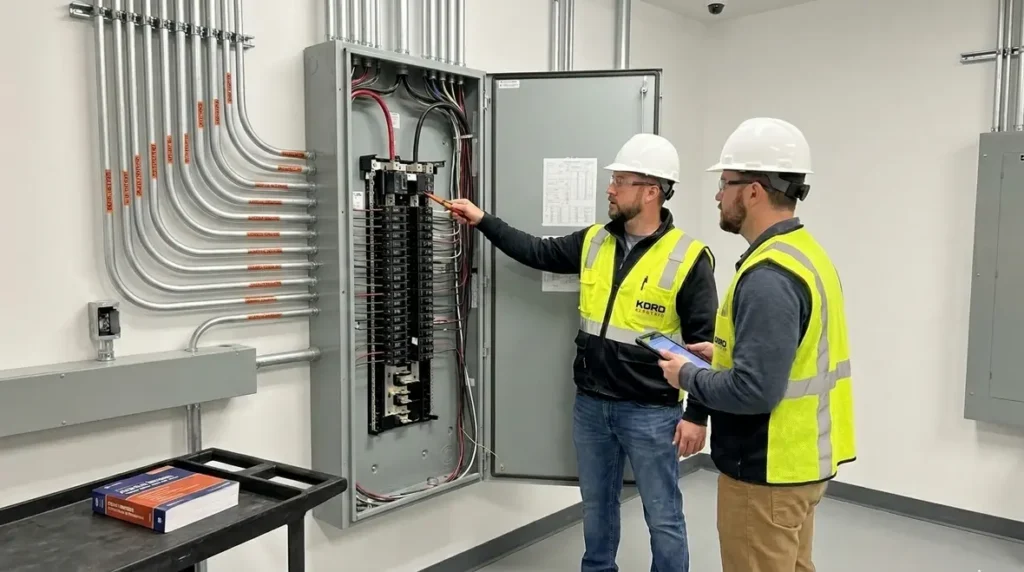
Kord Electric focuses on commercial and industrial facilities and major property buildings, so our inspections align with those realities. First, our technicians review the one line diagram, equipment schedule, and the actual installed layout. Then, they compare how each disconnect group supports isolation of the intended equipment.
After that, we validate practical access. We check whether the arrangement allows safe operation without creating unsafe crossing paths or blocked reach. Then, we verify identification and clarity. Finally, we explain findings in a way that helps facility teams fix issues before they become outage triggers or safety incidents.
Throughout the process, our expert service staff takes a calm approach. They do not treat compliance as a “gotcha.” Instead, they show the team how NFPA 70 requirements support real safety outcomes. In the end, people get answers they can use, not vague statements that sound good in a meeting and fail in the field. When appropriate, we also recommend following up with broader NEC learning, using resources such as NFPA 70 explainers and application guides that Kord Electric publishes for facility managers.
FAQ about NFPA 70 Section 267.34 and disconnect grouping
Conclusion and call to action for facility teams
Proper disconnect grouping under NFPA 70 helps keep commercial and industrial facilities safer, faster to service, and easier to manage during emergencies. Kord Electric helps teams translate NEC requirements into real field outcomes, with our technicians and expert service staff guiding the process from review to correction. If facility staff want clarity before the next shutdown window, they should reach out to Kord Electric for an on site assessment. Let’s make sure your disconnects work like they should, not like a mystery novel that no one asked for.
For facilities across the region, especially those looking for comprehensive commercial electrical support, Kord Electric’s dedicated teams provide Los Angeles County electrical services that integrate NEC grouping of disconnects reviews with broader system checks. That way, disconnect layout, bonding, overcurrent protection, and outside supply limits all support the same safety story instead of competing with each other.
Contact Kord Electric today to schedule a review for your major property building.