

NEC Occupant Access Disconnects and 267.35 Compliance by Kord
At Kord Electric, we build and service commercial and industrial systems with one simple goal in mind: safety that works in the real world. That is why we pay close attention to NEC occupant access disconnects and the rule behind them, including NFPA 70 Section 267.35 for occupant access to disconnecting means. Now, you might think this is just another code line that sounds stricter than it is, like a movie villain monologue that ends with a dramatic gasp. However, when our expert service staff walks a building, they see how quickly access issues become real problems during maintenance, inspections, and emergencies. And so, in the pages that follow, we explain what Section 267.35 requires, why it matters, and how Kord Electric helps owners and facility managers keep their electrical plans aligned with the NEC.
Understanding NFPA 70 267.35 in plain building terms
NFPA 70 is the National Electrical Code, and Section 267.35 addresses occupant access for disconnecting means. In other words, the code focuses on how the people who live or work in a building can reach the required disconnects when they need them. This rule matters most in commercial and industrial facilities, where equipment is not just “somewhere on a wall,” but a critical part of the building’s operation.
To keep it practical, Kord Electric treats Section 267.35 like a door policy. If the door is locked, blocked, or placed where people cannot reach it under normal conditions, the disconnect does not serve its safety role. Likewise, if access depends on keys that only a few people have, or if pathways are obstructed, then you do not get the benefit the code intends.
So, our technicians review the location of disconnecting means during design support, upgrades, and service work. Then, we compare what is installed against what the NEC requires for occupant access. That approach helps property teams avoid the kind of surprise that shows up during inspections. Nobody wants that surprise, not even the inspectors, and they have seen it all.
Why occupant access disconnects matter for emergency readiness
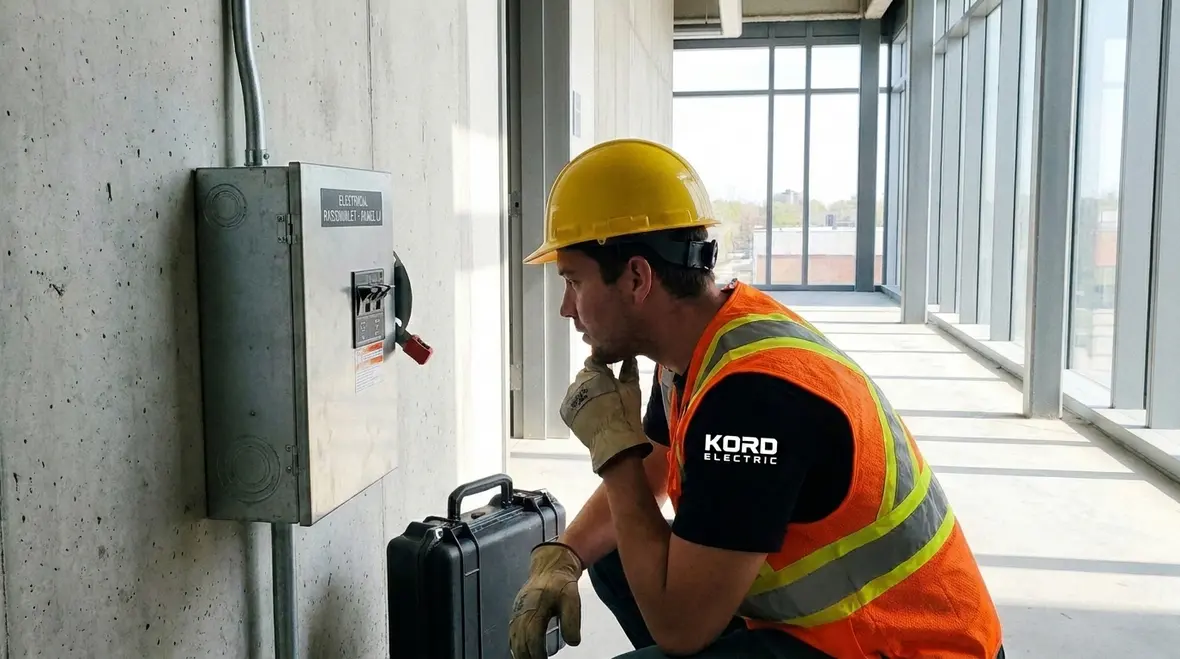
When a fault happens, time matters. Even if your facility has strong procedures, the physical reality stays the same: someone must be able to identify and reach the disconnecting means. That is where NEC occupant access disconnects become more than a compliance topic. They act as an entry point to safer response, including shutting down equipment when needed.
Moreover, occupant access supports quicker actions during routine problems too. For example, if a piece of equipment trips or needs service, staff often start with a power off step. However, access that is difficult or unsafe can turn a planned task into a chaotic one. As a result, troubleshooting takes longer, and the risk grows that someone will attempt a workaround.
Kord Electric uses our field knowledge to guide the right placement, labeling, and access conditions for commercial and industrial equipment. Our expert service staff explains options clearly to facility managers, so teams know what they can control and what needs a change at the equipment level.
What “access” really means under 267.35
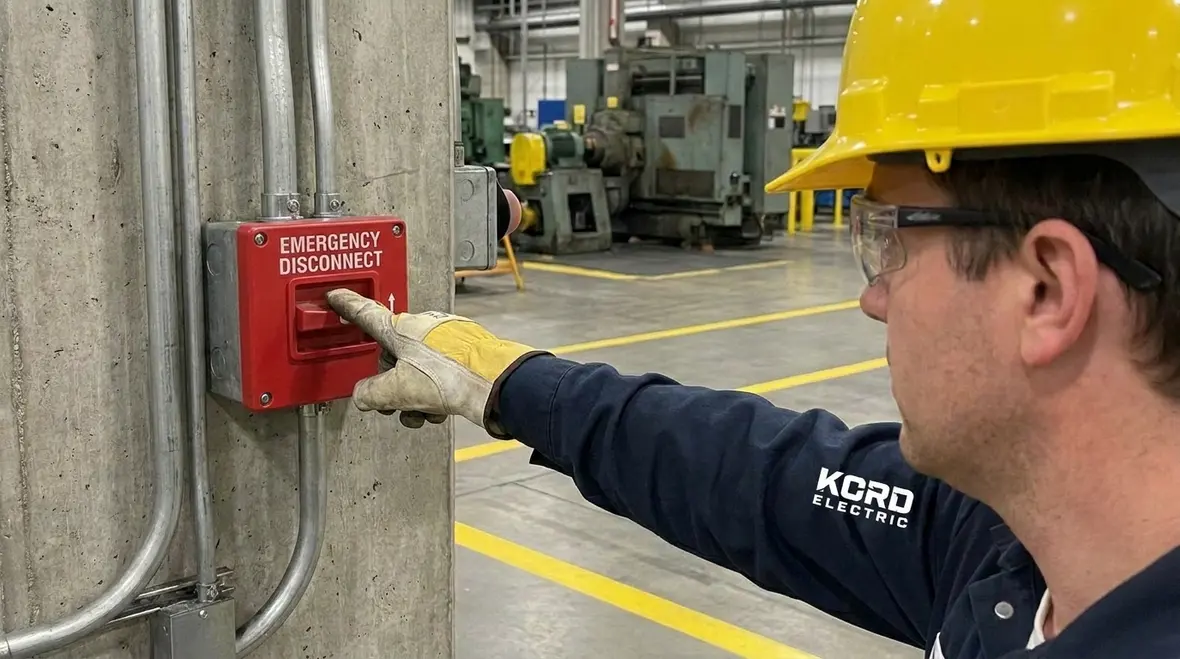
Section 267.35 does not treat access as a vague idea. It focuses on practical ability for occupants to reach the disconnecting means without unnecessary barriers. In day to day terms, we look at four things during planning and verification.
- Reach and approach so occupants can get to the disconnect location
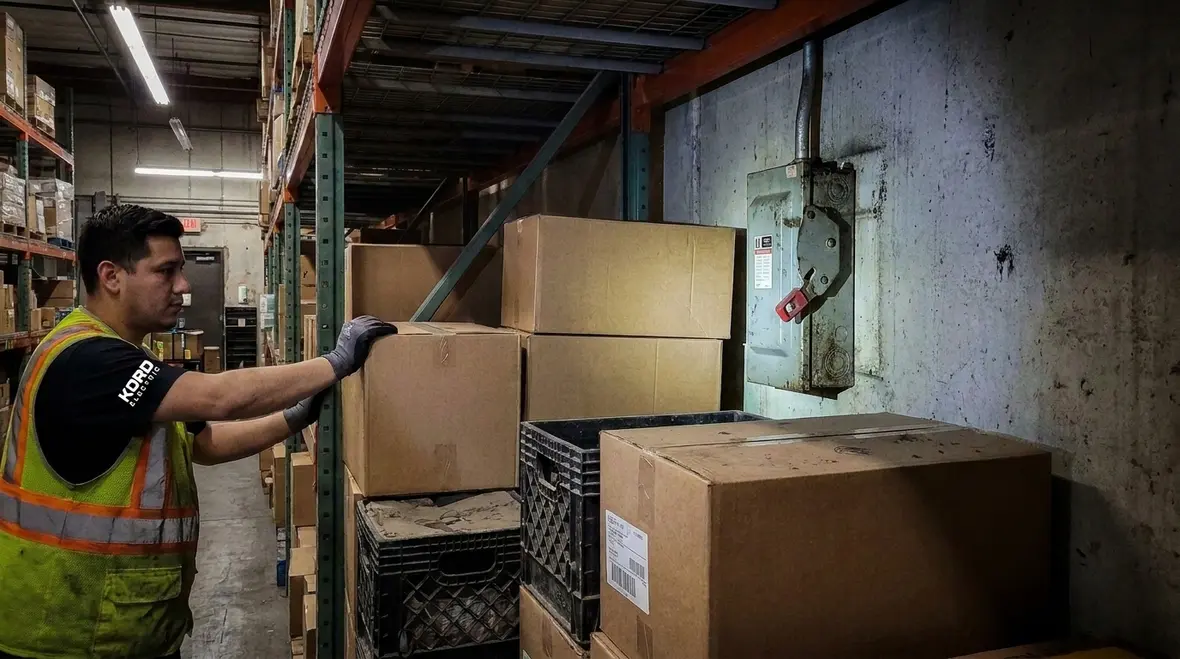
- Obstructions like storage, equipment stands, or architectural features that block the path
- Barriers such as locked enclosures or access restrictions that prevent normal use
- Visibility and identification so occupants can recognize the right disconnect without guessing
Next, our technicians consider how building layouts actually function. A disconnect that looks accessible on a drawing can become hard to reach after a new rack is installed, or when a hallway gets used for staging. Therefore, Kord Electric reviews the “current story” of the site, not only the original plan.
Also, we remind teams that occupant access does not mean anyone should wander around like they own the place. It means access must be available in a way that supports safe shutdown and service actions by trained people and authorized occupants. In other words, we balance safety with real facility operations.

Common commercial and industrial access issues we find
In commercial and industrial facilities, we typically see the same pattern of access failures, just dressed up in different finishes. And yes, sometimes the disconnect is installed with the confidence of a superhero pose, while still failing the access intent.
Here are issues our technicians often flag during assessments:
- Blocked pathways where conduits, cabinets, or stored items reduce clearance
- Disconnects hidden behind panels that require tools or special steps for access
- Labels that do not match equipment so occupants cannot confidently choose the correct disconnect
- Enclosures with access that is effectively restricted even if a door exists
- Equipment relocation where later upgrades change the building flow and remove access space
Then, we connect these issues to the “why” behind Section 267.35. When access fails, occupants cannot reach the disconnecting means. Consequently, electrical hazards remain energized longer than they should. That can increase damage, delay response, and create unsafe work conditions for staff.
Our expert service staff does more than point out problems. We explain what a fix looks like for the facility type and the site constraints, so owners can plan work that does not disrupt operations more than necessary.
Planning for compliance during upgrades and new installs
Owners and facility managers often ask how to handle Section 267.35 during upgrades. The best answer is simple: address access early, and verify it often. When teams wait, the building layout and equipment schedule become rigid, and then compliance changes become expensive.
So, Kord Electric supports design and construction planning by mapping disconnect locations to real access paths. We coordinate with teams responsible for mechanical rooms, electrical rooms, and equipment corridors. After that, our technicians verify labeling and enclosure details so the disconnecting means can be used as intended.
For existing facilities, we often take a measured approach. First, we identify which equipment is covered by the applicable disconnecting means. Next, we examine whether occupant access matches the NEC expectations. Then, if we need changes, we propose solutions that fit commercial and industrial operations, such as coordinated work windows, temporary controls where appropriate, and a clear plan for retesting and documentation.
To keep the conversation grounded, our service staff explains the tradeoffs in business language. We do not speak in code-only terms. Instead, we show how access improvements reduce risk, improve response speed, and support smoother inspections.
For teams who want a broader NEC foundation before diving deeper into occupant access requirements, Kord Electric also maintains educational articles that explain how the National Electrical Code shapes everyday decisions. One example is our in-depth guide Understanding NFPA 70: The National Electrical Code Explained for 2026, which connects detailed rules like Section 267.35 to the bigger NEC framework used in commercial and industrial facilities.
Coordinate with safety teams and documentation
Compliance does not live only in the electrical room. It lives in the building’s safety process. That means facility leadership, safety officers, and electrical contractors should align on how disconnects are identified and reached. When Kord Electric works with others on a project, we treat this like a team sport, not a solo act.
For example, we help owners prepare clear documentation that supports occupant understanding. We also help match labels and diagrams to the equipment that is actually in service. Then, we recommend practical checks that staff can repeat, such as confirming access paths after new storage or new equipment placement.
Our field experience shows that even strong plans fail when the building changes. Therefore, we encourage teams to revisit access after renovations, equipment swaps, and layout updates. That is how occupant access disconnects stay meaningful instead of becoming outdated.
When these reviews uncover broader power planning questions, facility leaders often pair occupant access work with system-level electrical planning. Resources like Kord Electric’s article on Building Electrical System Design: Planning Power for Commercial Facilities help teams connect individual disconnect locations to the overall design strategy, so safety and reliability stay aligned.
Connecting occupant access to broader NEC planning
Section 267.35 is just one part of how the NEC shapes safe building operation. In practice, real-world compliance has to connect occupant access with clear work spaces, realistic load calculations, and reliable equipment behavior.
For example, disconnect access interacts with work space rules around equipment, because even a perfectly located disconnect is a problem if someone has to squeeze between stored materials to reach it. That is why many facility teams review occupant access alongside guidance such as NFPA 70 work space dimensions and feeder diagram requirements, so the whole electrical story stays consistent from drawings to daily use.
Kord Electric helps owners and facility managers think in those bigger-picture terms. Instead of treating NEC occupant access disconnects as an isolated checklist item, we look at how your disconnects fit into emergency procedures, equipment shutdown steps, maintenance routes, and training plans. The result is a safer, more predictable environment for the people who actually work in the building every day.
For multi-site portfolios across Los Angeles County, this broader view also makes it easier to standardize practices between buildings. When access expectations and documentation look familiar from site to site, staff can react faster during incidents, and leadership can compare risk and readiness with fewer unknowns.
How Kord Electric supports occupant access assessments
When Kord Electric evaluates NEC occupant access disconnects in a commercial or industrial building, we follow a structured process that keeps both code language and real-world operations in view.
1. Field walk and disconnect mapping
Our technicians start with a field walk. We identify each applicable disconnecting means, document its location, and confirm what equipment it serves. Then we map those findings to drawings or one-line diagrams where available, so the paper story and the field story match.
This is where access problems usually start to show. A disconnect that seemed convenient during construction might now sit behind storage, or require someone to cross another hazard to reach it. By capturing these conditions in plain language and photos, we give facility teams a clear view of what occupants will actually face if they need to shut something down quickly.
2. Access path and barrier review
Next, we follow the path an authorized occupant would realistically take. We look for trip hazards, blocked clearances, locked doors without appropriate key access, and anything else that turns a “reachable” disconnect into a theoretical one. We also compare those paths with your building’s emergency and maintenance procedures, so the documentation reflects how access is supposed to work in practice.
If we find barriers that conflict with the intent of Section 267.35, we document them and explain their impact. Then, instead of dropping a dense code citation on your desk, we outline straightforward options to restore occupant access with minimal disruption.
3. Labeling, identification, and occupant understanding
After access paths, we look at what occupants will see when they arrive at the disconnect. Clear labels, consistent terminology, and diagram alignment all matter. If labels do not match equipment, or if multiple disconnects appear interchangeable, occupants may hesitate or guess at the wrong device during a critical moment.
Our teams help align labels with documentation and training, so the disconnects that Section 267.35 talks about are easy to recognize during real events. That reduces confusion and supports faster, safer responses under pressure.
4. Practical remediation planning
Finally, we help owners and facility managers prioritize fixes. In some cases, a simple storage policy update or label replacement is enough. In others, disconnect relocation, pathway reconfiguration, or enclosure changes may be required to align with NEC expectations.
Because we work every day with commercial and industrial operations, we understand that shutdowns and construction activity have ripple effects. That is why we sequence recommendations, coordinate with your scheduling constraints, and build plans that keep both safety and uptime in focus.
When to review NEC occupant access disconnects in your facility
Some property teams treat disconnect access as a “set it and forget it” item. In reality, changes in the building can quickly turn a compliant layout into a questionable one. We generally recommend a closer look at NEC occupant access disconnects whenever one of the following happens:
- Major equipment additions, relocations, or replacements in mechanical or electrical rooms
- Renovations that add partitions, storage, or staging areas near existing electrical equipment
- Operational changes that alter who is responsible for equipment shutdowns or emergency response
- Inspection findings that mention access, labeling, or unclear disconnect responsibilities
- Portfolio-wide safety reviews across multiple commercial or industrial sites
Treating 267.35 as a living requirement, rather than a one-time checkbox, helps keep your building ready for both routine work and unexpected events. It also reduces the odds of last-minute surprises during formal inspections, which is good news for everyone involved.
FAQ
Conclusion and next step with Kord Electric
If your facility uses equipment that depends on fast, safe shutdown, you should treat NFPA 70 Section 267.35 as an access plan, not just a checklist item. Kord Electric helps commercial and industrial property teams confirm NEC occupant access disconnects, correct real world access blockers, and document the results so inspections feel less like a surprise test. If you want a clear, calm path forward, contact us. Our technicians will review your site and explain your options in business friendly terms.
For properties across the region that need broader support beyond a single project, Kord Electric also offers dedicated Los Angeles County electrical services. That means you can align NEC occupant access disconnects with long-term maintenance, system upgrades, and emergency readiness under one experienced electrical partner.
When you are ready to turn NEC occupant access requirements into a practical, well-documented plan, Kord Electric is ready to help.


