
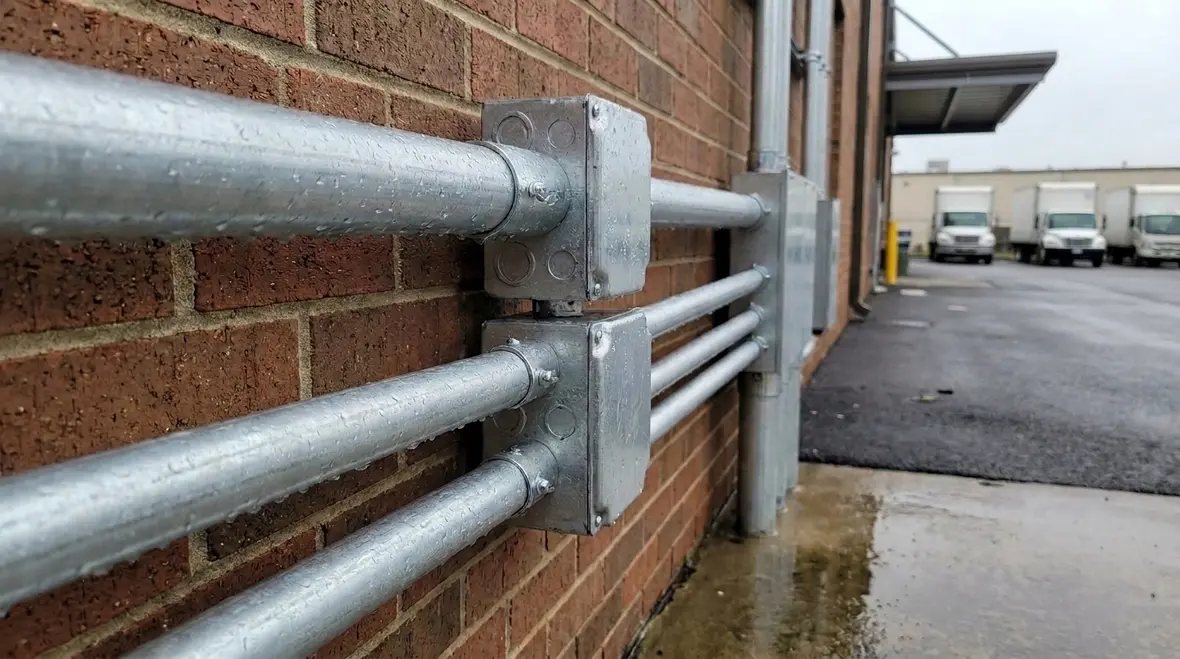
NFPA 70 Section 300.11 Wet Location Raceway Above Grade
NFPA 70 Section 300.11 wet location raceways above grade: what it means for commercial work
In the field, the NEC wet location raceway rules show up the moment a conduit runs where rain can reach it, or where moisture rides in on the wind like it owns the place. Section 300.11 explains when raceways enter a wet location, and it also frames the expectations for raceways above grade. In simple terms, if water can drip, splash, or collect on the raceway, the installation must treat that path as wet. At Kord Electric, our technicians and expert service staff do not just memorize the lines, they translate the code into a build that keeps power safe at a commercial and industrial facility, or at a major property building.
And yes, weather does not care about our schedules. But we plan around it.
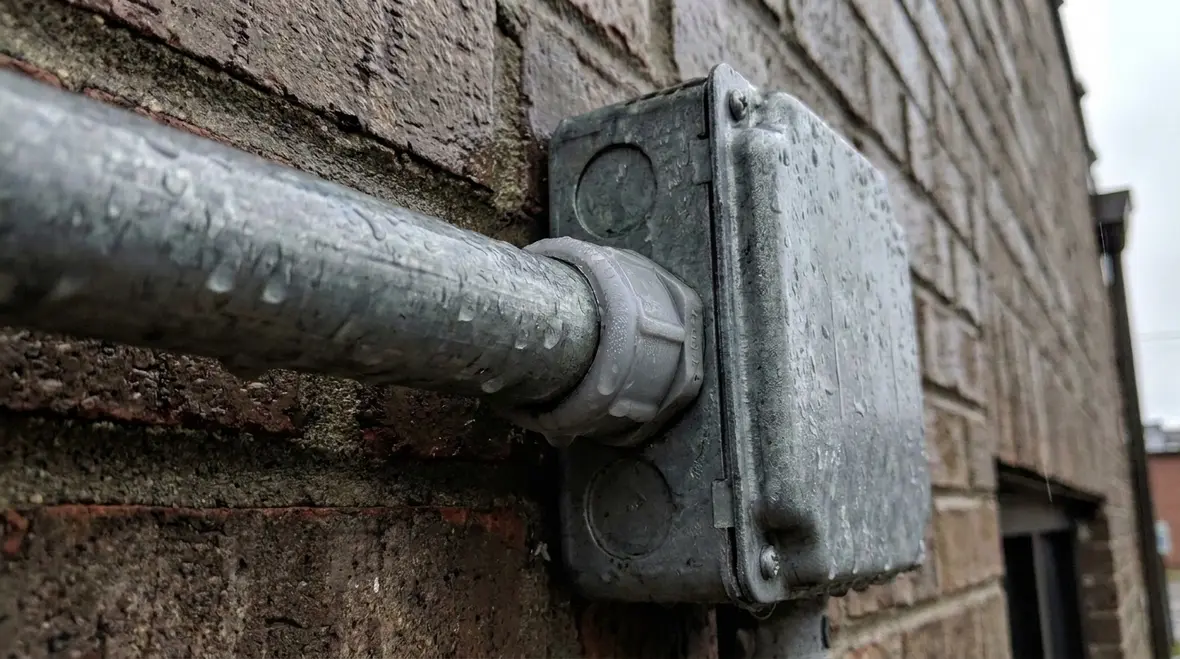
How wet location is defined in NEC practice
To apply NFPA 70 correctly, electricians must separate “wet” from “damp” and from “dry, sheltered” conditions. Wet location is not only about puddles. It also covers areas where rain is likely to wet the raceway and where condensation can land on conductors or equipment. Therefore, when the raceway routes above grade outdoors, under open air, or along building faces exposed to the elements, installers need to assume water exposure.
Moreover, the NEC treats the raceway as part of an electrical system. So, even if the wiring inside stays intact, a poorly selected raceway can fail through corrosion, cracks, or poor sealing. In turn, that failure can lead to maintenance problems, downtime, and safety risks.
Our team at Kord Electric often sees the real issue during site walks. One day a conduit sits “just above grade,” and the next day landscaping, a roof leak, or a new loading dock changes the exposure. Consequently, we ask practical questions: does water splash from traffic, does a gutter overflow during storms, and do sprinklers or washdown reach that run. Then we match the raceway type, fittings, and sealing methods to the actual wet condition.
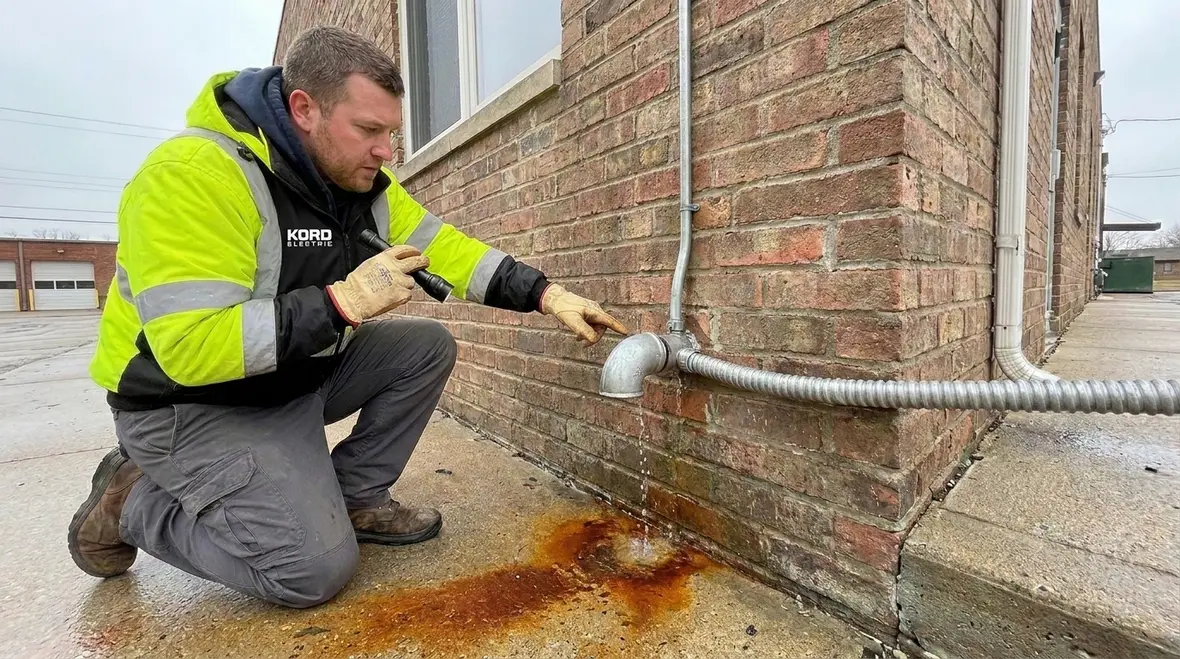
Section 300.11 and the big idea behind raceways above grade
When people hear Section 300.11, they often think it is a single rule with a single outcome. Yet, the deeper point is how the code links location to wiring protection. For raceways above grade in wet locations, the NEC wet location raceway rules focus on preventing water from getting into the system. Then it focuses on keeping the raceway and all connected parts durable in that environment.
So, the “how” matters. It is not only the conduit material. It also includes how the raceway connects to boxes, how fittings seal, how elbows face down to shed water, and how the system handles expansion and building movement. We tell clients this plainly. If you treat wet location like a dry one, the weather will eventually collect its payment.
Our expert service staff also notes something many teams miss: above grade does not mean “safe.” A raceway mounted on a building exterior can still see steady exposure due to wind driven rain. Furthermore, overhead runs near loading docks can receive frequent wetting from washdowns and hoses. In those cases, design teams and installers must treat the full route as part of the wet location pathway.
Common commercial pitfalls on wet location raceways
Commercial and industrial facilities do not fail because someone forgot a rule. They fail because several small choices stack up like loose parts in a tool bag.
- Using the right conduit material but the wrong fittings. Even a solid raceway can leak at a bad coupling or an unsealed hub.
- Leaving boxes or enclosures “almost sealed”. If water can enter through openings, it can reach conductor terminations.
- Routing that looks dry on paper. Then a later change adds exposure, like a new parapet, a revised grade, or a different use of the area.
- Neglecting drain paths. If elbows and sections allow water to pool, corrosion accelerates.
- Ignoring maintenance access. If the system becomes hard to inspect, problems hide until they grow bigger.
To keep projects moving, Kord Electric checks these areas early. We align engineering intent with on site reality. Also, we coordinate with facility teams and general contractors so the wet location plan survives after the layout changes. After all, nothing is more expensive than an outdoor rework crew brought in after a storm. That is the electrical version of watching a sitcom rerun you already hated the first time.
Design and installation practices our technicians use
Our approach is practical. We apply the NEC wet location raceway rules, then we make sure the details support them. Therefore, our technicians focus on materials, termination points, and water resistant practices that hold up over years, not weeks.
1) Choose raceway types and finishes for outdoor wet exposure
Where water reaches the raceway, the installation needs components built for that setting. That includes corrosion resistance and durable construction. If a system faces harsh exposure, we steer the team toward solutions that fit the environment instead of the cheapest option that “should work.”
2) Seal and protect at entry points
At entrances to boxes, enclosures, and devices, we verify sealing practices. Then we confirm that openings stay sealed after wiring is completed. In commercial buildings, a single unsealed entry can create recurring problems during wet seasons.
3) Direct fittings and supports to reduce water collection
We pay attention to routing, slopes, and how elbows turn. Meanwhile, we verify supports keep the raceway aligned and stable. When the system moves or settles, water can start pooling where it did not before.
4) Plan for inspection, access, and ongoing upkeep
So the job does not end at turnover. Our service staff explains inspection points to the facility team. That way, the property does not rely on hope and a prayer during the next maintenance cycle.
For clients who also review broader code context, our resources discuss how the National Electrical Code fits into real project planning, including the latest guidance covered in our NEC and fire code education pages. That kind of preparation helps teams reduce miscommunication across design, construction, and maintenance. You can explore our explanations through Kord Electric’s materials such as Understanding NFPA 70: The National Electrical Code Explained for 2026 and related Kord Fire content, and we also keep a close eye on standards discussions like those found through fire and pump related industry education sources at firepumps.org, since system reliability impacts electrical protection decisions too.
Compliance decisions in major property buildings and industrial sites
Large projects require consistency. Therefore, Kord Electric builds compliance into the workflow, especially for major property buildings, industrial campuses, and commercial facilities where downtime hurts. Wet location raceway details can affect permit reviews, inspections, and long term reliability. So, we help teams document their approach.
In many facilities, there are shared challenges. You might have exterior corridors, loading areas, and utility rooms with frequent wetting. Then you may also have multiple trades competing for the same physical path on a façade. Consequently, installation clarity becomes part of safety.
Our technicians and expert service staff often assist by walking the site and marking routes that will see wet conditions. Then, they match those findings to the raceway specification. That method supports clean inspection readiness, and it reduces the chance that a conduit run gets treated as dry when it actually lives outdoors.
Also, because electrical code enforcement can vary by jurisdiction, we encourage clients to align with local review practices. In addition, we make sure the system uses the correct installation techniques for wet exposure so it does not fail during the first real storm. Storms are like pop culture villains. They always show up when you are least prepared.
For facility leaders in Southern California and nearby regions, those decisions often connect directly to field support such as Los Angeles County electrical services for commercial and industrial sites, where NEC wet location raceway rules tie into broader power distribution and life safety planning.
Frequently asked questions for wet location raceways above grade
Take action: get your wet location raceway plan reviewed by Kord Electric
If your facility has above grade outdoor raceways, or if a new project will connect to exterior systems, we recommend a review before installs start. Kord Electric supports commercial and industrial teams with experienced technicians, clear guidance, and detail checks that help projects pass inspection without last minute surprises. Bring your route drawings, photos of the run, and your installation constraints, and we will help you align with NEC wet location raceway expectations. Call us today to plan the next step with confidence.
When you combine that review with a broader look at your NFPA 70 responsibilities, including how raceway choices interact with grounding, work space, and equipment guarding, your facility turns the NEC from a worry into a working plan that supports long term reliability.


