
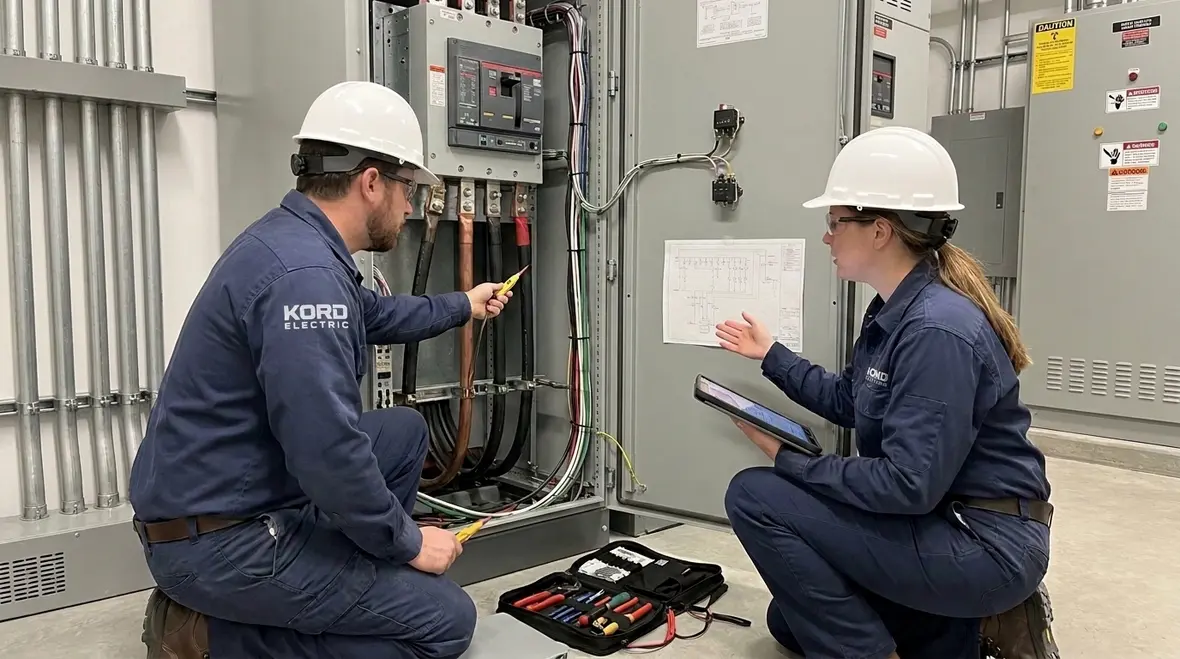
NFPA 70 Section 310.12 for Single Phase Services and Feeders
Kord Electric designs and supports electrical systems for commercial and industrial facilities and major property buildings, and we explain the rules with the kind of clarity that keeps people safe and inspectors calm. In this article, we focus on NFPA 70 Section 310.12 and how it applies to NEC single-phase dwelling services and feeders used in eligible applications. We also speak in plain language because code language should not read like a riddle. Our technicians and expert service staff walk site teams through what matters, why it matters, and what happens when it is ignored. And yes, we sometimes hear the same joke from clients: “The code is just paperwork.” We politely agree, then we show them how wrong that idea can be.
NFPA 70 section 310.12 and what it controls for services
NFPA 70 Section 310.12 addresses how single conductor sizes get determined and applied in specific wiring conditions. In practice, teams use it to verify that the conductors feeding equipment meet the rules for ampacity and installation. Therefore, when a building uses a one-phase service arrangement, this section helps guide what conductor size and protection logic must look like.
At Kord Electric, we connect the dots between the text of the code and the real world: transformer locations, panel schedules, conductor routing, and how the service gets assembled in the field. Moreover, we do not treat code compliance as a checkbox. We treat it as a safety system, and we verify it during design review and field support.
Additionally, others sometimes confuse “service” with “feeder” since both involve power leaving electrical equipment. Yet in the code world, the boundary matters. A service relates to where the utility interface ends and building distribution begins. A feeder relates to how power leaves that service equipment to reach other panels or loads. Once you see the boundary, decisions become easier, and mistakes become more obvious.
NEC single-phase dwelling services and feeders explained in building terms
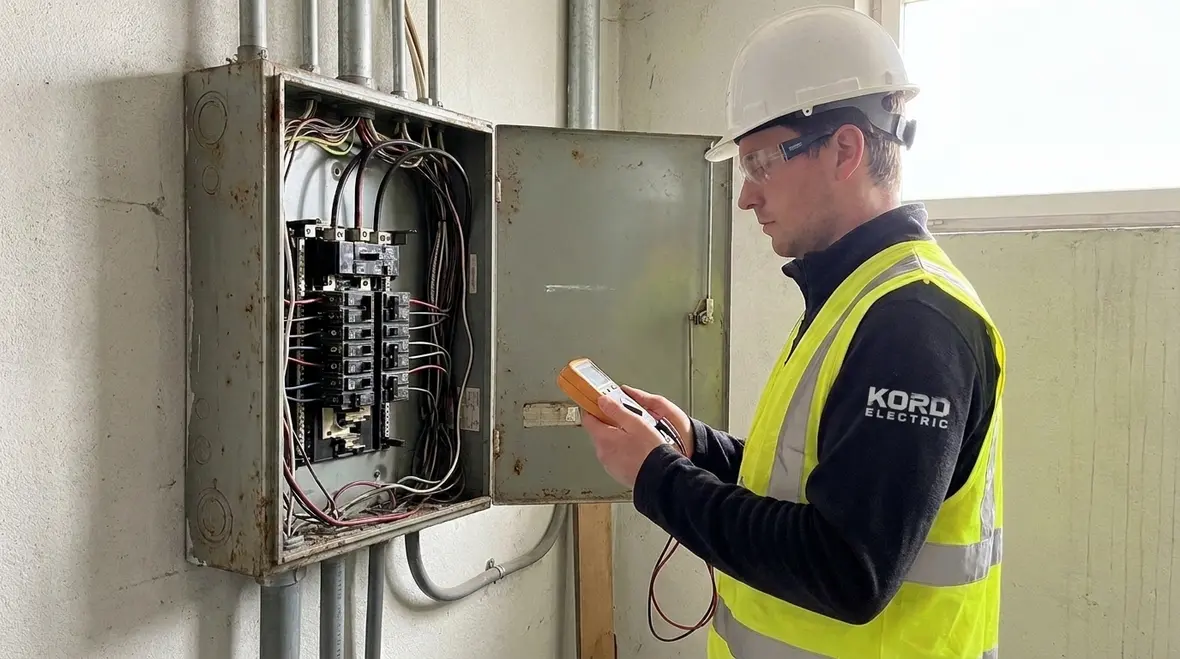
Many teams ask how NEC single-phase dwelling services and feeders show up in larger projects. The key is this: the code language describes specific use conditions, and the building design must still follow the proper limits. When the application fits, these service and feeder concepts guide the conductor and equipment arrangement.
In simple terms, a single-phase service delivers power to the service equipment. Then feeders distribute power from that service equipment to additional distribution points. Furthermore, you must match the feeder rules to the load behavior and to the conductor properties in the installed condition.
Our expert service staff at Kord Electric often reviews the same patterns. First, teams select conductor sizes using nameplate loads and calculated demand. Next, they verify that the conductors stay within the permitted ampacity under the installation method and ambient conditions. Then they check that overcurrent protection aligns with the conductors and with the intended load levels. Finally, they review labeling, routing, and connection quality.
To keep it engaging, think of it like a coffee line at a busy movie theater. The service equipment is the ticket booth, and feeders are the aisles leading people to different seats. If you send too many people down one aisle, something will jam. Electrical systems do not jam politely, so the design must prevent overload.
How conductor ampacity and installation factors drive sizing
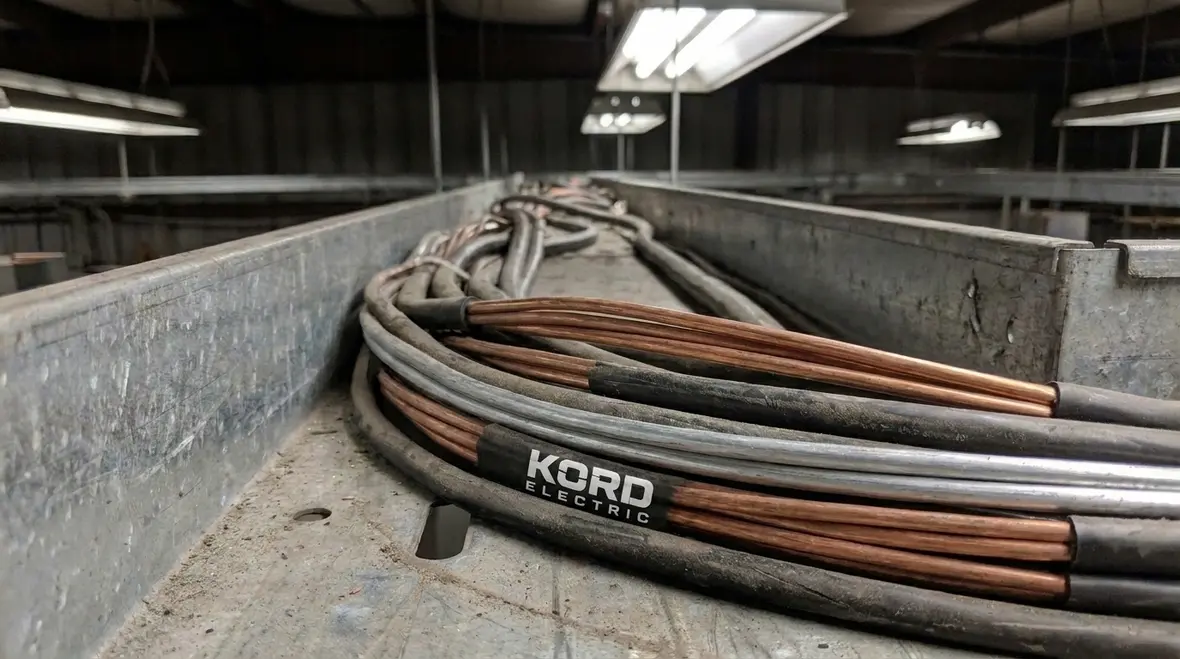
NFPA 70 Section 310.12 does not stand alone. It connects to the broader conductor sizing approach where ampacity depends on both conductor type and installation conditions. Therefore, teams must consider how the cable or wire gets installed, how many conductors share the raceway, and what thermal environment the system lives in.
At the job site, we see these factors drive the final answer:
- Conductor grouping: When too many current carrying conductors share a raceway or enclosure, heat rises and ampacity limits can change.
- Ambient temperature: Hot spaces reduce allowable conductor performance, so we adjust sizing and protection strategy.
- Insulation type and conductor material: Copper and aluminum behave differently under constraints, so we confirm the correct tables and conditions.
- Installation method: Raceway, cable tray, conduit fill, and support spacing affect how heat moves away from conductors.
Because of that, a “nameplate size” is not enough. We help teams avoid the classic trap where design drawings show one conductor size, but the installed reality changes. Then inspectors ask questions, maintenance staff gets stuck, and procurement starts chasing the wrong parts. We would rather prevent the chase.
Also, the protection side must match. When you reduce conductor capability due to thermal factors, overcurrent devices and feeder design must still provide safe operation. Kord Electric supports that coordination from planning through commissioning.
Service equipment to distribution panels: where feeders fit correctly
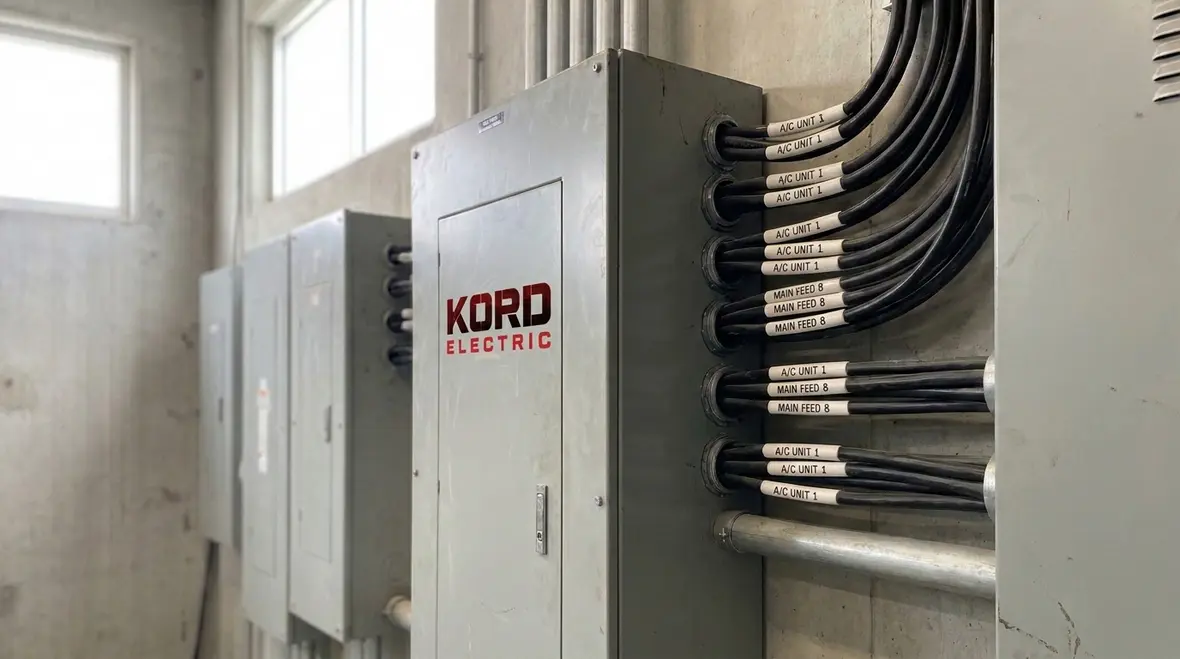
Once the service equipment has power, the distribution design decides where the energy goes next. Even when a project uses a one phase arrangement, feeders must follow the proper role and labeling so that maintenance teams can troubleshoot quickly and safely.
In many commercial and industrial facilities, feeders supply:
- branch panels for HVAC controls and motors
- lighting and small power circuits
- process equipment panels and distribution boards
- site loads like gates, pumps, or auxiliary rooms
However, there is a common misunderstanding. Some teams treat every circuit as if it is “the same kind of run,” especially when they look at a wiring schedule. Yet feeders require clearer intent because they link major distribution points. We make sure feeder runs get addressed as systems, not as loose cables.
Additionally, our work aligns with code based guidance we track through our knowledge resources, including our team’s ongoing updates on NFPA 70 and NEC requirements. When clients ask where to start, we start with the service boundary and then we map feeders to distribution panels in a way that supports safe inspection and long term service.
And if you hear someone say, “We will label it later,” we respond with the same calm tone we use on every call. Later is where problems grow legs. We label during planning and we verify during installation so the building stays easy to operate.
Common compliance issues we prevent during plan review and field checks
Even well run teams run into problems when electrical plans move from design to the field. Therefore, Kord Electric focuses on the failure points that show up again and again in audits, commissioning, and maintenance calls.
Here are the issues we commonly prevent:
- Mismatch between conductor sizing and installation method: Teams pick a conductor size based on a simplified assumption, then install it in a way that changes ampacity conditions.
- Overcurrent protection that does not align with feeder conductor capacity: Protection must support safe clearing and correct operation.
- Missing coordination details: Documentation and labeling help the next technician find the right circuit without guessing.
- Routing changes after approval: Small layout changes can raise conductor heat or affect conduit fill, so we recheck the impact.
- Connection quality problems: Loose terminations and incorrect torque can create heat and failures long before expected.
We also coordinate with fire and life safety expectations in major property buildings. For example, when fire pump rooms and related equipment come into the picture, the electrical design must support the reliability requirements of those systems. That is why some teams also review additional fire service guidance resources from organizations like firepumps.org, then tie the findings back into the electrical design. We do the same, but with an installation focused mindset.
Because we serve commercial and industrial facilities, we understand the operational stakes. A downtime event does not feel like a minor inconvenience. It feels like lost revenue and damaged trust. Our process aims to prevent that outcome.
Dual column quick reference: what to check for single-phase feeder readiness
To keep your next review moving, here is a quick checklist. We use it during plan review and again during field walks.
|
|
FAQ about NFPA 70 section 310.12 and single-phase feeders
Conclusion
When a project uses a single-phase service and feeder arrangement, NFPA 70 Section 310.12 becomes a practical tool, not a text you ignore until inspection day. At Kord Electric, we bring our technicians and expert service staff into the review early, so conductor sizing, protection, and installation details match what the code expects. If you manage a commercial or industrial facility and need reliable electrical compliance support, contact Kord Electric now. We will walk your system through the rules with calm confidence, and we will make sure it stays correct long after the drawings leave the office.
If your facility is in Southern California and you want code-focused support for service equipment, feeders, and distribution changes, explore how our Los Angeles County electrical services help commercial and industrial properties align NEC planning, installation, and troubleshooting with real-world operating demands.
References for further reading
kordelectric.com blog: Understanding NFPA 70 for 2026
kordfire.com: NFPA 70 All About the National Electrical Code
kordfire.com.au


