
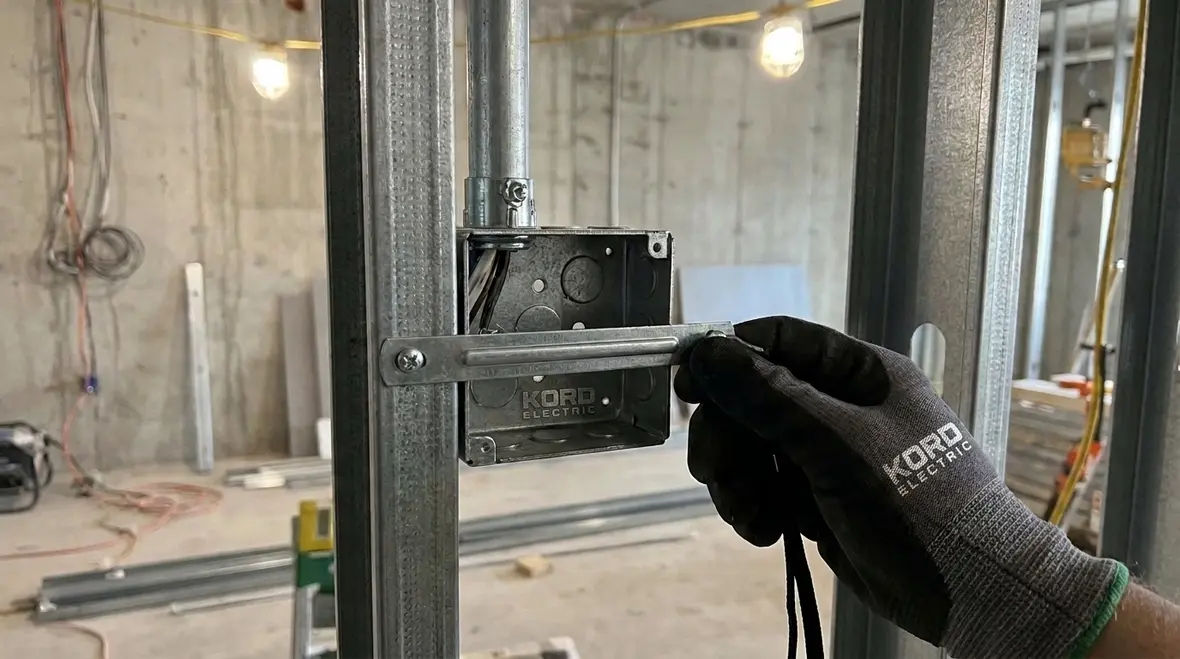
NFPA 70 Section 314.23 NEC Box Supports Requirements
NFPA 70 Section 314.23 sets clear rules for NEC box supports requirements so electrical boxes and conduit bodies stay solid, aligned, and safe. At Kord Electric, we see what happens when a box rides on guesswork: loose hardware, cracked cover plates, and long term trouble that no building manager wants to explain during inspection season. That is why our expert service staff takes a slow, careful approach. They walk through what section 314.23 means, how it applies to commercial and industrial facilities, and what proper support looks like in real installs. And yes, they do it without treating your site like a science fair. (Because nobody wants sparks as a “learning experience.”)
In this article, a third person voice will explain the essentials, while our technicians bring the practical details that keep major properties running. If a facility is large enough to have real power demands, it deserves real support rules too.
1) What NEC box supports requirements mean in 314.23
Section 314.23 focuses on how electrical outlet boxes, device boxes, and conduit bodies get supported. It also ties the support plan to the raceway and the building structure. As a result, the goal stays simple: the equipment should not move or loosen when cables, conduit, fittings, and covers do their everyday work.
To understand it, others usually look for three outcomes. First, the box or conduit body remains firmly installed. Second, the raceway can connect without twisting the box. Third, loads and stresses do not get carried through thin metal walls that were never meant to carry them. Moreover, the rule expects installers to use proper support methods, not “hope and a fastener.”
In commercial and industrial environments, the consequences of poor support show up quickly. Vibrations from machinery, foot traffic, and heavy maintenance traffic can loosen assemblies. Therefore, the support rules matter most where electrical systems live in the same space as real-world forces.
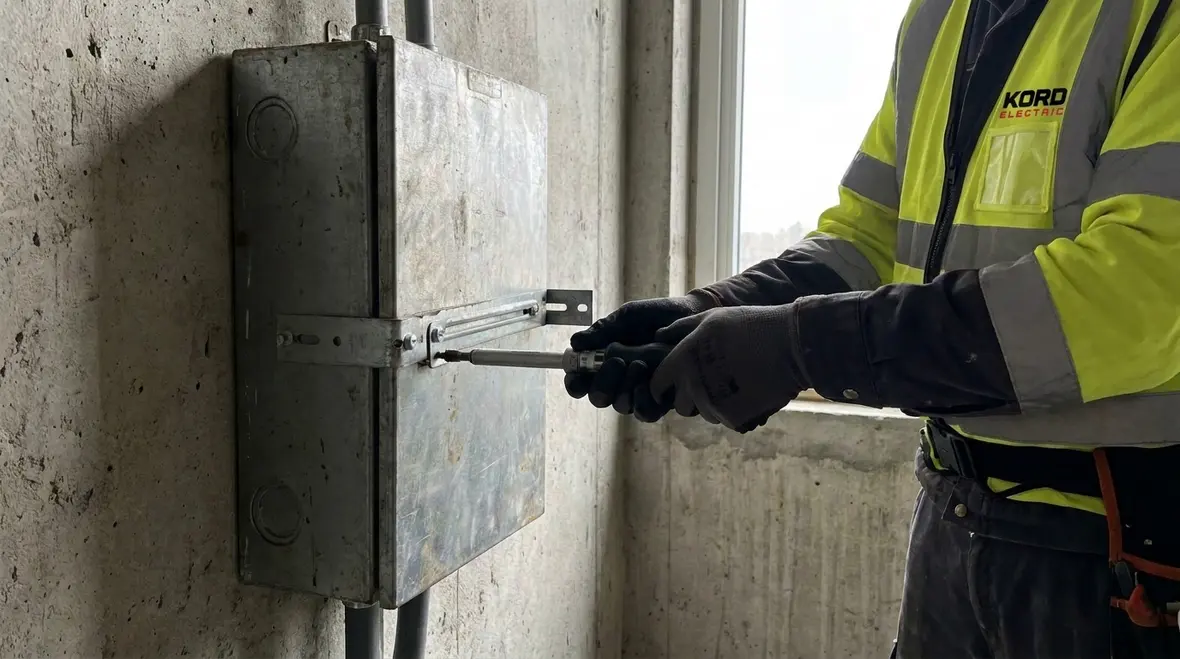
For facility teams that want a broader NEC backdrop while they look at box support details, Kord Electric’s code-focused resources—such as their explainer on understanding NFPA 70, the National Electrical Code, explained for 2026—help connect individual sections like 314.23 to the bigger compliance picture used in real projects across Southern California. Meanwhile, Kord Fire’s NFPA 70 overview gives building owners and fire protection teams a complementary view of how electrical rules interact with life safety systems across commercial properties.
2) How Kord Electric technicians read 314.23 on site
When our technicians work in major property buildings, they do not treat 314.23 like a checkbox. Instead, they inspect the full path: from the box location to the conduit layout and the way the raceway enters. Then they verify that the support plan matches the install style and the expected stress points.
For example, they look at how many conductors enter the box, whether the conduit is threaded or uses fittings, and whether the conduit run includes offsets that create extra leverage. After that, they confirm the box support method meets the NEC box supports requirements intent: the box gets held correctly, and the raceway does not act like a lever that bends or pulls the box over time.
Our expert service staff also explains the “why” so facilities can plan better during rough in, before the ceiling closes and everyone pretends it is too late. Sometimes a joke helps. Someone will say, “We’ll fix it later.” And our team replies, “Later is where inspections go to die.” Then we show them the correct support now, while access still exists.
On large projects, they often connect this section to related topics like open conductor supports and conductor attachment methods, so the same attitude toward support repeats throughout the electrical layout instead of stopping at the box. That keeps the entire path—from feeders to terminations—aligned with NFPA 70 expectations instead of relying on improvisation in the field.
3) Supporting boxes versus supporting conduit bodies
Section 314.23 covers more than one situation, so a facility should not assume all boxes get supported the same way. Boxes and conduit bodies share a common purpose, but they sit in different parts of the system.
Supporting outlet and device boxes typically centers on how the box attaches to building surfaces and how the raceway connects into the box. Here, the support method must prevent movement that can loosen the conduit fitting and stress the box itself. Therefore, a well supported box stays square, and covers align cleanly.
Supporting conduit bodies usually deals with their location in the raceway run and how the body handles the mechanical forces along the conduit path. Conduit bodies often sit where access matters, and installers may place them where maintenance crews need to pull conductors. As a result, the support method must resist movement that could disturb the conduit alignment.
In plain terms, supporting boxes keeps the wiring termination stable. Supporting conduit bodies keeps the raceway system stable. Both roles affect long term reliability in commercial and industrial settings, where the electrical system must stay dependable even when the building’s schedule does not pause.
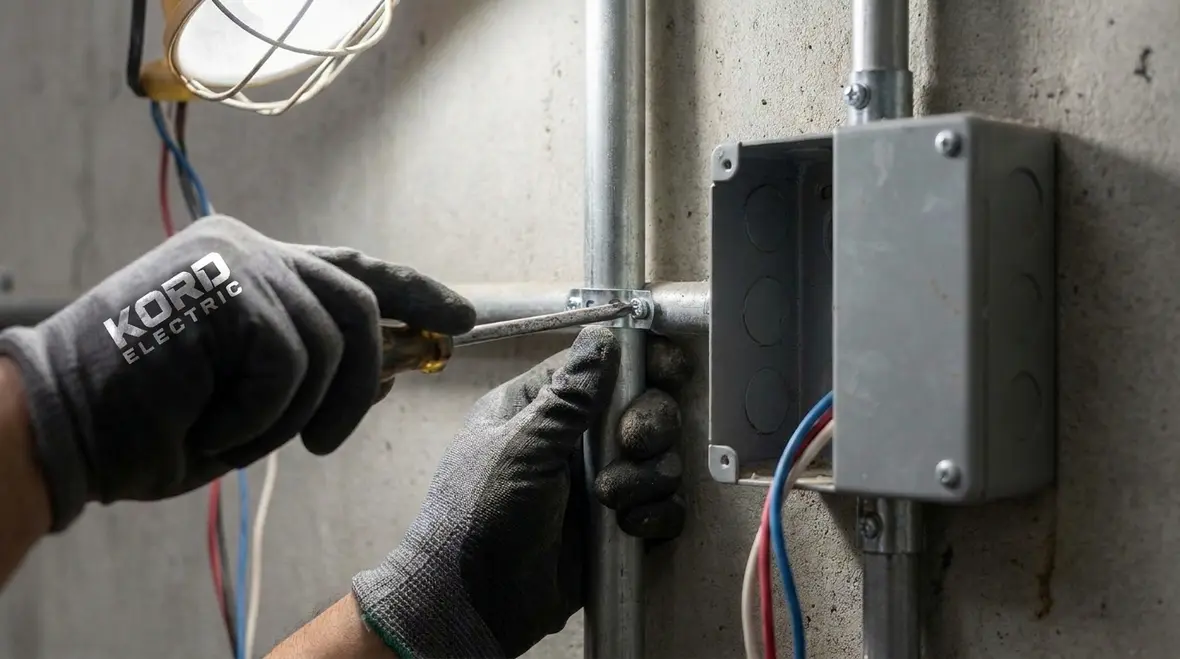
Because box and conduit body support choices influence the bigger code story, many commercial property teams also review broader NEC primers, like Kord Fire’s breakdown of NFPA 70 fundamentals, alongside Kord Electric’s own NFPA 70 application guides for 2026 projects. That way, they can see how local decisions on supports, raceways, and terminations reinforce the same safety and reliability priorities that run through the entire code.
4) When the raceway must share the load and when it must not
Another key idea in 314.23 is that the system needs proper support without forcing the box to carry loads that belong to the conduit run. In other words, the raceway can connect to the box, but the box should not become the structural support for everything else.
Our technicians commonly see this in the field. Someone installs conduit supports along the run, but the last section near the box becomes a “floating” segment. Then, when a technician pulls a cable or a maintenance crew bumps the conduit, the box shifts. Additionally, fittings can tighten and loosen through vibration cycles.
So, facilities should build support plans that treat the box or conduit body as a supported component, not as a hanging anchor point. To make that concrete, installers often align conduit supports so the conduit forces do not pull the box sidewise. At the same time, they support the box so it does not sag or twist.
It is like a pop culture reference: if a building is a “series,” then the box is a main character. It should not get tossed around just because the supporting cast looks fine. The system works best when every part gets proper placement and restraint.
This mindset also matches how Kord Electric treats other NEC support topics such as open conductor spacing and conductor attachment to buildings. When box supports, raceway supports, and exterior conductor supports all respect their limits, the system stops relying on any single component as a catch all anchor and starts behaving like a coordinated design that will pass inspections with less drama.
5) Practical support methods that pass scrutiny in major facilities
Support methods should fit the physical install, the material type, and the building structure. Our team focuses on practical solutions that keep installations aligned and durable for commercial and industrial properties.
What our staff checks
Mounting and fastening so the box stays rigid to the surface
Conduit connection points so fittings do not become stress points
Proximity to offsets because bends can create extra leverage
Access needs for conduit bodies so maintenance work does not break alignment
What facilities should plan early
Rough in coordination so support choices get built in, not patched later
Ceiling and wall closure timing to keep verification possible
Maintenance traffic routes so boxes remain protected where crews work
Load expectations like vibration and mechanical handling in industrial zones
Next, the facility should document what gets installed and why. That helps when teams swap out during turnarounds or tenant changes. Moreover, it supports consistent enforcement across inspections.
For additional context on how NEC guidance shapes electrical planning, Kord Electric also maintains resources such as a dedicated article on understanding NFPA 70, the National Electrical Code, explained for 2026, while Kord Fire covers NEC background in its educational approach to NFPA codes for commercial building owners. These resources help teams connect practical installation steps to the code intent.
And if anyone says, “We followed the drawings,” our response from the field is calm but firm: drawings describe intent, while support proves execution.

Because support hardware, raceway materials, and loading conditions vary across facilities, Kord Electric’s technicians often combine box support checks with broader power system reviews such as building electrical system design planning for commercial facilities or preventive maintenance programs. That way, NEC box supports requirements become part of a repeatable reliability strategy instead of a one time punch list item.
6) Common mistakes we prevent during commissioning
Even well trained crews can miss details when schedules compress. Therefore, our technicians focus on the frequent slip points that lead to corrections during inspection or commissioning.
First mistake: overreliance on conduit. Installers may assume that conduit support alone keeps the box stable. However, when the conduit run changes direction near the box, the stresses transfer to the box. Thus, the NEC box supports requirements intent gets bypassed.
Second mistake: ignoring offset leverage. A small bend can create a bigger force at the box, especially where fittings sit. When installers do not adjust support placement, covers may not seat correctly, and terminations can endure extra strain over time.
Third mistake: rushed closure. Once ceilings close, access disappears. Then teams discover mismatched alignment, missing fasteners, or support methods that do not match the box type. As a result, commissioning delays follow, and budgets feel the hit.
Finally, teams sometimes skip the “conduit body reality check.” Conduit bodies serve access and pulling needs, so they face maintenance action. If the support plan does not account for repeated use, the body can shift and the system’s alignment suffers.
Code compliance is not a magic spell. It is the sum of small, correct decisions made in the right sequence.

To reduce those mistakes, facility leaders sometimes pair box support reviews with broader NEC topics like open conductor supports spacing or conductor attachments to buildings, using Kord Electric’s specialized guides on those sections as a reference. That approach makes commissioning feel less like a scramble and more like the final verification step in a code conscious process.
For facilities across the region that need a partner beyond a single project, Kord Electric also supports broader programs such as electrical safety training, emergency electrical repairs, and preventive maintenance. Those services reinforce the same disciplined attitude that goes into getting NEC box supports requirements right the first time.
7) FAQ: fast answers for the featured snippet
Conclusion
Kord Electric helps commercial and industrial facilities meet NEC box supports requirements with a steady, practical process. Our expert service staff explains NFPA 70 Section 314.23 in a way that works on real sites, not just on paper. Then our technicians verify the support plan before closure, so the system stays stable through vibration, maintenance, and inspection cycles. If a major property needs electrical support done right the first time, call Kord Electric and let’s keep your project calm, code focused, and quietly confident.
When that work is part of a broader upgrade or new build, facilities can also align NEC box support checks with comprehensive power planning using Kord Electric’s building electrical system design services. For organizations across Southern California that want a long term partner rather than a one time fix, their dedicated Los Angeles County electrical services give commercial and industrial properties a single, code conscious team for inspections, maintenance, troubleshooting, and new installations.


