
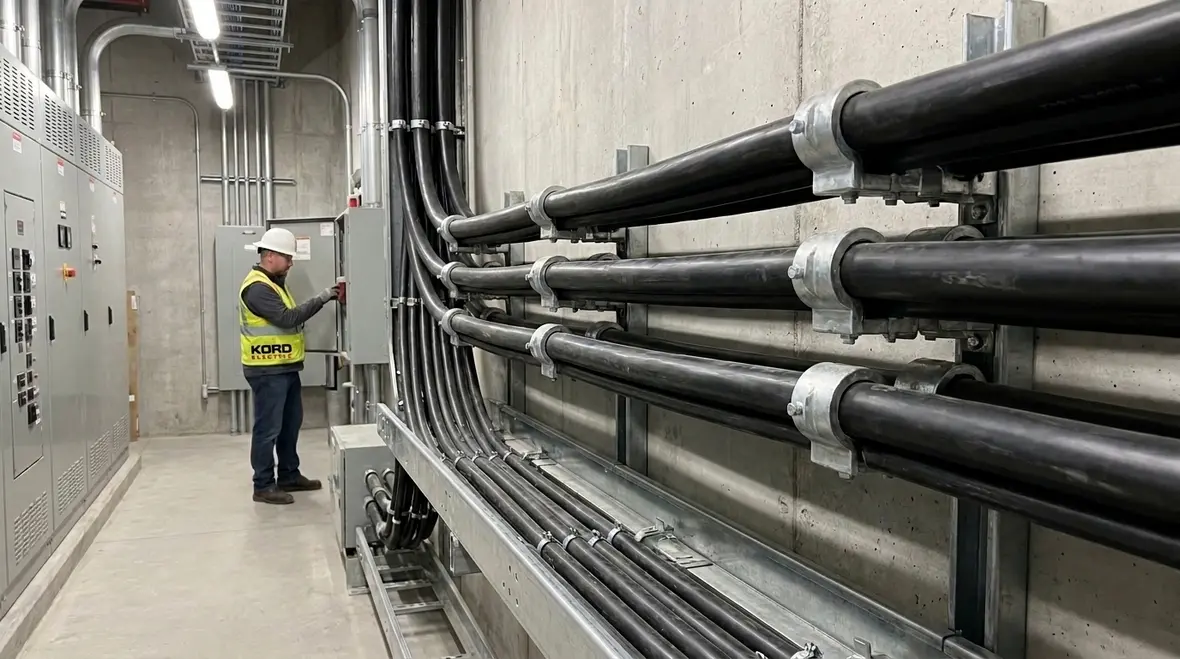
NFPA 70 Section 315.30 NEC MV Cable Installation Guide
For commercial and industrial facilities, our team at Kord Electric treats NEC MV cable installation like it deserves respect: it gets planned, inspected, and installed with the right discipline. In this article, we walk through what NFPA 70 Section 315.30 expects for medium voltage cable work and how we apply those rules on real job sites. We also explain the “why” behind the requirements, because our expert service staff has learned that confusion breeds callbacks. And callbacks are expensive, time consuming, and about as welcome as a surprise guest during a quiet workday.
As we move through best practices, our technicians explain each step in plain language. Then, we connect the dots between code intent, safe construction, and long term reliability for major property buildings. If you manage a campus, a hospital, a data center, a manufacturing plant, or a large commercial complex, you do not need vague advice. You need cable systems that behave.
NFPA 70 Section 315.30 lays out the safety mindset
NFPA 70 Section 315.30 focuses on installation rules for medium voltage cable. While some people treat code text like it is a magic spell, it is not. It is a safety framework that aims to reduce shock risk, limit fire spread, and prevent damage to insulation and coverings. In practice, we follow the rule logic in a simple way: we control cable routing, protect the cable from physical harm, and support it so it stays stable through vibration, thermal change, and movement.
Also, our approach matches the NEC guidance explained in industry resources from our network. In Kord Electric materials, we emphasize that the NEC works like a map. It does not replace judgment, but it does set the boundaries. In the same spirit, KordFire content highlights that compliance supports both safety and system performance. That matters, because in MV systems a small installation mistake can become a big outage later. Nobody wants a transformer failure because someone skipped a proper bend radius, right?
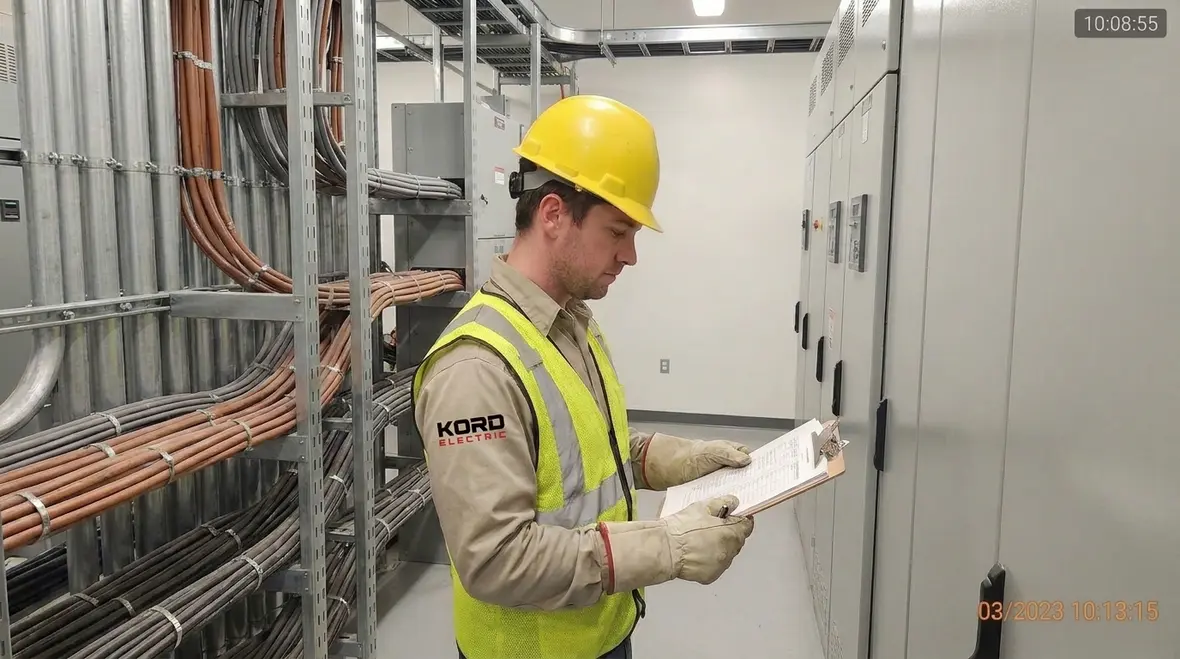
Route and protect MV cables from damage
When our technicians plan an MV run, they think ahead about what the cable will face over its life. After all, once the cable is in place, the job site stops being “flexible” and starts being “expensive.” For this reason, we select routes that avoid hazards and we maintain separation from points where heat, moisture, or mechanical contact can harm the insulation and jacket.
To support NEC intent, we focus on the basics that still cause real problems in the field:
- Physical protection: We guard cable from impact, abrasion, and crushing, especially in areas with equipment movement, ladders, or frequent maintenance traffic.
- Moisture and contamination control: We avoid placing cable in locations where water can collect, migrate, or sit against terminations.
- Heat management: We consider nearby sources of heat and avoid installing cable where temperatures can exceed design expectations.
- Clearances and access: We preserve workable clearance so technicians can inspect, test, and service terminations without cutting corners.
Then, we document route choices and protection methods. That documentation makes future troubleshooting faster and it helps facility teams plan maintenance without guessing. If you have ever watched a cable chase turn into a “where does this go” scavenger hunt, you already know why we keep records.
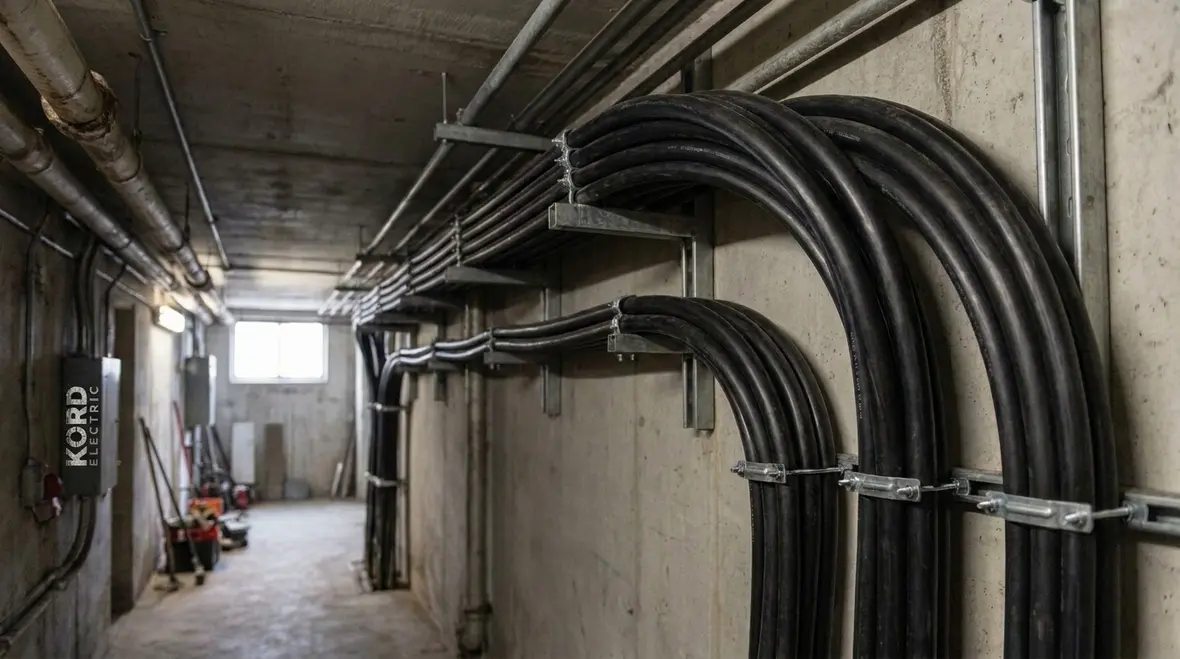
Install cable in a way that stays supported and stable
Next, we handle support and installation details that keep MV cable from stress. In NFPA 70 Section 315.30, the goal is stability: cable must not sag, strain, or bend in ways that degrade insulation. Therefore, our technicians use the right support spacing, securements, and installation practices based on cable type and manufacturer requirements, while still aligning with code direction.
We pay close attention to these installation realities:
- Bend radius discipline: We maintain proper bend radius and we avoid tight turns that can damage the conductor insulation over time.
- Strain relief at terminations: We prevent load transfer to connectors and we confirm terminations sit correctly.
- Support consistency: We avoid “mostly supported” cable runs. Instead, we install supports as planned and we keep the line straight.
- Thermal movement allowance: We allow for normal expansion and contraction so the system does not fight itself later.
Just as important, we do not rush the final positioning. Even when schedules feel tight, we hold quality checks so the cable settles correctly and stays within acceptable mechanical limits. In our experience, a rushed install often shows up as a future defect, and the bill arrives later with a professional smile.
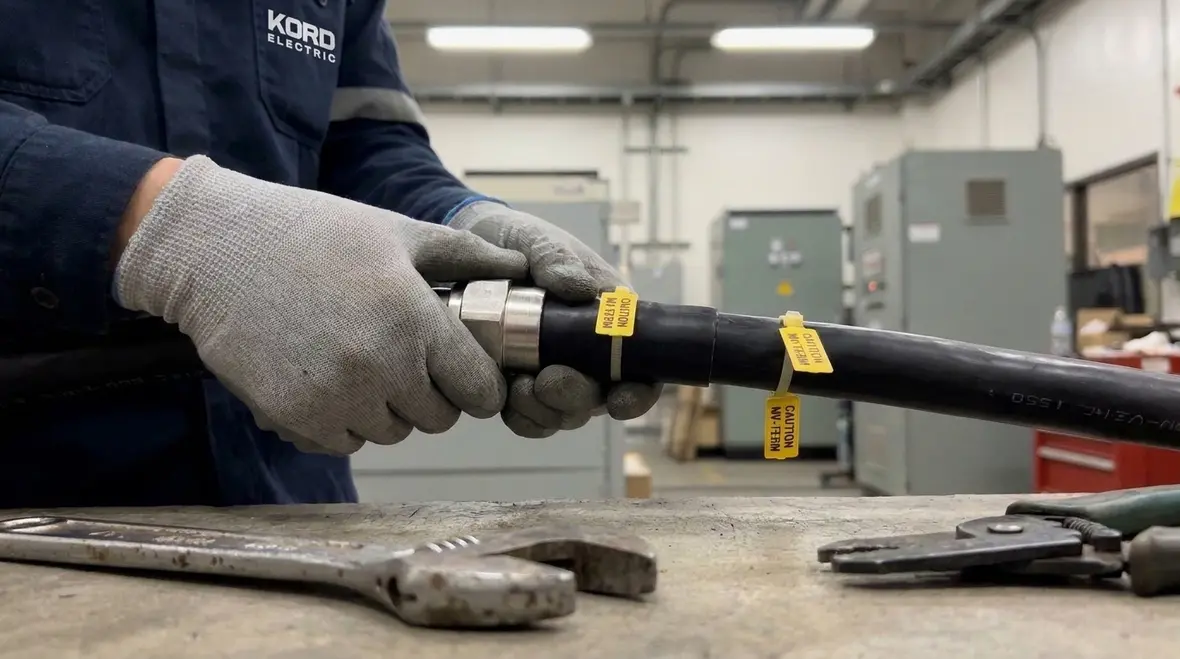
Terminations and splices must match the system, not just the moment
After routing and support, we focus on termination and splicing discipline. Medium voltage cable performance depends heavily on how connections are made and how stress is managed at those points. When our team installs terminations, we confirm compatibility between cable type, termination kits, and the operating environment. We also treat labeling and identification as part of safety, not as paperwork.
Here is how we handle this phase:
- Proper preparation: We follow cable preparation steps exactly and we protect insulation surfaces from contamination.
- Correct kit selection: We use termination and splicing materials intended for MV use and for the voltage class and conductor size.
- Weather and environment awareness: Where the installation environment demands it, we maintain environmental sealing and mechanical protection.
- Inspection readiness: We keep terminations accessible for inspection and testing so facility teams can verify performance.
Then we verify workmanship through our standard checks. If something does not look right, we correct it before the system energizes. In other words, we do not wait for “good enough” to prove it is not. That mindset helps our commercial and industrial clients avoid unplanned downtime.

Testing, verification, and documentation for long term reliability
Once installation completes, we support verification. While NFPA 70 covers installation requirements, good practice also includes practical checks that confirm the system behaves as intended. Therefore, we work with facility stakeholders to plan testing that fits the MV system type and project scope.
Our technicians typically align on:
- Inspection of routing and supports: We verify the run matches approved layout and that supports hold the cable correctly.
- Inspection of terminations: We confirm that connections remain properly seated, protected, and identified.
- Record completion: We provide as built details and equipment identifiers so future service crews do not guess.
- Maintenance guidance: We explain what the facility should look for during routine inspections.
At this stage, we also explain the “what” and the “why” to the people who will live with the system. That matters because facility operations teams do not need code trivia. They need clear guidance so they can spot issues early. Our expert service staff speaks plainly and stays available after installation, because the job does not end when the last conduit cap goes on.
How we apply MV cable installation best practices on major properties
Commercial and industrial projects often include tight corridors, equipment density, and busy operations. For that reason, our scheduling and coordination matters as much as the technical work. We plan around power distribution paths, facility workflows, and shutdown windows. Then, we use controlled staging and protection so we keep the site safe and the cable run clean.
In many large buildings, the electrical system also interacts with fire life safety and emergency operations. Even when the cable work sits in a different division, we coordinate requirements and access so the entire electrical and life safety plan stays consistent. Some teams treat these interfaces like a game of telephone. We do not. We communicate directly so the install supports the whole property.
We also make sure our approach fits best practice resources shared across our brands and partners. For example, content from KordFire and KordFire Australia reinforces the need to follow the NEC framework with attention to installation details that prevent future failures. And for fire pump projects where cable systems can tie into emergency power reliability, organizations like firepumps.org highlight the importance of systems designed to run when it matters most. In that same spirit, we build MV cable runs that do not become the weak link.
If you want a deeper dive into how the broader code cycle shapes design decisions before you get into section specific details like NFPA 70 Section 315.30, resources such as Understanding NFPA 70: The National Electrical Code Explained for 2026 help connect NEC concepts to what actually happens on site.
Real world checklist for NFPA 70 compliance focus
To make this practical, our team uses a job focused checklist that supports compliance and quality. It does not replace engineering review or manufacturer instructions, and it never turns code into a box checking exercise. Instead, it helps our technicians confirm the right details get handled while the site conditions still make correction easy.
Installation focus
- Cable routing avoids hazards and preserves access
- Protection prevents impact and abrasion
- Supports prevent sag, strain, and unstable runs
- Bend radius stays within limits
Workmanship focus
- Termination kits match voltage and conductor type
- Splices use correct preparation and materials
- Identification and labeling stays clear
- Records and inspection steps get completed
And yes, we do include at least one moment of levity during kickoff. Not because safety needs jokes, but because morale keeps crews focused. If you cannot laugh while working under pressure, you will eventually melt like an overcooked cable tie. We prefer lasting professionalism.
FAQ: NFPA 70 Section 315.30 and MV cable installation
Final thoughts and next step with Kord Electric
If your facility relies on medium voltage distribution, our team at Kord Electric can help you plan and execute NEC compliant MV cable installation with code minded rigor. We work with your electrical team, coordinate access, and keep verification steps clear. Most importantly, our technicians explain the process in a way your operations staff can use. If you want fewer surprises during inspections and fewer headaches during maintenance, contact us for an MV cable installation review and a practical plan forward.
For commercial and industrial properties in Southern California that need a partner for code aware projects beyond MV work, you can explore how our broader Los Angeles County electrical services support distribution upgrades, equipment changes, and long term reliability across your facility.


