
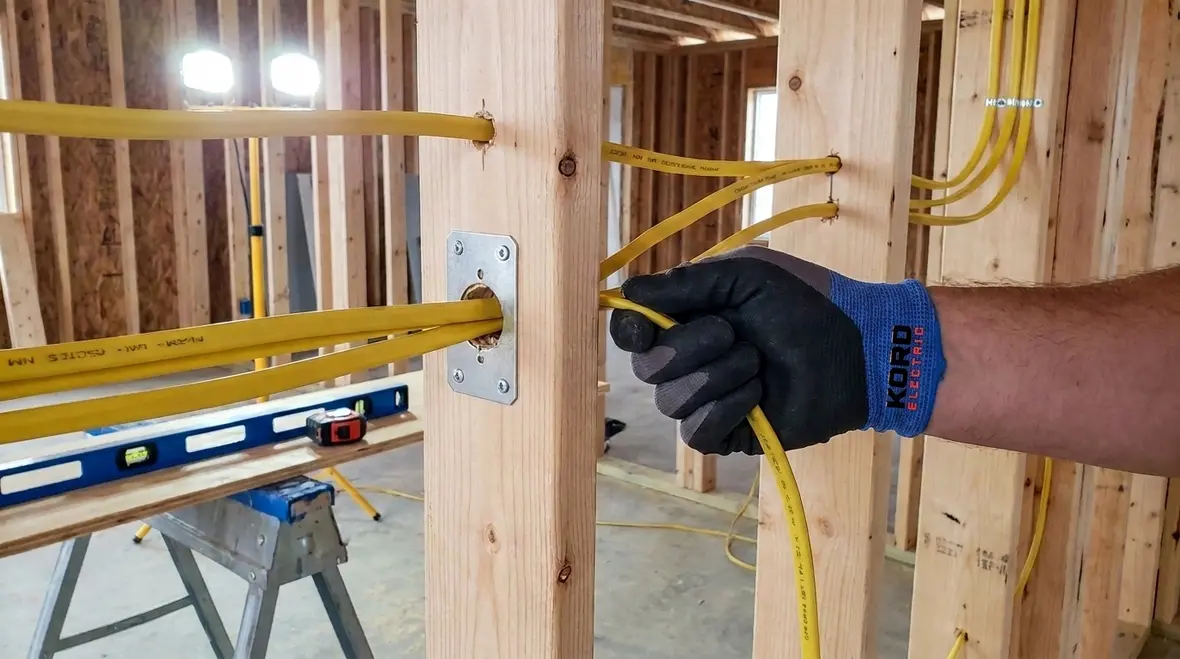
NFPA 70 Section 320.17 NM Cable Through Framing
Kord Electric sees a lot of wiring plans come across our desks, and we often start with a familiar question: how do we run NEC NM cable framing members safely through building framing? In this article, we tackle NFPA 70 Section 320.17, the NEC rules that govern how NM cable passes through framing members, and we translate the legalese into real jobsite decisions. Our technicians and expert service staff explain it in plain terms, because nobody should need a flashlight and a decoder ring to understand wiring safety. And yes, sometimes the wall cavities feel like a plot twist, but we bring order to the mess.
What Section 320.17 is really trying to prevent
In simple terms, NFPA 70 Section 320.17 aims to stop damage to NM cable as it travels through framing. Even when the installation starts with good intentions, sharp edges, fasteners, and metal parts can harm cable insulation. When insulation gets nicked, the cable can fail later under heat, vibration, or normal building movement. So, the code does not just care about whether the cable exists. It cares about how the cable survives.
At Kord Electric, we treat this like we treat all NEC requirements for commercial and industrial facilities: we plan for the messy reality of construction. Materials shrink. Wood warps slightly. Crews run fast. Then, a year later, someone adds a ceiling access panel and forgets what is behind it. So, we follow the rule on how NM cable framing members are handled, before the future turns into an electrical mystery novel.
Where NM cable goes inside framing cavities
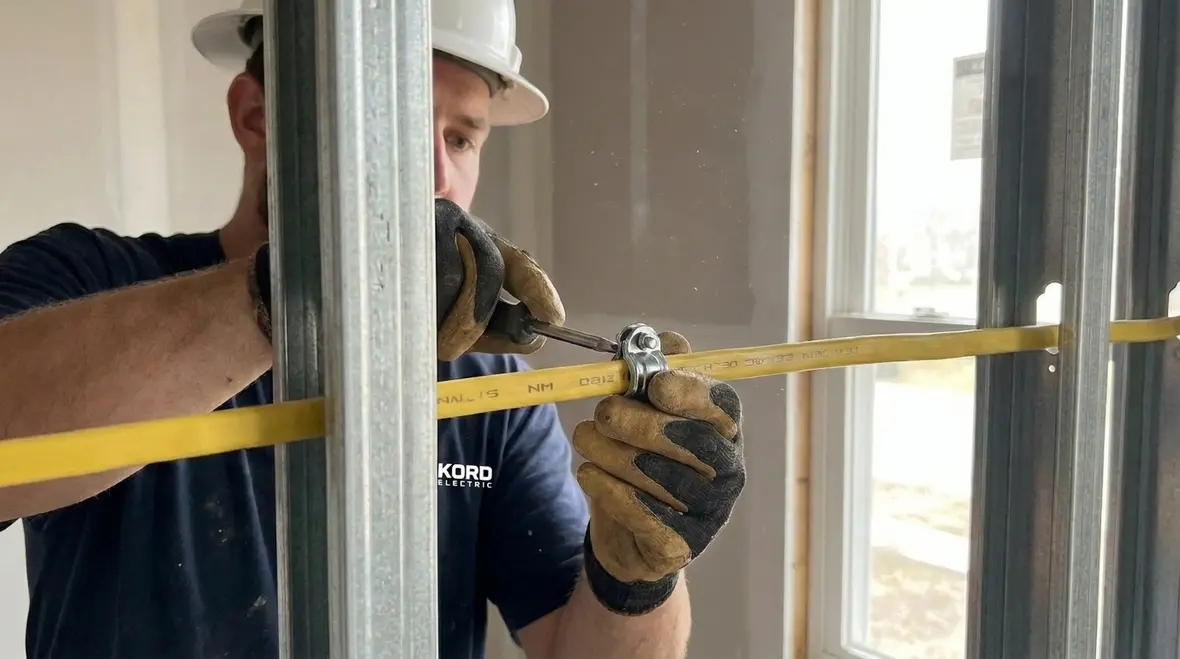
When designers and contractors route NM cable, they often run it within framing bays. However, framing members create physical boundaries that can expose cable to abrasion. Therefore, the NEC approach focuses on protecting the cable path. For example, Section 320.17 addresses how cables pass through bored holes and notched framing parts, and it ties the allowable conditions to the cable’s ability to remain safe after installation.
As our expert service staff explains, the rule is not meant to make installs “harder.” It keeps the system from becoming fragile. Moreover, in commercial and industrial settings, you have higher usage cycles, stronger vibration from machines, and faster tenant changes. Because of that, we install with a long time horizon. In other words, we do not just pass inspection. We build for the next team that inherits the space.
Hole and notch limits that protect the cable
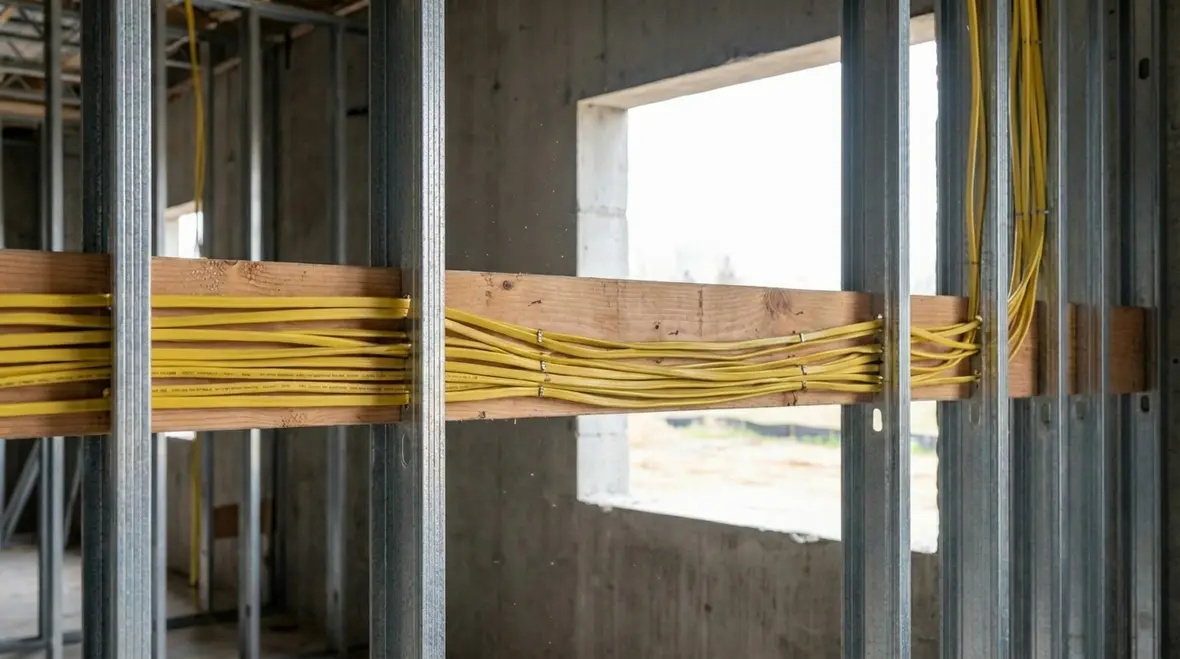
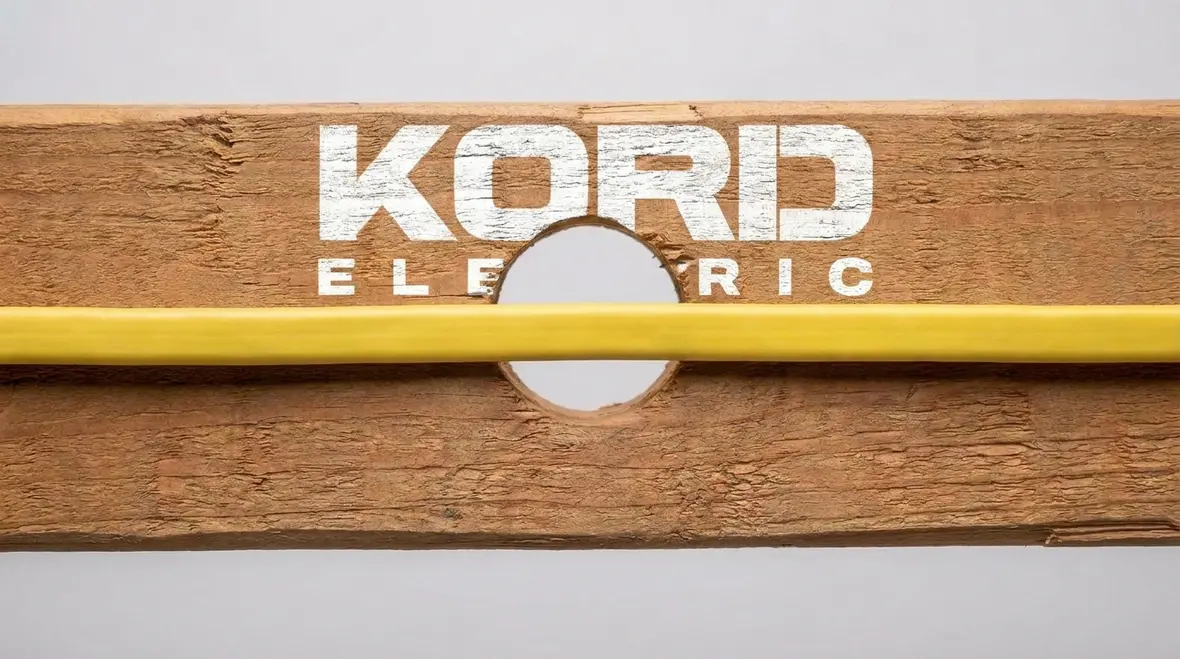
Section 320.17 restricts the size and placement of openings in framing members. If a hole is too large or placed poorly, the framing loses strength. If the cable sits too close to the edge, it is more likely to get harmed during construction. Therefore, the rule ties physical cutting and cable routing together.
In practical field terms, we coordinate these limits with the structural plan, because framing is not just “wood or steel.” It supports loads and shapes the building’s safety margin. Additionally, electricians do not want to rework a run after drywall closes everything up. So, when our technicians install NM cable framing members, we keep cable clear of points that could cause long term wear.
And if you have ever watched someone drill into a framing member and then act surprised when it squeaks, you already understand why the code cares. The framing does not forget. It just waits.
Securing and protecting the NM cable route
Once the route is chosen, the next step is control. Cable must stay positioned so it does not move and rub against edges. This is where good workmanship matters. Even a code compliant cable path can become a problem if it shifts during installation or if fasteners pinch the jacket.
Our team focuses on proper support and careful handling. We route the cable so it stays within safe areas of the framing bay and we avoid unnecessary crossings where workers might drill later for devices. Also, we plan for how crews will access the space for maintenance, because industrial schedules do not slow down for cable cleanup.
Transition matters here, too. For instance, after the cable is placed, we check the surrounding work before we close the cavity. Then we confirm the cable does not touch rough surfaces. Finally, we document the routing so future service teams can find it without guessing. That is how we prevent “treasure hunts” inside walls.
How this fits the broader NEC wiring approach
NFPA 70 Section 320.17 does not stand alone. It works with other NEC parts about cable protection, identification, and allowable wiring methods. When you install for commercial and industrial facilities, you also consider how the wiring connects to panels, how circuits are labeled, and how firestopping or other building requirements may apply.
In the Kord Electric workflow, we treat Section 320.17 as a piece of the full puzzle. We align cable routing choices with the building plan and with the rest of the electrical design, so the installation stays consistent end to end. Meanwhile, we also follow the safety goals described in our NEC education resources, including the broader intent behind the National Electrical Code. For readers who want more background on how the rulebook fits together, our team often points facility leaders to our resource Understanding NFPA 70: The National Electrical Code Explained for 2026 and related Kord Fire insights on NFPA 70 for commercial and industrial sites.
In short, we do the cable protection step early so the later steps stay smooth. That is how you avoid the classic scenario where the electrical rough in looks fine, the inspection passes, and then a later change turns into a costly cut and patch. In commercial work, time equals money. And electricians are not paid to do demolition unless it is part of the scope.
Common jobsite mistakes we see and how we prevent them
We see patterns. Not dramatic ones, just the kind that repeat across jobs because people rush. One common mistake involves cutting openings in framing without checking the size and placement rules. Another involves routing NM cable too close to edges, so vibration and handling wear down the jacket. Yet another involves pinching the cable with fasteners, even when someone uses the right cable type.
Our technicians address these issues with steady process. First, we review the plan before we drill or cut framing. Then, we confirm the route aligns with the conditions allowed for NM cable framing members. After that, we secure the cable and inspect clearances. Finally, we coordinate with other trades so they do not drill through the cable path during later work.
If you want the pop culture version, think of it like this: we do not want the cable to become the “main character” that gets introduced for five seconds and then gets ignored until the plot collapses. We keep it safe, out of harm’s way, and ready to serve.
What an inspection-minded installation looks like
When Kord Electric builds, we install in a way that respects both safety and compliance. Inspectors typically look for clear evidence of proper cable protection and correct routing through framing. So, we make sure the cable pathway matches the rule, and we avoid improvisation in the wall.
We also help the facility team understand what we did. Our expert service staff explains the approach after installation, so the maintenance crew knows how to handle access panels later. That reduces the chance of accidental cable contact during future tenant improvements. Transition-wise, this also means fewer surprises in scheduling. One team finishes. Another team knows what they are walking into.
For facilities planning major renovations or code upgrade work, we often pair Section 320.17 guidance with broader support like our Los Angeles County commercial and industrial electrical services, so the cable routing details line up with panel upgrades, working space rules, and inspection expectations across the entire project.
Frequently asked questions
Our next step, if you want this done right
If your facility plans include NM cable paths through framed spaces, do not treat 320.17 like a checkbox. Bring in a team that plans the route, checks opening limits, secures the cable, and verifies safe clearances before walls close. Kord Electric serves commercial and industrial facilities, and our technicians explain the why, not just the what. Contact us for an on site review or an installation plan that supports smooth inspections and long term reliability. We keep your electrical system calm, safe, and ready for what comes next.
If you are coordinating larger upgrades or renovation work around NEC NM cable framing members and related wiring methods, our project team can also integrate this effort with code-minded services such as electrical code upgrade consulting and regional service packages, so your framing, cable protection, and panel work all move together on the same schedule.
For facility leaders who want to connect the details of Section 320.17 with a broader NEC strategy, pairing this article with resources like NFPA 70: All About The National Electrical Code (NEC) 2026 from Kord Fire and our own NEC overview content helps turn the rule language into a practical roadmap for safer installations and fewer surprises.
When you are ready to move from theory to field work, Kord Electric is prepared to walk the framing bays, check the details, and help your team treat NM cable protection as part of a complete electrical reliability plan, not just a line in the spec book.
Our technicians are used to busy facilities, tight timelines, and inspectors who read every line, so we design your NM cable routing to pass today’s review and hold up under tomorrow’s renovations.
From first hole to final inspection, we keep the story simple: the cable stays protected, the framing stays strong, and your facility keeps running without drama.
If your next project includes NEC NM cable framing members running through complex wall or ceiling layouts, bring Kord Electric in early. We will help set the route, coordinate with other trades, and keep the electrical plot twist-free.
And if you are operating in or around Los Angeles County and need a team that can handle everything from cable protection through framing to large scale system upgrades, explore our broader commercial and industrial offerings through our Los Angeles County electrical services before your next round of work hits the calendar.
We build with inspectors, future technicians, and your operations team in mind, so the only surprise in your walls is how calm the next project feels.
If your facility is ready for that kind of wiring discipline, our next step is simple: walk the site, review the framing, and map out an NFPA 70 Section 320.17 plan that keeps your NM cable safe and your schedule steady.


