
NEC NM Cable Bending Radius Section 320.24 on Real Jobs
NEC NM cable bending radius: why Section 320.24 matters on real jobs
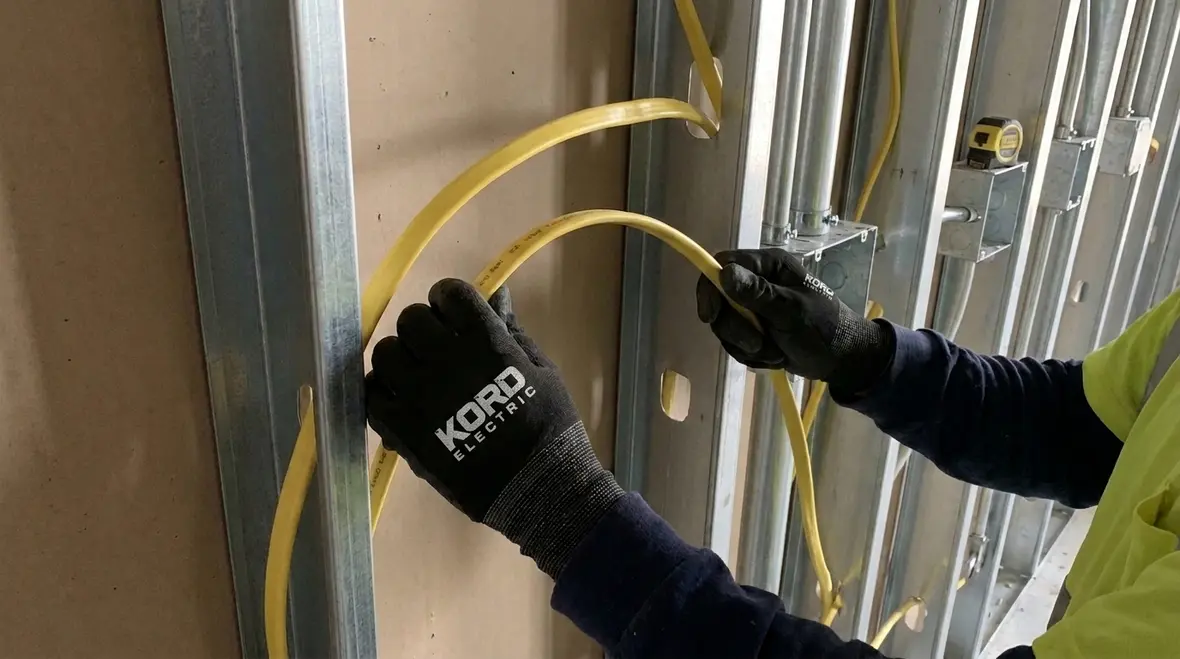
At Kord Electric, we see it every week: a crew pulls NM cable through a building and bends it too tight, then wonders why the insulation looks stressed or why the cable later behaves like it has a grudge. That is where NEC NM cable bending radius comes in. In the first place, NFPA 70 Section 320.24 sets rules for how sharply NM cable can be bent, and those rules help protect the jacket, the conductors inside, and the long term safety of the installation. To be clear, others can treat this like trivia, but our experienced service staff treats it like a line you do not cross. And yes, even cable has a breaking point. It is just usually not the breaking point you notice right away.
How we read Section 320.24 without making it feel like homework
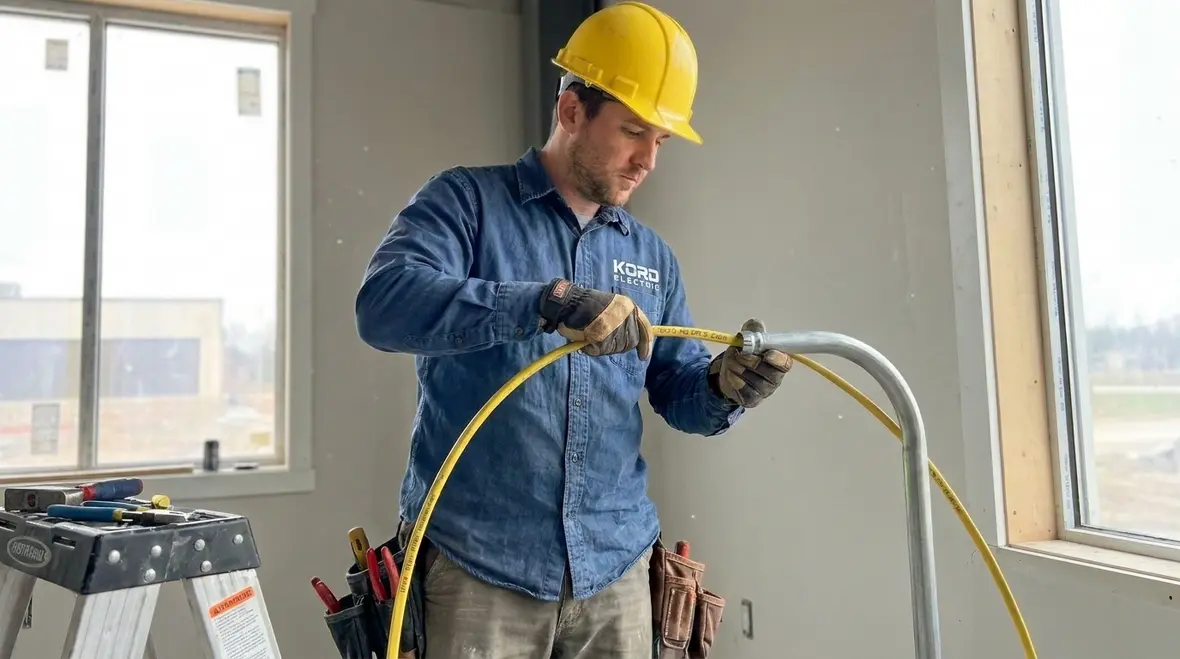
NFPA 70 can feel like a library book written for people who never sleep. However, Section 320.24 is simpler than it looks when our technicians explain it on site. First, the code focuses on preventing damage during installation. Then it links that goal to the bend limits so the insulation stays intact and the cable does not get pinched or kinked. In practice, we guide commercial and industrial facilities through the process so bends happen at the right radius, not after the fact when somebody says, “We will just fix it later.”
Meanwhile, job conditions can tempt teams to rush. Conduit turns, tight cable trays, and crowded ceiling spaces all create pressure. Still, good technique beats speed. When we walk through a layout with our expert service staff, we plan the route early and we identify where bends will land. As a result, crews avoid “on the fly” changes that lead to tight bends.
What happens when NM cable gets bent too tight
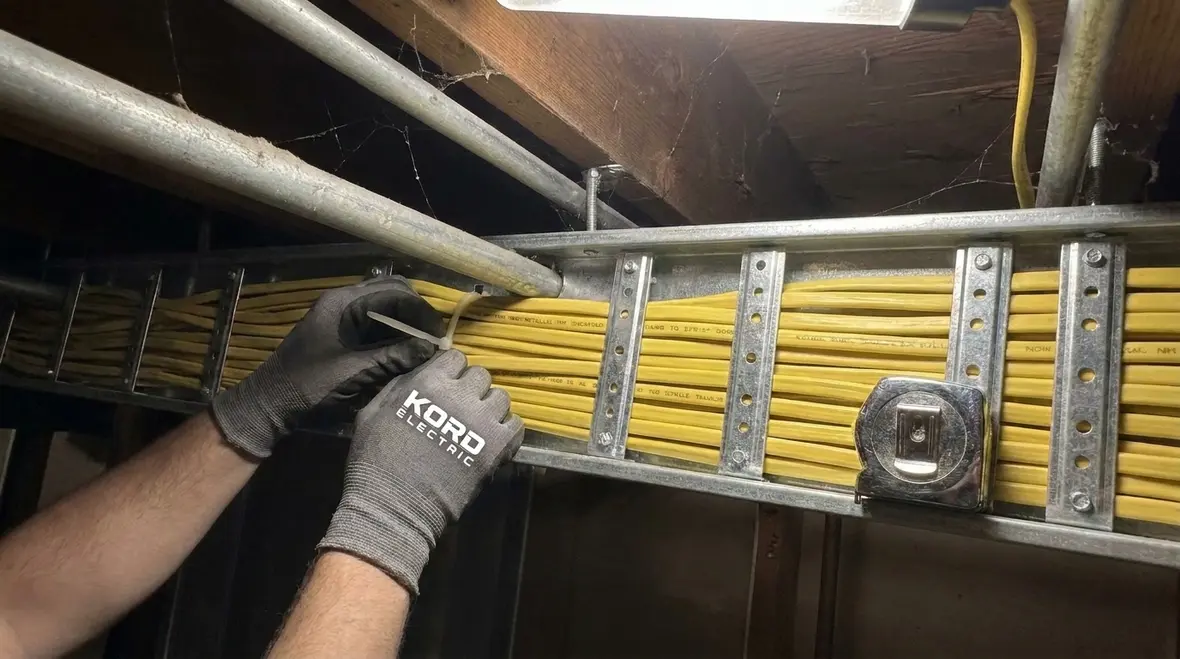
Let us talk about the stuff nobody wants to admit. When the NEC NM cable bending radius is ignored, damage can start quietly. For example, the jacket can stretch or deform, and that deformation can weaken the cable over time. In some cases, the inner insulation or conductor arrangement may shift slightly. Even if the cable still conducts power, you can see downstream problems like insulation wear, higher stress points, and a greater risk when moisture or vibration enters the picture.
Additionally, tight bending can make pulling harder. That means more tension on the cable, more friction against supports, and more chance that the cable jacket gets nicked. Therefore, the installation looks complete, but the system carries hidden stress. Later, when someone tests circuits or troubleshoots a fault, they can waste hours chasing a cause that started in the bend.
We also tell teams that the building does not care about your deadline. If the cable gets abused during install, the cable remembers. That is not mythology, it is basic physics with a grumpy side.
Installation controls we apply to keep bends within safe limits
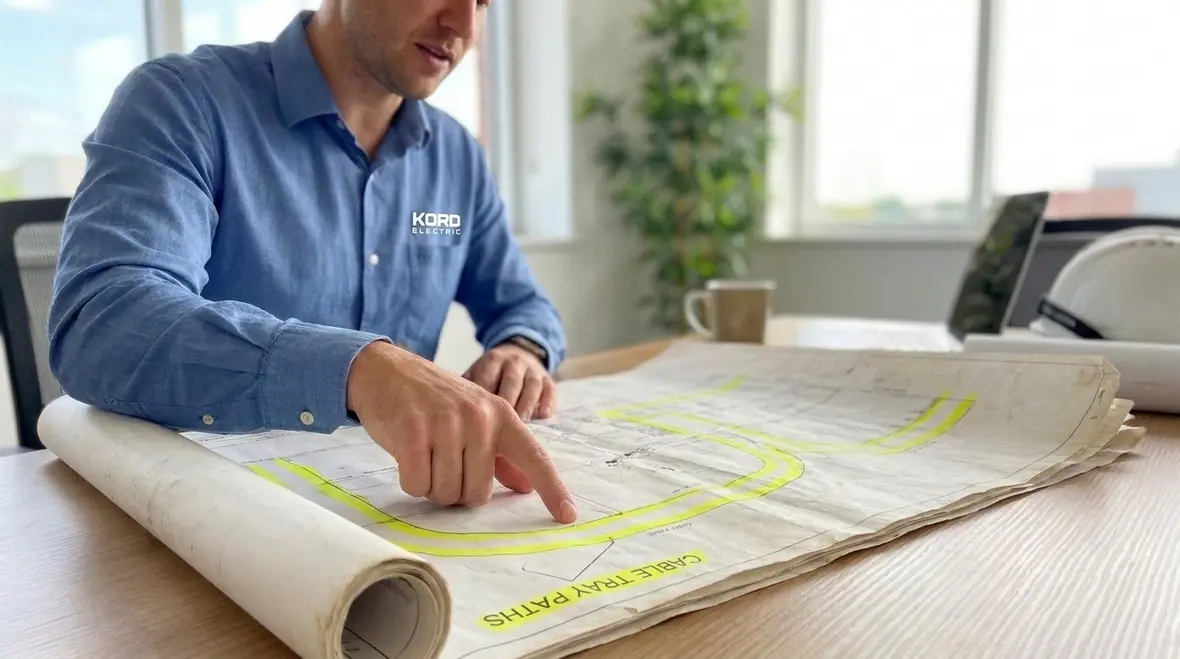
Codes matter, but field execution decides whether the job passes inspection and performs for years. So our technicians use practical controls to manage bend behavior across commercial and industrial facilities and major property buildings.
- Route planning before the pull: we map transitions, tray runs, and outlet points so the cable enters each turn with a planned path.
- Proper bending technique: we avoid sharp kinks and we control the cable as it changes direction.
- Using the right support spacing: supports keep the cable from sagging or being forced into awkward bends.
- Checking access points: we confirm there is room to form bends without forcing the jacket around tight corners.
- Pulling practices: we reduce tension, avoid side loading, and keep the cable from scraping during movement.
Then we document what we see. As a result, the project team has a clear record that aligns with code intent. And because our expert service staff explains the reasoning in plain language, crews understand what they are doing instead of treating the process like a magic trick.
Design and layout choices that reduce bend stress
Before any cable touches the tray, we encourage facility teams to think like designers. For example, small changes in cable path can reduce the number of turns or make turns easier to form. If a layout forces a tight corner, the crew ends up compressing the cable to “make it fit,” and that is when problems begin.
We often recommend the following approach for major property buildings and commercial and industrial facilities:
- Reduce the number of direction changes by using longer sweeps where space allows.
- Coordinate with other trades so cable runs do not get squeezed between ducts, piping, and structural elements.
- Plan for service access so future maintenance does not require reworking bends in place.
- Match cable route to tray and raceway geometry instead of fighting the space after the fact.
Also, we remind teams that thorough planning is cheaper than replacing cable. We say it politely, but we mean it. It is like realizing the wrong season of a TV show is over and now you have to catch up. Nobody enjoys that, but it happens when planning gets skipped.
What to expect from Kord Electric on cable compliance
Kord Electric serves commercial and industrial facilities and major property buildings, and we bring that focus into our work. Our technicians do more than “check boxes.” They explain what the rules mean, how the bends look in the real world, and why the NEC NM cable bending radius and its related requirements affect safety and reliability.
During site support, we help teams verify installation practices that protect the cable jacket and reduce stress points. Then we walk through what matters for inspections and long term performance. Meanwhile, our expert service staff stays calm and clear, even when a crew is under pressure and someone asks for a quick workaround. We let them know the workaround might cost more later.
If you want a deeper code overview, our team also draws on resources like Understanding NFPA 70: The National Electrical Code Explained for 2026 and the broader NEC context we share across our sites at kordfire.com. We do not ask our customers to memorize the code. We help you apply it.
FAQ: NFPA 70 Section 320.24 and NM cable bends
Bottom line: build it right the first time, and call us when you need certainty
When teams treat cable bending like a minor detail, they create stress points that show up later as delays, rework, or worse. Kord Electric helps commercial and industrial facilities and major property buildings follow NFPA 70 Section 320.24 with clear guidance and skilled field execution. Our technicians explain what the code means, then we apply it with careful routing, smooth bends, and the right installation controls.
If you are planning a project or addressing concerns, reach out to us for expert support and calm, code backed answers. For facility leaders in Southern California, our Los Angeles County electrical services overview shows how we connect NEC guidance, including NEC NM cable bending radius requirements, to real-world upgrades, maintenance, and inspection support.
Whether you are updating existing feeders, planning new distribution, or verifying NM cable routes inside complex spaces, our team can align the practical work with the NEC so your project moves forward with confidence instead of guesswork.


