
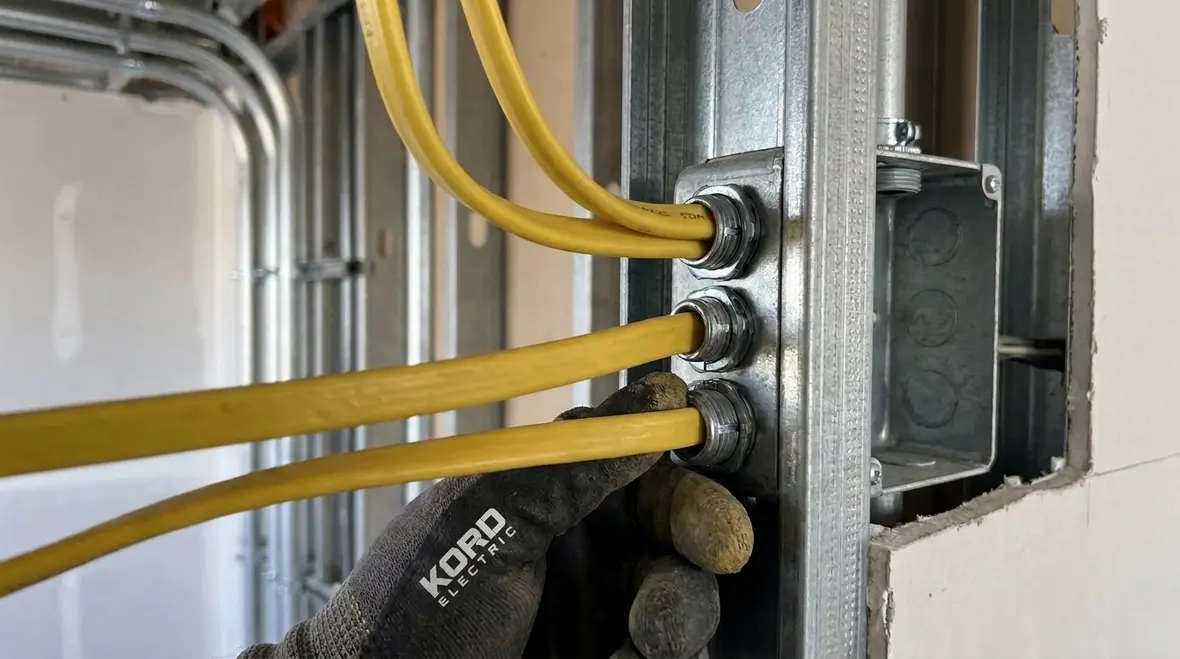
NEC NM Cable Boxes Fittings and NFPA 70 320.40 Explained
At Kord Electric, we start every commercial and industrial job with the same mindset: the wiring system must fit the real world, not just the drawings. That is why we pay close attention to NEC NM cable boxes fittings when we plan and install NM cable transitions through walls, floors, and raceways. Early in a project, our technicians also verify that the box and fitting choices align with NFPA 70 Section 320.40 so the cable stays protected and the setup stays code ready.
Now, let us be clear. This topic can sound like one of those “boring rules” that people ignore until an inspector shows up like a surprise party they never RSVP’d for. However, when we explain it in plain terms, the guidance becomes practical. And when the building is commercial, industrial, or a major property facility, “practical” means safe, repeatable, and built to last.
NEC NM cable boxes fittings and NFPA 70 320.40, explained for commercial sites
In commercial spaces, NM cable does not live in a vacuum. It shares walls, ceilings, and mechanical rooms with other systems, service trades, and daily building activity. That is why NM cable transitions at boxes and fittings play such a critical role: they are where the “paper plan” meets the actual structure. When we design for NEC NM cable boxes fittings, we look at how the cable will behave years from now, not just how it looks on day one.
Section 320.40 of NFPA 70, the National Electrical Code, gives specific direction on how NM cable must be secured and protected at these entry and exit points. Instead of seeing that as a checklist item, we treat it as the blueprint for durability. The goal is simple: no sharp edges, no unsupported spans, and no “that should be fine” guesses that come back to haunt maintenance teams later.
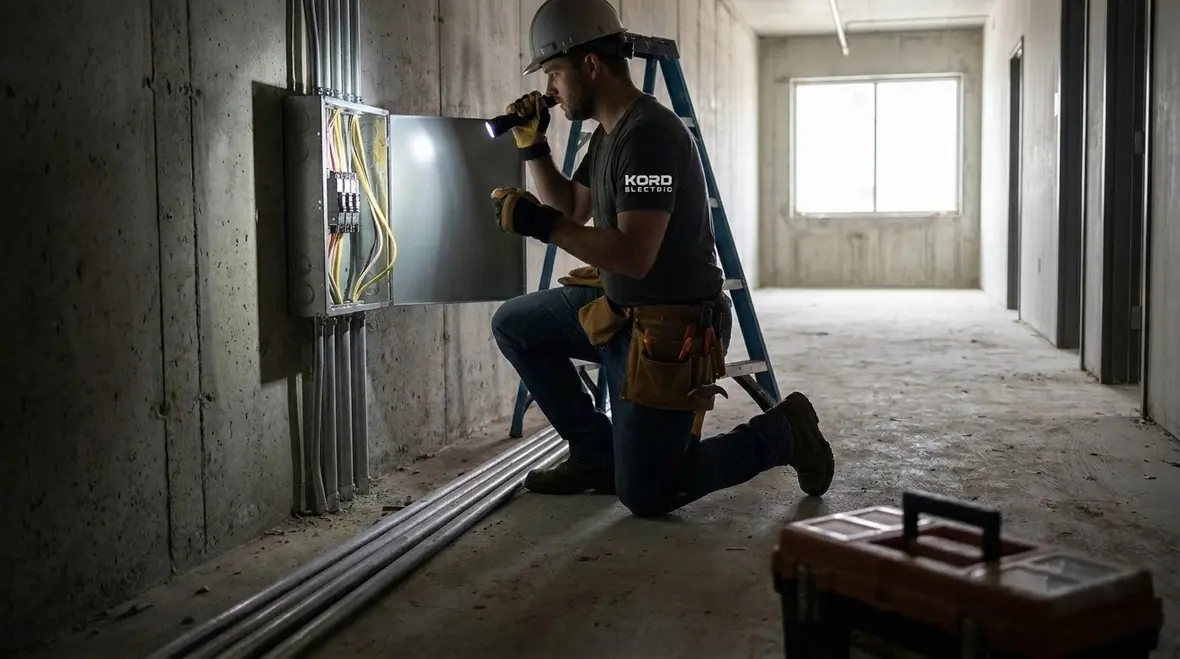
For facility leaders who want a broader picture of how NFPA 70 shapes their electrical infrastructure, our detailed guide “Understanding NFPA 70: The National Electrical Code Explained for 2026” walks through the code’s role in everyday building operation. This NM cable and box transition conversation fits directly into that larger code story.
Why NFPA 70 320.40 matters at the box transition point
NFPA 70 Section 320.40 focuses on Boxes and fittings for NM cable and it covers how NM cable enters and exits boxes, how the cable gets secured, and how the assembly protects the cable. In other words, it is the part of the system where failures often begin, because cables move, buildings settle, and contractors improvise. We do not guess here. We verify.
Moreover, the code expects the installer to use appropriate boxes and fittings that support the cable in a secure way. As a result, we help our clients avoid loose connections, worn insulation, and openings that allow physical damage. This is especially important on commercial and industrial projects, where maintenance crews, cleaning traffic, and tenant buildouts can stress cable paths over time.
When we review a new commercial project, we zoom in on three things at each NM transition point: how the cable is clamped or supported, how the jacket is protected from sharp edges, and how the box location fits the real routing path. If any one of those looks improvised, that is a red flag. The code language behind NFPA 70 320.40 gives us the framework to correct it before drywall closes and that “small detail” turns into a long term reliability issue.
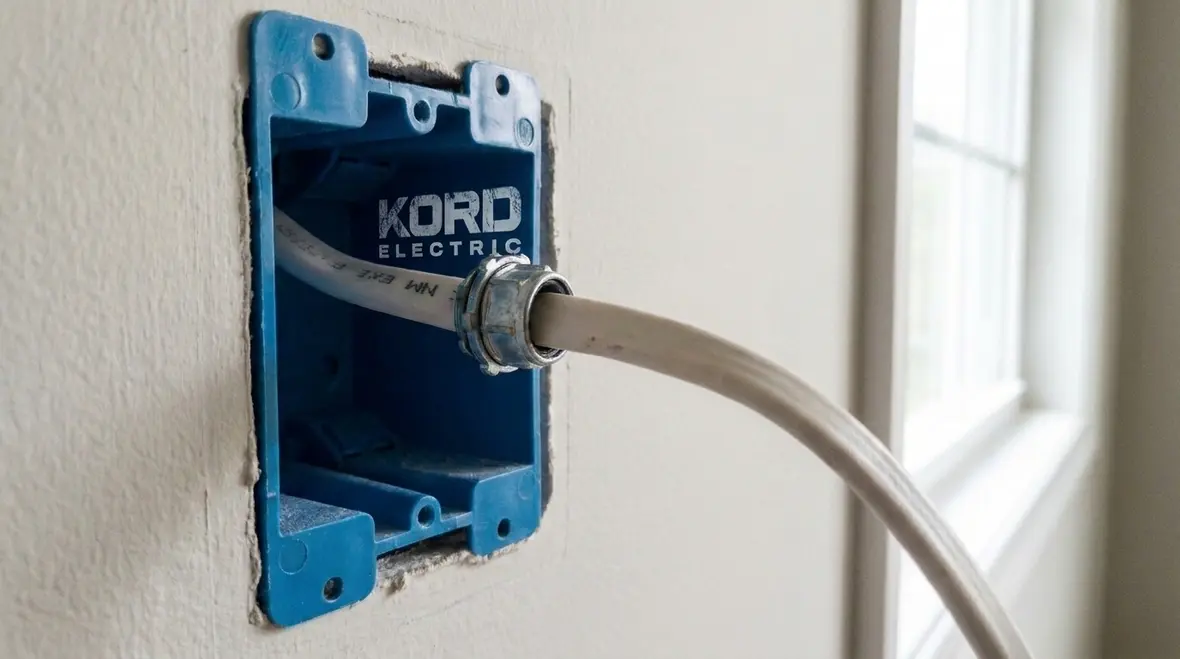
What “boxes and fittings” means in real installations
When our expert service staff talks with facility managers, we translate “boxes and fittings” into what you can actually see. Typically, the box is the enclosure that provides a controlled entry and a stable point for connections. Then the fitting supports the cable and helps maintain protection at the boundary where the cable meets the box.
In practice, this means we coordinate the route and the hardware before the walls close up. First, we check where the NM cable changes direction or transitions through building surfaces. Next, we confirm the box type and the fitting method match the cable requirements. Then we verify strain relief and protection so the cable does not get pulled or abraded during installation or future service.
We also remind teams that NM cable still needs proper handling even when the rest of the system looks “clean.” A tidy cable run can still fail if the entry into the enclosure is not done correctly. So we treat the transition like a key junction, because it is.
In multi-tenant and major property buildings, those junctions also have to match the building’s ongoing service reality. That means thinking ahead to panel upgrades, lighting automation, EV charging expansions, and other changes that may pull more load through the same path. Combining good box and fitting practices with broader design thinking, like in our data-driven electrical design approach, keeps the whole system aligned instead of pieced together one project at a time.
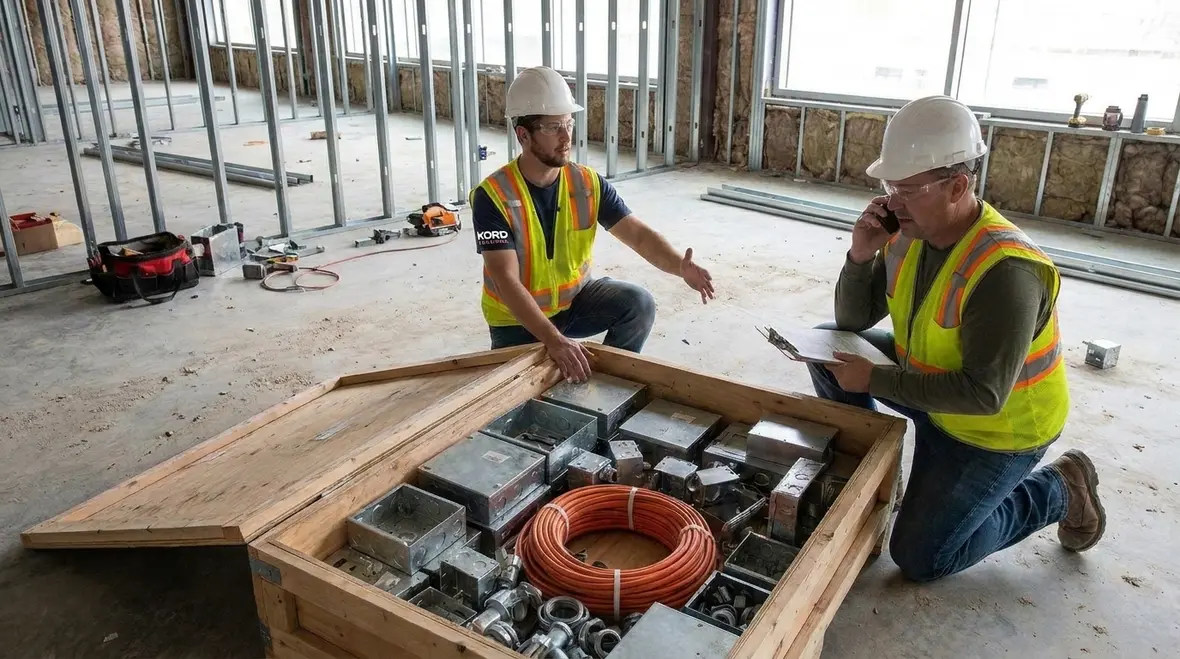
How our technicians apply code logic to commercial builds
Third party reviewers and inspectors often focus on details, and we get it. However, we also know what makes those details easier to approve. Our technicians use a step by step method: review the plan, check the field conditions, select the correct NM cable boxes fittings, and then confirm the installation matches the requirements of NFPA 70 320.40.
For example, we verify that the box system provides the needed mechanical protection. Additionally, we confirm that the fitting and box interface prevents damage to the cable jacket. This matters because even small movement can wear insulation over time. Then, when the facility later performs upgrades, the cable path stays stable instead of turning into a “mystery problem” that consumes maintenance hours.
And yes, we have heard the joke: “Why would a cable fitting need to be serious? It is just a box.” Our technicians reply in a calm voice, because they have seen what happens when someone treats it like a casual accessory. The cable does not care about the vibe. The code does.
On complex projects with EV charging, backup power, or dense lighting controls, our field teams often pair this code logic with load studies and coordination reviews. That way, the same discipline that goes into NM cable box transitions also supports higher level decisions like panel sizing, feeder routing, and future capacity. The result: fewer change orders, faster inspections, and systems that feel intentional instead of patched together.
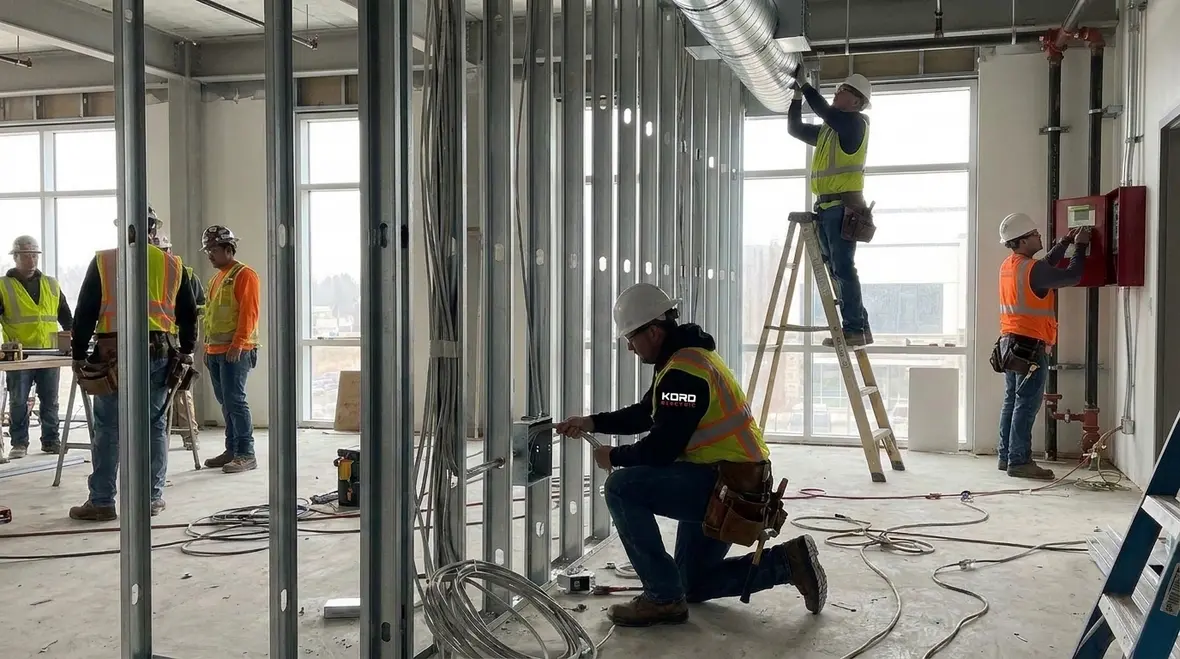
Common setup mistakes we prevent during electrical rough in
Even experienced teams can run into issues at the box transition stage. We prevent these problems because commercial and industrial sites cannot afford rework after walls close. So we watch for the classic mistakes.
1. Wrong or improvised fittings
When crews use parts that do not provide the intended support and protection, the cable can shift. Over time, that creates wear points. We ensure the chosen fittings match the cable entry needs and comply with NFPA 70.
2. Missing protection at the cable boundary
If the cable enters a box without adequate protection, the jacket can get damaged. Then, the system becomes more vulnerable during service work. We plan the entry method so the cable stays protected.
3. Poor strain control during installation
If the cable gets pulled too tight, it stresses the jacket. On the other hand, if it sits loose, it can rub. Our technicians manage slack and support so the cable remains stable.
4. Inconsistent box placement
When boxes do not align with routing needs, installers start “making it fit.” That is where compliance slips. We align box placement with the route before the rough in schedule gets locked.
Additionally, we coordinate with project teams so any future maintenance path stays predictable. That means clean access, stable cable routing, and fewer surprises when trades swap out equipment. On projects where we are also handling service upgrades or infrastructure changes, like Los Angeles County electrical service work for commercial facilities, that foresight can cut hours from later troubleshooting.
Coordination for multi trade facilities and major property buildings
Commercial and industrial facilities rarely involve just one trade. Mechanical contractors, fire teams, security integrators, and general contractors all operate in the same spaces. Therefore, NM cable transitions and enclosure entry points need clear coordination. Otherwise, one department mounts something in the wrong place and another department pays for it later.
At Kord Electric, we plan the electrical interface points with the building schedule in mind. We also align with fire and safety priorities, since NFPA driven environments require smooth handoffs between disciplines. For example, we consider how other systems might pass near cable routes. We ensure the box and fitting assemblies stay accessible and protected.
When the job includes fire pump rooms or specialized equipment spaces, we emphasize safe workmanship and code aligned installation practices. That is also why we stay connected to industry guidance and best practices, including resources like NFPA oriented updates and educational material from organizations such as firepumps.org. We do not treat compliance like a checkbox. We treat it like a quality system.
And if you are wondering whether this approach belongs in the “serious” category, consider this: a facility does not need surprise electrical failures like it needs surprise pop quizzes. You get the idea.
FAQ about NFPA 70 320.40 and NEC NM cable transitions
Final thoughts: choose teams that install NM systems with confidence
When we handle commercial and industrial electrical work, we do more than “make it work.” We install NM cable systems with the box and fitting details that NFPA 70 Section 320.40 expects. Our technicians and expert service staff explain the reasoning, so your team understands what was installed and why it holds up. If your facility needs a compliant retrofit, rough in review, or an upgrade that will pass scrutiny, contact Kord Electric and let us guide the project with steady, code aligned care.
From early design through final inspection, the small choices around NEC NM cable boxes fittings can make the difference between a system that just passes once and a system that stays reliable for years. If you are planning renovations, new construction, or service upgrades, bringing in a team that understands both NFPA 70 and real world operations helps protect your schedule, your budget, and your peace of mind.


