
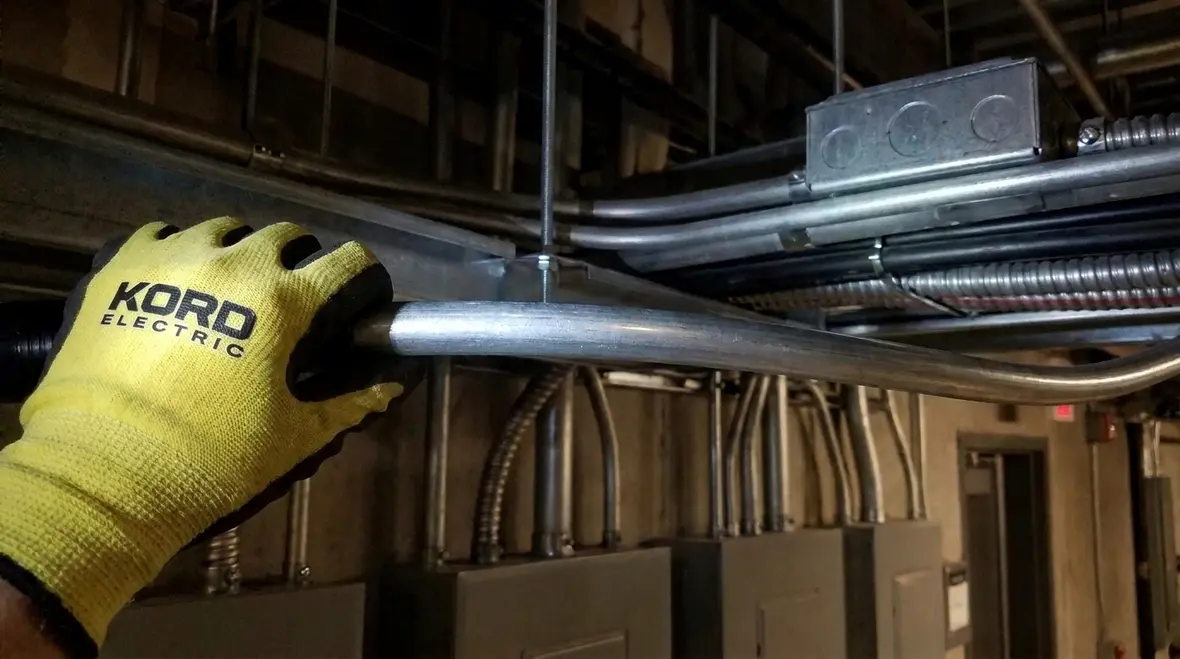
NFPA 70 Section 322.120 NEC MC Cable Marking
MC cable marking matters, especially when you follow NFPA 70 Section 322.120. At Kord Electric, we see this every day on commercial and industrial projects, and our technicians treat cable identification like a seatbelt: you do not notice it until you really need it. In the first steps of any install, we make sure the NEC MC cable marking rules are handled the right way, so future maintenance crews do not play detective with a flashlight and guesswork. And yes, we have heard the jokes about “mystery cables.” However, in the field, mystery usually turns into downtime, and downtime is expensive. So we explain the requirements clearly, then we document them, so everyone stays aligned from rough in to closeout.
Why Section 322.120 exists in the first place
NFPA 70 includes Section 322.120 because electricians and facility teams need a consistent way to identify metal clad cable later on. In large commercial and industrial facilities, cables get traced during troubleshooting, load changes, panel upgrades, and renovations. Therefore, the marking is not just a compliance checkbox. It is the roadmap that keeps work safe and fast.
At Kord Electric, our expert service staff explains this in plain terms on site. First, we tell teams that a properly marked MC cable reduces time spent locating circuits. Next, we point out how it supports safe testing and energizing. Then we add the part people forget: when cable identification is clear, inspections move smoother because the job already “speaks the same language” as the NEC.
And if you are thinking, “We will figure it out later,” well, later often arrives wearing a different project budget. The code wrote this section because later tends to show up fast.
What the NEC MC cable marking must communicate
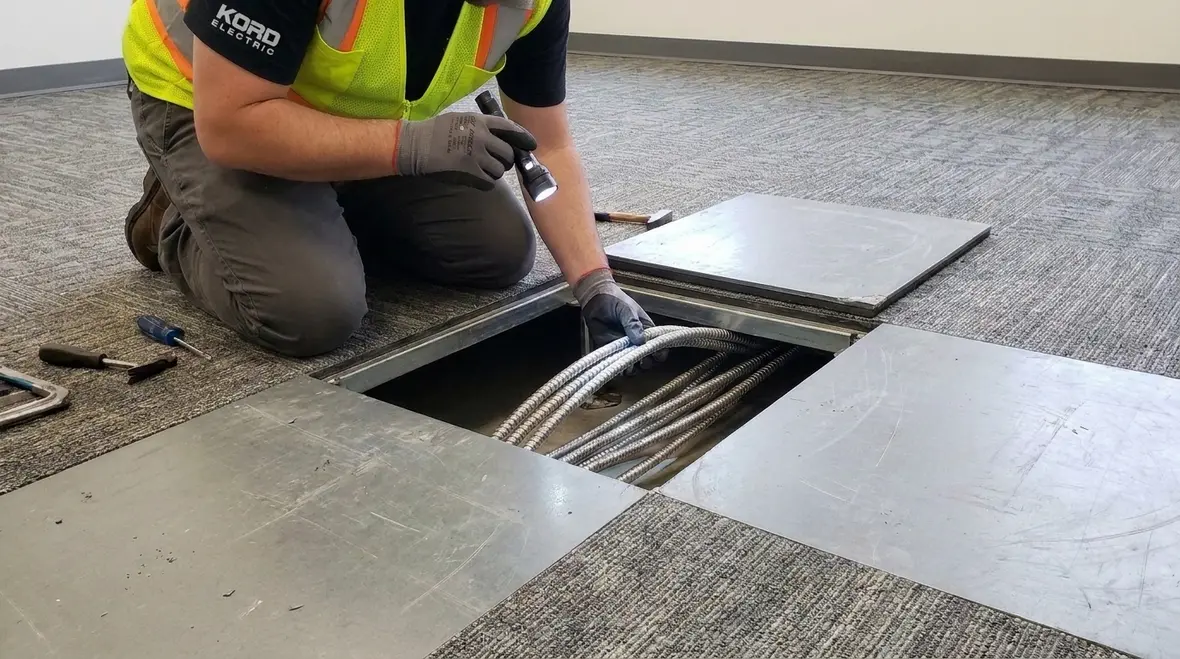
Under NFPA 70 Section 322.120, the marking on MC cable must allow someone to identify essential information about the cable. In practice, this means the markings must be legible and placed so that they can be read during inspections and maintenance.
Because MC cable gets routed through ceilings, raceways, and mechanical spaces, the marking needs to remain visible or accessible when reasonable access is available. Therefore, installers cannot treat marking as something to do “once the cable is gone behind the wall.” We see that approach fail during commissioning, where staff wants quick confirmation of circuit paths and cable types.
Also, the marking supports consistent labeling across the system. When equipment schedules, panel directories, and circuit labels match the cable identification, the facility team works with confidence. Meanwhile, mismatches create extra work, extra callbacks, and extra meetings. Nobody wants those. Not even in a sitcom.
Where marking shows up during inspection and maintenance
Large buildings do not stay still. Over time, teams add loads, update processes, and reconfigure spaces. Consequently, cable markings become a key tool for anyone who needs to trace circuits safely without guessing. At Kord Electric, our technicians plan with that reality in mind from day one.
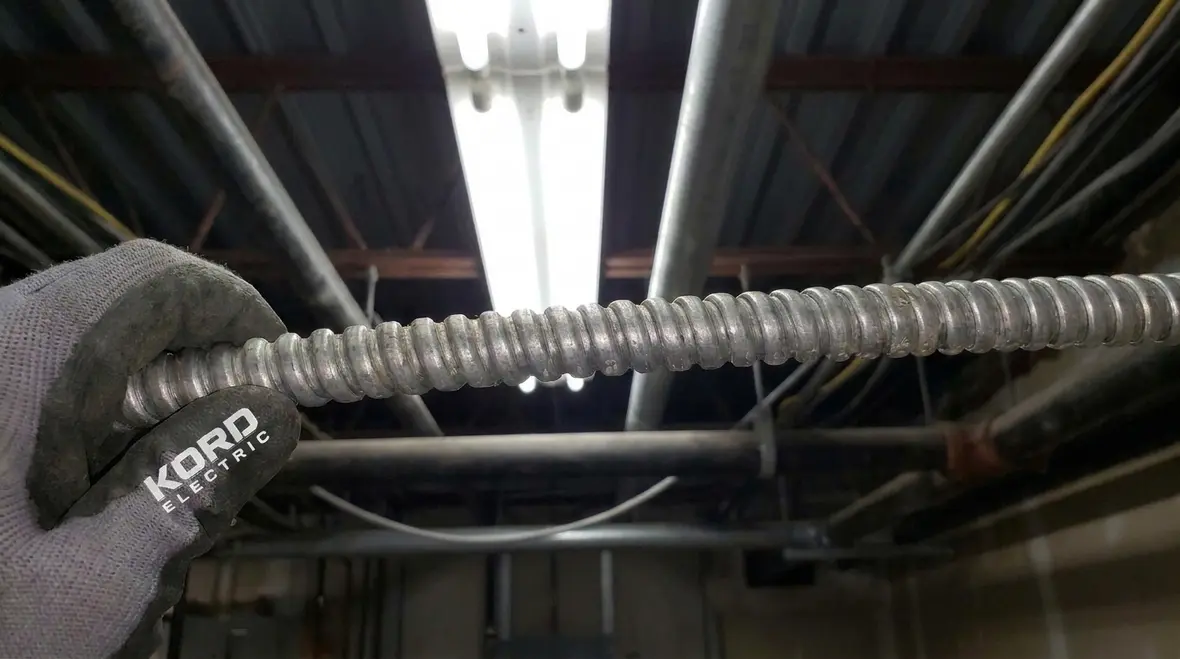
During inspection, electricians and AHJs look for clear evidence that the cable complies with NEC requirements. Marking must not be obscure or unreadable. For that reason, we train our teams to protect the cable jacket and markings during pulling, bending, and handling. Even careful work can damage print if teams drag cables over rough edges or use poor pulling practices.
In maintenance, marking clarity helps technicians confirm what a circuit actually feeds. Then it supports correct isolation during troubleshooting and lockout tagout. In other words, good NEC MC cable marking helps the building team avoid the “wrong switch” moment, which is funny only until it shuts down the wrong production line.
How Kord Electric teams handle marking during install
When Kord Electric crews work on commercial and industrial facilities, we follow a disciplined process. First, our technicians review the project requirements and cable schedules. Next, we confirm the MC cable selected for the job includes the needed factory marking information. Then, we verify that the markings will remain readable through the installation method.
After that, we coordinate pulling and routing practices to protect the marking. We keep work clean and controlled because jobsite damage often comes from rush, rough handling, or lack of attention at bends. Meanwhile, we also ensure that field-applied identification aligns with the markings already present on the cable.
In addition, our expert service staff explains the “why” to the people who manage the facility after closeout. We do not just deliver results; we show how the markings help in future work. That way, the building team does not rely on memory, and it does not rely on “whoever installed it” being on call forever.
Common mistakes that break code intent
Even experienced teams can stumble on cable identification. Therefore, we highlight the mistakes we see most often in commercial and industrial projects. When teams correct these early, they prevent costly rework later.
1) Markings become unreadable
Print can fade, smear, or get scraped off during pulling. If that happens, the cable no longer supports safe circuit identification as intended by NFPA 70 Section 322.120.
2) Marking gets covered during routing
Some installers route MC cable so that markings sit behind equipment, sealed surfaces, or inaccessible areas. As a result, the marking cannot be used during inspection or maintenance.
3) Field labels conflict with cable markings
When panel directories and equipment labels do not match the cable identification, technicians waste time verifying circuits. Worse, they can isolate the wrong load.
4) No plan for future work
Facilities evolve. If crews treat labeling as temporary, the next contractor or in-house electrician pays the price.
And yes, these issues show up in “small” ways first. Then one day, a technician asks a question, the room gets quiet, and everyone remembers the cost of avoidable mistakes.
NEC context: how marking links with the rest of the system
Marking does not stand alone. In a real electrical system, circuit identification connects to other NEC needs like safe access, correct labeling, and proper documentation. When cable marking supports consistent identification, it strengthens the entire workflow from installation to commissioning.
For example, when panel labels match the cable identification, troubleshooting becomes faster. When maintenance staff can trace circuits based on marking, testing gets safer and less disruptive. Meanwhile, during upgrades, builders can verify what is already installed before adding new work.
Kord Electric also keeps an eye on how projects connect across trades. General contractors and facility managers care about predictable timelines. Therefore, clear marking reduces “pause points” where teams wait for answers. In the end, marking supports not only compliance, but also project rhythm.
Related resources and code reading mindset
At Kord Electric, we keep learning and training active, because code changes and enforcement styles can vary across regions and AHJs. For teams who want a deeper look at the National Electrical Code and related guidance, we point clients to reputable summaries and training material, including resources like our NEC overview for 2026 and this NEC focused breakdown. For additional context on Kord Fire services in the broader safety and compliance space, teams can visit kordfire.com.au and explore broader safety resources from organizations like firepumps.org.
However, we also keep expectations realistic. Reading code is helpful, but field execution matters most. That is why our technicians translate requirements into installation steps that work in actual commercial and industrial environments. For facilities that want design and installation aligned from day one, our Los Angeles County electrical services give you experienced crews who understand both NEC language and real-world building demands.
FAQ on NFPA 70 Section 322.120 and MC cable marking
Call Kord Electric before the job gets complicated
When your facility runs on uptime, you cannot afford unclear cable identification. Kord Electric helps commercial and industrial teams handle NFPA 70 Section 322.120 with care, so NEC MC cable marking stays readable, aligned, and useful long after commissioning. Our technicians and expert service staff explain the requirements in plain language, then they execute with discipline. If you want a smoother inspection and faster maintenance, contact Kord Electric now to review your MC cable approach and project plan.
Whether you are planning a new build or upgrading an existing facility, our team connects disciplined marking practices with broader NEC planning, from circuit identification to documentation and long-term maintenance support. When you are ready to move from “we will figure it out later” to “we know exactly what each cable does,” Kord Electric is ready to help.


