
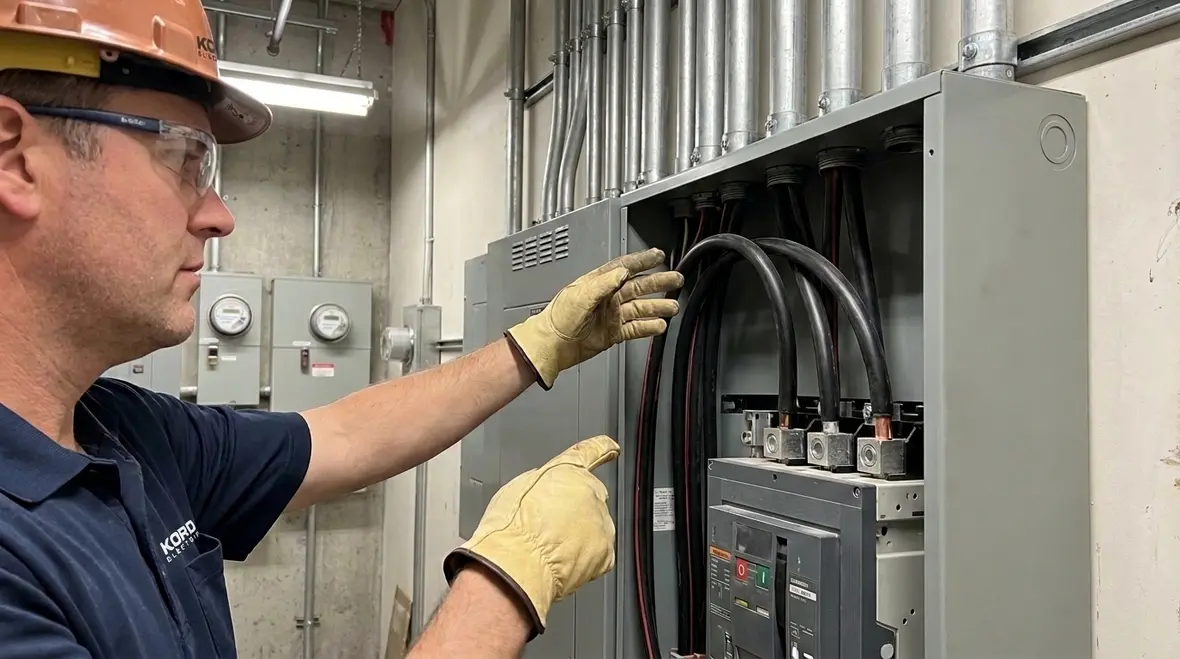
NFPA 70 Section 330.1 NEC Service Entrance Conductors Scope
At Kord Electric, we help commercial and industrial facilities keep their electrical systems safe, code compliant, and ready for real life, not just inspection day. In this article, we walk through the NFPA 70 Section 330.1 Scope of NEC Service-Entrance Conductors, and we do it in plain business language. Within the first steps of any project, these rules guide what conductors must serve as the service entrance, how they connect, and what limits they must follow. Then, we show how our expert service staff explains what that means on site, because reading code is one thing, and building it correctly is another. And yes, we have seen plenty of “close enough” setups that behave like a sitcom prop, not a safety system.
What Section 330.1 really covers for service entrances
NFPA 70 Section 330.1 sets the scope for NEC service entrance conductors, meaning it defines the boundaries of where those rules apply. In other words, it tells us what part of the installation the NEC is addressing, and it helps us avoid guessing. When we review a facility plan, our technicians focus on how the service conductors enter the building, how they are routed to service equipment, and how the system is meant to work under normal and abnormal conditions.
Additionally, this scope matters because service conductors sit at the start of the electrical story. They feed everything downstream, so the rules are strict for a reason. If you get this wrong, you do not simply “fix a wire.” You may need to revisit equipment selection, overcurrent protection, grounding methods, and even coordination with the utility connection.
Why commercial and industrial facilities should care
Commercial and industrial properties carry different loads, different uptime expectations, and different risk profiles than typical small buildings. Therefore, when a facility operates equipment that cannot pause, we treat the service entrance like a critical system. We have to think about peak demand, short-duration surges, and long-term wear on insulation and terminations.
Then there is the reality of inspections. Our expert service staff often explains to owners and facilities teams that the NEC rules are designed to be testable. Code language turns into concrete checks: conductor type, termination quality, physical protection, and proper support. When the scope is clear, the work stays clear. When the scope is ignored, the surprises show up later, usually during a busy week that nobody planned for.
It is a little like planning a loading dock. You can improvise once, but not forever. Electrical design works the same way. If you keep “winging it,” you will eventually need more than a prayer. You will need qualified troubleshooting and likely rewiring.
Where conductors start and why the routing matters
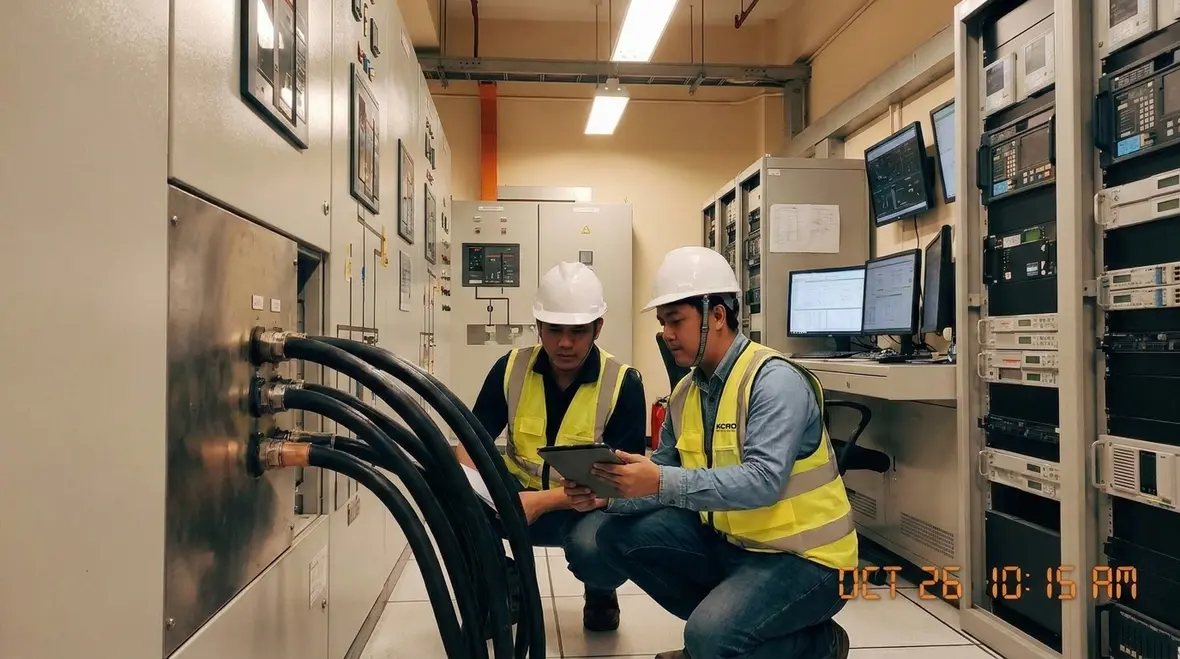
In practice, the NEC service entrance conductors scope shapes decisions about the entire early segment of the electrical system. First, we identify the service point of connection to the utility. Next, we trace from that point through the meter area, any service disconnect location, and into the service equipment. Then we check the route for hazards: where the conductors pass through building components, where they run near moving parts, and where they might get exposed to moisture or mechanical damage.
Our technicians also look at how routing affects workmanship and long term reliability. Short, neat runs usually help with support and termination. Likewise, protected pathways can reduce the chance of damage during construction or later tenant work. And when a facility has multiple phases of renovations, we make sure service entrance conductors do not become the “temporary” path that never gets replaced.
At Kord Electric, we do not just ask what the code says. We ask what the building does. A service entrance in a warehouse loading zone faces different conditions than one tucked behind a clean mechanical room wall. So, we match the system design to the environment, not to hope.
Support, protection, and terminations that pass real scrutiny
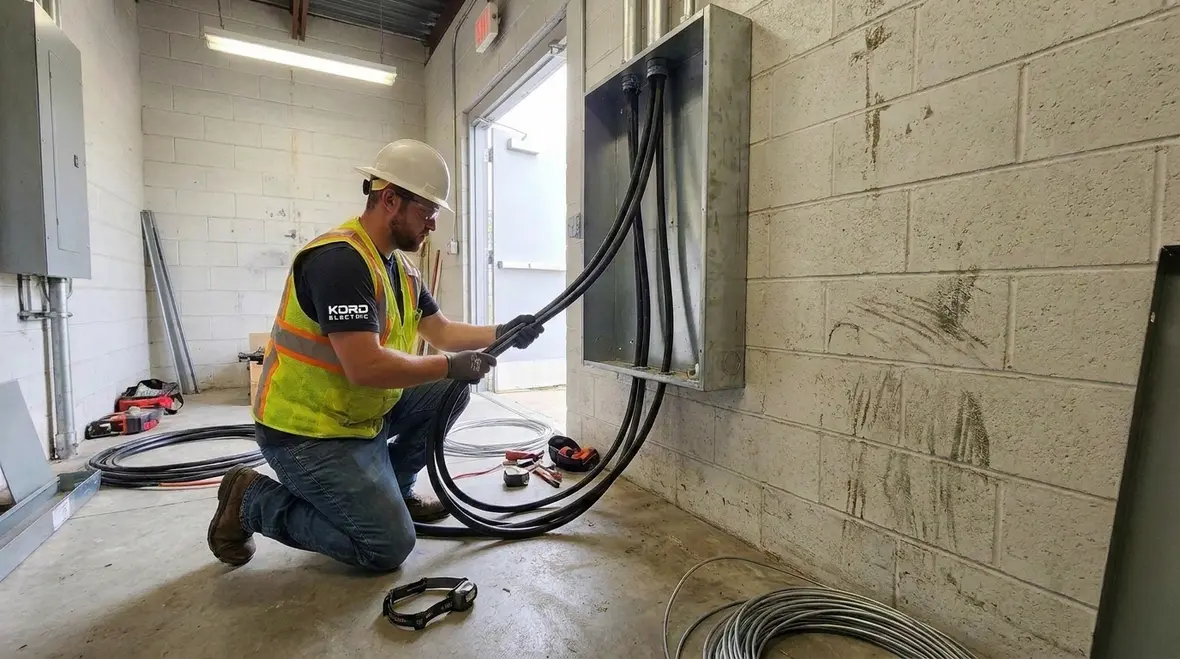
One reason Section 330.1 matters is that it sets up the broader NEC framework for how conductors must be handled. Once we know the conductors fall under the service entrance scope, we apply the related requirements that govern physical installation. That includes how the cables are supported, how they are kept safe from abrasion, and how terminations connect to the equipment.
We see mistakes that follow a predictable pattern. Someone chooses the right conductor size on paper, but then skips proper support. Or they install conductors with clean insulation at the start, yet the termination area gets rushed, which later leads to heat buildup. In a commercial or industrial setting, heat issues do not stay quiet for long. They show up as discoloration, loose connections, or nuisance alarms.
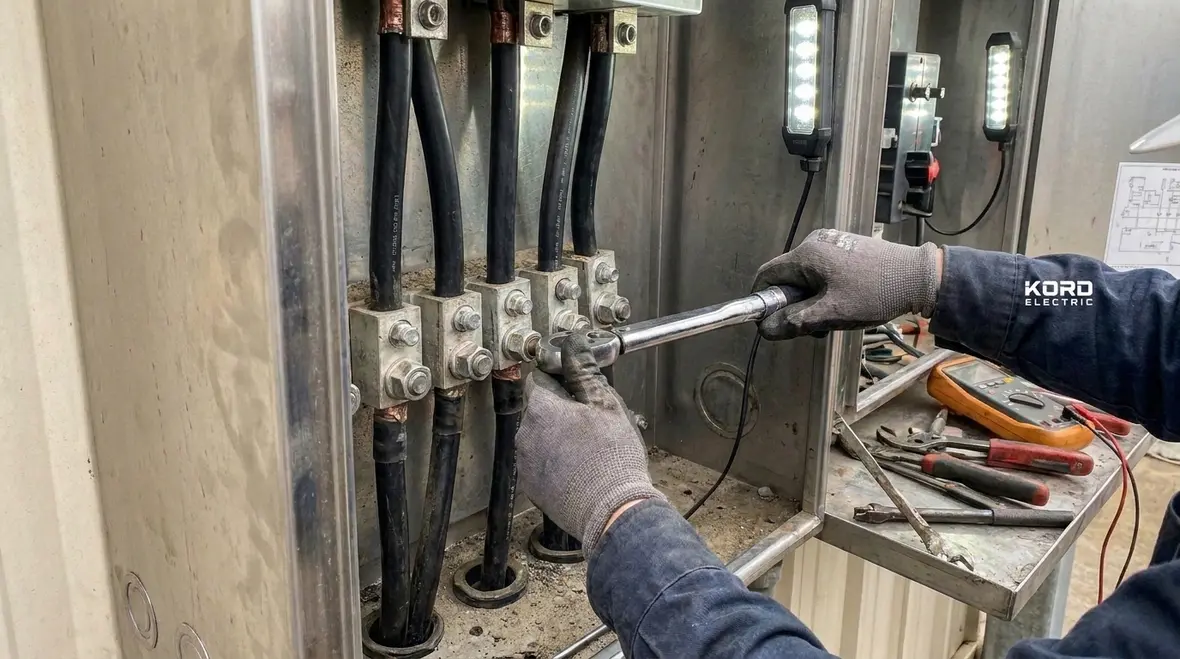
So we take a calm, methodical approach. Our team verifies torque values, checks lugs and conductor prep, and confirms that the installation provides adequate protection. In the field, we explain each step as we go, so facility teams understand what is happening and why it matters. When people get the “why,” they tend to stop treating electrical work like a magician’s trick.

How grounding and bonding connect to the service entrance scope
Even though grounding and bonding rules live in multiple parts of NEC, they connect tightly to the service entrance because that first segment drives the system reference. We coordinate bonding and grounding decisions with the service equipment and with how the facility manages fault current. This keeps the protection scheme reliable and helps reduce shock risk during fault conditions.
Additionally, good grounding and bonding support stable operation of sensitive loads. Many commercial and industrial buildings now run controls, drives, and communication systems that do not forgive sloppy electrical references. Therefore, we consider how service conductors interface with grounding electrodes, bonding jumpers, and metallic pathways.
Our technicians also explain a key point: the service entrance conductor segment cannot be treated like an isolated task. It influences how the rest of the electrical system performs during both routine operation and fault conditions. That is why we advise facilities to plan service upgrades with the whole electrical chain in mind, not just the visible equipment.
Practical compliance steps our technicians use on site
When a facility wants the service entrance done right, we start with a structured review. First, we confirm the scope of what the installation includes based on the NEC service entrance conductor rules. Then we verify the conductor types and ratings, along with the installation methods that protect the conductors along their route. After that, we check equipment interfaces, including where the conductors terminate.
Next, we validate grounding and bonding paths so the system behaves safely. Then we document the work in a way that helps the owner’s team understand what was installed and what standards were followed. This matters for ongoing maintenance and for future tenant changes, because commercial buildings evolve. If the service entrance setup stays clear, future modifications do not turn into a scavenger hunt.
We also coordinate with other trades when the jobsite gets busy. In the middle of construction, people bump things. Materials get moved. So we protect the electrical work during the process, not just at the end. That is where our service team shines. They do not treat code like a checklist they complete and forget. They treat it like an operating system for safety.
And if you are wondering whether all this sounds like a lot, remember this: electricity does not care how busy your week is. It will do what physics demands. We simply build so the outcome stays safe.
Connecting Section 330.1 to broader NFPA 70 guidance
Section 330.1 does not live alone in the NEC. It interacts with rules for overcurrent protection, working space, installation limitations, and how conductors interface with service equipment. For many commercial and industrial teams, it helps to see this scope as the first chapter in a much larger story about how power moves through the building.
When facilities want a clearer view of that larger picture, we often point them to educational resources that walk through the National Electrical Code in practical terms. One example is Kord Electric’s in-depth guide Understanding NFPA 70: The National Electrical Code Explained for 2026, which shows how service entrance rules connect with feeder diagrams, specific purpose load calculations, and medium-voltage conductor requirements over the life of a project.
Seeing those connections makes it easier for owners, engineers, and maintenance teams to treat the NEC service entrance conductors scope as part of a coordinated compliance plan instead of a single checklist item.
Planning upgrades with operations and inspections in mind
Service entrances affect more than just the equipment line-up on day one. When you plan an upgrade or a new installation, the Section 330.1 scope influences how you phase outages, how you schedule inspection visits, and how your teams coordinate with other construction activities around the service area.
In busy commercial and industrial facilities, we often map the service entrance work against production calendars or tenant schedules. That way, conductor routing, support details, and termination work happen in windows that protect critical operations. When the scope is understood early, it is easier to avoid last-minute redesigns that add cost and risk.
From there, we align documentation with inspection expectations. Diagrams, labels, and as-built records show where the service entrance conductors begin and end, how they are protected, and which devices control them. That clarity pays off during future maintenance and when a new inspector reviews the site years later.
FAQ: NEC service entrance conductors scope
Conclusion: talk to Kord Electric before the next service upgrade
If you operate a commercial or industrial facility, you cannot treat the service entrance like a minor task. Kord Electric brings expert technicians and clear explanations so you understand the NEC service entrance conductors scope, what it requires, and how it affects safety and uptime. Whether you plan a new build, a service upgrade, or a site correction, we help you get it right the first time. Our team also supports broader NEC-focused efforts, from installation limitations and feeder diagrams to surge protection and medium-voltage conductor work, so your entire power system follows a consistent strategy.
For organizations in Southern California and beyond, including those who need Los Angeles County electrical services, we coordinate service entrance planning with inspections, maintenance, and future upgrades so your electrical system stays ready for real-world operation, not just inspection day.
Contact Kord Electric today and let us guide your electrical work with calm, code based confidence, backed by technicians who understand both the letter of NFPA 70 and the realities of commercial and industrial power systems.


