
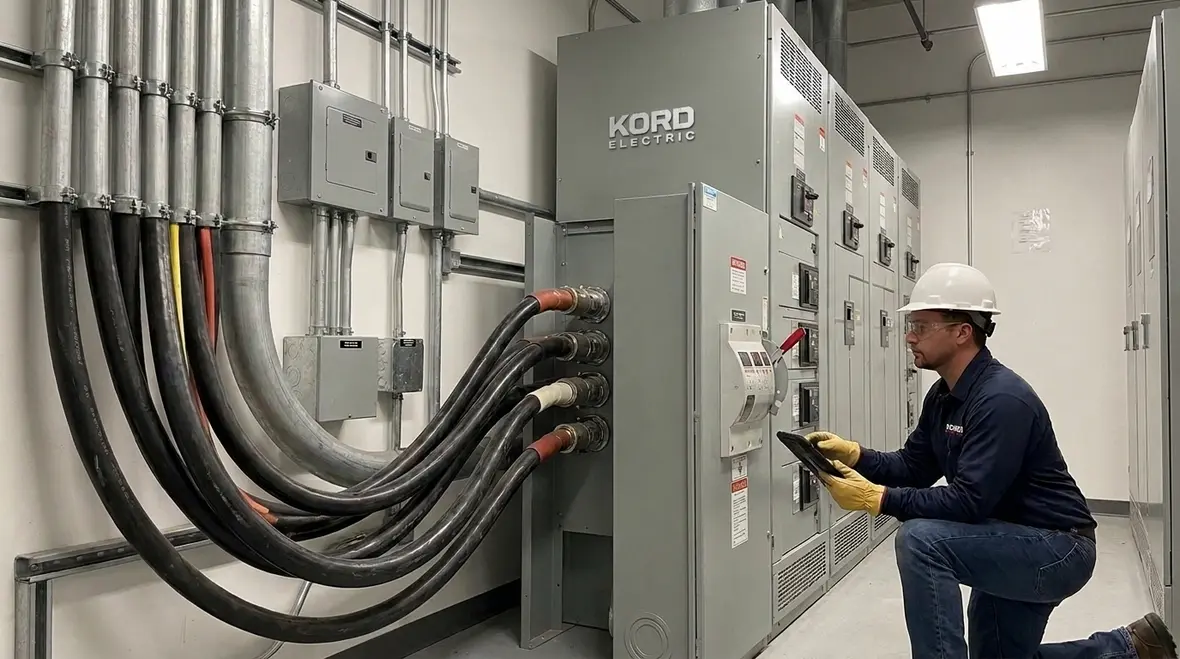
NFPA 70 Section 332.1 Service Entrance Cables Scope
At Kord Electric, we work with commercial and industrial facilities, major property buildings, and the people who manage them when the stakes get real. In this article, we focus on NFPA 70 Section 332.1, specifically the scope of NEC service entrance cables article, so you know what the rules cover before you buy, install, or inspect. Put simply, this section helps define the boundary for how NEC requirements apply to service entrance cables, and that boundary matters because electrical failures do not politely wait for paperwork to finish.
We explain these details in plain business terms. Then our technicians, and our expert service staff, walk you through how the scope connects to real job sites, real schedules, and real coordination with your utility and electrical system layout.
Why NFPA 70 Section 332.1 sets the rules of the road
NFPA 70, which many people simply call the NEC, organizes electrical requirements by topic and by what type of equipment you are dealing with. Section 332.1 starts the NEC service entrance cables scope by telling you what the article is meant to cover. In other words, it prevents you from treating every cable like it belongs in the same bin, like every tool in a shop bag is “for everything.”
When we interpret this in the field, we see a common pattern. Designers and contractors sometimes apply cable rules that belong to one part of the system to another part. As a result, inspections can turn into long meetings with the authority having jurisdiction. Therefore, we start with the scope so the project follows the correct path from the start.
Additionally, the scope language helps you match cable selection and installation methods to the service entrance function. That function usually sits at the boundary where the utility supply connects to the building wiring system. Because this is the interface, requirements tend to be strict, and not for drama. They exist because service entrance failures affect more than one circuit. They can affect an entire facility.
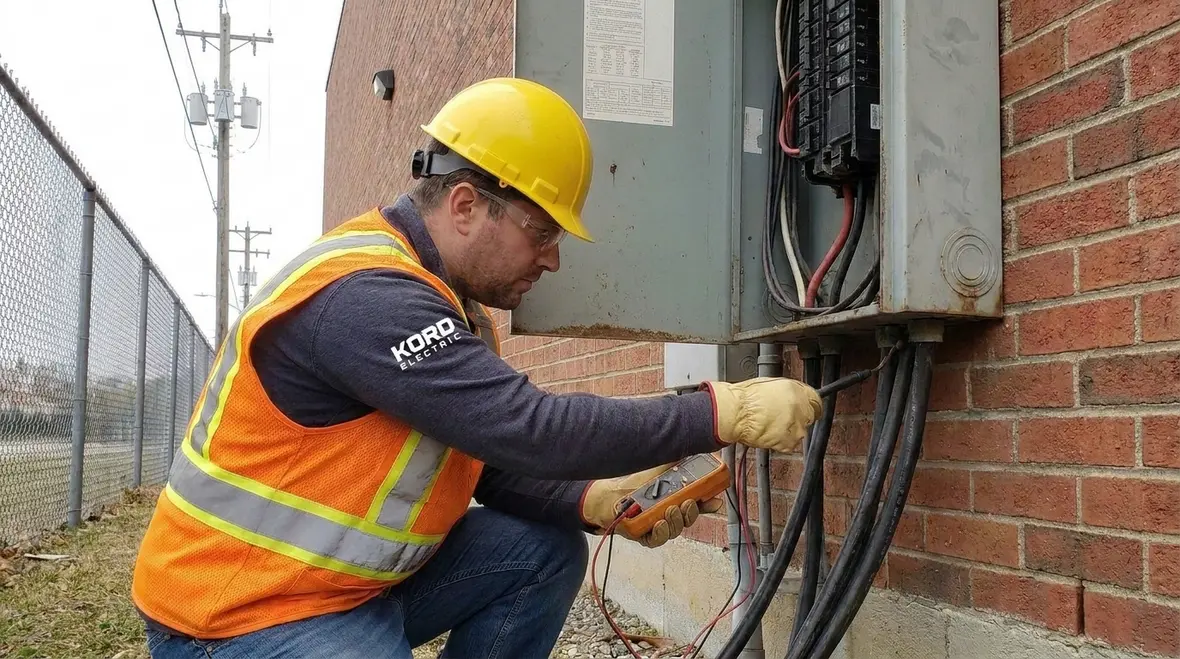
If you want a companion overview on how the National Electrical Code fits together, Kord Electric also shares a broader code explainer in our guide to NFPA 70 and what the National Electrical Code means for 2026 planning, which many facility teams read alongside focused articles like this one when they map long-term upgrade strategy.
What the NEC service entrance cables scope actually covers
At Kord Electric, we treat the NEC service entrance cables scope like a map legend. The code uses the word “service” for a specific job in the system. So, we determine whether the cable in question is part of the service entrance setup, which can include components that connect the utility point to the building’s service equipment.
Based on the code organization, the article’s requirements apply to the particular types of service entrance cables described within that article. That usually means you follow construction, identification, and installation rules that fit service entrance use. Then you apply those rules while you consider how the cable will run, what it will connect to, and whether the cable is intended to handle the conditions at the service location.
Next, we emphasize something many teams miss. The scope does not mean “anything that touches the service.” It means the article focuses on service entrance cables in their intended role. Therefore, you still need to confirm the cable type, routing, and terminations match the code’s expectations for that service boundary.
For commercial and industrial facilities, we also consider how the building’s electrical system gets laid out during construction. For example, large properties often have multiple service sections, switchgear rooms, or phased expansion plans. That means your team needs clarity early so procurement matches the later installation reality.
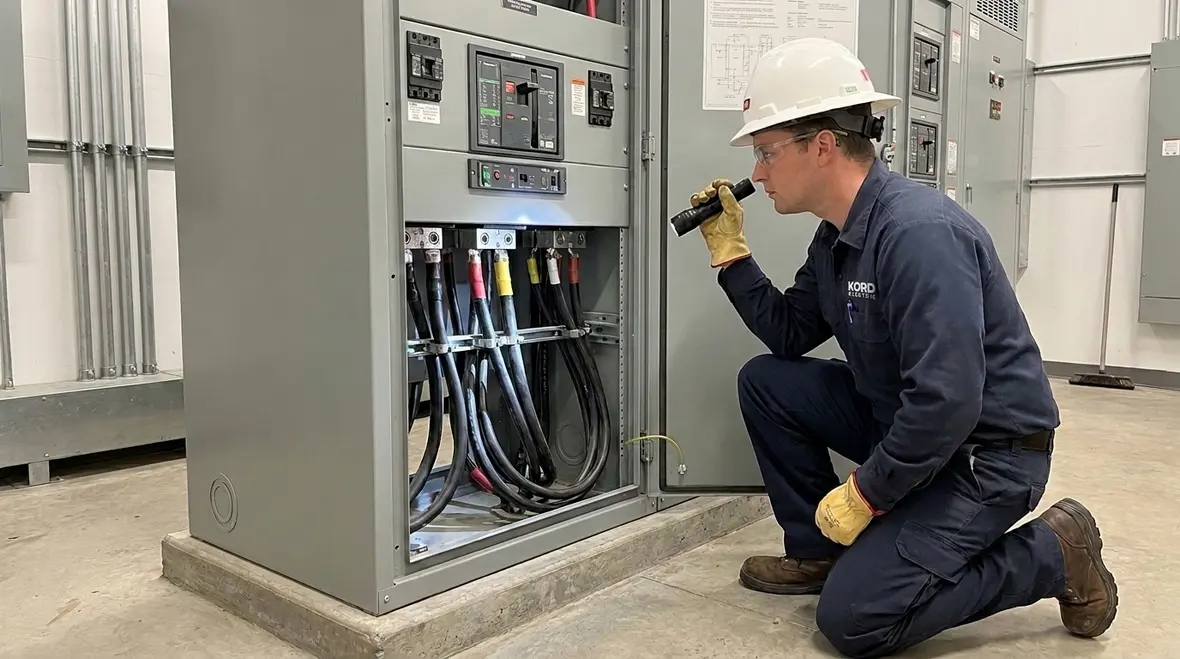
When clients want even more context for how sections like NFPA 70 Section 332.1 fit into the big picture, we often pair this article with our broader National Electrical Code explanations, including resources that break down how NFPA 70 shapes design, upgrades, and inspection expectations for 2026 and beyond.
How service entrance cables tie into system planning
In major property buildings, the electrical plan rarely stays still. One month, the tenant is expanding. The next month, the schedule shifts and the cable route changes. So, we connect the NFPA 70 Section 332.1 scope to planning decisions that affect the whole project.
First, we coordinate with architects, electrical engineers, and facility managers to confirm where the service entrance cable portion begins and where it ends. Then we map that to the service equipment location, such as main switchgear or service disconnects, because terminations and working clearances cannot be “winged.” Inspectors do not accept “we will fix it later” as a design detail.
Second, we plan for how the cable will protect against physical hazards. In commercial and industrial spaces, cables run near traffic paths, equipment rooms, and work zones. As a result, proper installation methods and support structures become non negotiable. Otherwise, you get wear, heat issues, or damage that shows up later and costs more than it should.
Third, we align the cable selection with the load profile and the utility requirements. While the scope in Section 332.1 focuses on what the article covers, real field success depends on the entire service setup. Therefore, we help teams avoid the classic pop culture mistake: choosing the right “character” but putting them in the wrong story. The cable might be technically correct, yet the setup might still fail the inspection logic.
We also rely on our experience from Kord Fire and Kord Electric resources that we share across projects. Our expert staff makes sure that the electrical side and the life safety mindset stay in sync. When fire risk controls and electrical controls coordinate well, the building performs better under real conditions.
If your facility team wants to deepen that planning mindset, we often recommend reading this article alongside our other NEC-focused pieces, such as enforcement guidance under AHJ roles and branch circuit planning, so the service entrance decisions line up with the rest of your distribution system.
Installation details that inspectors look for first
Once the scope is clear, the next step is execution. Inspectors do not start by reading your intent. They start by verifying what is installed. At Kord Electric, our technicians focus on the details that typically drive inspection outcomes for service entrance work.
Here are the common checks we plan for, so your job stays calm and on schedule.
- Proper cable identification so the installed cable matches the approved plan and the service function.
- Correct routing and protection so the cable follows accepted methods and avoids damage from equipment or building use.
- Secure terminations at service equipment so connections maintain stability and do not create heat or loosening risk.
- Working clearances around service equipment and terminations, since access rules matter for maintenance and safety.
- Clean documentation including labeling and as built notes so inspectors can trace the system fast.
Now, let’s make this practical. If the service entrance installation involves conduit interfaces, equipment rooms, or changes due to construction progress, our team documents each change. Then we confirm the cable still fits the NEC service entrance cables scope expectations for that phase. In other words, we treat revisions like contracts, not like doodles on the margin.
Also, we remember that commercial and industrial projects often involve multiple trades. Electrical contractors need coordination with general contractors, mechanical teams, and sometimes utility coordination. If everyone moves at their own pace, the cable route becomes a battlefield. We prefer the peaceful option: planned handoffs, clear drawings, and real checks before the cable gets locked in.
To keep that inspection path steady, we often combine this kind of checklist with broader code upgrade consulting. In those projects, we reference our in-depth NEC overview for 2026 and align the service entrance details with feeder diagrams, grounding expectations, and AHJ enforcement patterns so nothing feels like a last minute surprise.
Common mistakes and how Kord Electric helps teams avoid them
Most problems do not come from “bad intent.” They come from rushed assumptions. Here are mistakes we frequently see when teams do not anchor to the code’s defined service entrance cable scope.
- Using the wrong article logic by applying cable rules from a different part of the system.
- Misreading where service ends and then mixing installation methods that do not match the scope boundary.
- Skipping confirmation of cable type before ordering, which causes rework and schedule hits.
- Underestimating route impacts during construction, like late layout changes in major property buildings.
- Weak documentation so the inspector cannot trace the installed cable back to the approved design.
Our expert service staff closes those gaps with a steady process. First, we review the design against the NEC requirements tied to the service entrance cable article scope. Then we confirm procurement alignment. After that, we check installation planning so terminations, protection, and labeling do not get treated like optional extras.
And yes, we sometimes say it like a joke in the field. We tell teams, “Code is not a vibe. It is a set of rules.” Then we help them make those rules part of the workflow, not a last minute surprise.
How to keep service entrance compliance steady over time
Commercial and industrial facilities do not stay static. People renovate. Tenants change. Equipment gets added. Therefore, compliance should not be a one time event done at turnover. It should be a repeatable practice.
After installation, we support maintenance planning that respects the service entrance portion of the electrical system. That can include periodic visual checks, tightening and inspection where appropriate, and review of any modifications that touch the service boundary. When a facility team expands or changes operations, we help them assess whether new loads or rerouted cable runs still align with the requirements tied to the service entrance cable scope.
We also bring a calm, methodical approach. Our goal is to reduce surprises. If you run a facility, you already have enough surprises. The building should not add electrical compliance surprises to the calendar.
For teams that want more background on NEC organization and how it affects real systems, we point them to resources from our network, including the detailed NEC explainer content we publish. You can find more information at Kord Fire and Kord Electric pages, and if you need further guidance related to fire and electrical coordination, you can also check resources at firepumps.org.
When your planning includes renovations or code upgrades, these service entrance questions naturally connect to broader electrical compliance work. That is where our code upgrade consulting and Los Angeles County electrical services support facility teams that need both NEC detail and practical field coordination on the same project timeline.
FAQ about NFPA 70 Section 332.1 and service entrance cables
Conclusion and next step
NFPA 70 Section 332.1 gives the NEC service entrance cables scope, and that scope keeps your team from guessing when the inspection clock starts ticking. At Kord Electric, we help commercial and industrial facilities plan, install, and verify service entrance cable work with discipline and clear documentation. If you want a steady compliance path for a current project or an upcoming upgrade, we are ready to support your team. Reach out to Kord Electric and let our technicians walk the scope with you before construction locks in the details.
For more big-picture context on how NFPA 70 shapes design and inspection expectations for the coming cycle, you can also explore our National Electrical Code explainer content, including our in-depth 2026 NEC breakdown, which many facility managers read alongside focused articles on feeders, bonding jumpers, grounding, and AHJ enforcement.


