
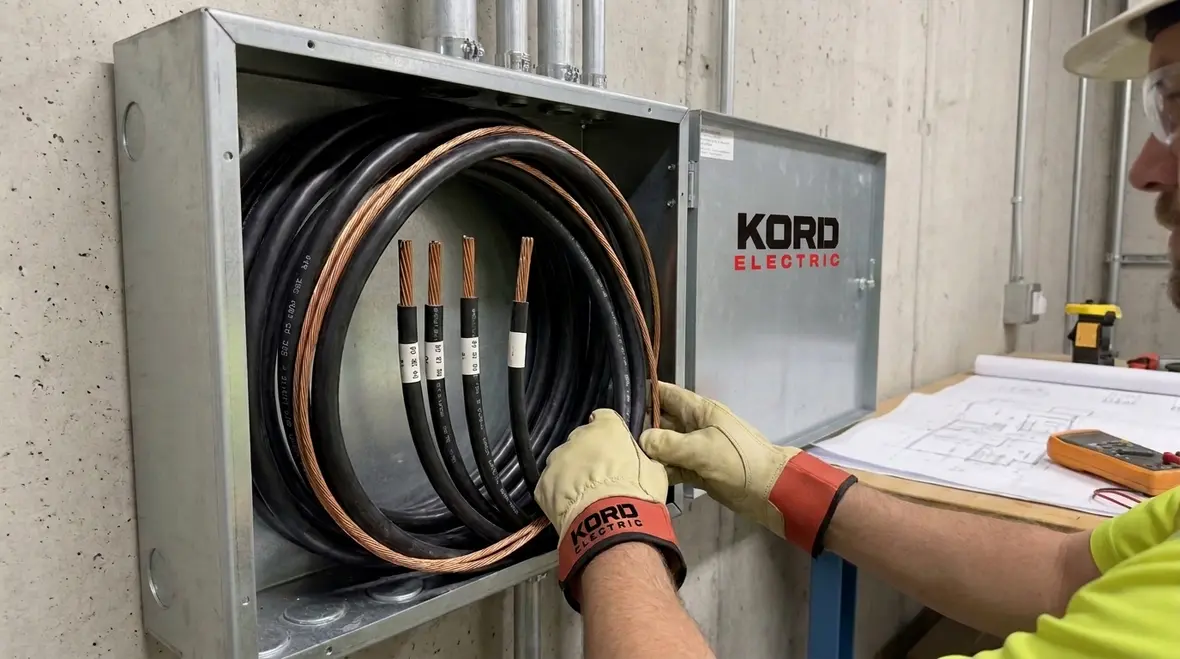
NFPA 70 Section 332.104 NEC SEC Cable Conductors
At Kord Electric, we help commercial and industrial facilities keep their power systems steady, safe, and code aligned. In the heart of that work, we often talk about NEC SEC cable conductors and how the rules in NFPA 70 Section 332.104 shape what belongs inside SEC cables and how those conductors must be handled. Now, if that sounds like a lot of alphabet soup, don’t worry. We break it down in plain language, and our expert service staff explains it the way technicians want to hear it, slowly and clearly, like a calm briefing before the real work starts.
In this article, we walk through what Section 332.104 requires, why it matters for facility owners, and how Kord Electric supports compliance in the field. Meanwhile, we will keep things practical, because nobody wants surprises when the lights are on and the inspection clock starts ticking.
NFPA 70 332.104 and why SEC cables need discipline
NFPA 70 Section 332.104 sets a specific expectation for NEC SEC cable conductors installed in SEC cables. In simple terms, this section tells us that the conductors used in SEC cables must meet the requirements described in the NEC for those conductors. In other words, the insulation, rating, design, and usage must align with the NEC rules, not with guesswork, hope, or whatever the previous contractor had for lunch.
Then there is the practical side. Facilities depend on these cables for power distribution, control circuits, and system performance where failure can become costly. Therefore, when a design uses SEC cables, we do not just “install cable.” We verify conductor type, sizing, temperature rating, and where the cable runs. After that, we coordinate with the broader electrical system so the cable works as intended under real load conditions.
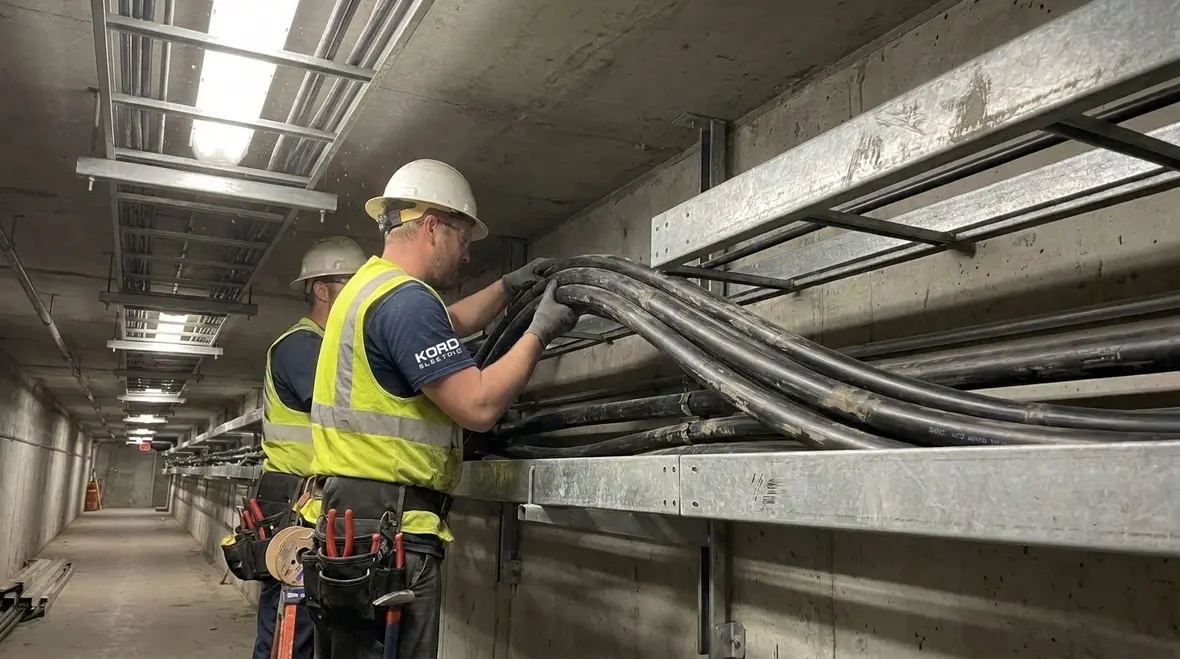
What our technicians check before anyone pulls a single conductor
At Kord Electric, our technicians follow a method that feels calm, but it is not casual. First, we confirm the project scope for commercial and industrial facilities, major property buildings, and similar property types where electrical systems face higher demands. Next, we review the cable design and the NEC expectations tied to conductors.
Then we look closer. We check how conductors are marked, how cable is rated, and how the installation environment affects conductor performance. Even when everything looks “close enough,” we still verify details that inspectors care about. As our expert service staff explains on site, small mismatches can create big problems later, especially once systems start running at full load.
And yes, we do this because the goal is not to win an argument with a compliance officer. The goal is to keep your facility operating without interruption, like it should. If you want pop culture accuracy, it is the difference between a “quick repair” montage and a real professional fix that lasts through the credits.
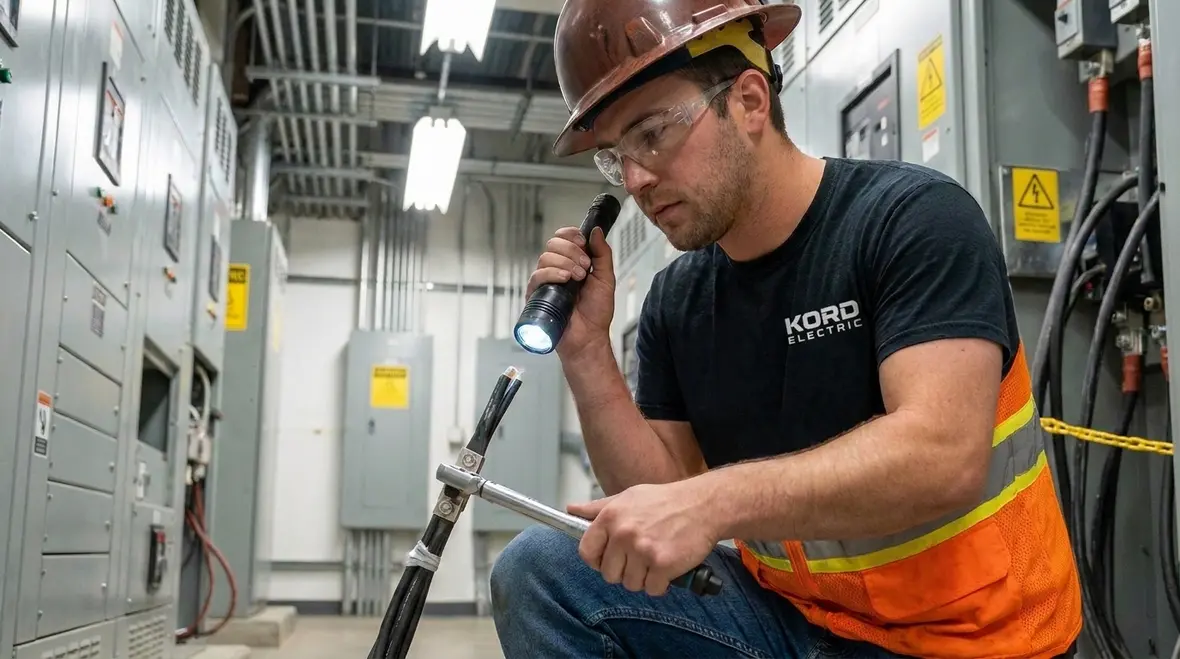
NEC conductor requirements in SEC cables: what gets carried forward
Section 332.104 effectively pushes the responsibility back to the conductor rules in the NEC. That means facility designers and installers must treat SEC cable conductor selection as a code matter, not a procurement convenience.
In practice, we focus on key conductor factors tied to NEC expectations. Those include conductor insulation behavior, temperature limits, ampacity considerations, and correct conductor usage for the circuit type. Moreover, we pay attention to how conductors are applied within the cable assembly. When the installation environment changes, the conductor requirements do not magically change with it.
At this stage, our approach is structured. We align cable selection and conductor ratings with the circuit plan, then we confirm installation methods support those assumptions. Therefore, the cable assembly behaves as the NEC intends, under the conditions your facility actually faces.
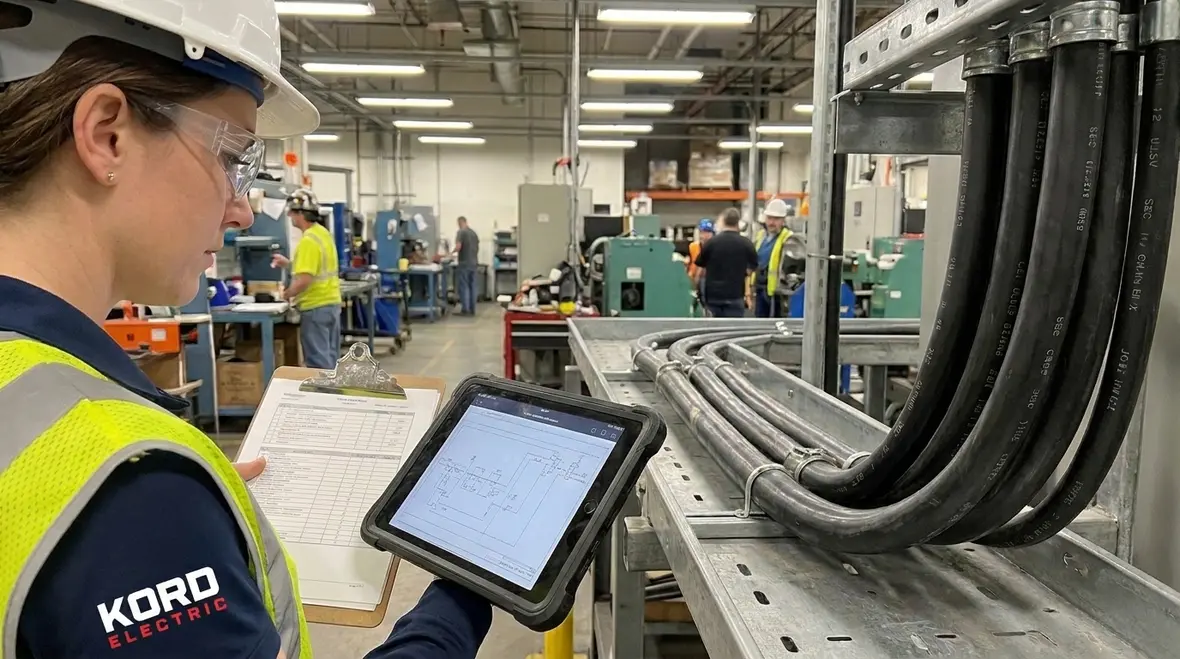
Installation realities in commercial and industrial buildings
Even when drawings look right, the field has its own personality. Our crews manage that reality for commercial and industrial facilities and major property buildings by controlling the details that create compliance risk.
First, we coordinate routing and support so cables do not take shortcuts that damage jacket integrity or strain conductors. Next, we confirm terminations and connections meet the NEC intent, because conductor performance depends on both the cable and the terminations. After that, we ensure labeling, identification, and installation practices support safe operation.
Additionally, we consider how power flow and loads affect conductor performance. If a facility runs equipment-heavy schedules, conductors must handle expected current and temperature conditions reliably. We also consider future growth. Many owners plan expansions, and we prefer solutions that do not force a redesign later.
Transitioning from theory to practice is where Kord Electric earns trust. We explain what we found, what it means, and what we recommend, so decision makers can act with confidence instead of guessing like it is an escape room and the clues are buried in the conduit.
Compliance without drama: how we document and verify
Code compliance should not feel like a wrestling match. Instead, we structure compliance work so it is clear, repeatable, and auditable. Our expert service staff supports clients with documentation habits that help during reviews and inspections.
As we move from design verification to field checks, we keep records of cable ratings, conductor alignment, installation practices, and any field clarifications. Then we confirm the final configuration matches the design intent. This matters because SEC cable work often connects to broader distribution systems, and conductor mismatches can ripple through performance and safety outcomes.
Furthermore, we recognize that facility teams need communication that does not bury them in technical jargon. We explain the “why,” the “what,” and the “next step.” That way, commercial and industrial property owners can make decisions quickly, without treating the NEC like a mystery novel.
Common mistakes we see with SEC cable conductors
We have seen enough projects to recognize patterns. Some mistakes occur because teams move fast, some because designs get value engineered, and some because a detail gets lost between meetings.
One common issue involves conductor selection that does not align with NEC expectations for the circuit and use case. Even if the cable is labeled for SEC use, the individual conductors must still meet the NEC rules carried forward by NFPA 70 Section 332.104. Another frequent problem includes installation practices that affect performance, such as improper handling, poor support, or termination errors.
Also, teams sometimes focus on cable rating alone and forget about the conductor requirements that govern temperature and ampacity behavior. Yet conductors live under load, and they respond to the real conditions of the facility. Therefore, we insist on conductor verification during planning and again during installation.
Lastly, some projects struggle with communication. When designers, installers, and facility teams do not share the same understanding, it becomes easy to miss what inspections look for. Kord Electric keeps that line of communication open, so everyone works from the same facts, not from vibes and “should be fine.”
How Kord Electric supports SEC cable work for major property buildings
Commercial and industrial facilities face different electrical pressures than small sites. That is why we tailor our service around your operational needs. Kord Electric supports major property buildings with planning support, field installation, and inspection minded verification.
We also train and guide our technicians so they follow consistent standards. In addition, our team collaborates with stakeholders to reduce downtime and manage work sequencing. When electrical work happens during business operations, we take the schedule seriously and we plan for safety and continuity.
To stay current on code expectations and practical implications, we keep close ties to resources from the electrical community, including the Kord Electric blog and KordFire materials that focus on the NEC, including NFPA 70 updates and interpretation perspectives. If you want a deeper code context, start with those resources such as kordfire.com.au and kordfire.com, and for high level NEC explained content see our Kord Electric blog on NFPA 70 for 2026. We also maintain broader safety context through organizations like firepumps.org, because building safety is more than a single section of code.
When facility leaders want to translate those rules into real projects across Los Angeles County and surrounding areas, they often connect with our dedicated Los Angeles County electrical services team, who apply NEC expectations to actual SEC cable installations, upgrades, and troubleshooting work.
FAQ: NFPA 70 332.104 and SEC cable conductor basics
Final word from Kord Electric
If you manage a commercial or industrial facility, you already know electrical work must stay safe, dependable, and code aligned. NFPA 70 Section 332.104 matters because it ties SEC cable work directly to the NEC conductor requirements, and that connection can make the difference between smooth operation and costly corrections. At Kord Electric, we support your project with expert technicians, clear explanations, and field practices built for compliance. If you want us to review your SEC cable design or installation plan, contact Kord Electric today for a focused, professional next step.
For facility teams who want to see how these NEC rules fit into the broader 2026 code direction before planning the next project phase, it can help to pair this SEC cable discussion with resources like our National Electrical Code explainer for 2026, related Kord Fire NEC overviews, and our Los Angeles County project experience. Together, those pieces turn Section 332.104 from a line in the book into a practical roadmap for real conductors, real equipment, and real inspections.


