
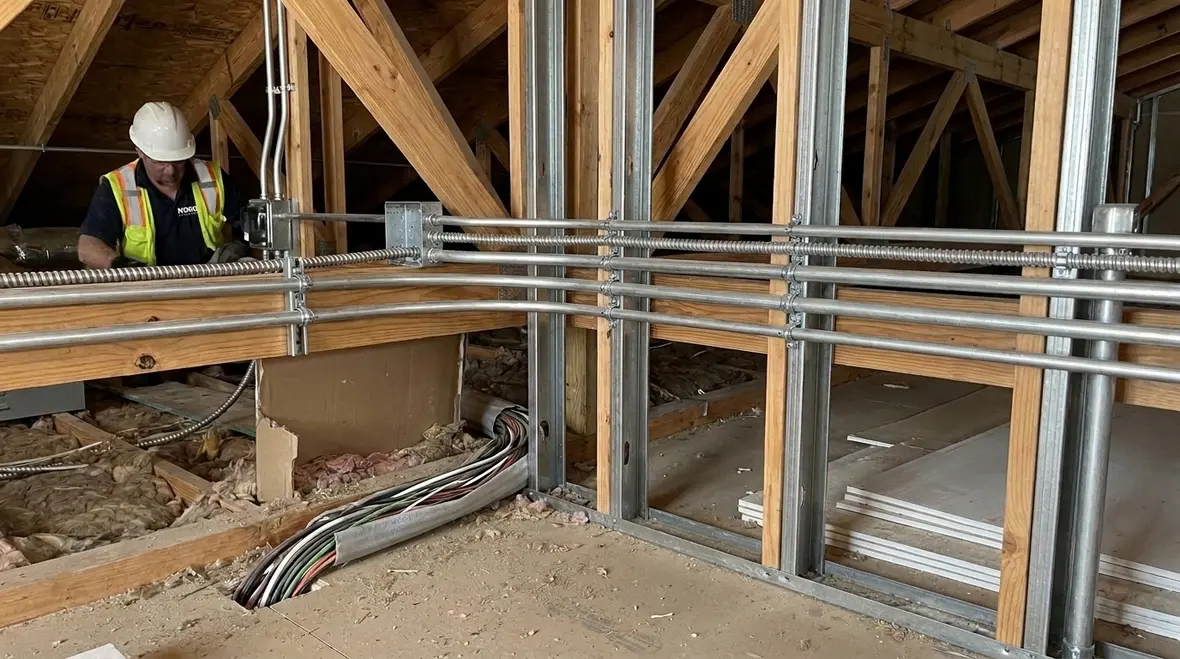
NFPA 70 Section 334.23 Accessible Attics Branch Circuits
Kord Electric works on commercial and industrial electrical systems, and we often find that the real story starts in the NEC branch circuit accessible attics. In those spaces, conductors run where heat, moisture, and foot traffic can turn a “simple” wiring job into a long term reliability issue. Therefore, when our clients ask about NFPA 70 Section 334.23, we do not answer with guesswork. We send our experienced technicians and expert service staff to explain what the code requires, why it matters, and how to keep a building safe without turning the project into a comedy special. (Though, to be fair, bad wiring can feel like one.)
NFPA 70 Section 334.23: what the rule is protecting
NFPA 70 Section 334.23 addresses how branch circuit conductors should be run in accessible attic areas and how their installation must support safe operation. In plain terms, the code aims to reduce the risk of damage to conductors caused by everyday conditions in attics. Those conditions include abrasion from construction materials, impact from maintenance work, and long term wear from temperature swings.
So, when a project involves conduits, cables, or conductors routed through attic spaces that workers can reach, the rule pushes the installation toward safer methods. As our team explains on every site visit, this is not paperwork for paperwork’s sake. It is the difference between a system that stays reliable for years and one that fails when someone steps in, drops a tool, or performs routine work.
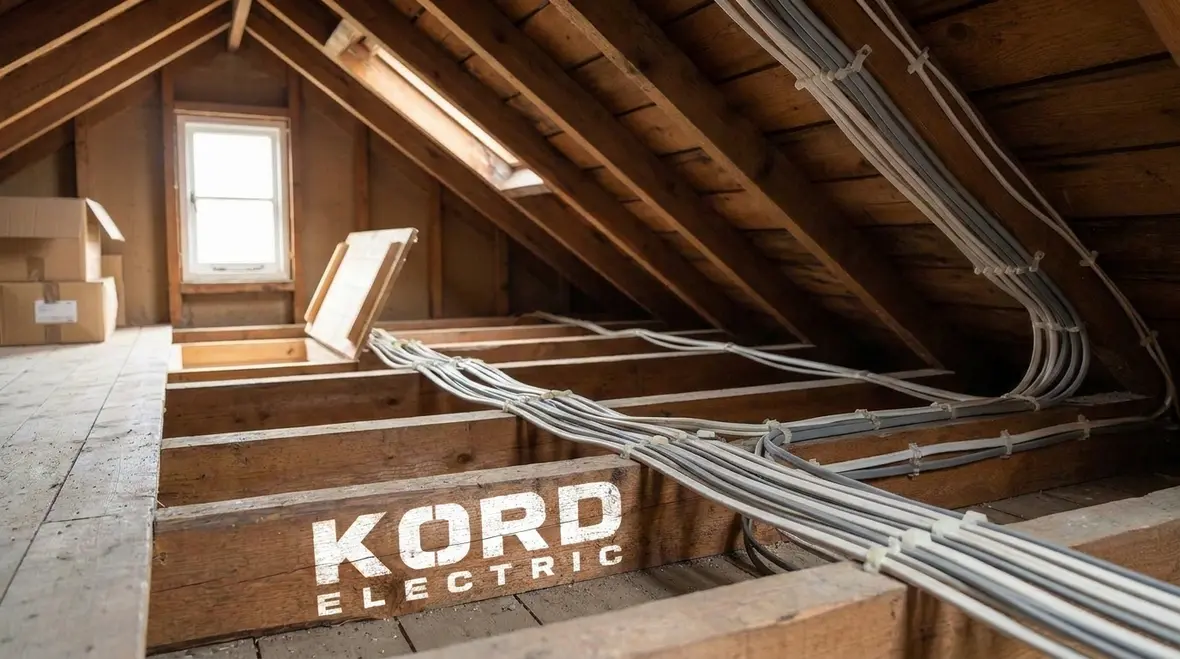
How commercial and industrial buildings change the risk picture
Commercial and industrial facilities do not behave like homes, and our clients know that. For one, these buildings host ongoing staff movement, periodic inspections, and contractor access. As a result, an attic that is “quiet” in a residential sense can still become a busy workspace in a commercial environment.
Also, schedules matter. Facilities often keep operations running while electrical work happens. Therefore, install methods must handle temporary access, staged materials, and repeated visits. When our technicians plan the routing, they treat the attic like a living work area, not a sealed storage box.
Finally, building systems in major properties interact. HVAC, fire protection, and security equipment often share the same ceiling zones. Consequently, the placement and protection of branch circuit conductors needs to account for both electrical performance and future service access. It is like planning traffic lanes on a highway before the rush hour begins.
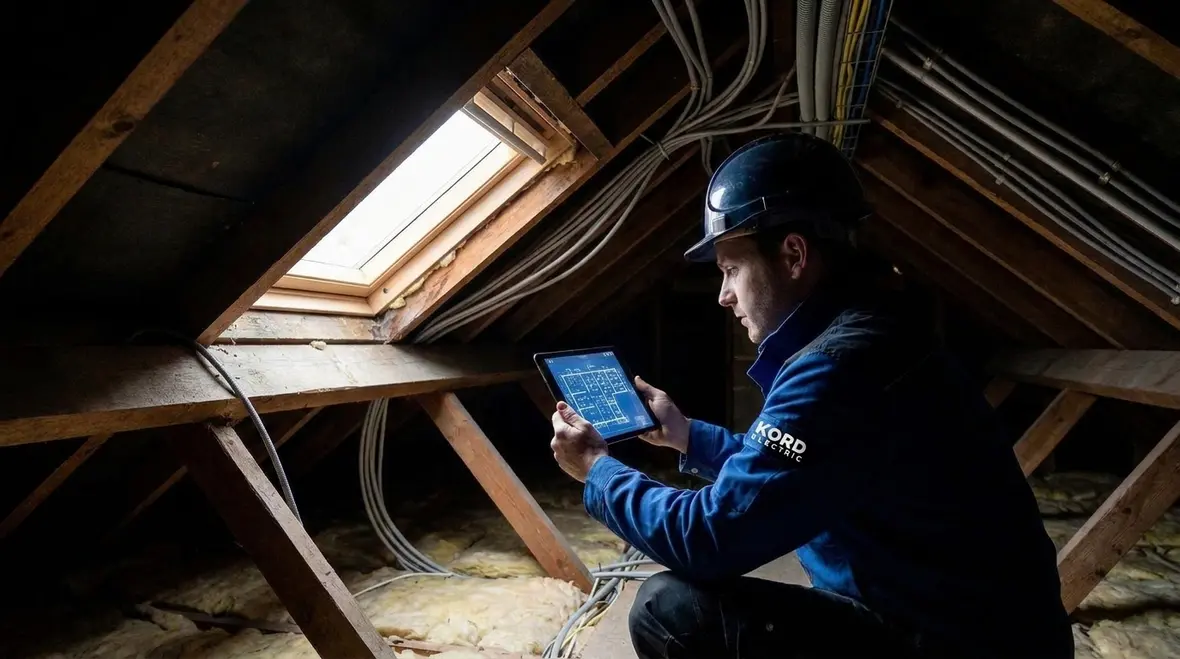
Where NFPA 70 makes installation safer in accessible attics
In accessible attic spaces, NFPA 70 pushes for protection and proper conductor handling. Section 334.23 focuses on conductor location and protection so that the conductors do not take damage from the environment or from routine access. In practice, we see three big factors on job sites.
- Mechanical protection: Conductors need protection from abrasion and impact where workers can reach them.
- Support and routing: Proper securing helps prevent sagging, rubbing, and uneven load that can degrade insulation over time.
- Heat and conditions: Attics can run hot and sometimes carry moisture. Install choices should help keep the system within safe limits.
When our expert service staff reviews drawings, they look for routes that minimize contact with rough edges, insulation settling areas, and equipment that requires future service access. Then, they confirm the installation matches the plan. If you have ever watched a cable rub against a sharp metal edge for years, you already know why this step deserves attention. Time is relentless, and insulation does not bargain.
Design decisions that improve reliability without extra headaches
Good code compliance also makes maintenance easier. Our technicians often see that when conductors are installed with the right protection and routing from day one, troubleshooting later becomes faster and less disruptive. Therefore, teams can keep production moving and reduce downtime.
In the design phase, we work through the details that prevent future “surprises.” For example, we coordinate conductor paths with access clearances, and we plan for inspection points where appropriate. Additionally, we consider how ducts, pipes, and cable trays share space. If the attic already hosts other systems, we cannot treat the electrical run like it exists in a vacuum.
We also pay attention to how crews will perform work during construction. In many commercial and industrial projects, different trades come in and out. As crews place materials and walk the space, protected routing reduces the odds of accidental damage. In other words, we build for both the code and the real world.
What inspectors typically look for during review
When the building team approaches an inspection, the inspector does not just ask, “Is there wiring?” They ask whether the installation supports safe use under the conditions described by the code. That is where NFPA 70 Section 334.23 matters.
During review, our experience shows that inspectors commonly focus on whether conductors in accessible attic areas receive the protection the code expects. They also check that conductors stay properly routed and supported. If conductors run where they can be easily damaged, then the inspector will likely ask for changes before approval.
Because of this, Kord Electric helps teams document the approach early. Our expert service staff explains what will be visible during inspection and what must be corrected before the installer leaves the site. We also coordinate with the facility team so the building stays operational. After all, no one wants a grounded schedule and a shocked supervisor.
Common mistakes we see, and how to prevent them
Even well managed projects can miss details. Still, in the field, certain mistakes appear again and again. Our technicians spot these issues early, and we address them with practical fixes.
- Insufficient physical protection: Conductors get routed in ways that allow rubbing or impact during maintenance access.
- Weak support or poor routing: Improper securing causes sag, stress on insulation, and movement that damages materials over time.
- Ignoring attic conditions: Heat and moisture can strain insulation if the installation does not account for real conditions.
- Not coordinating with other systems: When electrical routes compete with HVAC, piping, or security lines, the attic becomes a collision course.
To prevent these issues, we review the routing plan and then verify the field conditions match the design intent. Moreover, we teach the facility team what to watch for after turnover, so they know what changes could create risk later. That way, compliance does not end at the inspection stamp.
Our approach at Kord Electric for major properties
At Kord Electric, we serve commercial and industrial facilities and major property buildings. That focus matters because those sites demand careful planning, clean coordination, and long term reliability. We do not treat code compliance like a one time event. Instead, we build systems that keep working, even as the building grows and staff needs change.
Our expert service staff explains the “why” behind the code requirements in plain language. Then they help teams implement the “how” with installation methods that support safe conductor performance in accessible spaces. If you have ever heard someone say, “We will fix it later,” we get it. Later is where problems breed. So we fix them where it counts: at the attic before the risk becomes a call on a busy day.
We also align our work with broader NEC guidance and current best practices. If you want additional context about the National Electrical Code, our team shares educational resources through our networks, including our coverage at Kord Electric and Kord Fire related NEC explainers, such as Understanding NFPA 70, the National Electrical Code Explained for 2026, which helps connect attic branch circuit decisions to the bigger picture of system design. And for those who also manage fire pump systems, FirePumps provides helpful industry material that complements how electrical and life safety systems work together.
For facilities across Los Angeles County that need a partner to translate these requirements into real projects, our Los Angeles County commercial and industrial electrical services team plans, installs, and maintains systems that keep accessible attic branch circuits protected and ready for inspection.
FAQ: NFPA 70 Section 334.23 for branch circuits in attics
Bottom line: get the attic right the first time
NFPA 70 Section 334.23 matters because accessible attics expose branch circuit conductors to real conditions, not best case assumptions. When Kord Electric designs and installs with protection, support, and clear routing in mind, we help you meet code and protect long term reliability. Our expert service staff explains the requirements on site and works with your team to avoid last minute fixes. If you are planning a retrofit or new build for a commercial or industrial facility, contact Kord Electric. We will make the attic behave.
If you are ready to translate NEC branch circuit accessible attics requirements into a plan that fits your facility, our team can review your drawings, walk your site, and align attic routing with the rest of your electrical and life safety systems so inspections are calm, not dramatic.


