
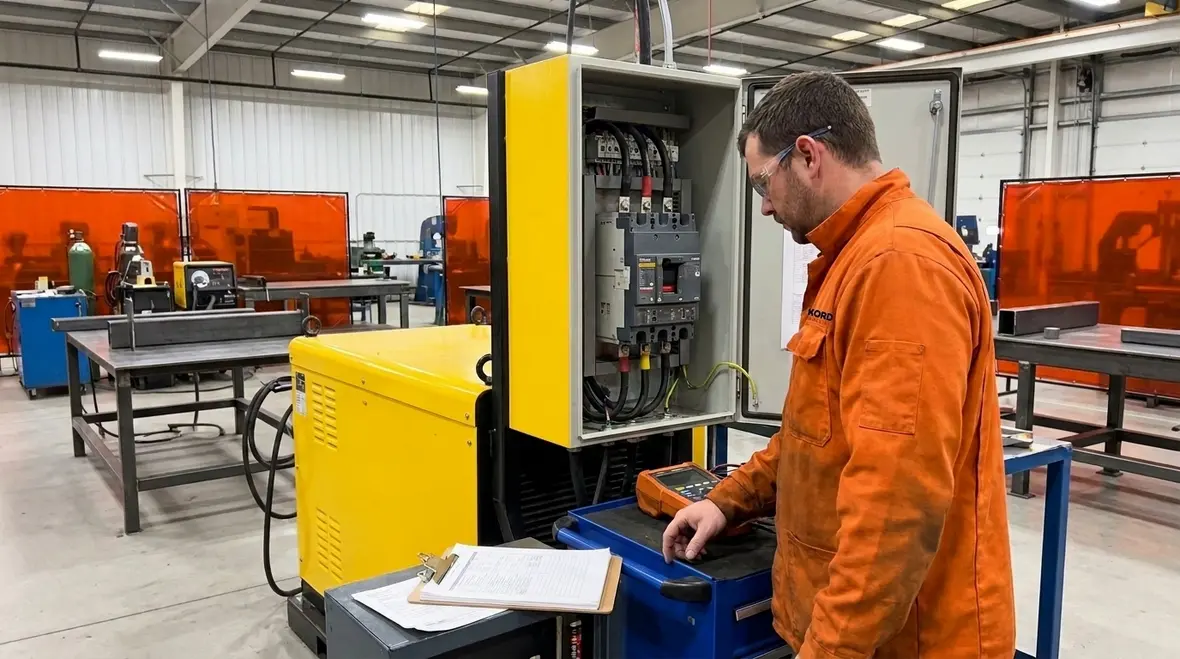
NFPA 70 Section 630.32 Welding Transformer Overcurrent
NFPA 70 Section 630.32 and why it matters in commercial welding setups
When a commercial facility uses a welding transformer, the details can save you from downtime and surprise hazards. In the first place, we look at NFPA 70 Section 630.32 welding transformer overcurrent. This requirement guides how we protect welding transformer circuits from overcurrent in the field, so the equipment can work as designed, not as a dramatic prop in a “why did this fail” training video.
Our technicians at Kord Electric explain the rule with practical clarity. Then, we connect it to real system design, material choices, conductor sizing, and inspection habits that major property owners and industrial operators rely on. And yes, we make it soothing, not scary, because we would rather teach you how to stay compliant than troubleshoot an electrical incident at midnight.
What NFPA 70 requires for welding transformer overcurrent
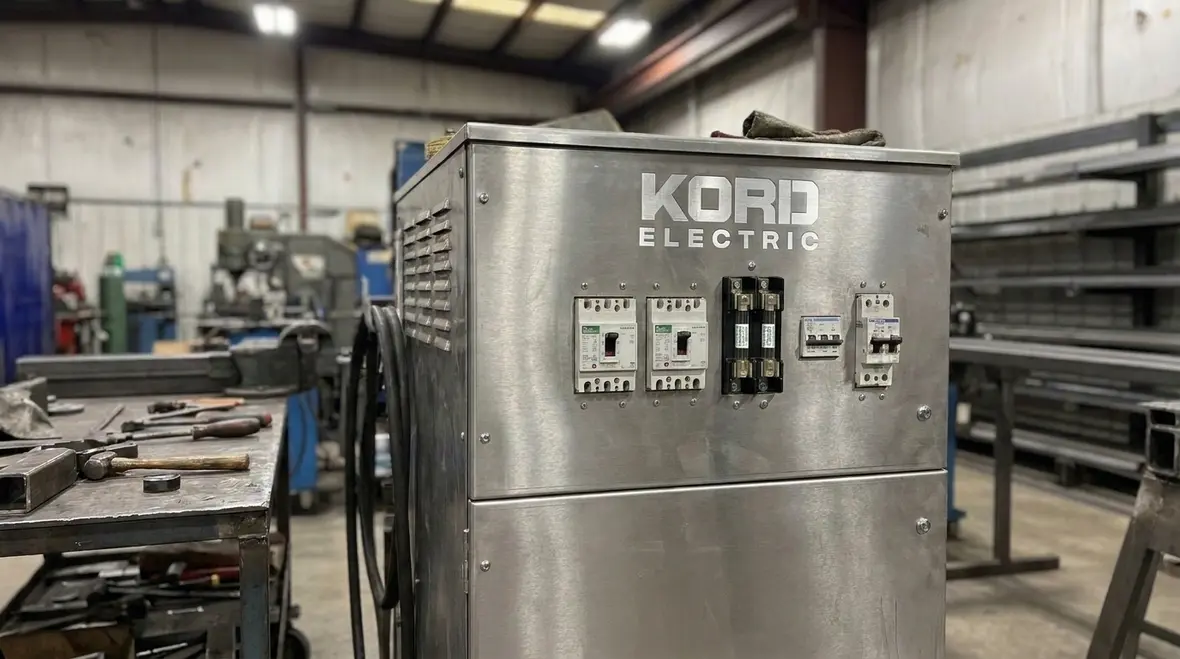
NFPA 70, also called the National Electrical Code, sets the baseline for safe electrical design. In the welding context, Section 630 lays out special rules because these loads behave differently than many standard building circuits. Welding activity can create high inrush current patterns and rapid changes during operation. Therefore, our expert service staff treats welding transformer protection like a living system, not a one time checkbox.
In plain terms, NFPA 70 Section 630.32 welding transformer overcurrent focuses on protecting the transformer and its associated wiring. As a result, it helps prevent overheating in conductors and damage inside the transformer. We also make sure the protective device settings match the actual operating needs of the welding equipment. Otherwise, the breaker trips when you need it most, or it stays on when you should stop the machine and check for trouble.
We explain it this way: overcurrent protection must be coordinated. The transformer, the conductors, and the protective device must agree on what “too much current” means. We confirm the match through a design review and, when needed, field verification. Our technicians do not guess, because guessing is fun only in movies.
How we select protection devices for 630.32 compliant circuits
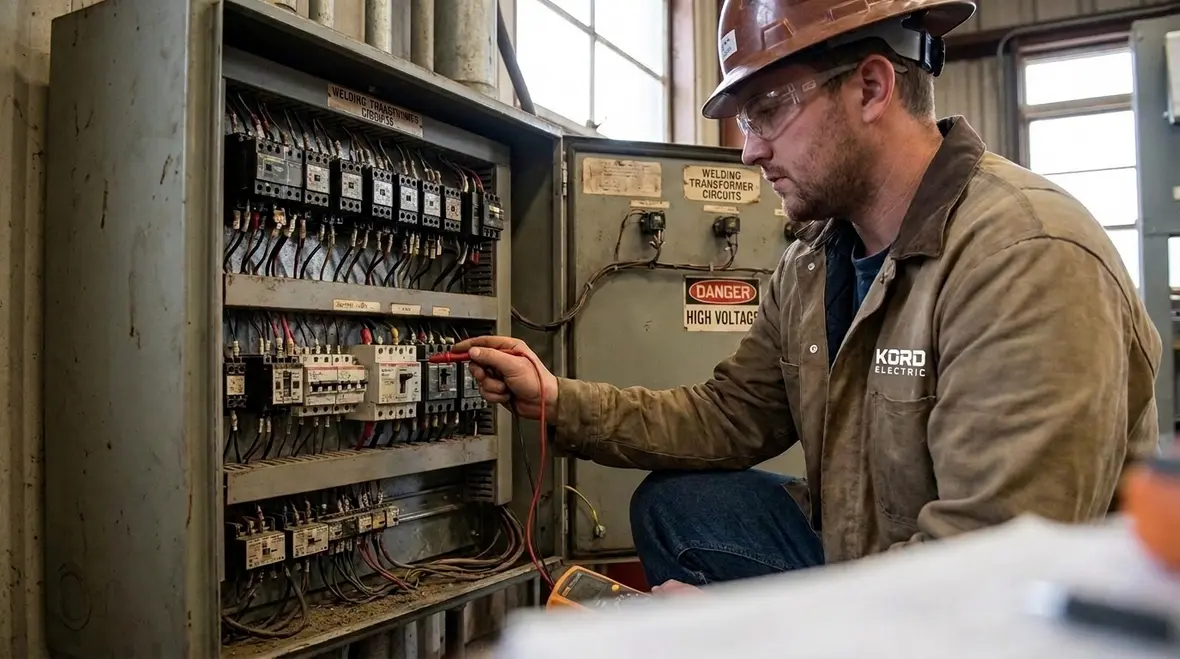
In commercial and industrial facilities, a welding setup rarely works alone. It connects to feeders, branch circuits, and load centers. Thus, our process starts at the source. We trace upstream protection, then we design the downstream protection so it works in steps.
For NFPA 70 Section 630.32 welding transformer overcurrent, we pay attention to protective device type, ratings, and coordination. We also confirm how the device responds under welding duty cycles. Since welding equipment can produce current peaks, we look for devices that protect without nuisance tripping.
- We verify conductor ampacity and insulation ratings for the actual operating environment.
- We confirm that the protective device rating and setting match the transformer circuit requirements.
- We check coordination so upstream devices do not take the entire facility offline for a single welding bay issue.
- We document the design so future electricians and inspectors can understand the logic quickly.
Then we add the human part. Our technicians explain the why behind each selection. So when your maintenance team asks “why that device,” we give a clear answer, not a vague “because code said so.”
If your team wants a deeper look at how this section fits into the bigger picture of the National Electrical Code, you can also review our broader overview article Understanding NFPA 70: The National Electrical Code Explained for 2026, which shows how individual rules like Section 630.32 support an integrated safety framework for commercial and industrial systems.
Common mistakes we see in industrial welding power distribution
Even strong teams can get tripped up when schedules tighten and someone says, “We will fix it later.” However, electrical protection does not care about project timelines. It responds to physics.
Here are the issues we often see in commercial and industrial buildings when welding transformer circuits lack careful planning.
- Wrong coordination between upstream breakers and the welding circuit devices, which causes the wrong equipment to trip first.
- Oversized protective devices that fail to protect conductors at the level the system needs.
- Undersized conductors for the actual load and ambient conditions, leading to heat buildup over time.
- Missing documentation, which makes inspections harder and future troubleshooting slower.
- Inconsistent installation details such as torque issues or poor terminations, which can increase resistance and heat.
Now for a quick joke, because we are professionals but we are not robots. A poorly coordinated system can act like a sitcom neighbor who always “accidentally” knocks over the vase. Everything looks fine until you need it, then suddenly you are dealing with the mess.
To prevent this, we design for the actual welding process and the facility’s operating pattern. We also use our expert service staff to explain how changes in equipment, cable routing, or bay use can affect compliance and performance.
How inspections and documentation support safety and uptime
Compliance is not just about passing a test. It is about reducing future risk. That is why we emphasize inspection readiness for commercial and industrial facilities. We align our approach with the broader intent of NFPA 70, while also recognizing how local practice and enforcement can vary from one building to another.
When we work on a site, we create a clear trail of decisions. For welding transformer circuit protection, that means we explain what we used and why. We also show how the design handles overcurrent conditions safely.
Additionally, we help teams plan for inspections. We guide owners and facility managers on what to expect during reviews, and we identify which records tend to matter most. When needed, we coordinate with other trades so the electrical scope does not clash with equipment commissioning or fire and life safety needs. Our goal is simple: fewer surprises.
Fire safety, coordination, and why electricians must think beyond breakers
Welding power is an electrical topic, yes. But it also connects to broader safety. Therefore, we treat welding transformer overcurrent protection as part of a larger system mindset. We look at how electrical fault conditions could influence fire risk and how emergency operations should work.
In a commercial property setting, the electrical system connects to life safety plans, fire pumps, and emergency power behavior. We stay aligned with fire protection thinking because safety does not live in a single discipline. For customers who need cross discipline guidance, we work with the same seriousness you would find in fire pump planning resources like FirePumps.org, and we align with the practical perspective described in resources from Kord Fire such as the coverage on NFPA 70 and the National Electrical Code.
Even the best electrical design needs clean interfaces with fire safety workflows. So we document our electrical protection choices, and we explain how those choices protect equipment and reduce risk during abnormal conditions. When your teams understand the “chain of safety,” operations run smoother. It is the difference between knowing your route and just driving with your eyes closed, hoping GPS will feel generous.
Designing for major facilities: our approach for commercial and industrial projects
Kord Electric serves commercial and industrial facilities and major property buildings. That focus shapes how we plan, how we communicate, and how we maintain quality. We treat large sites differently because they have more stakeholders, more equipment, and more ways for a small electrical change to ripple across a campus.
For welding transformer circuits, we start with the facility’s operational reality. Then we translate that into a compliant design path. Our technicians and expert service staff explain each step in straightforward language, so facility leadership can approve decisions with confidence.
We also build for change. Equipment gets upgraded, production patterns shift, and bays get repurposed. So we design protection thinking that can support future needs. And when projects include new construction or retrofit work, we plan so the installation matches the approved design. That consistency matters for NFPA 70 requirements and for long term reliability.
To keep that long-term picture steady, many facility teams pair this NEC-focused work with broader service partnerships. Our Los Angeles County electrical services overview explains how we support complex sites from early design through maintenance, so welding power, life safety, and general distribution all stay aligned.
Next, we close the loop with training and handoff. Your team should know what we installed, how it behaves, and what maintenance checks matter most. That is how we reduce downtime, not by luck, but by process.
FAQs about welding transformer overcurrent and NFPA 70 compliance
Request a professional review from Kord Electric
If you run welding equipment in a commercial or industrial facility, we recommend a careful review of your welding transformer circuit protection. Kord Electric can evaluate conductor sizing, protective device selection, coordination, and documentation to support NFPA 70 compliance and reliable uptime. Our technicians explain findings in plain language, so your team can act fast and confidently. Contact us today to schedule an assessment and keep your electrical system working like it should, not like it is guessing.
For facilities planning broader upgrades or ongoing maintenance programs, this welding-focused review can also tie into larger preventive strategies. By looking at NFPA 70 Section 630.32 welding transformer overcurrent in the context of your overall distribution system, we help you reduce unplanned outages, support inspection readiness, and keep production running without constant “do we trust this circuit” debates every time a welder is needed.


