
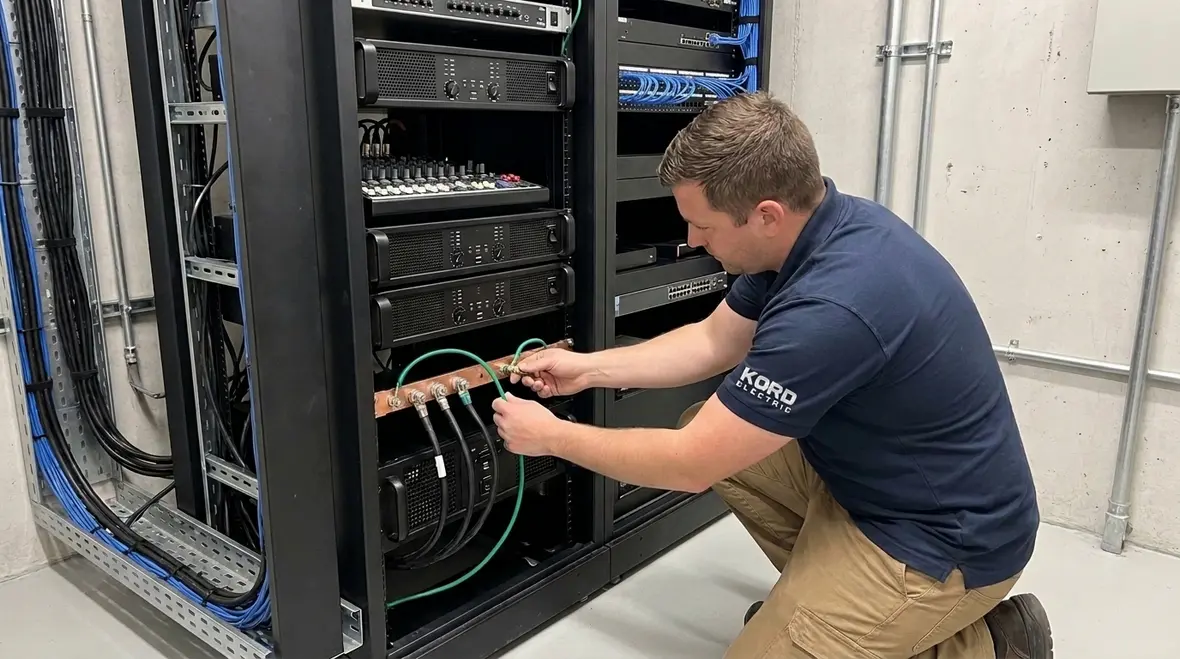
NFPA 70 Section 640.7 Audio Equipment Grounding
At Kord Electric, we build electrical systems for commercial and industrial facilities and major property buildings. And when we talk about safe, reliable power, we start with the rules that protect people long before an alarm ever sounds. That includes NFPA 70 Section 640.7 audio equipment grounding, which lays out how grounding needs to be handled for audio equipment so noise, faults, and shock risks do not get a free pass. Now, grounding is not glamorous. Still, if you have ever heard an audio system crackle right before a big speech, you know grounding is not just paperwork, it is the difference between “music” and “mystery static.”
In the sections that follow, we explain how NFPA 70 connects to real jobsite decisions. Our technicians and expert service staff walk through what matters, why it matters, and how we verify it without guessing. Others may toss buzzwords into the air. We prefer to measure, document, and move forward with confidence.
Why NFPA 70 matters to commercial power systems
Commercial and industrial facilities run on schedules that do not care about weekends, weather, or delays. Therefore, the National Electrical Code used in NFPA 70 sets practical safety requirements that help prevent shock, fire, and equipment damage. It also supports consistent design so electricians, inspectors, and facility teams speak the same language.
When we review a project, we do not treat NFPA 70 like a textbook. Instead, we tie specific sections to how the building actually operates: how panels feed critical loads, how conductors get routed, how grounding and bonding keep faults under control, and how systems stay stable as tenants change, floors get renovated, and technology evolves.
Also, we remind our clients of a simple truth: code compliance is not only about passing an inspection. It protects your investment and it protects the people who work in the building every day. And yes, we have seen systems that “almost” meet requirements. “Almost” is a word that electrical problems love.
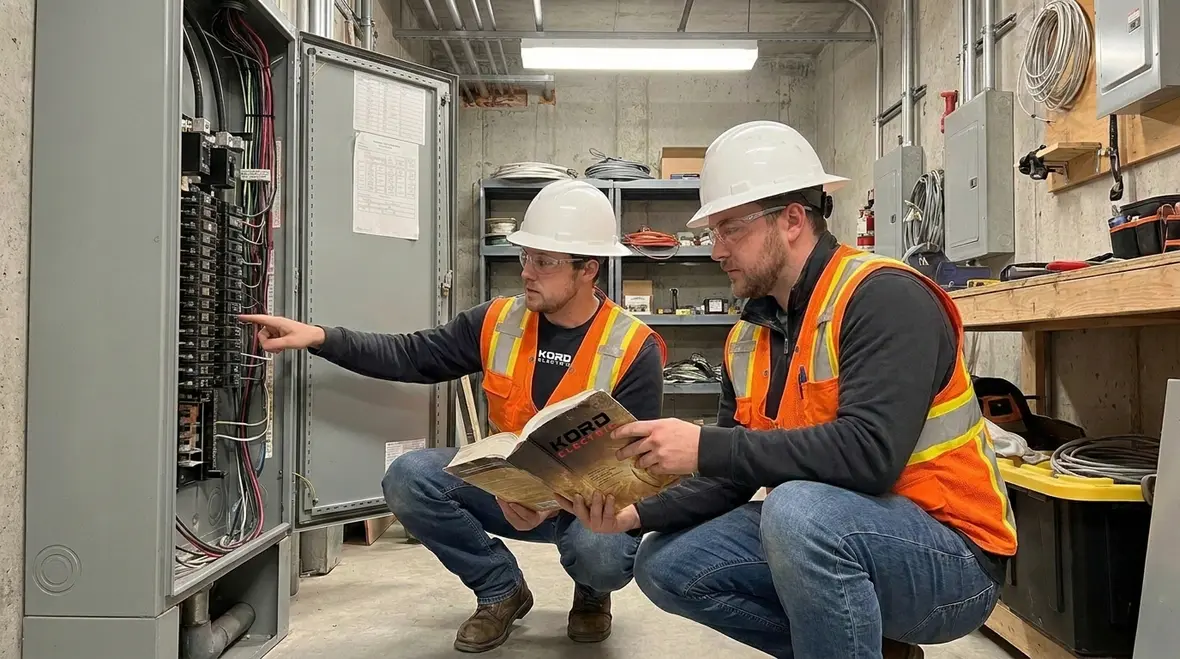
How NFPA 70 handles grounding for audio equipment
Audio systems in major facilities often look straightforward. However, once you connect equipment across rooms, racks, and rooms again, you create pathways where differences in potential can cause interference or safety issues. That is where NFPA 70 Section 640.7 audio equipment grounding steps in.
In plain terms, the standard addresses how audio equipment needs to connect to the building’s grounding system. It focuses on bonding and grounding practices that reduce the chance of hazardous voltage appearing on equipment enclosures, and it helps control noise that can otherwise show up as hum, buzz, or unstable performance.
Our expert service staff explain it like this: grounding is not a single wire pulled once and forgotten. Instead, it is a network with clear goals. When grounding points connect correctly, fault current finds its intended route, and equipment stays referenced to the same safe baseline. Consequently, the system behaves predictably during normal use and during abnormal events.
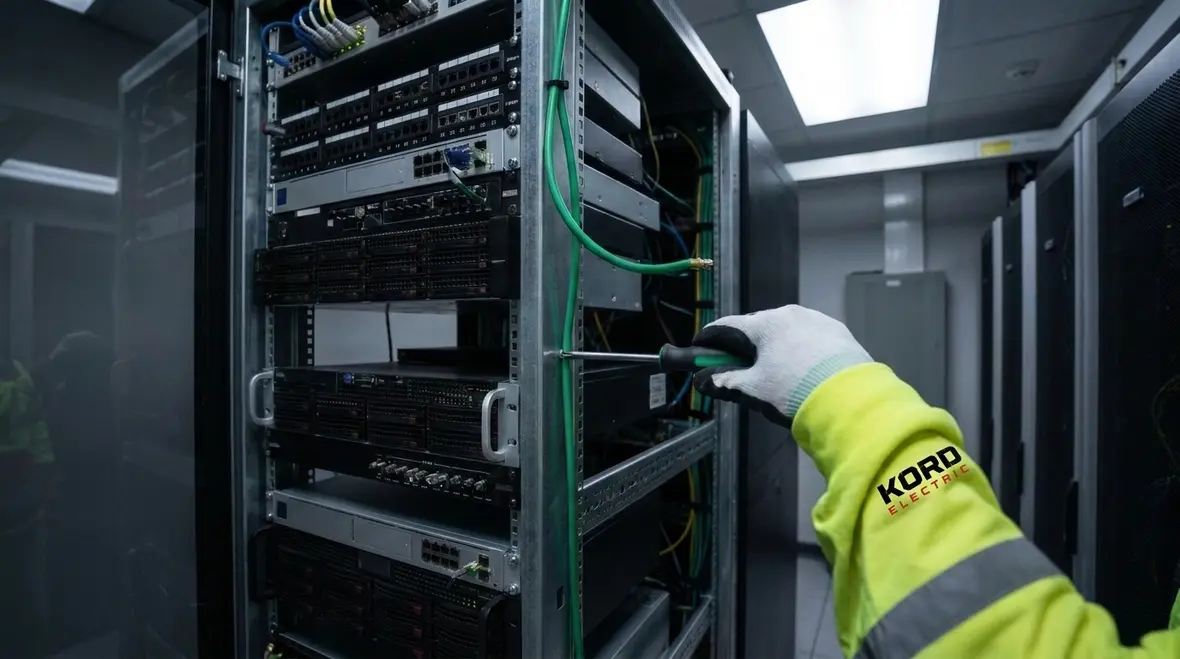
Bonding vs grounding in the field, explained by our technicians
People often say grounding and bonding like they mean the same thing. They do not. So, our technicians break it down during walkdowns, especially for facilities with multi zone audio, emergency announcement systems, and shared networked AV.
Grounding provides the path to earth or to the grounded conductor system. It gives fault current a route and helps stabilize electrical reference.
Bonding ties conductive parts together so they stay at the same electrical potential. That reduces shock risk and reduces unwanted voltage differences between metal parts.
When we install or upgrade systems, we focus on both. For example, if an audio rack is bonded correctly but the associated equipment grounding conductor path is incomplete, you can still see performance problems and safety exposure. Therefore, our teams verify continuity, routing, terminations, and connection quality, not just the presence of a ground point.
And just to keep it fun, think of bonding as introducing two neighbors who never talk. Once they connect, everything calms down. Grounding is the street they both share when something goes wrong. If they do not get introduced, one side acts weird, and everyone blames the homeowner. In electrical work, that “weird” becomes a call to us.
Practical installation steps we follow for major buildings
Code knowledge matters, but jobsite execution matters more. So, we take a methodical approach that aligns with NFPA 70 requirements and the real layout of commercial spaces.
First, we confirm the building grounding scheme and identify the correct connection points. Then, we plan conductor routing to limit sharp bends, avoid damage, and keep pathways consistent across floors and racks.
Next, our technicians pay close attention to terminations. We use proper torque, clean contact surfaces, and correct conductor sizes. Small mistakes here can create resistance, heat, or intermittent behavior later.
Then, we verify audio equipment grounding practices using field testing. We check continuity where applicable and validate that bonding and grounding conductors connect as designed.
Finally, we document what we did. That includes labeling and as built notes. When building teams maintain systems later, the documentation saves time and prevents “mystery rework.”
If you work with other trades, you know how projects drift. We work to prevent drift by coordinating early and explaining the path from code requirement to installed reality. Our team often collaborates with partners who handle AV racks, ceiling infrastructure, and fire systems, because audio grounding does not live in isolation inside a major property building.
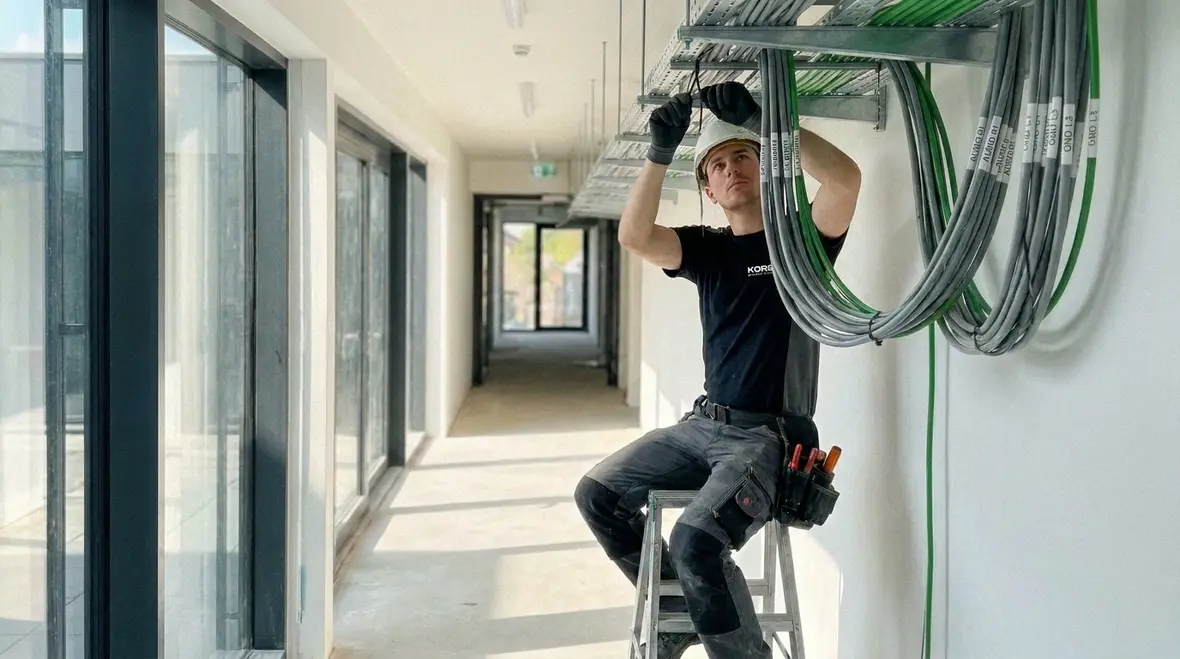
Where inspection and testing fit into the plan
Many facilities think inspection happens at the end. However, we use inspection as a guided process, not a surprise event. Therefore, we align the build with the intent of NFPA 70 early so you do not scramble near energization.
During planning, we identify likely coordination points. For example, audio equipment often ties into pathways that also serve data, signaling, and emergency voice systems. When these routes share trays or conduits, separation and grounding integrity matter. We treat separation as an installation goal, not an afterthought.
Then, we test and confirm before handoff. Our technicians verify that grounding and bonding connections match the design and field conditions. As a result, the system supports stable operation, lower noise, and improved safety margins.
For additional background and code context, many teams review summaries and focused explanations from credible code resources. We also point clients to guidance from organizations that support code understanding in the real world, including resources we reference internally alongside our NFPA 70 knowledge base.
NFPA 70 updates and what facility managers should watch
Commercial and industrial buildings change constantly. New tenants move in, old systems get replaced, and technology keeps shifting. So, facility managers should watch how NFPA 70 requirements apply to upgrades, not only to brand new builds.
When regulations evolve, the biggest risk comes from “partial” upgrades. For example, someone may update audio equipment, add a rack, or replace wiring without revisiting grounding practices. Over time, that can create uneven grounding paths and unpredictable noise. Therefore, we recommend treating audio and electrical grounding as a system, not a component.
On our side, we keep our teams current with code discussions and practical interpretations that impact field work. In the same spirit, clients can also explore related guidance that explains the National Electrical Code in a way that helps teams plan upgrades, including resources like Understanding NFPA 70: The National Electrical Code Explained for 2026 where available. In Australia, for example, facility teams often find local code pathways and safety guidance useful when they manage multinational operations, and those resources can help shape internal procedures.
And because audio systems often intersect with life safety, we also keep an eye on how fire related system considerations connect with broader electrical compliance. That way, our installation decisions align across disciplines rather than fighting each other later.
Code compliance, fire systems, and steady operations
In major property buildings, audio systems frequently support announcements, evacuation messaging, and coordinated communication. When the fire or life safety side matters, electrical grounding and bonding matter too. Consequently, good grounding helps ensure that audio equipment performs when it must, and it helps keep faults from turning into larger incidents.
Organizations that support fire pump and life safety ecosystem knowledge can be a helpful reference for the broader safety context. We approach this the same way: we respect the system boundaries, yet we design with the full building in mind. That includes how emergency systems get powered, how circuits get arranged, and how ground paths support the overall safety goal.
Then, we bring it back to execution. Our crews coordinate routes and connection points so audio grounding practices do not get overridden by last minute changes. If something changes in the field, we document it, evaluate risk, and adjust the plan instead of pretending nothing happened.
In short, we help buildings avoid the classic scenario: “It passed last time,” until it does not. We aim for long term stability, not just the moment before the inspector arrives.
Commercial audio grounding and the realities of maintenance
Maintenance is where many issues quietly grow. So, our approach includes not only installation quality, but also maintainability. We design grounding and bonding connections to be accessible for inspection, testing, and service when systems age or when facilities expand.
When future work happens, facility teams need clear guidance. Therefore, we label grounding points, document conductor pathways, and provide instructions that match what our technicians built. That way, others can maintain the system without guessing, and you avoid the “did we connect that or not?” situation that turns into hours of troubleshooting.
Also, we help clients understand that grounding supports both performance and safety. Yes, it supports cleaner audio. Yet it also supports stable electrical behavior. When grounding is correct, the system holds up under load changes, tenant modifications, and equipment upgrades.
To show what we mean, we once worked with a large facility that repeatedly saw background hum each time they made changes to rack equipment. They assumed it was the audio hardware. We found inconsistent bonding paths and corrected grounding connections. After that, the noise dropped, and the system stayed stable. It was not magic. It was correct electrical discipline.
Fast reference: key compliance checks we perform
Here is how our team thinks during a commercial audio grounding review. We keep it focused, practical, and aligned to NFPA 70 intent.
Check |
What we confirm |
Grounding connections |
That audio equipment grounding meets the requirements for the grounding system and bonding network. |
Bonding integrity |
That conductive parts and equipment enclosures connect at the right points and stay at the same potential. |
Conductor routing |
That paths stay protected, correctly supported, and free from damage or poor terminations. |
Terminations |
That connections use proper torque, clean contact points, and the correct conductor size. |
FAQ
Ready for a safer, steadier audio and electrical system?
If your facility uses audio equipment for announcements, paging, or life safety communication, we can help you confirm grounding and bonding practices that align with NFPA 70. Our technicians explain what they find, they correct issues with disciplined installs, and they document everything so your team can maintain the system with confidence.
If you are planning an upgrade, a renovation, or a troubleshooting sprint, you can also connect this work with broader Los Angeles County electrical services that keep panels, feeders, and life safety circuits aligned with the same steady approach. From audio racks to distribution gear, we keep the path from NFPA 70 requirement to installed reality clear, documented, and repeatable.
If your next project needs more than “it should be fine,” contact Kord Electric and let us bring order to the wiring before it brings chaos.


