
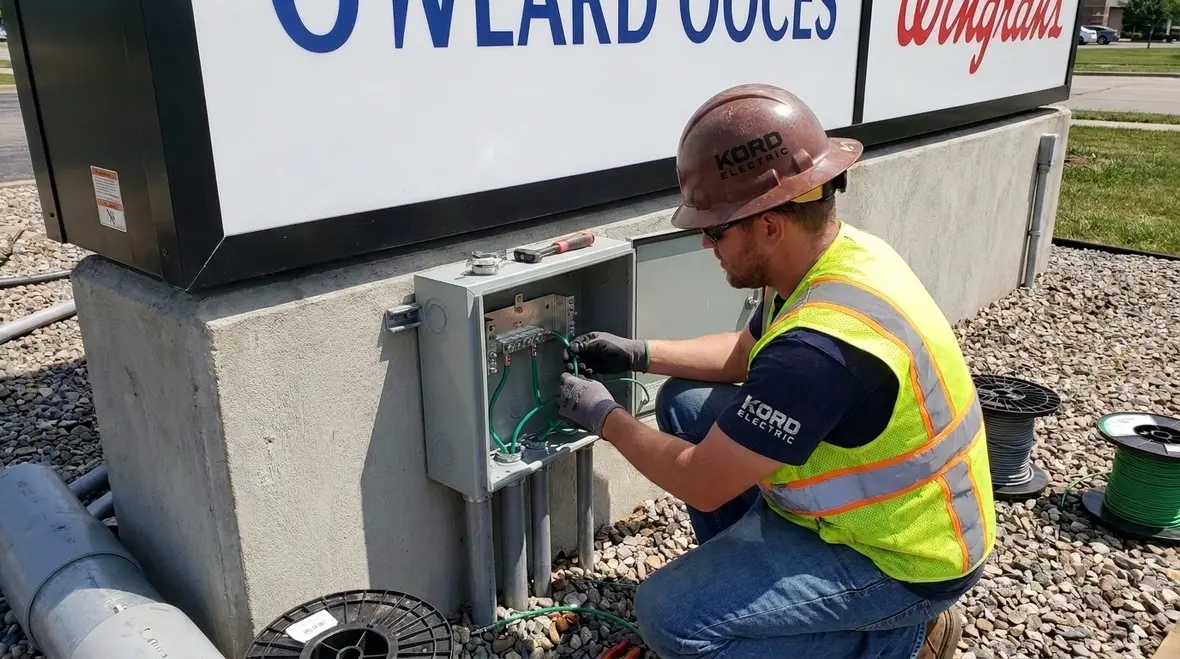
NFPA 70 Section 647.7 Sign Grounding Rules for Commercial Buildings
NFPA 70 sign grounding rules for commercial buildings: what we do and why it matters
In the first moments of any sign job, we start with NFPA 70 Section 647.7 sign grounding rules. Those rules shape how we treat sign circuits, how we handle metal parts, and how we make sure the electrical path stays safe when the building is under load. In other words, we build the grounding system so it can take a fault without turning the sign frame into an accidental conductor of surprises. Our technicians follow these requirements step by step, and they explain the “why” as they work, because good safety is not luck, it is process.
For commercial and industrial facilities, a sign is not a decoration. It is an electrical device tied to the building, often near people, vehicles, and weather. So we treat it like one. And yes, we keep it professional, even if the jobsite sometimes looks like a backstage concert before showtime.
How the NEC fits together for signage and building power
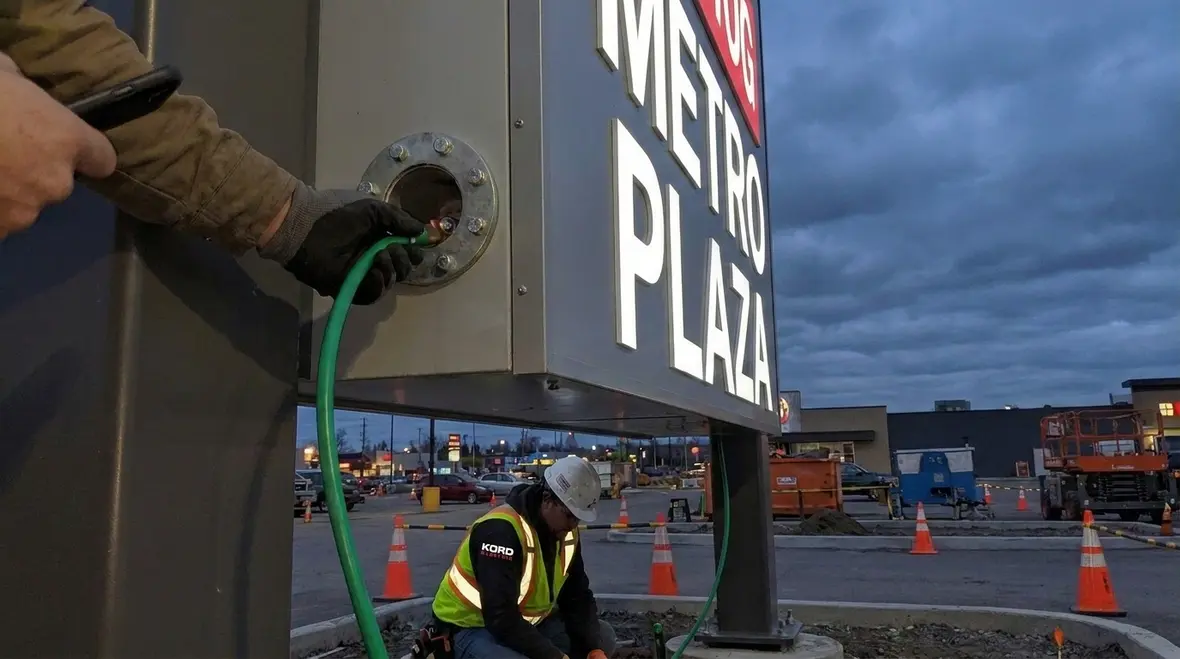
The National Electrical Code, known as NFPA 70, organizes electrical safety into clear parts. For commercial sites and major property buildings, we use that structure to reduce risk and avoid rework. First, we look at the sign’s power source, then we check the wiring method, then we confirm the grounding and bonding strategy. After that, we verify the equipment and conductors are suitable for the environment.
To make this practical, our expert service staff walks through the system map with the facility manager. We explain which section applies, what it means for the sign enclosure, and how it ties back into the building’s grounding network. Meanwhile, we also keep an eye on inspection expectations, because the field does not care about the theory if the documentation does not line up.
We also coordinate with the fire protection and fire pump professionals when the site involves those systems. You would be amazed how often signage power routes overlap with other critical areas. So, we plan routes and separations early, instead of discovering conflicts after walls get closed.
For teams that want to dig deeper into how the broader code structure frames these decisions, our electrical crew often points facility managers toward resources like our NFPA-focused guides. Articles that unpack the National Electrical Code for real projects help connect the dots between abstract sections and the wiring that keeps your building open for business.
What NFPA 70 Section 647.7 requires for sign grounding
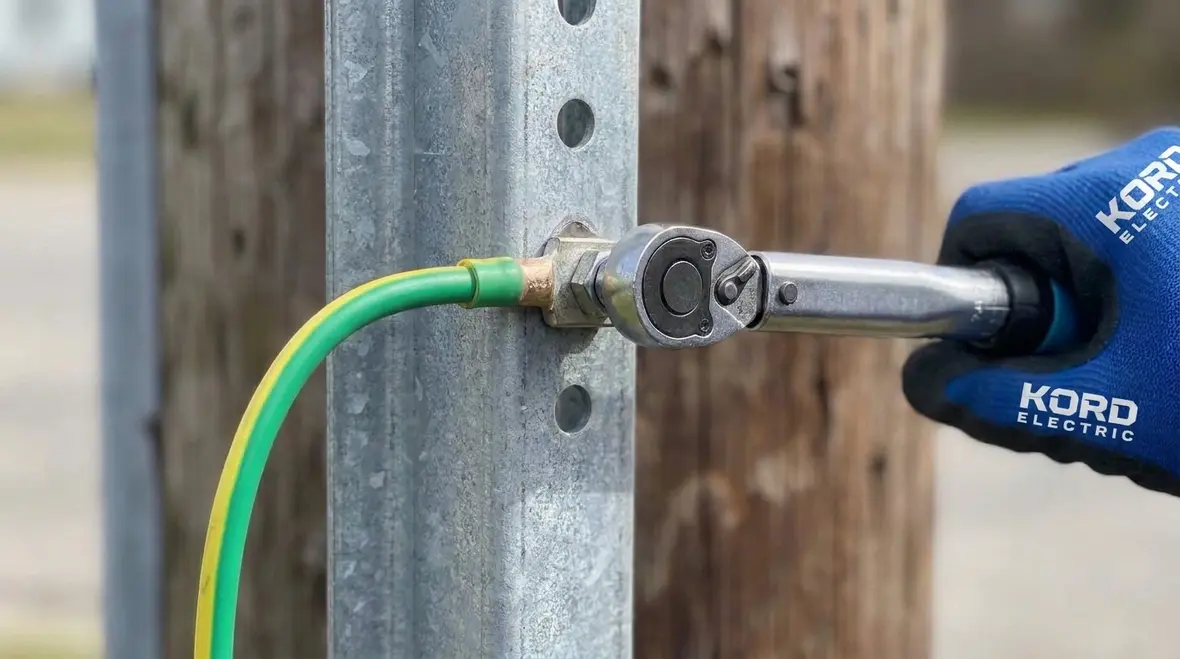
Section 647.7 focuses on grounding for signs in a way that protects people and equipment. In a typical commercial install, we ensure that metal sign structures, frames, and other conductive parts connect to the correct grounding path. When we bond parts, we do it in a way that keeps continuity and prevents dangerous potential differences during faults or surges.
Next, we confirm that the sign grounding conductor exists and matches the design intent. If the sign uses raceways or wiring methods that include metal paths, we still treat grounding and bonding as a system, not as a side note. Then we check terminations, because a grounding system that has a loose connection is like a seatbelt with missing hardware. It might feel fine until it suddenly does not.
During our install checks, our technicians do not just look for “a ground wire.” They validate the path, the connection quality, and the compatibility with the sign structure. Therefore, we help facilities meet the NEC intent, and we keep the work inspection-ready from the start.
We also align sign grounding with the building’s broader electrical strategy. For example, when a project involves new distribution gear or emergency power planning, we coordinate with system design so sign circuits do not become the forgotten branch that behaves differently during transfer, backup, or maintenance operations.
Bonding and continuity: the part that inspectors notice first
In the real world, bonding decides whether the building and sign behave as one electrical system. Continuity matters, because grounding works by giving fault current a controlled way back. If continuity fails, the fault does not go where it should, and voltage can rise on exposed metal surfaces.
So we use a disciplined approach. First, we identify all conductive parts that could become energized, including mounting hardware and metallic frames. Then we bond them to the grounding system using proper connection methods. After that, we verify the installation details that often trigger red flags, like improper connection points, missing bonding jumpers, or corrosion-prone interfaces.
Our expert service staff explains each step in plain language for facility teams. They also explain what “good” looks like after installation, so the site does not become a mystery novel for the next technician. And because commercial operations run on schedules, we coordinate the work window to reduce disruption. Nobody wants a sign outage like it is the plot twist in a bad superhero movie.
When a project includes broader upgrades, we often pair these bonding checks with system-wide evaluations. That can include distribution planning for commercial facilities or targeted reviews of emergency power and backup systems that share pathways with signage circuits. The result is a building that behaves like one coordinated network instead of a bundle of unrelated projects.
Installing sign systems in commercial sites: layout, environment, and safety
Sign installs rarely happen in perfect conditions. In commercial and industrial facilities, we handle outdoor exposure, vibrations, high traffic areas, and sometimes heavy maintenance traffic. Therefore, we design the sign wiring and grounding with the environment in mind.
We consider how the sign enclosure handles moisture, how conduit routes protect conductors, and how bonding points remain accessible and reliable. For example, we plan for expansion, we protect terminations from strain, and we keep separation where it prevents unwanted interactions. If a site includes areas tied to life safety systems, we also align our routes and timing with those teams.
At Kord Electric, we focus on major property buildings and business operations. We do not treat these installs like a weekend side project. Instead, we follow NEC concepts carefully, then we document the results so facility teams can maintain the asset without guessing.
This layout work often happens alongside larger electrical design planning for commercial facilities. When sign work is folded into a broader electrical system design, it benefits from load studies, panel planning, and grounding strategies that are already tuned for your building instead of being bolted on at the last minute.
Testing, documentation, and maintaining compliance over time
Once we install grounding and bonding, we do not just walk away. We test and verify performance, and we document what we built so it stays understandable later. That matters because commercial buildings evolve. Tenants change, equipment gets added, and sometimes signs get replaced while the original grounding hardware quietly ages.
Our technicians explain how to maintain the sign system without breaking compliance. That includes visual checks for corrosion, inspection of terminations, and ensuring that maintenance crews do not bypass bonding points during upgrades. Also, when any sign is modified, we recheck the grounding system instead of assuming “it worked before.” In electrical work, past performance is a story, not a guarantee.
Meanwhile, we coordinate with other professional resources when needed. For example, when fire-related systems are part of the larger project, we align with fire pump and fire protection planning groups so electrical signage does not conflict with life safety needs. Sites like these require a team mindset, not a solo mindset. If only the universe were like that sitcom where everyone shows up on time.
Over the life of the building, we also encourage owners to fold sign grounding into their broader electrical asset management strategy. When maintenance plans already include panel checks, infrared inspections, and torque verification, adding sign system grounding checks keeps small issues from quietly turning into surprises during the next big storm or renovation.
Why choosing experienced electrical service matters for major property buildings
Sign grounding involves more than attaching a wire. We manage design intent, code compliance, and real field conditions. And that is where experience shows up. Our service staff understands how commercial and industrial environments behave over years, including moisture cycles, mechanical wear, and the way building renovations can unintentionally disturb grounding continuity.
We also bring a process that reduces the chance of rework. We evaluate the sign structure, the wiring method, and the connection points before we install. Then we verify grounding and bonding after we complete the wiring. As a result, the facility team gets a system that performs and stays inspection-ready.
If you want to understand how broad NEC concepts apply to real projects, we also point teams toward additional resources published through our related platforms. Those references help stakeholders understand the code landscape, while our in-house work applies it to your exact building and signage plan.
For commercial properties in Southern California, that experience connects directly to field crews who already work on complex distribution systems, emergency power, and long-term reliability planning. When your signage project is supported by the same specialists who design and maintain building-wide electrical systems, NFPA 70 Section 647.7 sign grounding rules stop being a checklist and start becoming part of a larger, resilient power strategy.
If your facility also needs upgrades or repairs beyond signage, you can align everything under one umbrella through dedicated Los Angeles County electrical services for commercial and industrial buildings. That way, the same team that designs sign grounding also understands how it fits into feeders, panels, and backup power plans across your entire site.
FAQ: NFPA 70 sign grounding and Section 647.7
Can maintenance staff work on sign grounding later?
They can perform safe checks, but any changes to wiring, bonding, or grounding conductors should involve qualified electrical service to preserve compliance and safety.
Conclusion and call to action
When we install or upgrade a sign at a commercial or industrial property, we treat grounding as a core safety system, not a checkbox. Our technicians follow NFPA 70 Section 647.7 sign grounding rules to protect people, prevent dangerous voltage on metal parts, and keep your site inspection-ready. If you plan a new sign, a replacement, or a renovation that touches electrical routes, contact Kord Electric. We will assess the job, plan the grounding and bonding correctly, and deliver work that stays solid long after the sign lights up.
And because signage rarely lives in isolation, we can align your project with broader electrical work across your facility. From panel upgrades and emergency power planning to preventive maintenance and future tenant improvements, our team helps your building meet code today while staying flexible for tomorrow’s loads.


